Date
Author
Наталья Глухова, Ирина Кравцова
Source

Preserved copy
Translated material
"People considered blocking an encroachment on the future"
The inhabitants of Nepal told Novy-Europe as the protests of schoolchildren and students led to the cancellation of the ban on social networks, the resignation of the prime minister and the arson of parliament
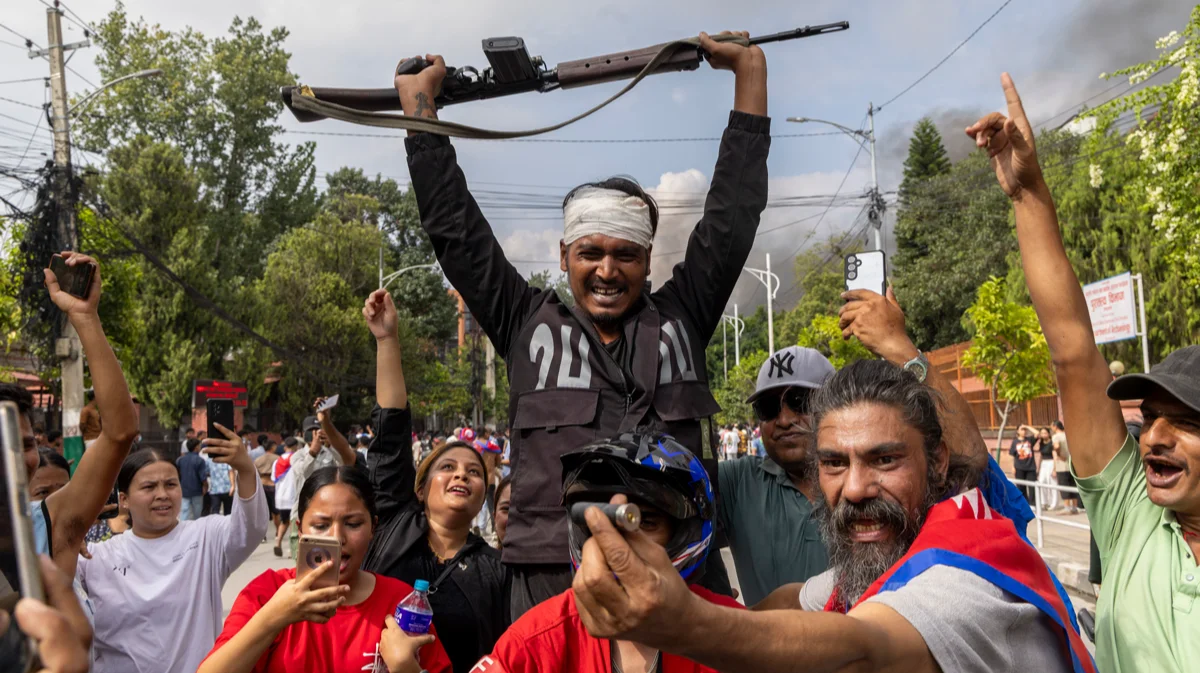
The protester holds a weapon stolen at the police during the assault on the Singha-Durbar Palace in Kathmandu, Nepal, September 9, 2025. Photo: narendra shrestha / epa
Protesters in Nepal after two days of large -scale protests and riots achieved a ban on popular social networks. In clashes with the police, 22 people were killed, hundreds were injured, and the Prime Minister Nepal resigned.
The main reason for the blocking was the decision of the Nepal authorities to take control of the Internet space under the pretext of combating “fakes”. Experts and eyewitnesses of events in a conversation from Novo-Europe told what a new act of censorship led to and what to expect further.
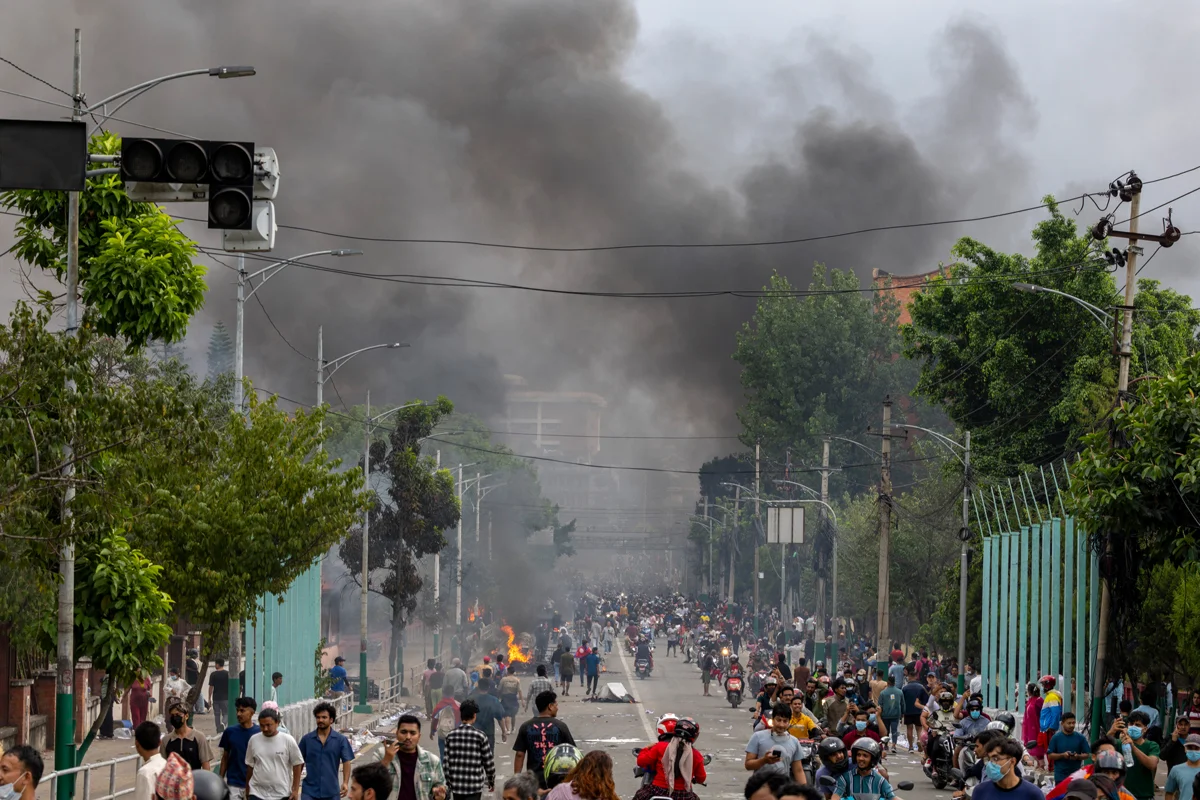
In Nepal, large-scale protests continue due to blocking social networks. The police uses tear gas, waterlets and rubber bullets, protesters block roads, set fire to tires, build barricades.
According to the latest data from doctors, 22 people were killed, more than 300 were injured. The demonstrations grew into clashes with security forces and riots.
According to New Europe, last week, Nepal authorities blocked 26 social networks, platforms and other services, including the Facebook, Instagram, WhatsApp, YouTube, X and Reddit, which were popular in the country, due to the fact that the companies did not submit registration applications. To submit applications, a seven -day period was assigned, which began on August 28 and expired on September 3. The Nepal government claims that in this way he is fighting the fraud and distribution of “fakes” and fake accounts.
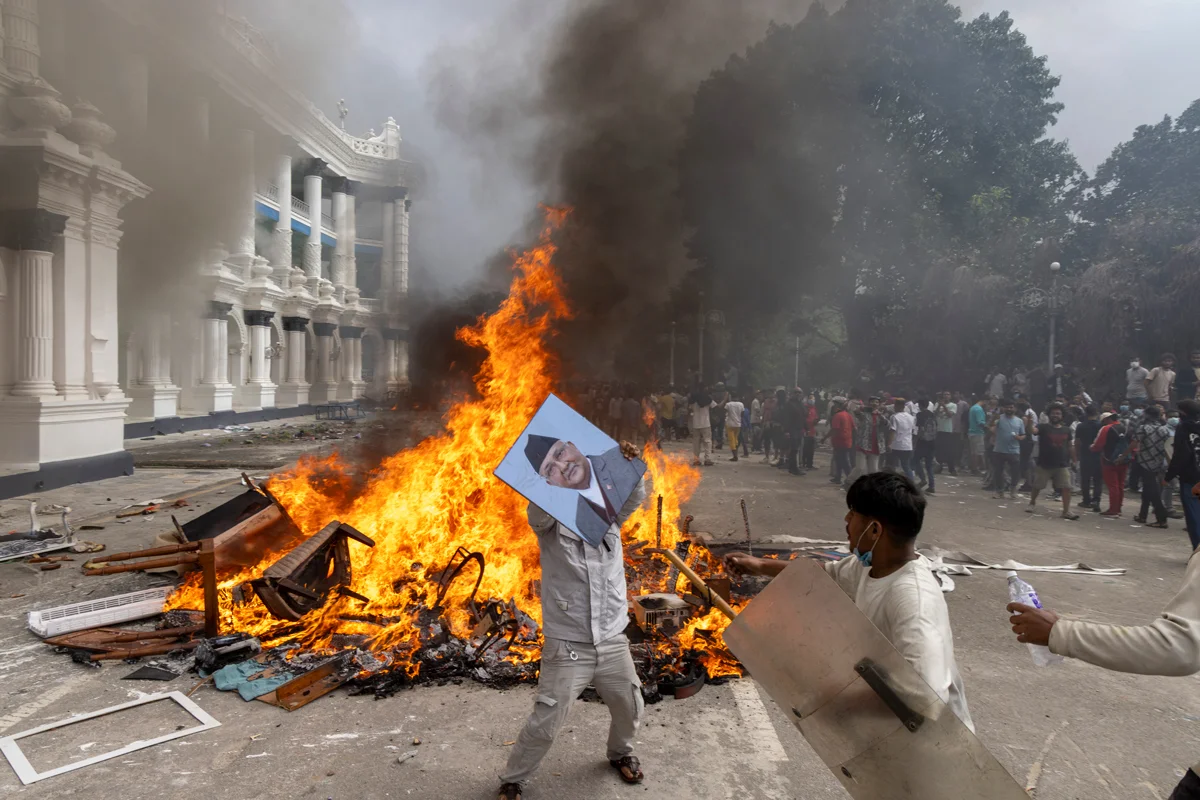
Already on September 9, the Nepal government canceled the decision to block social networks, but the protests did not stop. The demonstrators again took to the streets of the capital, despite the curfew, introduced in the city center. According to Reuters, they set fire to the building of the Nepal parliament, defeated the residence of the Prime Minister and the President, and also attacked the Singha Durbar building, where the houses of ministers and parliament are located.
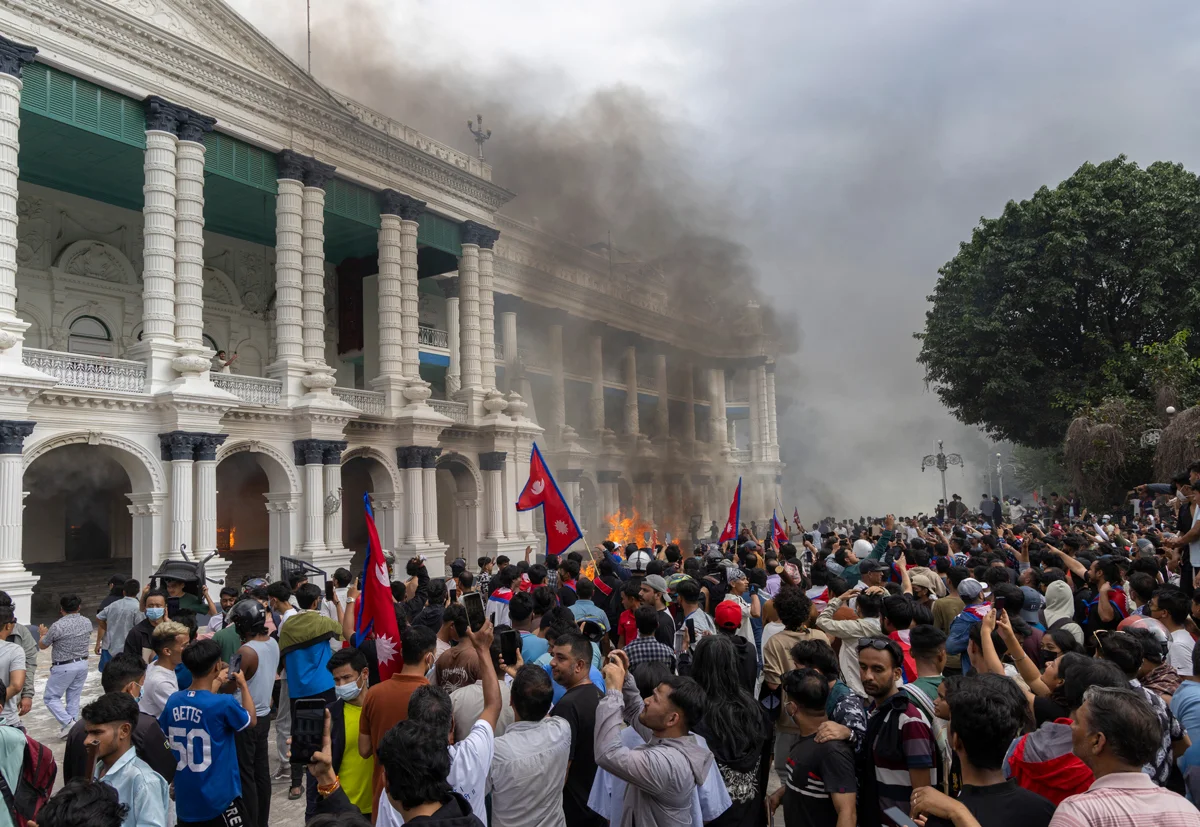
- A more aggressive crowd went out into the streets and began to smash everything and everything. The building of the parliament, the office of the prime minister, the cabinets of ministers, the court of appeal and even the presidential palace are attacked and burned to the ground. Full chaos! -said “Novy-Europe” by Jugal Bhutrel, an engineer working in Nepal, and a graduate of the Moscow State Construction University.
As a result, the Prime Minister of Nepal Khadga Pracad Sharma Olya resigned . In his statement, he said that in this way he wants to "contribute to solving the problem and help to resolve it in a political way." The premiere and other ministers were evacuated from their residences on military helicopters.
The international airport in the capital of Nepal Kathmandu was closed, more than 300 military were placed on its territory. According to India Today, it was there for evacuation that the Nepalian ministers were delivered.
“Now here [in Nepal] is a real chaos,” a journalist-investigator from Nepal on terms of anonymity described the atmosphere in the country there.
Most protesters are Zumers, he confirmed. However, according to the interlocutor of Novo-Europe, representatives and other generations joined them today.
In the name of stability
The protests began with the movement against corruption organized by the generation Z ( English name - Demonstrations by Gen Z ) through social networks, Dzhugul Bhutrel told New-Europe.
- In social networks there was a mass campaign against the so -called “families” - mainly sons and daughters of politicians who are bragging their wealth on social networks. This caused a massive reaction and forced the zomers to protest. Then the government banned social networks. It was like adding oils into the fire, ”he notes.
According to him, the real reason for the blocking is obvious, and it differs from the official version of the authorities, according to which the government seeks to make the Internet space more “safe”:
“The situation in Nepal is no different from what is happening in Russia: the authorities are tired of constant criticism [from independent media and people],” summed up Bhutrel.
In Nepal, social networks are the main space for news, communication and free expression of opinions, Crete Bhandari, an activist and a member of the Central Committee of the Communist Party of Nepal notes in a conversation with the “New Evrop”. In her opinion, the government considers the platform as a source of criticism of systemic corruption and mobilization against it, so it tries to control them.
- Although formally this was justified by stability and “security”, the true reason was to stop criticism and resistance. People reacted so violently because they took it as a direct encroachment on their freedom and future. For young people and especially for students, this was connected not only with the Internet, but also to speak and be heard with their right, ”she added.
"The people defeated the state - at least at the first stage"
As a result of the protests, the entire system of power completely collapsed, Jugal Bhutrel said in a conversation with the New Evrop: the prime minister resigned, the demonstrators burned all large buildings representing three pillars of the democratic system: centers of executive, judicial and legislative power. The interlocutor of Novo-Europe assumes that in the near future a new Provisional Government will be formed and, probably, he will have a mandate to hold general elections after 6-12 months.
- Can we say that the people defeated the state? At least at the first stage - yes. The protests and resistance were so strong that the government was forced to abandon some of its measures. This became possible only thanks to collective strength, organization and self-sacrifice of the people, ”activist Crete Bhandari noted in a conversation from the New Evrope.
In her opinion, in the near future the government will encounter growing pressure both within the country and at the international level. And if the authorities continue to meet with repression, then the anger of the public will intensify.
- On the other hand, the protesters will probably become more organized and decisive. In general, the protests raised fundamental questions about freedom, democracy and accountability of the government in Nepal to a new level, ”she summed up.
According to Bhutrel, in the future a noticeable political player in Nepal may become the mayor of Kathmandu Balen Shah. In the past, he was a rapper and gained popularity among the Z generation. During protests, the shah proposed ideas that many found “leading to thoughts”, and therefore even began to be considered a “backstage leader,” the interlocutor of Novo-Europe notes.