
Translated material
What does the fourth article of the NATO agreement mean
Poland asked the alliance to apply it after the invasion of Russian drones
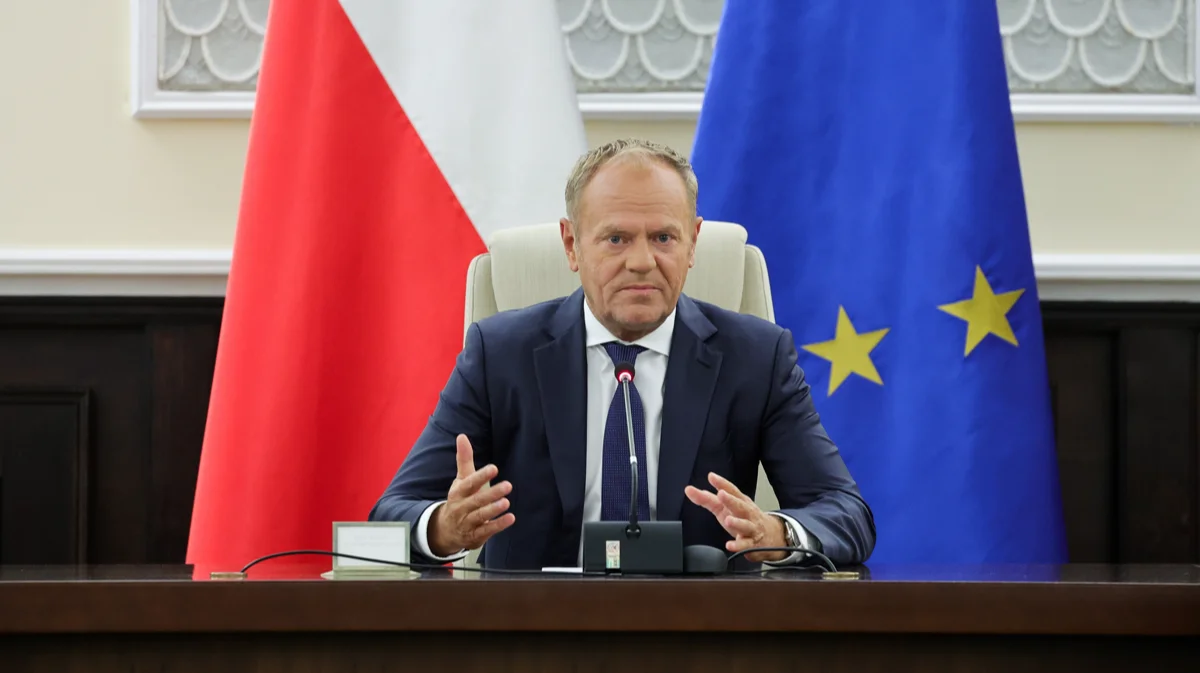
Donald Tusk performs at an extraordinary meeting of the government in connection with Russian drones, Warsaw, Poland, September 10, 2025. Photo: Szymon Pulcyn / EPA
After the massive invasion of Russian drones into the airspace of Poland during a night blow to Ukraine, NATO used Article 4 of the North Atlantic Treaty - the fundamental document. This happened for the eighth time in the 76 years of the alliance.
The Secretary General of the Alliance Mark Rutte said that "the allies expressed solidarity with Poland and condemned the reckless behavior of Russia." And this seems to be limited now. About the use of Article 5 - about the collective response to threats - there is all the more so far. Read more-in the material of "New-Europe".
Verbal support
The fact that Poland activated Article 4 of the North Atlantic Treaty, signed in Washington on April 4, 1949, was told by the Polsat spokesman for the Government of the Republic Adam Shlapka. This article says :
“Contracting parties will always consult with each other if, in the opinion of any of them, the territorial integrity, political independence or safety of any of the contracting parties will be at risk.”
Such a threat, as confident in Warsaw, arose on the night of September 10. As the Prime Minister of Poland Donald Tusk said in the morning, the “huge number of Russian drones” invaded the country's airspace. Later, during a speech in the Sejm, he clarified that it was about 19 drones, who "first flew from the territory of Ukraine as a result of errors or small Russian provocations": "A significant part of the drones flew directly from Belarus."
The military NATO, meanwhile, announced that they were directly involved in the defense of the Polish airspace: the Poland Air Force and the Netherlands, an Italian radio exploration aircraft, as well as a alliance-refuratory forces of the forces of the alliance were involved in the repulse of the attack.
The use of Article 4 has become a strong political signal: emergency consultations do not imply obligations to take any specific steps. Although earlier, sometimes in such cases, NATO allies made some decisions. Until September 10, 2025, Article 4 was involved in the history of the alliance seven times.
Who, when and why activated article 4?
Turkey, February 2003 : Threats related to the war in Iraq. As a result of NATO, the operation of Display Deterrence (February - May 2003) on the protection of the border regions of Turkey began.
Turkey, June 2012 : the disaster of the Turkish intelligence aircraft RF-4, hit by the Syrian military in the sky above the Mediterranean Sea. NATO made a statement, condemning the actions of Damascus.
Turkey, October 2012 : The shelling of the Turkish border areas of the Syrian troops. Later, for the protection of Turkish territory, NATO was deployed as part of the Active Fense operation Patriot anti -aircraft missile systems.
Poland, Latvia, Lithuania, March 2014 : the annexation of Crimea by Russia and the growth of the threat to the eastern borders of the alliance. The strengthening of the eastern flank of NATO was discussed.
Turkey, July 2015 : a terrorist attack in a border with Syria, the Turkish city of Suruch, the murder of a Turkish military near the city of Kilis and other terrorist attacks. NATO issued a statement condemning the actions of terrorists.
Turkey, February 2020 : The death of the Turkish military as a result of air raids in Idlib, carried out with the support of Russia. NATO made a statement in support of Turkey.
Eight countries (Bulgaria, Czech Republic, Estonia, Latvia, Lithuania, Poland, Romania, Slovakia), February 2022 : Russia's full -scale invasion of Ukraine. The beginning of discussions of how NATO should strengthen the defense on the eastern flank.
According to the results of the consultations on September 10, NATO condemned Russia's invasion into the airspace of Poland. The Secretary General of the Alliance Mark Rutte called the actions of Moscow “reckless” and said that a “full assessment” of the situation is being carried out now. “My message to Putin is clear: stop the war in Ukraine, stop violating our airspace and know that we are vigilant and will protect every inch of NATO territory,” he added.
Apparently, the expression of the full support of Poland, the consequences of involving Article 4 this time will be limited.
From the fourth to the fifth
Initially, Article 4 was included in the Charter of NATO, taking into account the “colonial interests of Europe,” was noted in the analytical article of the Center for European Political Analysis (Cepa). She did not establish the territorial framework for threats, which allowed the countries to use resources and support for NATO and in relation to overseas territories.
In practice, article 4 has never been used in this vein: most of the colonies of European countries achieved independence in the 1940–60s.
In 1995, in the work “Future of NATO: outside the collective defense”, the American researcher Stanley Sloan claimed: the end of the Cold War gave additional relevance to Article 4, while a better article 5 - about collective defense - became a “reserve option”.
“The daily activities of NATO in the nearest historical period will probably be more and more concentrated on new risks, and not on territorial defense,”
He explained. But history showed that the geopolitical tension has not disappeared anywhere, and, as a result, Article 5 remains the cornerstone of the alliance.
What is said in Article 5 of the Charter of NATO about collective defense
Novyevropa gives the original text of Article 5 of the NATO Charter.
“Contracting parties agree that an armed attack on one or more of them in Europe or North America will be considered as an attack on them as a whole, and, therefore, agree that if such an armed attack takes place, in order to exercise the right to individual or collective self-defense recognized by Article 51 of the United Nations, the assistance of the Completed Nations will provide assistance to the agreed The party, which has undergone or contracting parties, underwent such an attack by immediate implementation of such an individual or joint action, which will consider it necessary, including the use of armed force in order to restore and subsequently maintain the security of the North Atlantic region.
Any such armed attack and all measures taken as a result of it are immediately reported by the Security Council. Such measures should be terminated when the security council will take measures necessary to restore and maintain international peace and security. ”
In short, the fifth article of the NATO Charter says that an attack on one member of the Alliance is considered an attack on everyone and requires a coordinated answer.
But, as can be seen from the wording, the common perception that this article gives the alliance guarantees from the allies guarantees from the allies is incorrect: each member of the Alliance has the right to choose “actions that will consider it necessary”.
One way or another, the use of Article 5 is the brightest measure, and the allies resorted to it in the history of the alliance only once: after the attacks of September 11, 2001 in the United States. Then several statements were made, as well as the military operations of a limited scale: Eagle Assist, which provided for the transfer of several aircraft to North America, and Active Endeavour-the anti-terrorist naval mission in the Mediterranean Sea.
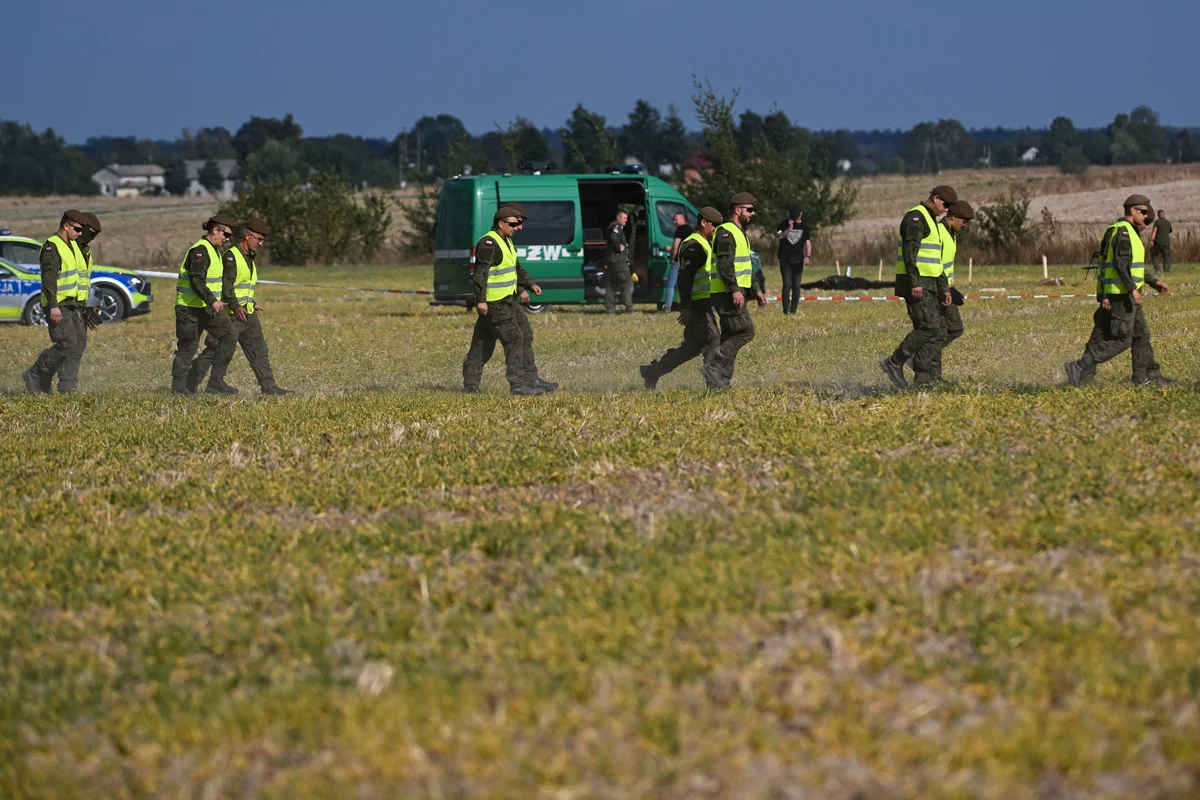
Now the use of Article 5 should not be expected for several reasons.
Firstly , such a step requires the approval of all allies, and Hungary and Slovakia close to Moscow will not go to this.
Secondly , it is already clear that NATO will not aggravate the situation. As the Reuters agency stated with reference to a source in the Alliance, the allies do not regard the incident with the UAV in the airspace of Poland as an attack.
Thirdly , Moscow, it seems, is also not set to play an exacerbation. The Ministry of Defense of the Russian Federation reported that the objects for defeat on the territory of Poland, where several drones were shot down, were "not planned." “The maximum flight range used in the strike of Russian UAVs, which allegedly crossed the border with Poland, does not exceed 700 km,” the department said, adding that they are ready for consultations on this topic from the Polish Ministry of Defense. And the Russian Foreign Ministry said that they were also ready to join in possible consultations - “in order to complete clarification of what happened for all parties interested in preventing further aggravation of the situation.”