
Translated material
Alexander Morozov: "Free the language from the totalitarian virus"
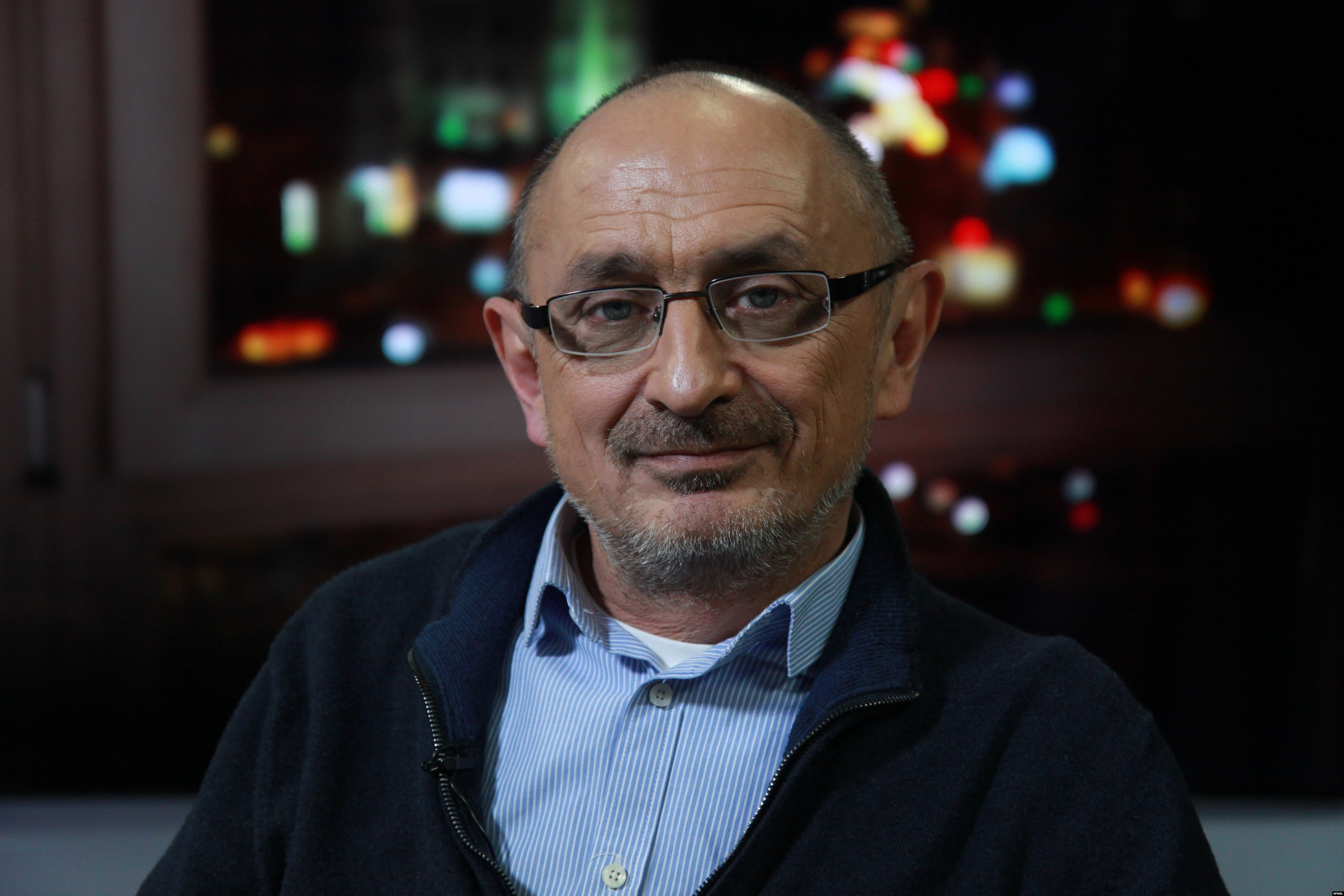
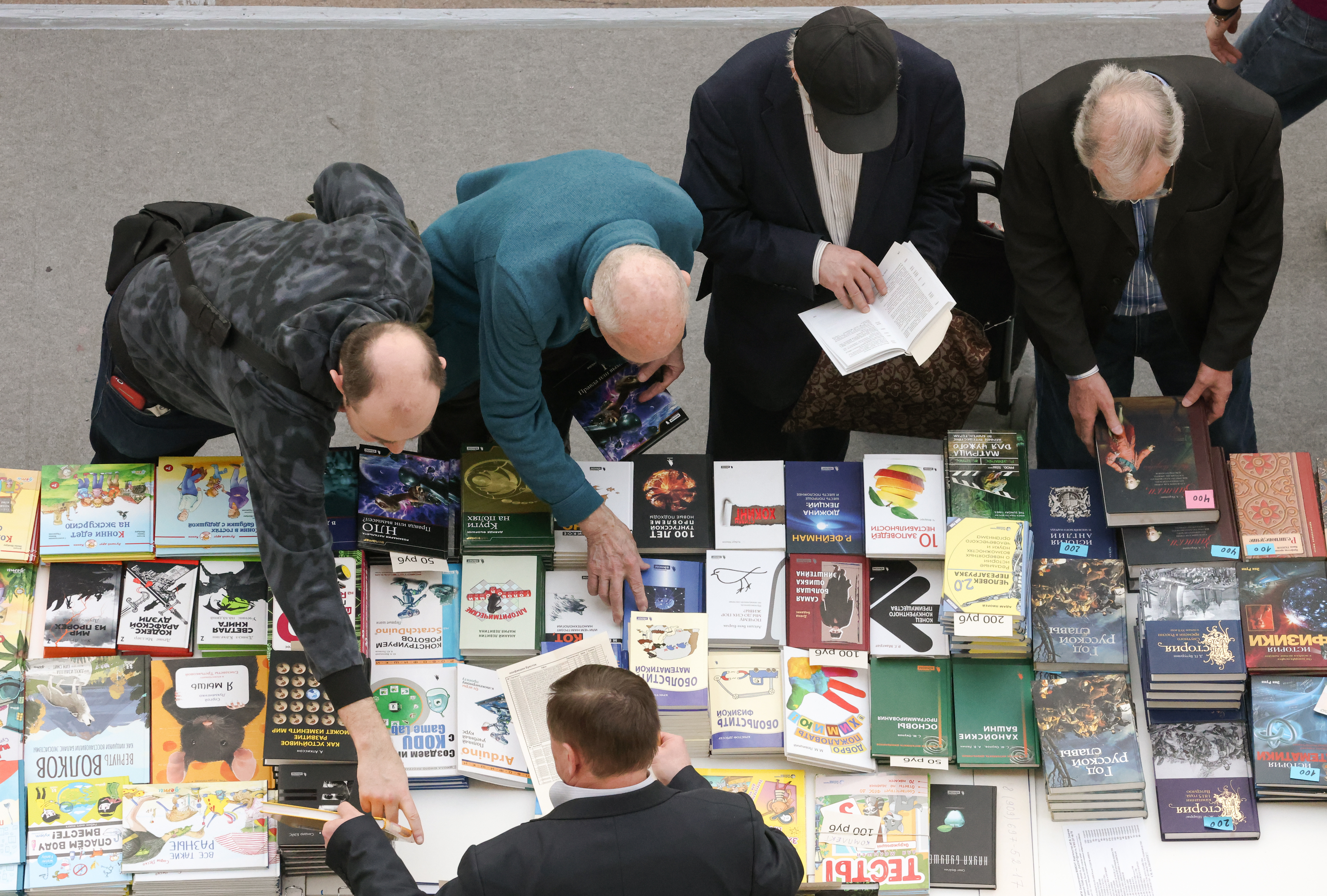
The Fair " Prague Book Tower ", which takes place for the second time, offers the products of independent publishers and invites to reflect on the future of the Russian language and the dialogue between emigration and the metro.
Freedom’s questions are answered by a fair of a fair, political scientist and publicist Alexander Morozov, who lives in Prague.
- Looking at the interest that is caused by a book fair, we can say that the cultural part of emigration is on the rise, and the political is weakening. Do you agree with this?
- If the political regime stands, and the surge of the protest movement is far behind, then the political part of the emigration is inevitable, and the cultural is intensifying. So this is the Belarusians now, so it was, for example, in Iranian emigration. So this is with us. Yes, in fact, it was in all previous waves of emigration from the USSR. And in the first wave of emigration-from 1918 to the end of 1920, political emigration was, for a clear reason, very rich and active, but as a result, the cultural and humanitarian was still more significant. And then we can already talk only about the cultural result of each next wave. From the first emigration now no one is alive. But the emigrants of all post -war waves intersect. And at the book fair it is very clearly visible. Here are the new books of Alexander Genis, Yuri Felshtinsky, Igor Pomerantsev, and they left the USSR in 1977-78, the books of Mikhail Shishkin and Vladimir Sorokin, who left in the early 90s, immediately after the collapse of the USSR, the books of those who left after 2014, for example, this is Boris Akunin, and there is already a large literary wave of 2022 after aggression.
- What is important in this wave after a full -scale invasion of the Russian army into Ukraine in February 2022, in your opinion?
- In the first year, everyone was shocked. And it was the "literature of the shock." In addition, they left without preparation, throwing a very established life. Many were just on take -off, in the middle of the journey, already having a great symbolic capital. Everyone fell into a situation of breaking old ties. Say, Anna Starobinets or Ksenia Buke. Or, for example, Ksenia Luchenko or Andrei Arkhangelsk. I can name about a hundred names, half of them in Russia were declared foreign agents, and many were already convicted in absentia, put on the wanted list. And if we take, for example, an environment that I know well - academic humanities, then I think about two hundred researchers left. It is enough to open the site of a free university to see 150 known names. Their departure led to the fact that in 2022-2024 such new centers appeared as Yulia Sineoku in Paris, Viktor Vakhstein in Israel and Montenegro, the list of personal educational programs is huge, Armen Zakharyan, Alexander Arkhangelsky.
It is impossible to list, it is a very large cultural landscape. And therefore, in the last year we are experiencing a sharp jump in book publishing and in distribution of books. In September, the VidimBooks festival in Amsterdam is added to the Prague and Berlin Book Fairs in September. The Zimin Foundation resumes the awards, the second year of the Dar Prize begins, the idea of the StraightForward Foundation , which gives grants for writing books, turned out to be very fruitful. All these institutions participate in the Prague Book Fair.
This military period of the war period makes pre -war publishing initiatives in Europe noticeable. And the authors who have long emigrated.
I heard that the organizers of the “Prague Book Tower” this year were invited to the Frankfurt Fair as representatives of Russian -speaking literature.
- The voices are constantly heard that the Russian -speaking environment is infected with imperial virus, "rashism", and broadcasts "Moscow culture." What do you feel about it?
If you are trying to impose responsibility to everyone else, except yourself, then this is pharisaism
- It is clear that to attribute to any people or the state unchanged properties - at least negative, even positive ones - this is savagery, archaic and all this after the Second World War for the humanitarian and political environment in Europe is unacceptable. I look very critically at all this "Ordynstism", "imperial" and the like, if it is charged with everyone and everyone, starting from the 16th century and further. But what's the problem. Putinism, since 2004, from the reaction to the first Maidan, began to slowly but very consistently move towards extremist dictatorship. This transformation has already been studied to the smallest details. And the result is that Putinism led Russia to disaster and complete failure of the entire post -Soviet period.
And now, when they are looking for the source of this disaster, they are already turning to the 90s, and to Gorbachev, and to the failure of the thaw, and to the fact that Emperor Nicholas and the like incorrectly renounced.
But the scale of the current disaster is such that all "Russian", that is, "Putin" - everything is saturated with toxicity. In one way or another. In the first year of this war, "collective responsibility" was discussed a lot. It is clear that "collective responsibility" can be imputed "outside", after the defeat of the aggressor. Or it can be experienced by a person at an individual level. But if you are trying to impose responsibility to everyone else, except yourself, then this is Pharisee, Tartuf, and at the level of today's social media, it is just a hat. And without any real consequences. Because Hayit flows rush constantly and it became a routine. Moreover, everyone remains where they were. Well, perhaps the FSB rejoices, seeing how the anti -Putins are riding each other in networks.
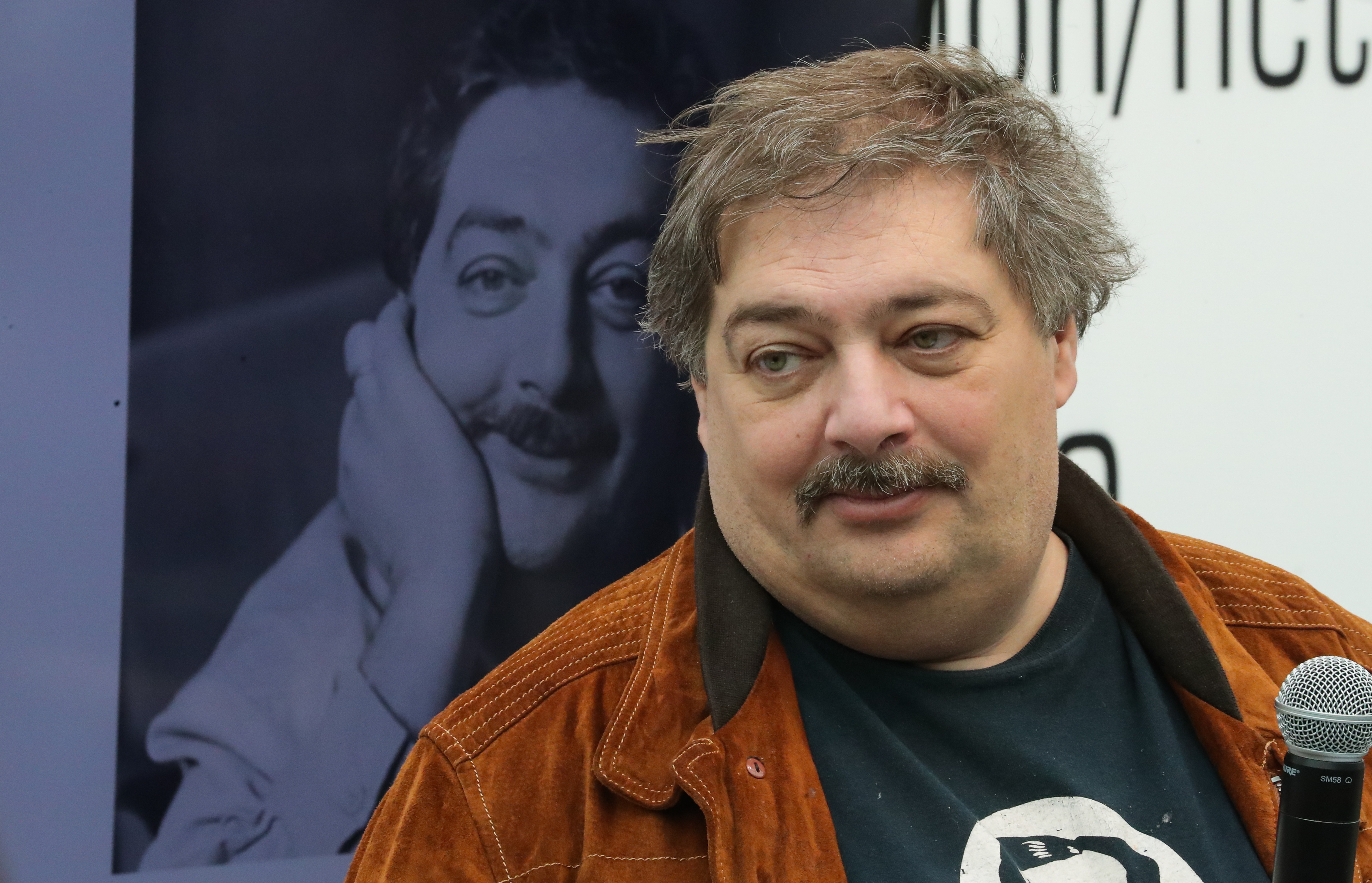
- After all, this was the case before in exile! And in the first wave there were conflicts, and in the wave where there were "syntax" and "continent" ...
The entire post -Soviet period is in question
- Therefore, I begin for myself from the following Maxim. First: I try to write about those people who, with their cultural effort, strive to overcome this toxicity. I feel in the same boat with such people. Because the entire post -Soviet period is in question. My own life is in question for all three decades. Second: I get out of the parable about the employee of the last hour. That is, it doesn’t matter who and when left. Anyone who has decided to leave now as valuable as the one who left in 2018, 1998 or 1978. In the same way, the one who went into the internal emigration, remaining in the country, is also valuable. Third: when we say that all this “empire” should once finally disappear, then we must understand that this can happen in only one case-if those who write and speak Russian will be able to process all historical and public experience in the same language, free the language from the totalitarian virus. And it is impossible to do this “outside”, this can only be done from the inside of the language itself. Therefore, I follow every cultural effort with great attention, in which all these Maxims are represented.
- Does the anti -Putin "Russian world" exist now?
-I always believed that in no case should you politically construct some alternative “Russian world”. Even if we say to ourselves that this is the "Russian world" of supporters of democracy, the separation of powers, free elections and human rights. No need to enter the numerous and diverse personal positions of people who continue to write in Russian, shoot films, put performances in Russian to the general ideological hat. Each realizes their own creative mission.
At the same time, any specific institutional ideas - funds, bonuses, creative residences, festivals, forums - this is very important. Just because such institutions without any special ideology, without declarations of unity, allow you to see a large Russian -speaking cultural landscape. This landscape is now at once on all borders: on the border of the transition to other languages, on the border with the remaining in Russia, on the border with Ukraine, on the border of crises, in which there are "countries of stay" and so on. All this is a very complex landscape. Risky, tempted by many circumstances. And this means that the keywords here are “care”, “care”, the presumption of good intention.
- How does an emigrant from Russia live in the Czech Republic?
- There is a myth that immigrants from Russia are poorly integrated. It is very well refuted by numerous publications of archival materials in the Czech magazine " Russian Word ". Usually pay attention to the first row of emigration, to large figures. But the "Russian word" has already shown hundreds of fate of ordinary people who settled in Czechoslovakia after the Civil War in Russia - engineers, doctors, military and others who completely joined the formation of industries in Czechoslovakia between the two world wars. These people, after ten years of life in Czechoslovakia, did not feel like emigrants.
- How significant was the Russian penetration in the Czech Republic through the structures of Rossotrudnichestvo and the advice of compatriots? In many countries, they were very noticeable.
Gazprom, Rosatom, Sber, Russian Railways - this is what Putinism entered Europe
- The Czech Republic was in conflict with the Russian Federation before the aggression of 2022. Due to the exposure of the undermining of the weapons warehouse in the Czech Republic by Russian operatives from military intelligence. But I would say this: all these "tips of compatriots" played a much less real role than Russian penetration through the activity of the state corporations. Because corporations had resources. Gazprom, Rosatom, Sber, Russian Railways and others - this is what Putinism entered Europe. The advice of compatriots could mobilize only local freaks. But Vladimir Yakunin, with the "Dialogue of Civilizations" 10-15 years ago, collected on the Rhodes forums former heads of government of European countries, including the Czech Republic.
Now all this is in the past. There was practically nothing left of Rossotrudnichestvo in the Czech Republic. And it is very important that the Russian Traditions Foundation and the editors of the Russian Word magazine in zero years refused to cooperate with the Kremlin within all these congresses of compatriots, did not buy the activity of Sergei Mikhalkov and the Russian Foreign Ministry. That is why we are very trust in what this fund does, and to the magazine. They represent the Russian diaspora in Czech official structures, and that is right.
- In your opinion, the Russian machine of information sabotage inherited the Soviet one?
- Partly. In the Soviet period, the influence was ideologized, it relied on the left -wing parties, on the Communists. Many were connected by resistance to fascism in the Second World War. In the post -Soviet period, until about 2005 there was economic cooperation, it continued even after Putin's Munich speech, which was poorly heard. Information sabotage in the full sense of the word, as system actions, began after the annexation of Crimea, when the Kremlin needed to justify this attack on Ukraine in different ways. And here the Russian propaganda machine has already returned to the practices that the USSR KGB used in the struggle against the West.
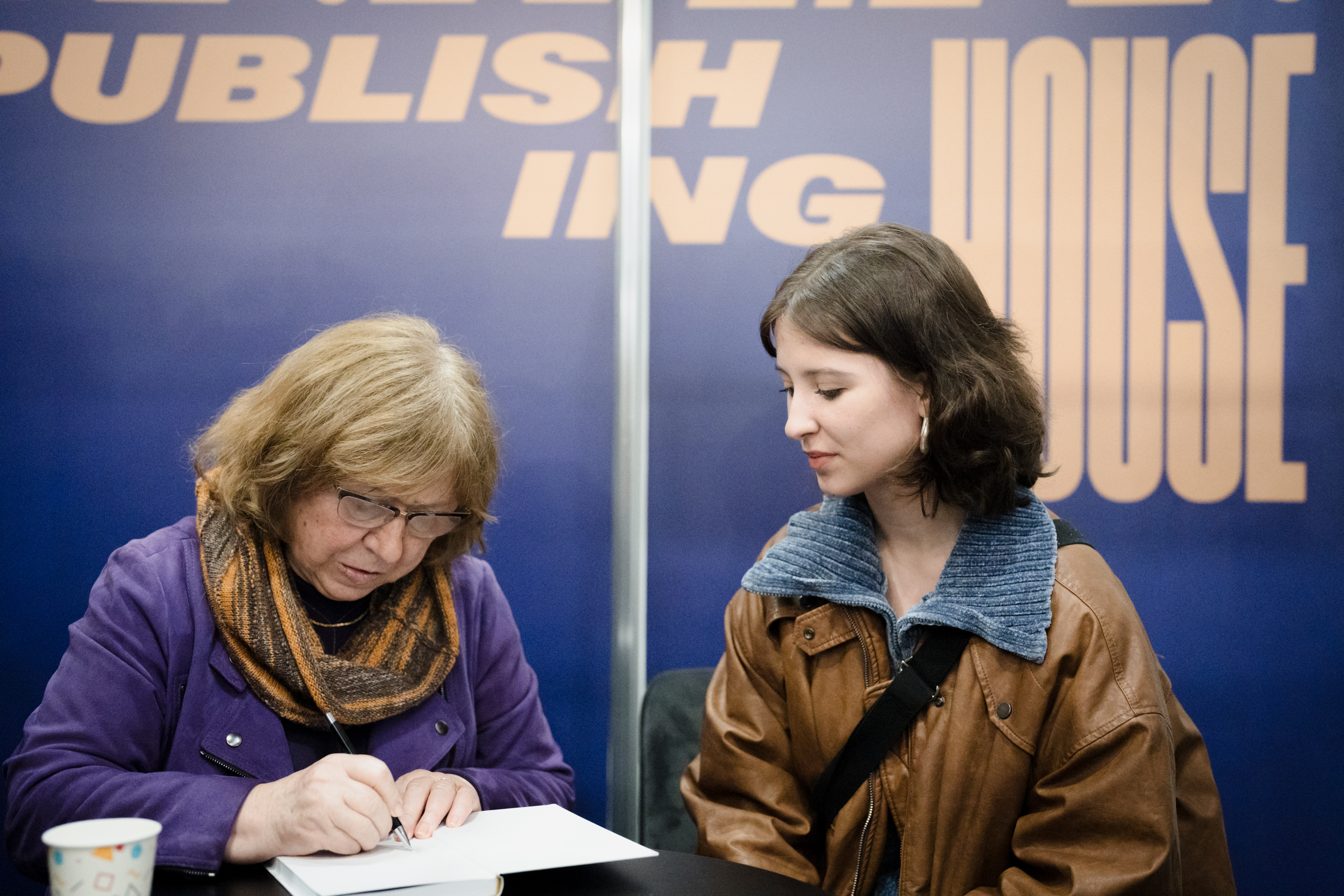
- After February 24, 2022, a new argument for emigration from Russia was a desire to leave the war. Did you leave for ethical reasons or for themselves?
-It was not easy for many of those who decided to leave Russia after February 22. Many of them abandoned at home, hastily fled to Armenia, Georgia, Serbia and so on. Okay, if one, and when with children? Such sharp solutions plunge a person into high uncertainty and risks. I do not think that you can clearly draw a border between ethical solution and self -preservation. After all, many left to save children from an ideological dictatorship in the future, from the prospect of living in a closed country with "Heroes of Swear". This is ethics and self -preservation. Someone left, believing that he still could not work further in this atmosphere. The motivation is different, and the tests fall out about the same: legalization, searching for your place in abroad, preserving ties with relatives, adaptation of children, especially if they are in adolescence.
- Russia brutally torments Ukraine for the fourth year. What happened to Russian -speaking emigrants that left before and after? Has the political movement formed?
- The political movement in such conditions is impossible. Several clusters develop. Human rights activists. And this is important, because human rights activists work together with European and Ukrainian colleagues, in the search for both civilians who were in prison in Russia and displaced children. Another cluster is independent media, there are its own tasks. And we see that many materials that are exclusively prepare Russian -speaking editions use the media of many countries. The third cluster is educational. Fourth: thematic civilian NPOs (feminist, environmental, help to relocates and others). And the fifth cluster is cultural. Of course, these clusters intersect in specific projects. But still they have different tasks.
As for what we call "political" groups, in reality it is today either "media holdings" or thematic NPOs. In my opinion, the struggle with Putinism completely shifted into the sphere of culture, language, and media. Actually, it cannot be otherwise in war. That is why Thomas Mann is so often quoted or turn to the literature of "evidence", including German. We are in a situation of "evidence". And not in a situation of political resistance.
In my opinion, in the political sphere, it now matters only what is connected with the war: the prospect of the international tribunal for aggression, clarification of personal sanctions lists, collecting certificates of crimes of the Russian army and civil leaders of various levels in the occupied territories. And if Putin turns out from under all this, then there will be no “society” that can process the consequences of the post-Soviet disaster.
- Emigration in Russian and people who live in Russia, from the point of view of free thought and culture, diverge like ships in the sea?
- Free thought functions personally, that is, it is some implementation of the mission of a particular person. After all, Kushnir remained and died in Russia, people whose diaries, and possibly novels, will be in Russia, will now be in the future in the future, the most important evidence.
- How will the cultural dialogue of those who are here and there remain?
- In the Soviet Union "there" - we were ourselves. For me personally, it was very important that somewhere there is another, free culture and life. One could briefly see the Syntax magazine once, but I knew that in Paris there is Andrey Sinyavsky, Maria Rozanova and a printing house. In Frankfurt-on-Main-"Faces". In Michigan - "Ardis". I knew that in exile - Alexander Galich, Iosif Brodsky, Viktor Nekrasov, Sergey Dovlatov, Vasily Aksenov, the list is long. Another style and system of the Russian language came from emigration. I listened to the waves of Radio Liberty Russian speech by Archpriest Alexander Schmeman, not crippled by the Soviet New Year. It was a free Russian language addressed to all of us. It was important. It will probably be so now.