
Translated material
Elephants with brick
In the Pavilion 11.12 Gallery, an exhibition of Vasily Blondov “Who are we to each other?”

The exhibit from the exhibition of Vasily Ilekonov in the territory of the "Vinzavod". Photo: social networks
In the Pavilion of 11.12 Gallery, a new exhibition of Vasily Blondov “Who are we we are to each other?”, At which the artist introduced the collection of several dozens of small sculptures made of one element - brick, opened on the territory of the Winzavod.
Over the past couple of years, elephants have become one of the main newsmakers in the world of modern Russian art-unfortunately, for the most joyful occasion: last fall the Krasnoyarsk artist was sentenced to a year of correctional labor for one of his works-“Nevalyashki-Katorzhnik” with prison tattoos. Ilekunov was accused of “repeated public demonstration of the symbolism of an extremist organization”, namely, the movement of AUE, recognized as extremist and prohibited in the Russian Federation. According to the artist,
During the investigation, it was found that a tattoo in the form of an eight-pointed star “directed against the basics of the constitutional system and integrity of the borders of the state”, so that the demonstration of a non-waist-rival at exhibitions and on the Internet could not be otherwise extremism.
The plot in the best traditions of Vladimir Sorokin, no matter how difficult it was to believe in it, turned around in real reality. The artist, it should be noted that he tried to give the battle system (albeit, unfortunately, doomed to defeat) and at each process put forward a considerable number of arguments in his protection. However, as one might guess, neither rational arguments nor expert conclusions did not affect the investigation too much, and the Krasnoyarsk court was able to bear only one sentence - the conviction.
Having become a victim of one of the most absurd trials of recent years, Vasily Elephants, on the one hand, tirelessly tries to appeal the sentence (following several appeals in the courts of Krasnoyarsk and Kemerov in line - the Supreme Court), on the other hand, continues to actively engage in creativity. The exhibition at 11.12 Gallery is a certificate that neither 7.5 months of home arrest, nor a year of “correctional labor” (which consisted in holding 15% of the artist’s salary in favor of the state) prevented elephant in his creative plans, and he all with the same mild irony dissects the phenomena of modern reality and mass culture with the help of different improvised means - this time, instead Bricks.
The serial method associated with specific objects is generally characteristic of elephant. In his catalog there are objects of art created from cotton wool, fly agaric, fire extinguishers, kokoshniks, cheburashki and many other objects, but, importantly, the artist uses them not in the spirit of the radi-maid of Marseille Dyushan or Maurizio Kattelan, but transforms each object in his own way, creating new meanings.
The theme of bricks is also not new for the artist: in his words, he has been addressing her for more than twenty years, and some of his friends even define this interest as “brick sexual orientation”. In the bricks, Ilekonov is attracted by the simplicity and versatility of this subject: "The brick is simple, he has his own geometry, and all world architecture is created from the brick." The brick building of the “Vincavod”, in which the exhibition takes place, as if echoes these words.
In addition, elephants are especially noted by antiquity of brick: indeed, historians attribute the first use of cheese brick to the eighth millennium BC, that is, long before the appearance of such a key object for human civilization as a wheel.
The artist considers the brick to be the same “basic element of human culture and all civilizations”, which makes it much more universal than many others emphasized the “Russian” objects of the artist’s creative interest, like kokoshniks, balalaikas and nonsense.
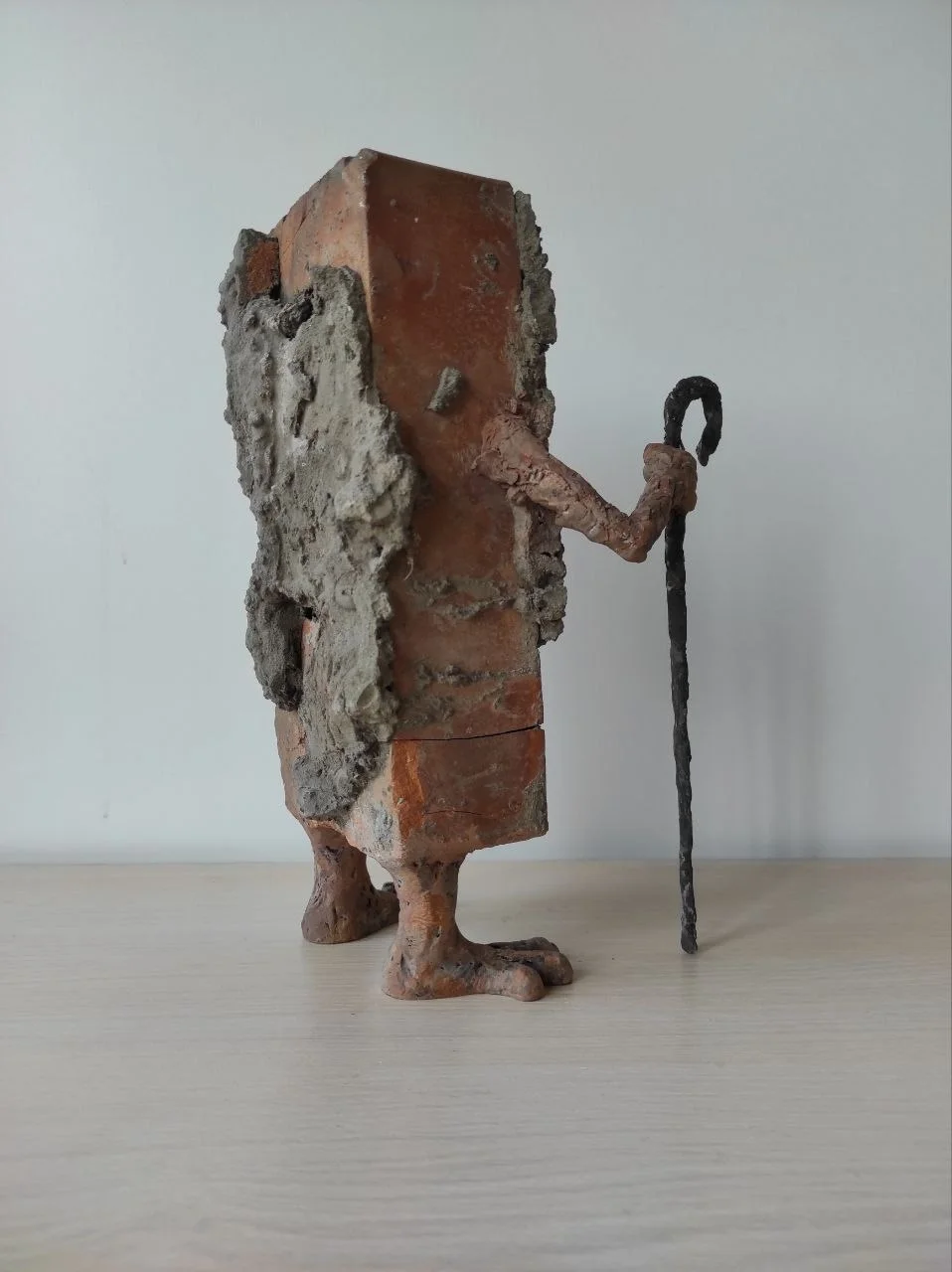
Exhibition "Who are we we?" It opens with a biblical quote from the book of the prophet Isaiah: “But now, Lord, you are our father; We are clay, and you are our educator, and we are all your hand. ” Thus, elephants emphasize not only universality, but also the sacredness of the image of brick for modern culture. Adam, created from clay, becomes a kind of primary for each work of the artist at the exhibition. A small exposition is conditionally divided by the artist into three parts (series) - “dust and emptiness”, “life of wonderful bricks” and industrial design objects created from brick.
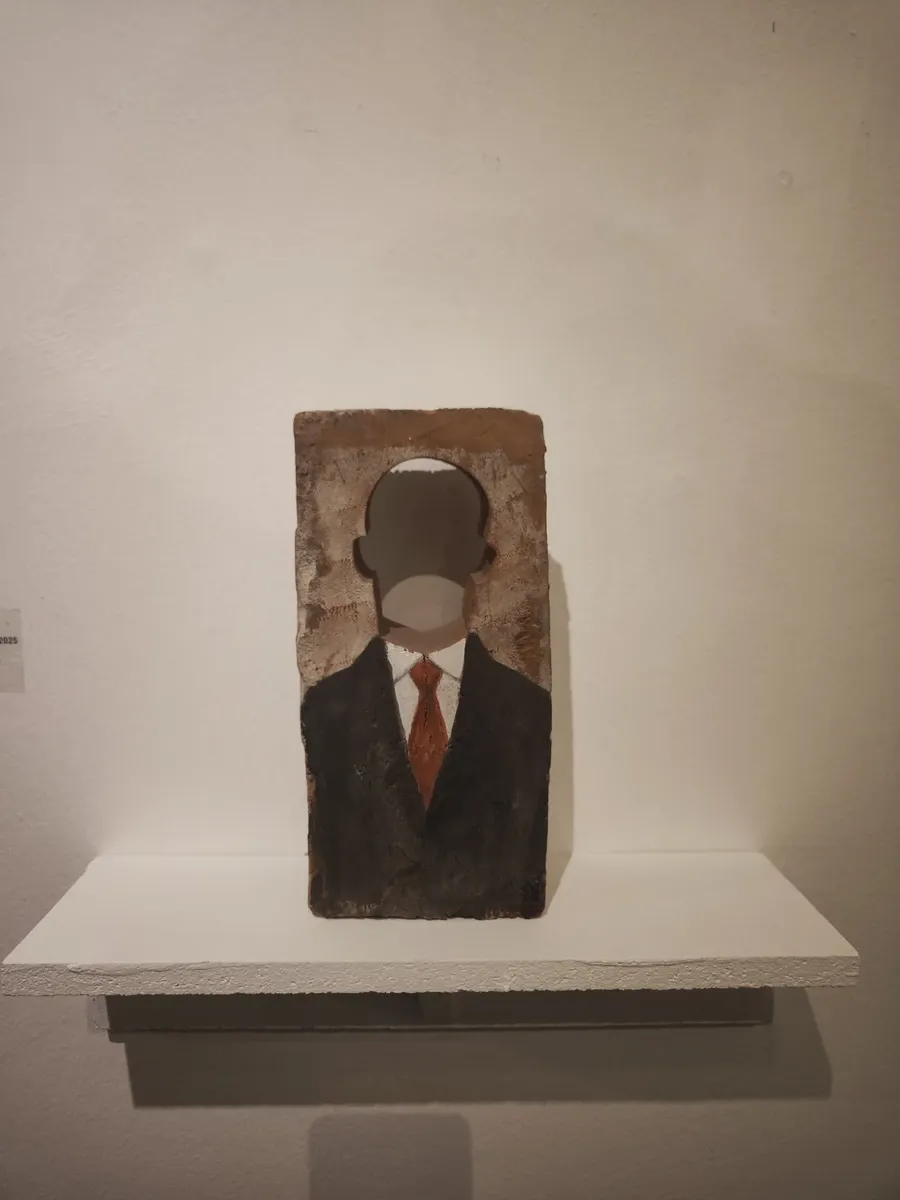
The most interesting and large section of the exposition is the first, because in it the artist is very curious with such an artistic tool as emptiness. A variety of historical events, literary plots, or simply well -known images of a popular culture here are shown using bricks and an empty space carved by an artist in them. So, through the emptiness of the elephants, Gogol’s profile, the “invisible man” Wells, the pipe from the painting of Magritte or even the stolen clarinet Karl and Clara.
One of the most witty images is the brick “Chapaev and Emptiness”, where the void from the name is illustrated literally. Elephants shows how to create a truly bright and memorable image with absolutely minimalistic means. If Michelangelo, according to the known phrase, took a block of stone and cut off all the superfluous, Vasily Elephants fluids a similar operation with bricks - and indeed, due to the truncation and decrease of space, turns the brick into a work of art.
Using “dust and emptiness”, the artist also rethinks the catastrophic events of history like the death of “Titanic” and the explosion of “twin towers” or the biblical images for world painting-Judas, Calvary, the return of the prodigal son. Each of the sculptures-bricks can cause a completely different reaction in the audience-from an ironic smile to a sincere shock.
The second section of the exposition is a series of so -called “genetically modified bricks”, in which the artist no longer “cuts off excess”, but rather transforms pieces of matter into human images. Elephants demonstrate a variety of human relations, attaching arms and legs to the bricks. So, bricks in the exposition work, hug, make love and even climb onto the wall. In this section, the art of elephant is approaching manual multiplier, in which people are created from plasticine or dolls. These brick figures can really encourage the viewer’s imagination to come up with a variety of plots.
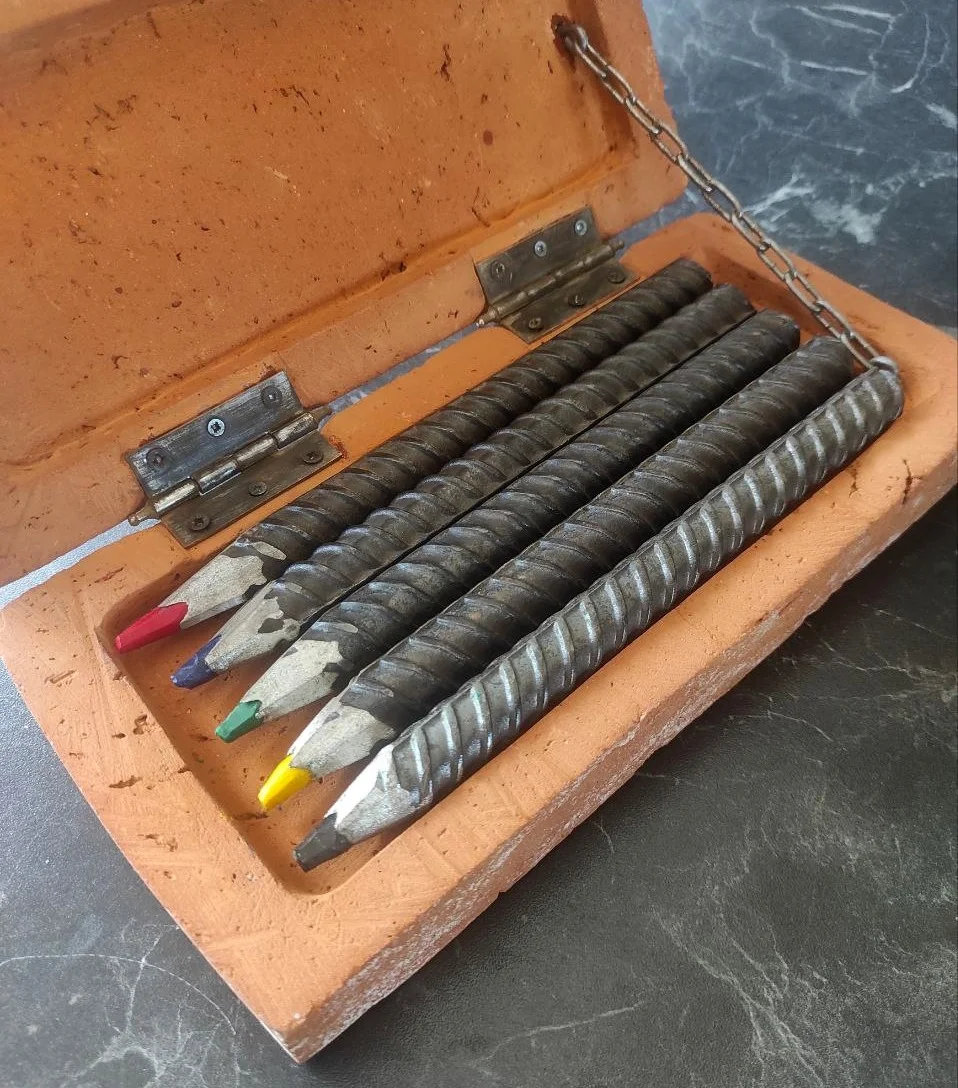
Finally, the third section presents objects made with the help of bricks that can be used in everyday life: lighters, lipstick, music columns and so on.
At the opening of the exhibition, the artist even applied one of the objects - “brick corkscrew” - by its intended purpose, opening a bottle of wine and showing the most diversity of his method: Bricks elephants are able to perform not only a sacred, but also a completely household function.
It is curious that instead of a curatorial excursion or auto -combination from the artist himself, the description of the exhibition was the opinion about the work of elephant, composed by artificial intelligence. AI shared his personal (of course, “respectful and interested”) attitude to the work of the artist and identified several basic topics of his work: playing with ordinary, irony and humor, social criticism, minimalism, philosophical connotation and provocativeness.
All this at the exhibition can be seen with your own eyes - but there is almost almost no typical social criticism and provocation here. Perhaps this is due to the criminal case, but perhaps the case in the bricks themselves: after all, in contrast to the sole -glorified universal women, skulls in the paintings from the exhibition “Heavenly Jerusalem”, torn by SERB activists in 2018, or posters from the Welcome series! Sochi 2014, which at one time caused a serious scandal, which led to the dismissal of Marat Gelman* from the Perm Museum of Modern Art, bricks as objects are almost devoid of any political and relevant charge and turn to eternal general cultural values. The name of the exhibition "Who are we we?" And some individual works like “one heart for two” with a carved heart and arms striving for each other remind you that the work of elephants can work with reality not only through mockery or irony.
As Vasily Elephants himself said not without humor at the opening of the exhibition, addressing his criminal case, “I am now corrected artist,” and one cannot but rejoice that this extremely unpleasant process of recent years did not break him at all (even if, of course, he forced his own experience to be disappointed in the Russian forensic system). However, we can say that the new “brick series” of the artist reproduces much more “traditional” and ancient values than those who want to see ideologists in all contemporary art. The values that the elephants broadcasts dates back to those times when a person was created by the Almighty of clay and lived in the world with everything around him. I would like to believe that these values will someday again become “traditional” for all of us.