
Translated material
Children's manuals and Islam. Why in the North Caucasus they are so often divorced
For several years in a row, the regions of the North Caucasus have remained leaders in the prevalence of divorces. Residents of Dagestan, Chechnya and Ingushetia are twice as often to visit the registry office to dissolve the marriage than to get married. This was influenced by the criteria for the appointment of children's benefits and local traditions, experts say.
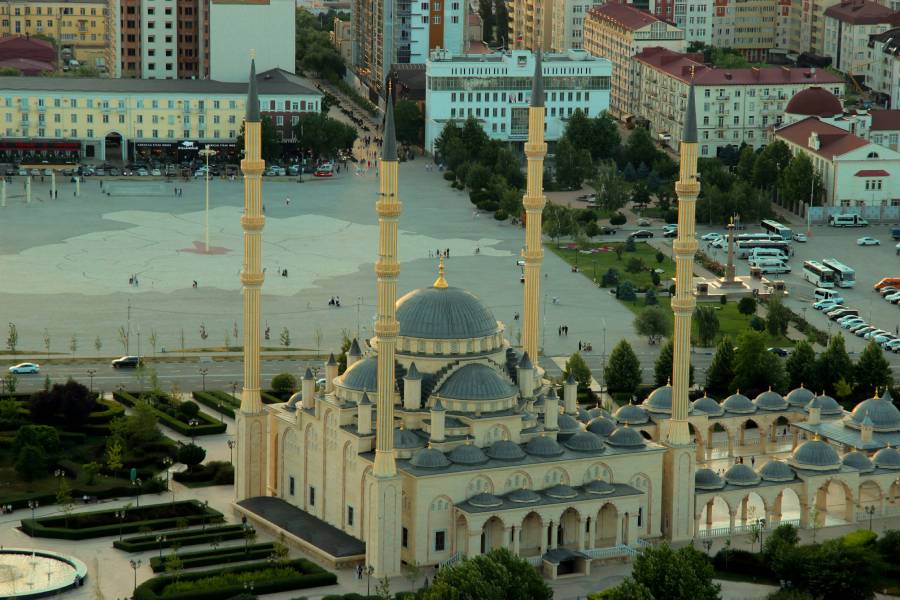 Photo: ignat kushanrev / unsplash.com
In 2025, in the North Caucasus Federal District, 34% more divorces were registered than marriages, calculated “such affairs” based on Rosstat data . The highest indicators in Chechnya - three times more people divorced there than they got married in Dagestan (2.2 times) and in Ingushetia (1.9 times).
Demographer Alexei Raksha explains the situation with divorces by the socio-economic position of the regions of the Caucasus. “The first factor is the birth rate, the second is poverty. And, as a rule, in Russian conditions they coincide: above the birth rate where people are poor, ”the expert says“ to such matters ”.
The increase in the number of divorces in the Caucasus began in 2022. By 2023, according to Rosstat, for every 100 thousand inhabitants of Dagestan, Chechnya and Ingushetia, more than six divorces per year were recorded.
At the same time, the number of divorced marriages began to sharply exceed the number of prisoners: if in 2021 in Dagestan there were 38% more weddings, then by 2023 there are three times more divorces. On average, the inhabitants of the North Caucasus in 2023 were divorced 30% more often than they married, although until 2022 the indicators were mirror.
According to the demographer Igor Efremov, a sharp change in the marriage behavior of the inhabitants of the Caucasus is associated with the reforms of state support measures for families with children. In 2022, a manual appeared for parents of children from 8 to 17 years old. To obtain it, the family’s income should not exceed the minimum wage and the design of the divorce sharply reduced this indicator in the eyes of the state bodies, Efremov explains.
In 2023, the authorities introduced a single allowance for families with children with similar criteria, and the growth of the number of divorces in the Caucasus continued.
The regions of the North Caucasus and Tuva are leaders on the dependence of people on social benefits and benefits, wrote the project “to be precise”. In rural areas of these republics, they make up more than half of the income of families.
But, according to the demographer Efremov, mass divorces for the sake of benefits are characteristic almost exclusively for the regions of the Caucasus. Throughout the country, based on the data of Rosstat, only the inhabitants of Kalmykia reacted to the introduction of benefits - there in 2023 they began to marry 20% less than to get divorced.
"I think that two factors are important here: poverty and social well -being"“For example: there is a poor Tuva, but no one is getting divorced there, because there is still a factor of dysfunction - there people are cohabiting, start children, but do not marry. Therefore, they are not divorced, ”says Efremov.
The demographer Raksha believes that the North Caucasus republics also have cultural features that affect a slight attitude to divorces. “Roughly speaking, a religious marriage is much more important there than an officially registered state. And it is simply more profitable for them to divorce, and the values of the marriage taken into account by the registry office are not there, ”he said.
The gender researcher Said Syrazhudinova tells “such matters” that a significant part of the newlywed-Muslims in the North Caucasus first concludes a religious marriage. “Nicknames in the republics with a predominantly Muslim population is considered basic, basic. And many people reach the registry office when for many years they live together, children appear. Or if this is needed for some bureaucratic points, ”says the expert.
According to Syrazhudinova, the inhabitants of Dagestan, Ingushetia and Chechnya are very focused on obtaining social benefits: "When there is an opportunity to get a benefit, become a single mother or something else, people are easily divorced."
Another reason for the prevalence of fictitious divorces Syrazhudinov calls close family, neighboring and communal ties. “They transmit information about benefits to each other. They do not just know how to get them according to the instructions, but consult with those who have already done it, ”the researcher says.
 Photo: Beyza Yilmaz / Unsplash.com
By 2024–2025, the number of divorces in the North Caucasus began to decline. Their level, according to Rosstat, in the most active Dagestan and Ingushetia fell one and a half to two times compared to peaks 2022–2023 years. Raksha says that this is also due to the sharp increase in divorce duties in early 2025. The fee has grown from 650 to 5000 rubles.
“In addition, the decline is due to the fact that many who wanted to get divorced have already divorced. And since 2024, the legislation has changed in terms of benefits, and such a fictitious divorce simply became less profitable financially, ”the expert adds.
In mid -2024, the authorities changed the rules for calculating a single manual for families with children. Now, when calculating the family income, alimony is taken into account. Even if they are not officially appointed, the authorities will still assume that the children receive from the second parent a quarter to half the minimum wage, they explain in the social fund. Accordingly, it has become less profitable to divorce for benefits.
In addition, since the beginning of 2025, a single benefit for children is paid only to those parents who earn at least four minimum wages per year or have good reasons not to work. For example, caring for young children, army service or forced unemployment.
It is difficult to say how this affects the situations with divorces in the North Caucasus. In the summer of 2025, Rosstat ceased to publish most of the demographic indicators. In particular, when trying to see freshdata on the number of divorces, the department’s website reports that access to the indicator is suspended.
Raksha explained that the statistics were closed to avoid promoting data on military losses and in order not to focus on very low birth rate, which are in a single module with marriages and divorces of the “natural movement of the population”.