
Translated material
The worst river disaster of Russia
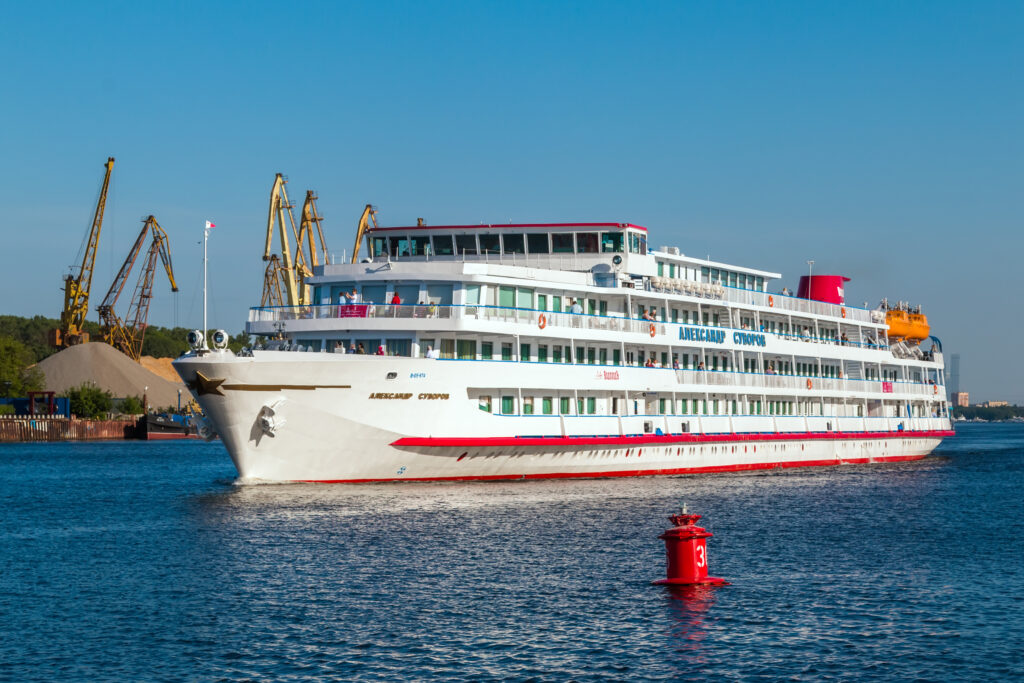
On June 5, 1983, the new cruise ship "Alexander Suvorov", which was performed by a flight from Rostov-on-Don to Moscow, crashed into the flight of the railway bridge near Ulyanovsk. The upper deck was cut off. According to official figures, 176 people were killed - more than a third of passengers. The collapse of Suvorov has become the largest river disaster in the history of the USSR and modern Russia. How a human mistake led to a terrible tragedy - in the section of the " cold " "disaster".
We put a person in the center of our journalism and talk about people who are faced with injustice, but do not lose their spirit and continue to fight for their rights and freedoms. In order to further cover human stories, we need readers' support - thanks to your donations, we continue to work, despite the pressure of the state.On June 1, 1983, the motor ship "Alexander Suvorov" went on a tourist flight from Rostov-on-Don to Moscow. On board there were more than 400 people. Many of the passengers were employees of the coal industry, who paid for expensive tickets for Kruiz by the trade union.
On June 5, the ship was approaching Ulyanovsk. It was already dark, and many went to the upper deck to look at the lights of the city. That evening, Vladimir (surname is unknown) from Rostov-on-Don was in the cabin with his wife.
- Let's go upstairs? Soon the city, but we will not see it - we are sitting here, like fringing cockroaches, ”Vladimir recalled his wife Vladimir in a conversation with Komsomolskaya Pravda.
“I don’t want something,” he dismissed.
Vladimir's wife came out of the cabin and one went to the upper deck. It was crowded there: passengers also came to watch the Soviet detective “Return of“ St. Luke ””, which was shown in the cinema above. A few minutes after his wife left, Vladimir who remained in the cabin felt a strange “viscous” blow. The ship, which before that walked calmly along the river, sharply braked. As Vladimir told Komsomolskaya Pravda, he immediately rushed upstairs.
 The most massive suicide in the United States these people renounced their families, and some have passed castration so that aliens of 24 minutes of reading flew behind them for them.
The one saw struck him: blood was poured down the ramp with a continuous stream. From the railway bridge, under which the ship stopped, logs and grain poured. Vladimir rose higher and saw a mountain of bloodied bodies. Some people were still alive, they moved and moaned. Near the ladder lay a girl without legs, who, as Vladimir recalled, looked at him with crazy eyes. She told him: "Tell mom that I am alive." After a few seconds, the girl died.
Near the entrance to the cinema, Vladimir discovered his wife’s body with a broken head.
Sixth section
The ship "Alexander Suvorov" was built in 1981 at the Czechoslovak plant in the city of Komarno. Due to the fact that according to the project, such motor ships were too high for the Danube bridges, the upper deck of Alexander Suvorov was mounted after the ship launch on the water. This was done at the mouth of the Danube at a shipyard in the Ukrainian Izmail.
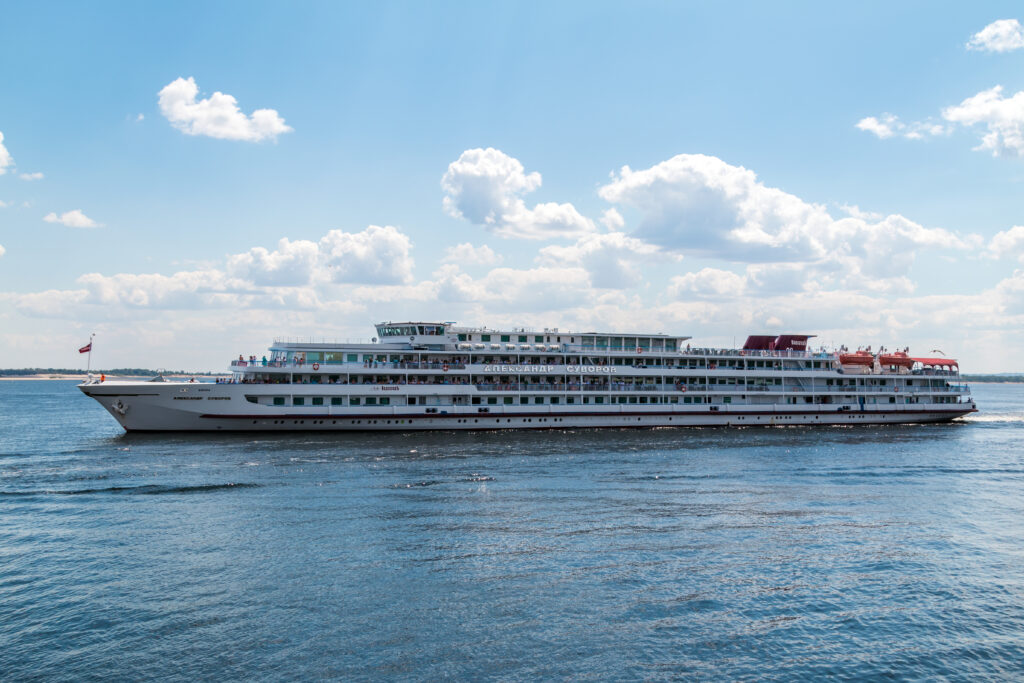
Soon after the construction, the ship entered the Volga-Don River Shipping Company and performed tourist cruises. One of the most popular areas of Suvorov was the route from Rostov-on-Don to Moscow. At first he walked along the Don, then through the canal he turned onto the Volga. Along the way, he passed by Volgograd, Kazan, Ulyanovsk and Nizhny Novgorod with stops in several cities, walks and excursions.
A bar, two restaurants and a library worked on the ship "Suvorov". On the upper decks there was a cinema and dance floor. Water cruises in the USSR were considered an elite type of relaxation. Trips for cruises in the Don and Volga to Moscow cost twice as much as the average salary of Soviet people (it amounted to about 180 rubles in 1983, or 50-60 thousand rubles in modern terms). Most often, employees of large enterprises could afford such a vacation, where the trade union committee paid the entire or most of the amount.
On June 1, 1983, there were 438 people on board the ship - 345 passengers and 93 crew members. Later, investigators found that they were also launched on board the stow passengers - some for a bribe, others - by acquaintance.
The captain of the ship was 52-year-old Vladimir Kleimenov-he had long drove ships along the Don and Volga. His senior assistant -32-year-old Evgeny Mitnkov-has been working as a navigator for water transport for seven years. Rulev was 20-year-old Andrei Uvarov with a little experience: the cruise on Suvorov was only his third flight.
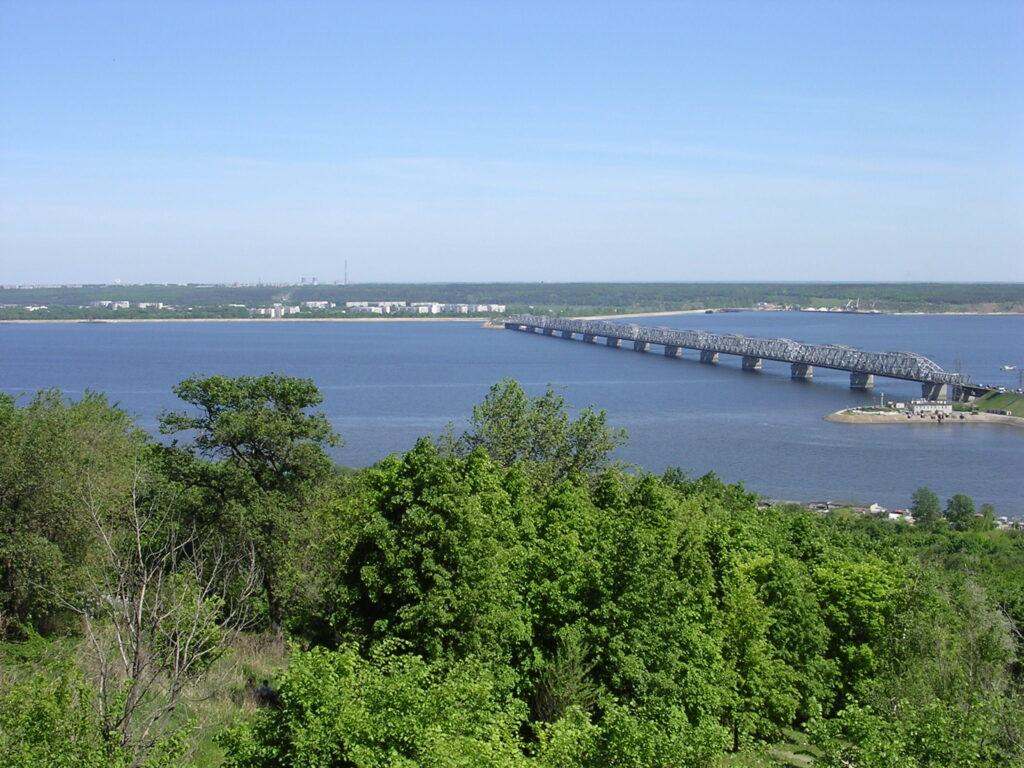
On the evening of June 5, 1983, the ship approached the Ulyanovsk bridge (since 2009 it is again called imperial, as in construction). The ship was supposed to go to the third flight. Its height is 13.8 meters, the smallest among navigable flights of bridges on the Volga, but sufficient for the passage of river ship.
However, the steering wheel Andrei Uvarov directed the liner not to the third, but to the sixth flight - it is much lower and unsuitable for ships of this type. The four -deck ship "Alexander Suvorov", one of the largest in the river fleet of the USSR, could not have passed under it. Moreover, in front of the bridge the ship was supposed to slow down, but for an incomprehensible reason, the steering wheel led it at maximum speed.
 Before her death, she left three letters in them, a 16-year-old girl told how her mother threw her, and then she was taken abroad and involved in sex storage. This story shocked the whole country crime 14 minutes of reading
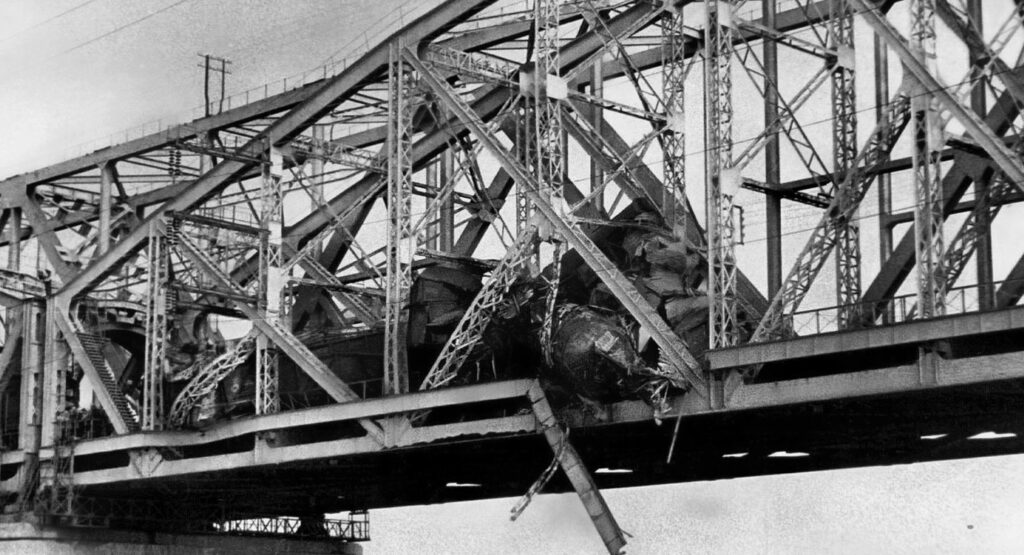
At 22:40 in Moscow, when the ship approached the impassable section, a commodity train drove into the bridge. After a few seconds, the ship at a speed of 26 kilometers per hour crashed into a flight. Continuing the movement, the ship dragged the one and a half -ton section of the bridge and the railway track - the rails shifted 40 centimeters. The Suvorov stalled the engines, but by inertia he went after the flight of another 300 meters.
The train remained on the bridge thanks to high fences, but 11 out of 53 wagons fell to one side, and logs, coal, crushed stone and grain fell on the ship. The tank with fuel also went off the rail, but stuck in the railing of the bridge. Gasoline flowed out of it - a fire did not happen only a miracle.
The upper deck "Alexander Suvorov" cut off: cabin, cinema and dance floor were destroyed. At that moment there were about 200 people there.
“At first something twitched, and that’s it. [It happened] a short circuit: everything sparkled, and then the light -abroad, ” recalled Valery Beskrovny, the surviving passenger of the ship. After the tragedy, he underwent 64 operations and lost both legs.
"Terrible meat grinder"
According to official figures, out of 438 people, 176 died in the disaster. The former investigator of the KGB Ulyanovsk Directorate Georgy Demidov recalled that there was a “terrible meat grinder” at the upper deck: from the blow of people it was “grinded” to pieces, to many of the legs, arms and heads.
“Those who went to watch the movie cut off their heads. People were simply grinded about this bridge. It was not to make out whose head, but whose legs. The bodies were collected literally in pieces. Others fell into the Volga, and the water is cold. Coal, logs fell from the bridge, everything stopped. Horror!" - told the “tape” Sergey Ermakov, at that time the deputy head of the Lokomotive economy service of the Kuibyshev Railway, and later the mayor of Ulyanovsk.
 The catastrophe on the Tien Shan Natalya Nagovitsin did not abandon her husband when he was dying at an altitude of almost 7000 meters. Four years later, she repeated his fate of the society 16 minutes of reading
Many bodies were carried away by the current. The police and rescuers caught corpses 200 kilometers downstream near Kuibyshev (the name Samara in 1935-1991). Eyewitnesses talked about cases of looting: from the bodies nailed to the shore, removed jeans, shoes and valuable things.
Stanislav Dombrov, who worked in 1983 as deputy head of the departmental guard of the Kuibyshev Railway, recalled in an interview with the Russia channel, as passengers drowned: “I saw what was happening there. There were many people in the water. Although if they knew that they could get up around the supports, many could have been saved. ”
According to the recollections of the ship’s conductors, sailors and service personnel carried out the wounded who asked them to help.
People were in shock and did not understand that they no longer had arms or legs. Many were dying in the arms of the guides, without waiting for help“Carled children, pregnant women with torn stomachs. Close were looking for their loved ones. No screams are quiet moans. Even the children did not cry. The corpse of one girl torn in half hung upside down for a long time. It started to rain, and blood flowed through the hair. It was scary, ”the conductor wrote to the captain after the court sentence.
The captain of the police of the River Port of Ulyanovsk Vyacheslav Gushchin was one of the first witnesses of the disaster. He recalled that many years after the tragedy saw nightmares.
“I still see one girl in reality. Red -haired, very pretty. Both feet were cut off, - Gushchin told Ulyanovsk Pravda. - But she was in shock, and when we lifted her aboard the boat, burst out and ran along the deck. Right on these bloodied stumps. I probably was in shock too. Because he looked at her, and one idiotic thought was spinning in her head: she now scratches the deck. However, the deck almost immediately became red with blood. "
Miraculously surviving
Dozens of passengers miraculously lucky to survive. Someone went down in front of the disaster itself, someone was just about to go upstairs, and someone was just below, in the cabin.
 “There are two of us ... There is no more strength ...” Elvira Shataeva was in love with the mountains and climber. She died in the mountains, and her husband buried her at the foot of her vertex, society 23 minutes of reading
A passenger named Akop, shortly before the disaster, went with his wife to the cinema. But there were a lot of people, and the hall was stuffy. Then the couple went down to the cabin - and felt a blow. Trying to understand what happened, Akop went upstairs and saw blood streams pouring from the upper deck. Around lay torn limbs and heads.
He told Komsomolskaya Pravda that he threw off his jacket and waved it, trying to attract the attention of people on the shore and passing by ships. According to his memoirs, help came only after 40 minutes. Rescuers lowered the boat and loaded the wounded there, which were closest to them.
Former instructor of the Ulyanovsk regional committee of the CPSU, Lidia Khlopina, recalled that a woman who lost her 10-year-old son came to the identification procedure for several days in a row. In the lists of the dead and injured he was not. A few days later it turned out that after the crash, the boy was frightened and hid in the cabin, where he was found alive.
Another teenager, according to Khlopina, the grandmother at the last moment sent from the upper deck for a warm sweater to the cabin: in the evening on the Volga it was cool. Whether my grandmother survived, Khlopina did not specifyTwo engineers from the Donetsk region went on a cruise with their families. The men decided to go down, and their wives remained on the upper deck and died at the time of the collision with the flight of the bridge.
“Two male friends interrogated vigilant people: how did this happen that their wives died, and they were alive? They said: the wives were called the movie, but they refused because they were a bottle, and remained in the cabin. This bottle saved their lives, ”the article“ Komsomolskaya Pravda ”, which came out in 1991, said . This was one of the first detailed publications about the disaster.
Others were less fortunate. Khlopina recalled that one family did not have time on a cruise, but then she still got aboard the ship. The obstetrician-gynecologist from Armenia bought two vouchers-for his wife and 10-year-old daughter. They were late for the ship in Rostov-on-Don. Then the doctor came for them by car, caught up with Suvorov in another city and put his wife and daughter on him. A few days later he was called to Ulyanovsk to identify bodies: at the time of the collision, his family was on the upper deck.
In the coming hours, after the catastrophe of the Hospital of Ulyanovsk, they took the victims. In the Central City Hospital, the wounded were put on mattresses right in the lobby and distributed into the departments. Ulyanovsk doctors were shocked by the number of victims, who were brought almost simultaneously.
 The dolls on the shelves were dead children, the famous local historian dug up children's bodies from the graves for years and collected the “collection” crime 16 minutes of reading
Passenger injuries were very serious: many were torn off the limbs, the spine, ribs and femoral bones were broken. The ex-teacher of the trauma department of the Ulyanovsk hospital, Alexei Chulkov, recalled that the surgeons had to carry out a lot of heavy operations, rinse and treat ragged wounds. Everything was also complicated by the fact that the wounds were dirty and filled with grain and coal crumbs.
The passengers of the ship that were on the lower decks were almost not injured. Many interrupted the trip and returned home, but some decided to continue the cruise on another boat.
“Suvorov” immediately after the disaster was towed into Zaton near the place of the tragedy. The crew was not allowed ashore: investigators conducted interrogations.
Secret business
At the time of the blow in the steering wheel, there were Mitenkov and Uvarov. Both of them died. But Captain Kleimenov remained alive: he was thrown from a 12-meter height into the water: he rested in the captain’s wheelhouse. In the hospital, he told the doctors that his cabin was torn away from the deck, and he was able to swim through the formed hole.
“I don’t remember how I fell into the water. He came to his senses. I saw an empty boat, climbed into it. He picked up four people and swam to the shore, ”he said in the investigation.
The investigation in the case of Alexander Suvorov was classified , although in the European and American press the news about the disaster appeared a day later. The Ministry of the River Fleet of the RSFSR briefly reported an accident in an official message, but it was silent about the number of dead.
“Often such accidents remain unnoticed by the Soviet media, if foreigners are not involved in them,” wrote The New York Times on June 8. But, as the representative of the Intourist, who organized tours for foreigners, said, only Soviet citizens were aboard. “The representative of the“ Intourist ”said that he did not have additional information about the disaster, but expressed skepticism about the reports distributed in Moscow that the number of dead reached 170 people,” added The New York Times. Detailed publications on disaster in Soviet newspapers appeared only in 1991.
How many people have actually died is still unknown. All because officials could not take into account the freezers in their statistics.
“As far as I know, this is the largest catastrophe throughout the history of the river fleet. Her absurdity, tragedy, a colossal number of lives that she claimed in the circumstances of completely harmless and safe, moreover, absolutely normal for ordinary swimming - all this has no analogues. They didn’t write about her, and if they talked, then exchanging only ridiculous, often contradictory rumors - because they did not know what to think then. That unprecedented disaster with a tragic milestone marked a new stage: it became the last to be forbidden to write about, and the first in the insane series of terrible disasters and accidents that literally fell upon our country later, ” they wrote in the first article about the Suvorov disaster, published in Komsomolskaya Pravda.
In order not to advertise information, in Ulyanovsk for several weeks they limited the entry, and the documents were checked even at the entrance to the stores. From the Ulyanovsk airport to Rostov-on-Don secretly delivered the body of the navigator Mitnkov. The coffin in the middle of the night was placed in a military truck and taken to the cemetery, where they buried without witnesses.
At the beginning of the investigation, the investigation commission nominated the version that the navigator and steering were sleeping or were drunk at the time of the disaster. Such an assumption arose due to the fact that in the evening of June 5 on board was congratulated on the birthday of the cook.
But the examination did not show the presence of alcohol in the body of Mitnkov and Uvarov. In addition, the navigator Mitnkov did not drink alcohol due to the stomach ulcerMany conspiracy theories have appeared. One of the most popular-the tragedy happened due to sabotage on board. Some believed that someone from the team could adjust the disaster so that the OBHSS (the department for combating the theft of socialist property, which is part of the Ministry of Internal Affairs) did not detain the crew for speculation. In the early 1980s, transport workers often brought products with them: for example, potatoes or Astrakhan watermelons, then to resell. Investigators and operatives checked this version, but they did not find evidence.
The experts were at a loss - why the crew, who worked many times on this route, could miss the desired flight of the bridge. A large shield hung on his stilts along the ship with the inscription “Entrance”, noticeable even in the dark, and the witnesses said that the spans were even visually visible from afar. The coastal services also warned the crew: they transferred radio signals and launched warning missiles.
Investigators concluded that primarily to the disaster led to the negligence of the navigator and the steering, which died at the time of the collision. They found eyewitnesses who said that the navigator did not follow the route at the time of the disaster, but read the book. The materials of the criminal case indicate that the second navigator Kandaurov left a ship on a car administration, which needs to be disconnected when approaching bridges, gateways and in front of oncoming vessels. Assistant captain and steering could forget about it.
“On that tragic day, Mitnkov released the steering of Uvarov from the shift to the meeting. When Uvarov returned, he handed him the control of the ship, and himself plunged into reading a book seized on a watch. Then everything happened in strict accordance with the characteristic given by the defendants Kleimenov. From a given course, the steering wheel no longer turned. То ли забыл о третьем пролете, то ли еще что. Тяжелая махина наплывала на роковой, шестой», — говорил на суде государственный обвинитель.
 Я уехал из Украины в Чехию За свою свободу я отдал несколько тысяч долларов. Осваиваюсь на новом месте и хотел бы когда-нибудь приехать к родственникам в Россию Общество 9 минут чтения
У следователей была еще одна версия. На шестом пролете моста стояла будка железнодорожного путевого обходчика. Экипаж мог принять ее за тот самый щит «Вход» для судов, поднимающихся по Волге.
«Хорошо, есть кого судить»
На скамье подсудимых оказался только капитан теплохода Владимир Клейменов — несмотря на то, что в момент катастрофы у него было время отдыха. Его приговорили к 10 годам лишения свободы по статье о нарушении правил безопасности движения и эксплуатации транспорта. Также ему необходимо было возместить убытки на сумму 6000 рублей (и 1000 рублей судебных издержек). Это около двух миллионов рублей в современных деньгах.
Клейменова обвинили в том, что он недостаточно контролировал работу других членов экипажа, а после катастрофы не вернулся на корабль и не помог спасать людей.
«[После катастрофы] в вестибюле гостиницы “Венец” размещались люди, прилетевшие из Москвы. Была наша медицинская комиссия и двое или трое военных в форме высших офицеров. Слышу разговор, это было сказано вслух:
— А капитан жив?
— Жив.
- Fine. Судить есть кого», — вспоминал Валентин Земсков, бывший в 1983 году главным хирургом Ульяновской области.
Через четыре года Клейменова выпустили условно-досрочно, но он не успел вернуться к работе капитаном. Арест и приговор подорвали его здоровье: в СИЗО и колонии он потерял 20 килограммов и тяжело болел , у него начались проблемы с сердцем и гипертония. На свободе он устроился работать сторожем ремонтной базы. Через три года после освобождения, в 1990 году, Владимир Клейменов умер от сердечного приступа.
 This city wants to introduce a limit on the use of smartphones of his authorities that people are poorly sleeping and do not communicate with loved ones for the world 7 minutes of reading
Теплоход «Александр Суворов» восстановили: после крушения его отбуксировали на тот завод в Измаиле, где ему монтировали четвертую палубу. Сотрудники чехословацкого завода, на котором произвели судно, заново изготовили рубку, кинозал и трубы.
Теплоход снова вышел в рейс через год после катастрофы. «Суворова» перевели в Волжское пароходство — он выполнял круизы из Москвы в Астрахань и обратно. В 2025 году теплоход продолжает возить туристов по Волге: его эксплуатирует российская компания «ВодоходЪ». Цены на круизы варьируются от 16 до 120 тысяч рублей в зависимости от маршрута.
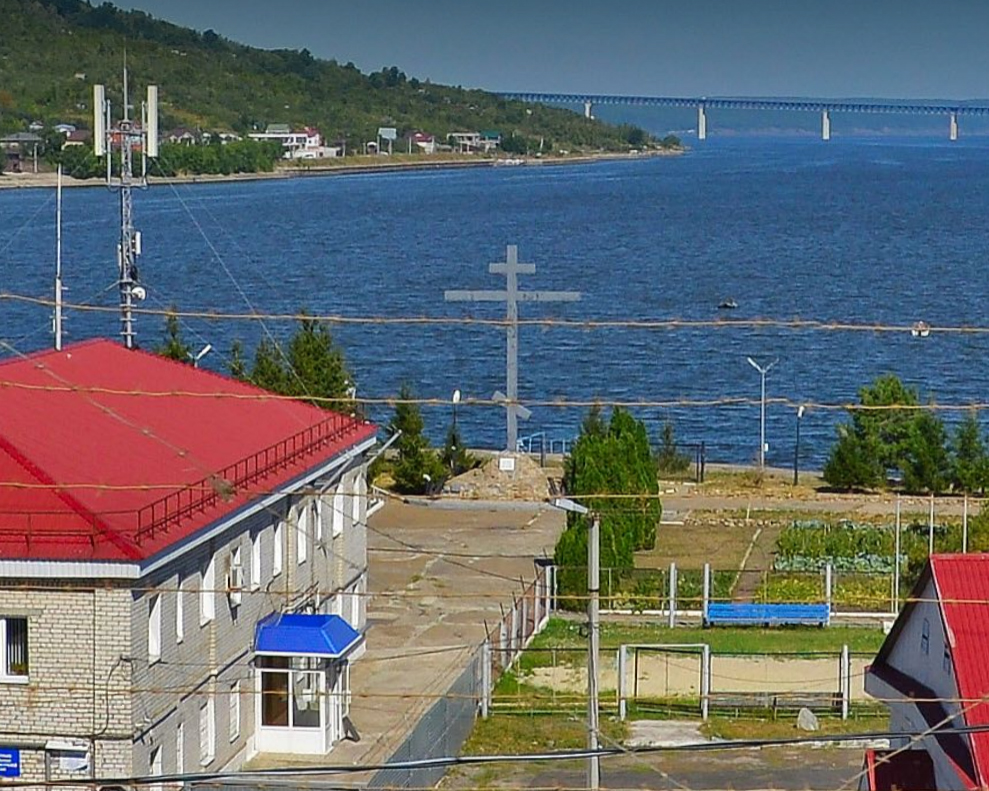
Через 25 лет после катастрофы в Ульяновске открыли мемориал жертвам трагедии. Авторы памятника установили рядом с православным крестом и якорем кусок металлического пролета моста, который был поврежден врезавшимся в него теплоходом.
In order not to miss the main materials of the "cold", subscribe to our social networks! Telegram
  Instagram
  Facebook
  Tiktok
  X Мы ставим в центр своей журналистики человека и рассказываем о людях, которые сталкиваются с несправедливостью, но не теряют духа и продолжают бороться за свои права и свободы. In order to further cover human stories, we need readers' support - thanks to your donations, we continue to work, despite the pressure of the state.