
Translated material
Basmach with a pencil
The Tajik journalist created television studio in Europe. In response, the regime of Rahmon took his father a passport and property. The story of Muhamadjon Kabirova
Collage: Rina lu
There is a small television teduction in the ordinary office building in Warsaw. When the news broadcast is recorded there, the inhabitants of neighboring offices will never understand what they are talking about: the presenter speaks Tajik. This is Azda TV television, independent television of Tajikistan in exile.
- Come, get acquainted. This is our host - Firuz Khayit. His father is serving life imprisonment. We are now preparing to record, do you want to see how we work? - With such “optimistic” introductories, the head of Azda TV, journalist and human rights activist Muhamadjon Kabirov invites me to the studio.
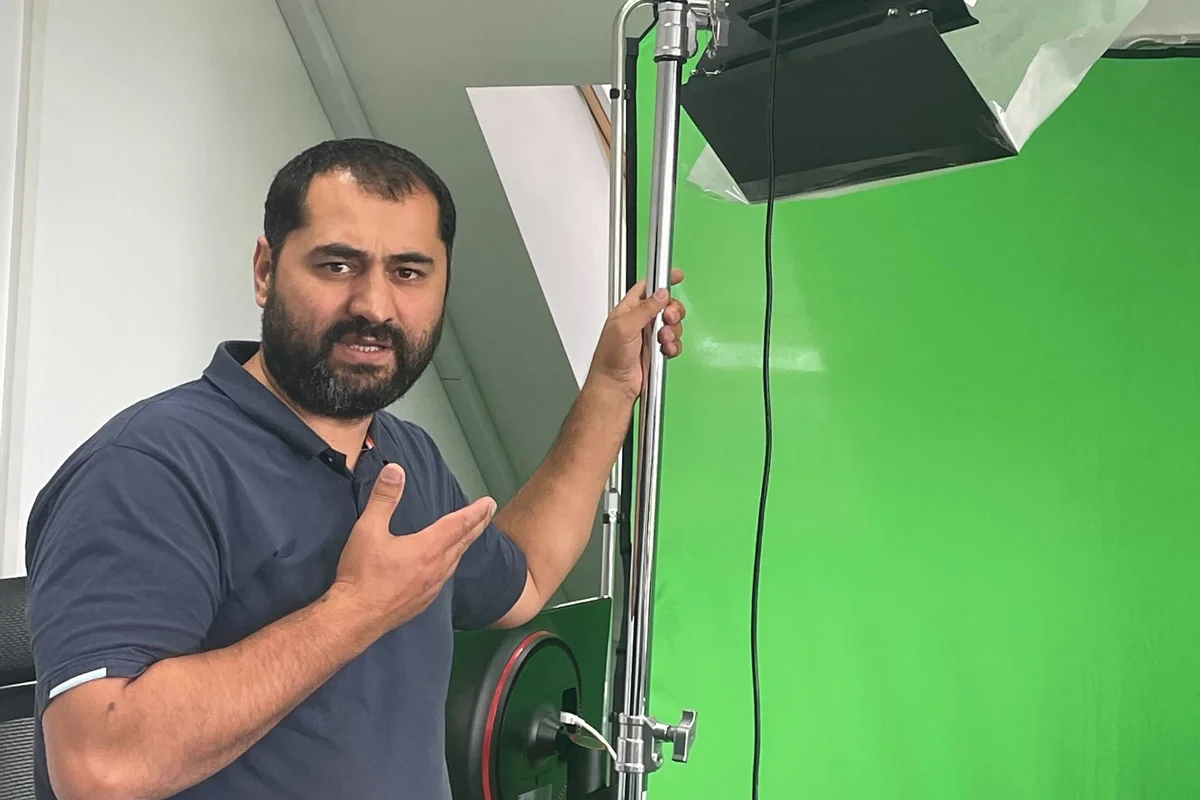
In the studio - four young people and the old, if not ancient equipment. They do not even have mixers - neither audio nor videos. A flash drive is inserted into the camera, and after recording the same flash drive is sent to the computer. So mount. But every day they record the news. Once a week-in Russian, then the leading Ukrainian comes to the studio. And all the other days of the week are in Tajik.
Correspondence refugee
Muhamadjon Kabirov did not at all dream of living abroad, broadcasting from a safe place about the situation in Tajikistan and fighting at all European doors with stories about repressions and political prisoners. He was born in a religious and loving family of his family. And although he went first to Iran, then to the USA, after - to Moscow, he knew that the end point of his route would still be Tajikistan. And then he, an educated young man (and having both Western and Eastern education at the same time), will be able to benefit his country. So many people think - both those who leave to study or work abroad, and those who run with one backpack, fleeing the security forces, waving the order to arrest.
However, plans do not always break because of the security forces. The life of Muhamadjon, perhaps, would have developed in a completely different way if his wife had been given an American visa. But she was refused. Muhamadjon studied at the American magistracy, and his wife could not come to him. And he decided to complete his education in Russia: a visa is not needed there.
Kabirovs settled in Moscow. Muhamadjon studied political science and international relations, but even before the graduate, he was offered work in journalism: at the end of 2014, the Central Central Asian television of the Central Asia TV was created in Moscow. Journalists from different Central Asian countries were supposed to work there. It was assumed that such a television project would not only talk about the news, traditions and culture of the countries of Central Asia, but will also change the attitude to migrants from those states.
In February 2017, Muhamadjon Kabirov flew to Turkey to relatives for the weekend. There was Saturday, in the editorial office there was only an employee on duty when they came there with a search and seized all the equipment. The Central Asia TV had two rented rooms in the office building, on the second and third floors, over the other. But on the second there was a Central Asia TV plate, but they didn’t hang it on the third, they did not have time, recently expanded. And the security forces did not go to the third floor, so it was possible to save a small part of the equipment. Judging by the fact that Tajiks were the absolute majority of the television companies, it was easy to assume that the search was carried out at the request of the Tajik intelligence services.
“I became a refugee in absentia in Turkey,” says Kabirov. - The security forces came to the television company’s office, and while I thought what to do, my wife went to the local administration (we lived in the Tula region, we had a residence permit in Russia) on a small issue. And the administration’s employee tells her:
“Strange, you have all the documents in order, we know your family - I just can’t understand why the FSB became interested in you.” Then I realized that it is impossible to return to Russia anymore. To Tajikistan - all the more so
There, my colleagues and I were already considered enemies of the people, because they gave information as normal media, and not as propagandists. Rahmon does not forgive this. Journalists and bloggers are his personal enemies.
From Kebabna - on the air
Muhamadjon had a Schengen visa, and he flew out of Istanbul to Warsaw. I did not want to fly far to the West - like many of the same fugitives, regardless of the country of origin and source of persecution, hoped that perhaps you just had to leave for some time safe. He also submitted a statement to the provision of refugee status a year after emigration - only then he finally understood that there was nowhere to return.
And his wife and children Kabirova did not have a visa. My daughter is two years old, my son is eight months old. And Hajar Kabirova took an incredibly risky journey: she reached Brest with young children and sat on the Brest -Terespol train. Then there was no pandemic with closed borders, no war with sanctions, and electric trains went from Belorussian Brest to Polish Terespol. The distance between the two cities - seven kilometers - the train was driving 21 minutes. When landing, Belarusians did not ask for visas. And upon arrival in Terespol, Hajar asked for political asylum. She did not accept the application and sent back. (Then, in the same way, hundreds of Chechens, hoping to get asylum, and lived right in the waiting room at the Brest Station.)
So the Muhamadjon family "traveled" exactly 14 days. They returned to Brest, rented a room until the morning and again went to the station. All this time, Kabirov called and wrote to all instances. But around it seemed to be a deaf wall. And two weeks later, the door suddenly opened in this wall: the Kabirovs accepted the application and passed to Poland. So the wife and children eventually received refugee status before Muhamadjon.
It has become easier to engage in human rights activities in exile: he began to speak at conferences, talking about repressions and political prisoners in Tajikistan. But with journalism it was more difficult.
But a little later it turned out that a small community of Tajik activists who fled from repression formed in Warsaw. Those who were not a journalist before is not a problem, learn. And Muhamadjon with his associates began to work. More precisely, volunteer: after a working day they were going and “on the knee” recorded programs. Muhamadjon worked in Kebabna and in a vegan restaurant, and at a construction site. Everyone else is too. So for journalism there was only evening time.
At first, like -minded people called the new project “Central Asian News”, but a year later they realized that they did not have enough time or resources to cover the events of the whole region, and decided to focus on their homeland - Tajikistan. So the YouTube channel and the Azda TV website with broadcasting in Tajik and Russian languages appeared .
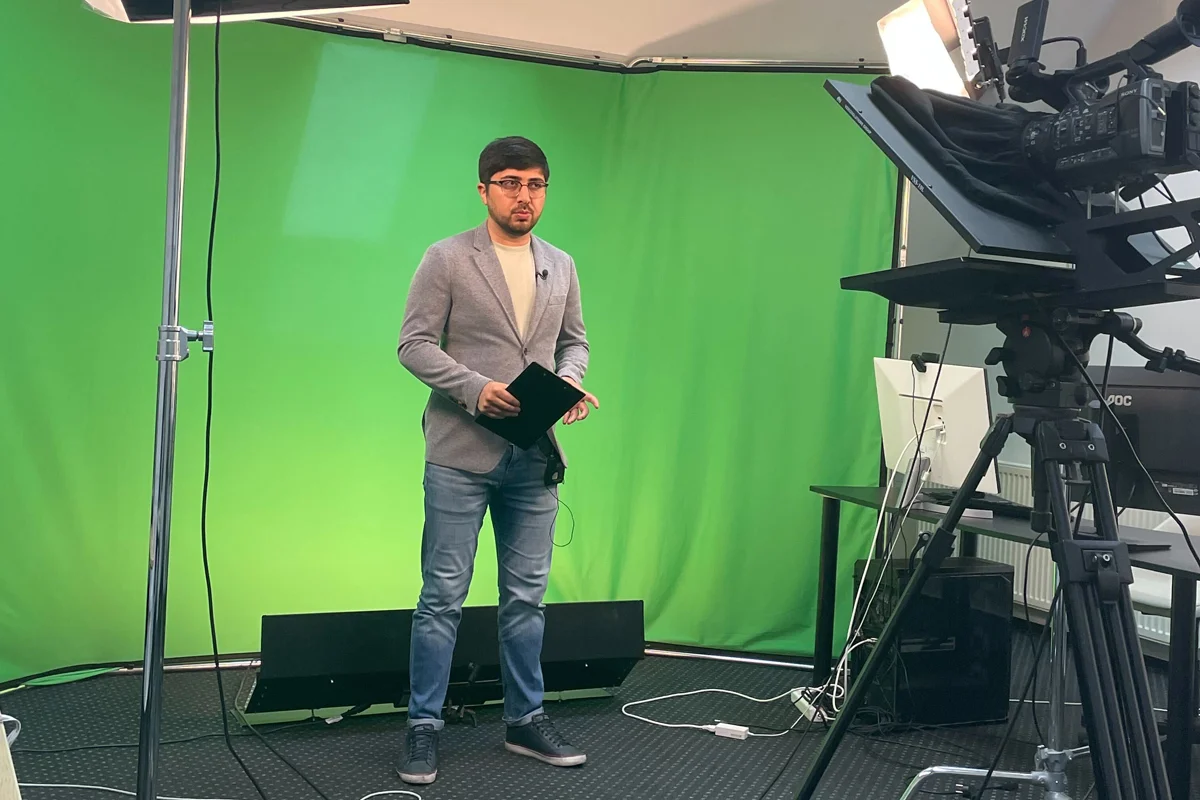
The host of the news in Tajik language Firuz Khayit was arrested in Dushanbe as a schoolboy. His Pope Mahmadal Khayit, Deputy Chairman of the Party of Islamic Renaissance of Tajikistan (PIVT), was arrested in 2015. Then all party leaders and about 200 of its supporters were arrested. They were accused of involvement in an attempt by a military rebellion . The party was declared a terrorist organization. Makhmadali Hayit and another deputy chairman of the PIVT, Saisyudra Husayni, sentenced to a life sentence.
Firuz then photographed all the pages of the sentence and sent to the Tajik opposition who are abroad. Those, in turn, were sentenced. And state security officers established where the photographs were taken on a fragment of the carpet that fell into the frame. Firuz and his mother were detained. After three days, they were released - with threats and warnings. Firuz had to leave. His mother remained: once every six months she is given a short -term date with a lifetime convicted husband and accepted a program for him.
Meanwhile in Tajikistan
You can not live in a dictatorial country for years and gradually get used to the idea that you are safe. But if your relatives remain the dictator, they automatically move into hostage status as soon as the dictatorship declares you an enemy.
The father of Muhamadjon was a farmer: gardens, arable land, equipment, cattle, the hardest work from dawn to dawn. But when his son created a studio in Poland and began to release programs about what was happening in Tajikistan, the family took away all the property. They confiscated land, agricultural equipment, and Muhamadjon’s apartment, and property registered to his mother. The father was left by the old great -grandfather’s house, where he has been living under house arrest for the past two years. He is strictly forbidden to communicate with his son.
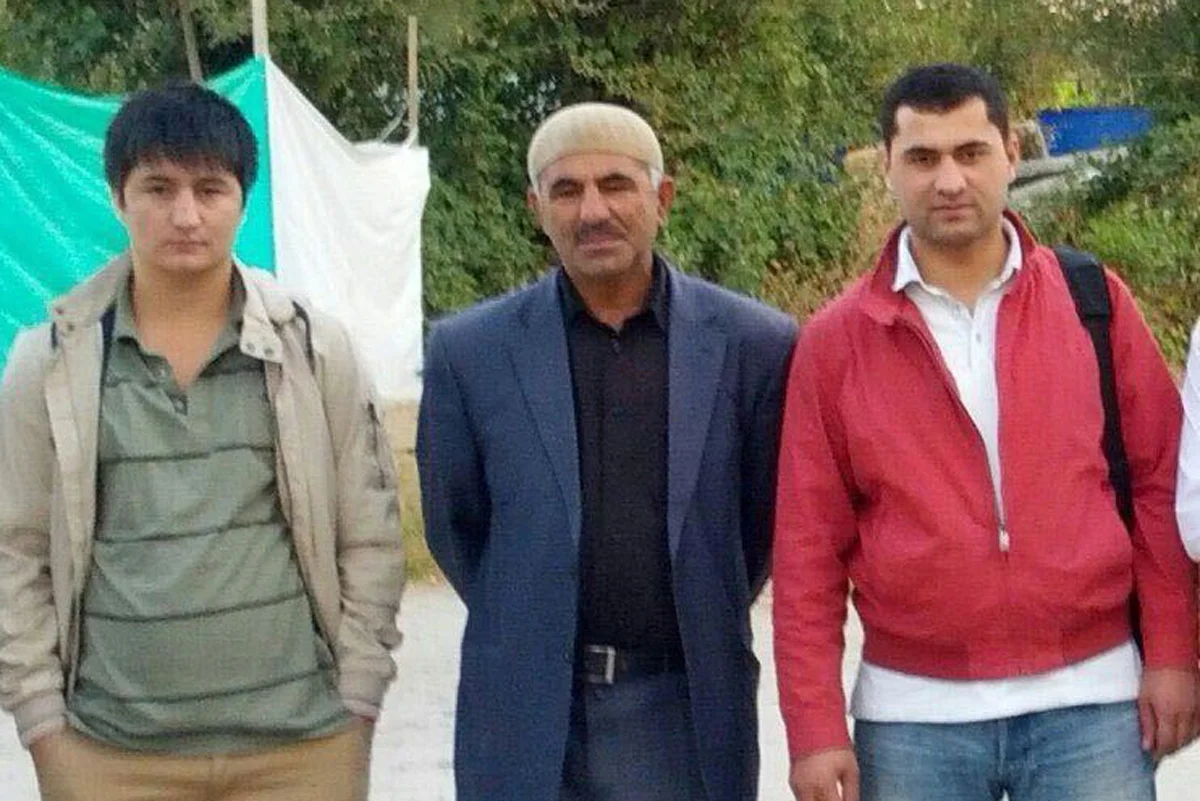
- My mother managed to leave. And we really hoped to pull out our father. Two years ago, he received a visa. But right at the airport, a passport was taken from him and simply canceled. Even a driver’s license - and they were canceled. He is hostage in the classical sense of the word. Yes, and with a complete ban on communication with me. One single time-this was before the seizure of a passport, in 2017, before my performance in the OSCE-suddenly a call came from his father's number. I did not answer. I immediately realized: something is wrong here. And just a couple of minutes later my aunt from Moscow called: “Muhamadjon, your father in the police, was taken away. They want you not to speak. They made their father call you. " I still performed. I could not help but take the opportunity to talk about what is happening in Tajikistan. Understand that we are already crossed out on the world map. As if there is no Tajikistan, there is no dictatorship, there is no rahmon, no repression. Rahmon calmly travels with visits to Western countries. No one requires him to free the political prisoners. Unless the UN Human Rights Committee softly “recommends”. You know, sometimes such despair covers me! I think: what can I achieve with my pencil in my hand? It would be better to take the machine gun and became a basmach, honestly.
Safara Kabirova, the father of Muhamadjon, was kept in custody for two days in handcuffs, without against any accusations, but threatening with prison and torture. Then they let go. However, is it possible to say that Safar Kabirov is free? Without relatives, without property, idle, which he built for years, and now even without a passport and driver’s license.
Before the farming, Safar Kabirov worked as a bus driver. But that first profession was taken away from his rights. At the same time, the relatives of another Tajik activist in exile, Islomiddin Saidov, were simply expelled from their house. Saidov said: "You are punished for your son."
A year later, the same thing happened with the relatives of the human rights activist Shabn Khudoydodova. She herself received political asylum in Poland after she was detained in Belarus for the red circulator of Interpol - Tajikistan authorities brought her there. She sat for Shabnam for nine months in the Belarusian pre -trial detention center, but then was released and was able to leave for Europe. In 2018, before the performance at the same conference, the mother, daughter and brother Shabn were taken to the police, took the documents and warned that they were all “on operational accounting”. And after the performance of the Shabnes at the OSCE conference, the Tajik intelligence services drove to the school where her daughter Fatima, a crowd of “indignant citizens” studied. “Citizens” followed the girl to the house, calling her a terrorist. Documents were returned to the family only a year later, and a year later they took away again, when the mother, daughter and brother Shabn tried to fly away from Tajikistan. Relatives of many Tajik activists who remained in their homeland are faced with arrests and threats. The revenge of hostages is a typical and bright feature of the Tajik regime.
But Muhamadjon is still communicating with his father. Rarely, carefully, without direct calls - through several relatives, through several countries, through different messengers.
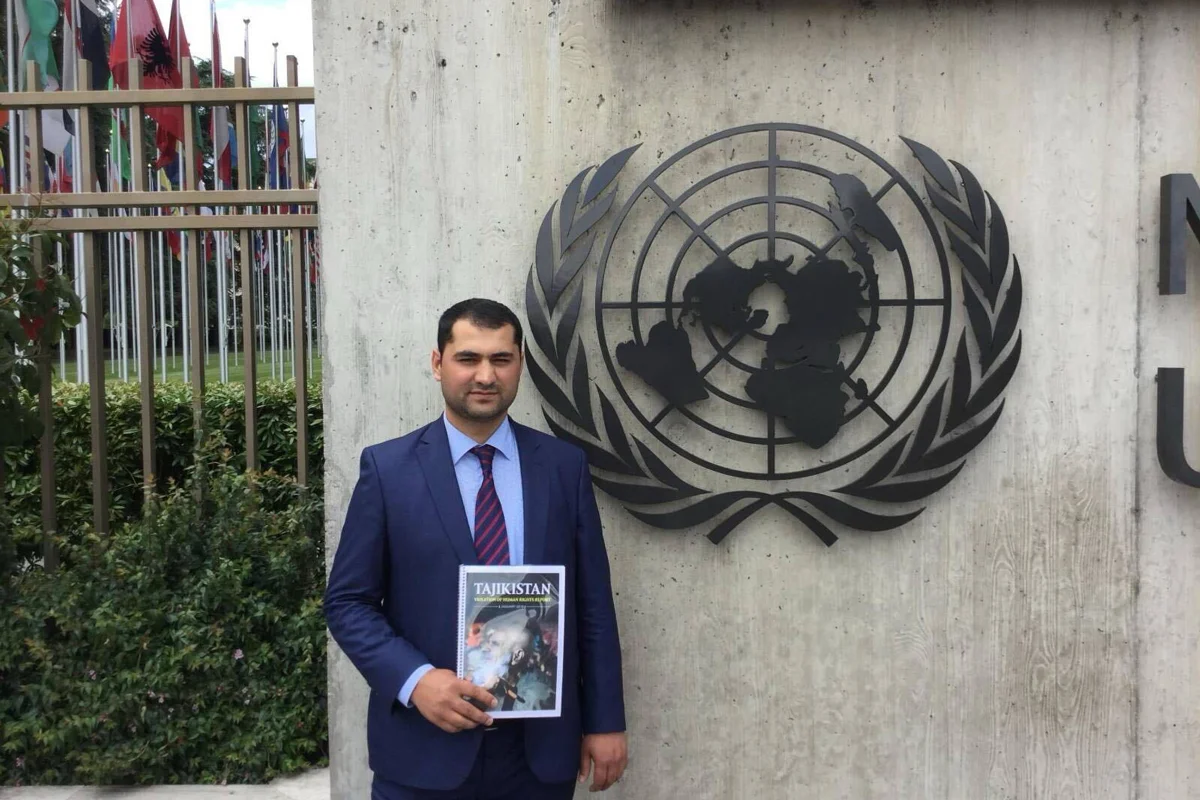
Transnational repressions and 307th article
In addition to the whip in the form of detentions of relatives and threats, the Rachmon regime actively uses the gingerbread: the promises of amnesty or pardon in exchange for returning. Muhamadjon recalls that in 2020, in this way, oppositionist Sobir Valiev, deputy chairman of the opposition movement Group 24, returned to Tajikistan.
- Sobir, it turned out, studied in the same class with the son of the president. Well, the classmate convinced him to return. True, then a new criminal case was opened. This is also the norm for Rahmon: “We amnesty, return,” and then they initiate new deeds and plant. Well, if they are abducted - then, of course, they plant for a long time.
The Tajik opposition in Russia is abducted . It is there that Tajiks are easiest to leave, and before many of them went to a neighboring country in the hope of security. Russian intelligence services never commented on the sudden disappearance of Tajik activists, after which they ended up in Dushanbe prisons. Tajik special services, in turn, claimed that people came to their homeland voluntarily.
And from Europe, Tajiks are simply deported after refusal to asylum. The last example is the blogger Farmok Negmatov, who lived in Sweden since 2019, filed a statement on the provision of political asylum several times, received refusals, appealed - and eventually was deported to Tajikistan, where he was recently sentenced to eight years in prison. In November last year, oppositionist Dilmurod Ergashev was deported from Germany, who was immediately taken into custody in Dushanbe. Activist Farukh Khropromov, sent from Poland last year, was sentenced to 23 years in prison.
Those who are unable to kidnap or persuade to return can be killed. Back in 2015, one of the leaders of the opposition, the founder of “Group 24”, Umaral Kuvvatov, was shot down in Istanbul. Tajikistan demanded his extradition, but Türkiye did not give an opposition. The bullet turned out to be much more effective than papers with the requirements of expulsion back to their homeland. The chief organizer of the murder was detained by the Istanbul police, and he eventually received a life sentence. The remaining four suspects managed to leave Turkey.
By the way,
It was in Turkey, which until recently was considered a relatively safe place for Central Asian emigrants, the leader of Group 24 Sukhrob Zafar and his associate Nasimjon Sharifov disappeared in March last year.
And then it turned out that they were mysteriously delivered from Turkey to Tajikistan. In November, Zafara was sentenced to 30 years in prison, and Sharifova - to 20. Both, according to the most common in relation to the dissenting article 307 of the Criminal Code of Tajikistan: “Calls to a violent change in the constitutional system using the Internet.”
“Last fall, a man called me with whom I was familiar about 20 years ago,” recalls Muhamadjon Kabirov. - He said that the special services of Tajikistan invited him to go to Poland and eliminate me. He was promised that after completing the assignment, he and his family would not need anything all his life. This man, according to him, said that he needed to think, and that night he escaped from Tajikistan. Of course, I told the police about this call. To be honest, I did not even expect that it would work on me like this: we all know that Tajik intelligence agencies hunt journalists, human rights activists, activists. We know about the abduction and murder outside Tajikistan. We know that we must always be vigilant and not at any point in the world do not relax. But when they say so easily to you: “I had to kill you,” it paralyzes. For two months I could not work normally. The police, of course, explained how to behave and what to avoid, where to call if I notice something suspicious. But the fact that threats are known in the police does not make life easier. Over the past year, I changed the apartment twice after I noticed strange people at the entrance. We were forced to change the office because we noticed surveillance.
I was visiting Azda TV just in the new office. Only the equipment remains old.
“Sometimes even Tajik opposition in exile refuses to give an interview,” Muhamadjon laughs. - They call us "grantomed people." Do you want me to tell you about grants?
He tells how two years Azda TV worked on a volunteer basis. Then Muhamadzhon, one of the international funds supporting civil society, suggested writing an application for a grant. He wrote. Grant was allocated: 45 thousand dollars per year. A third went to rent a premises. The rest is for the current expenses and salaries of employees. Salaries were the same as the cashiers in the "Toad" (a network of cheap shops in Poland). So they live.
The working day in the studio "Azda-TV" is completed, the program is recorded and mounted, you can disperse. And the Grants diverge - again to work. Who is for a taxi bagel, some to courier delivery.