
Translated material
Vladimir Syndrome
The court approved the verdict in the case of the defenders of Navalny. Convicts must be sent to the colony
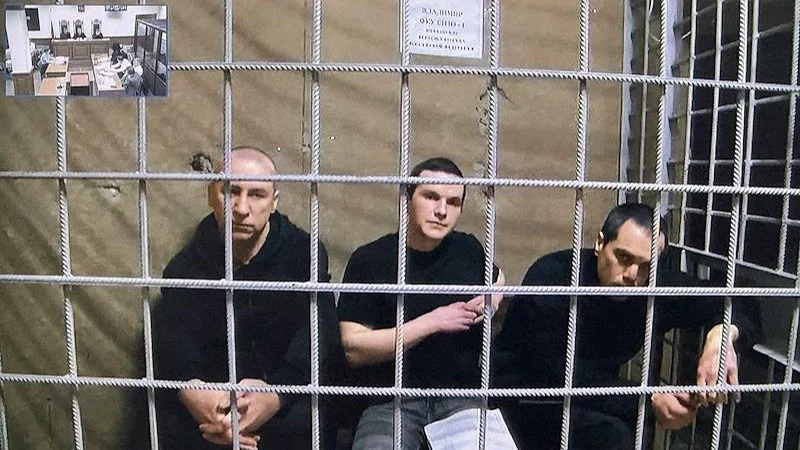
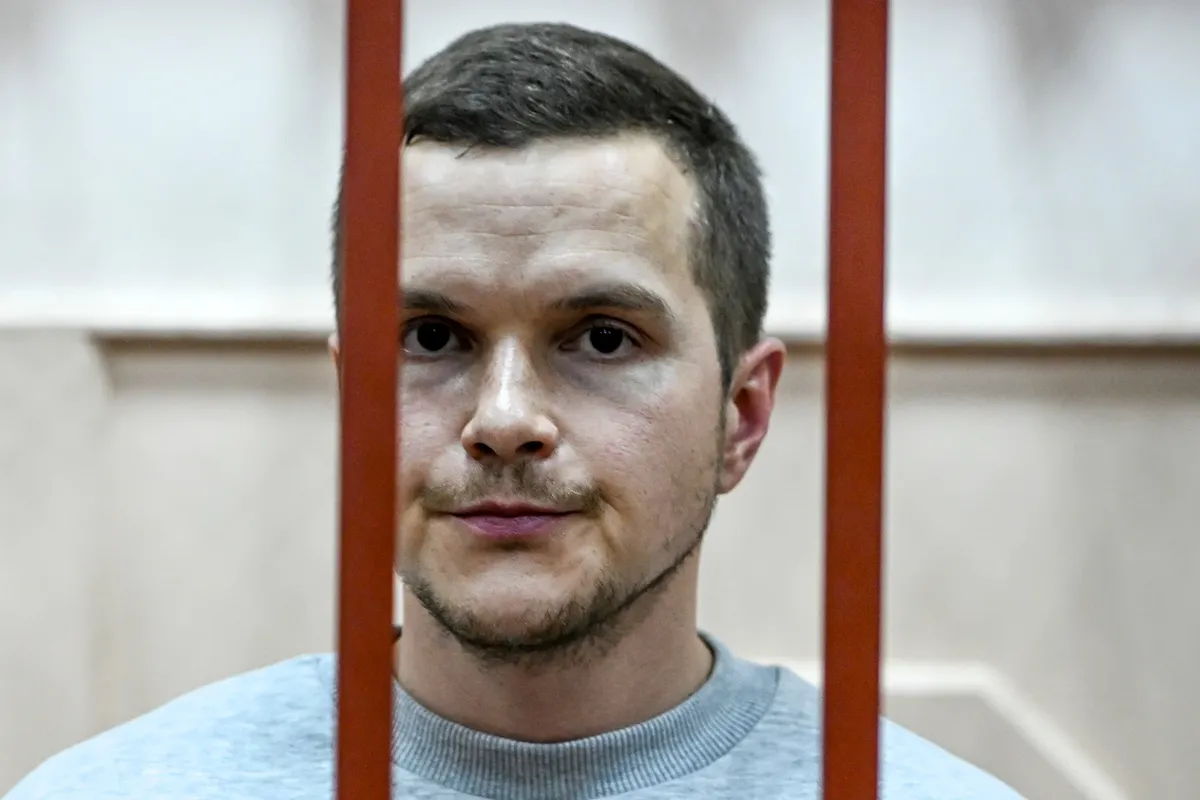
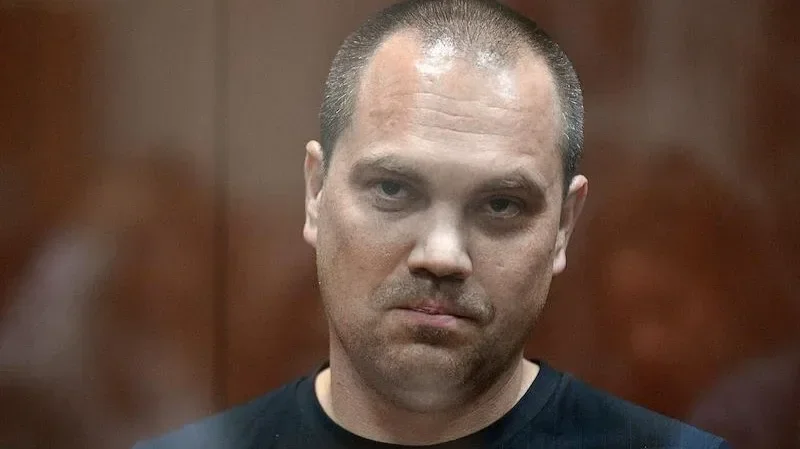
September 22, 2025. A meeting of the Vladimir Regional Court. Igor Sergunin, Alexey Lipzer and Vadim Kobzev during a court session in a video conference mode.
When I was going to go to Vladimir at the second meeting of the Vladimir Regional Court of Appeal for the sentence to lawyers Alexei Navalny - Vadim Kobzev, Alexei Liptser and Igor Sergunin, I thought that the judicial report would not work.
I was already in this court on August 13, on the first day of the hearing. The presiding judge Yuri Paltsev then read out a summary of the complaints of lawyers, and the prosecutor Irina Kolotilova made a proposal to tighten the sentence to the convicts. Without moving to the debate, the judge of the fingers unexpectedly postponed the meeting on September 22. There was no hope that this meeting would somehow change the fate of convicted lawyers. But since the “lawyer case” itself is unprecedented (never before in Russia, and in the Soviet Union they did not plant lawyers for the provision of professional activities), it was important to be present in this court and fix it, as “it happens”. On September 5, Alexei Liptser died, Elena Lipzer, also a lawyer, but Judge Yuri Palov refused to attend his son’s funeral. At today's court hearing, lawyers Alexei Lipzer and his relatives came to Cherny.
Without the Internet and without hope
The city of Vladimir met us with a dazzling sun, the last day of the woman’s summer. True, the mood was very quickly deteriorated: serious interruptions in mobile communications began in the city. I suddenly received a SSMESK confirming my worst suspicions: “In order to ensure security measures in your area, temporary restrictions in the operation of mobile Internet are possible. But we made you can use the usual digital services, even when there is no Internet: taxi, public services and other resources. See a list of available services. We remind you that ordinary calls and SMS work unchanged. ”
The city lived its life, as if not noticing the lack of a world web. Red trolleybuses with an ambiguous inscription raced along Lenin Avenue: “Do not forget about the past, look into the future” - and buses with May slogans about the Day of the Great Victory of 1945.
Before the nine -story building of the Vladimir Regional Court on the boulevard, a massive monument to Count Mikhail Mikhailovich Speransky, the founder of legal science and classical legal education in Russia, towered. Only for some reason he stands facing the park and his back to the Vladimir Regional Court.
In front of the meeting room, where hearings were supposed to begin on complaints of lawyers, a small crowd gathered: twenty journalists and sympathizers.
And not a single colleague of convicts.
They explained to me that lawyers are busy people, each has their own courts, investigative actions and much more. True, they mobilized in January 2024, when they arrived in the cockerel for the verdict. But there was no one at the Court of Appeal. However, I do not condemn them, in recent years I myself began to come to the courts only as a judicial reporter. Yes, and then rarely: there are too many processes and little ... Hope.
" Imitation of presence"
The experience of reporter work in political trials for two decades weaned me to be surprised and hope for a positive outcome of the case. If at the very beginning of my observations of the participants in the trials I carefully caught the expressions of the people of the judges, their reactions to the speeches of lawyers and the speeches of the accused, it seemed to me that they were listening to what was happening during the process, they are notifying in large notebooks, in order to take into account their living impressions when writing a sentence, I began to notice that in most cases this is a “imitation presence ".
Yes, judges imitate their presence in court, in most cases they know in advance what will be written in the verdict, because the verdict, as a rule, copies the indictment. And then - the question in the terms that the judge should be voiced.
Who in the Russian court decides on the terms of punishment in political cases? The opinions of experts here diverge. About fifteen to twenty years ago, when the voices of rebellious judges, sort of “white raven” from justice, who told how decisions in the deliberative room were heard from the bowels of the court, we learned that the decisive vote had the chairman of the court, and he was called from the presidential administration or from the FSB, depending on the category of the case. Now among experts the opinion prevails that judges themselves know what sentence should be passed without any calls, and only check with judicial practice.
Therefore, in the "lawyer case" it was not worth expecting surprises. And judge Julia Shilova from the Petushinsky City Court of the Vladimir Region condemned lawyers strictly:
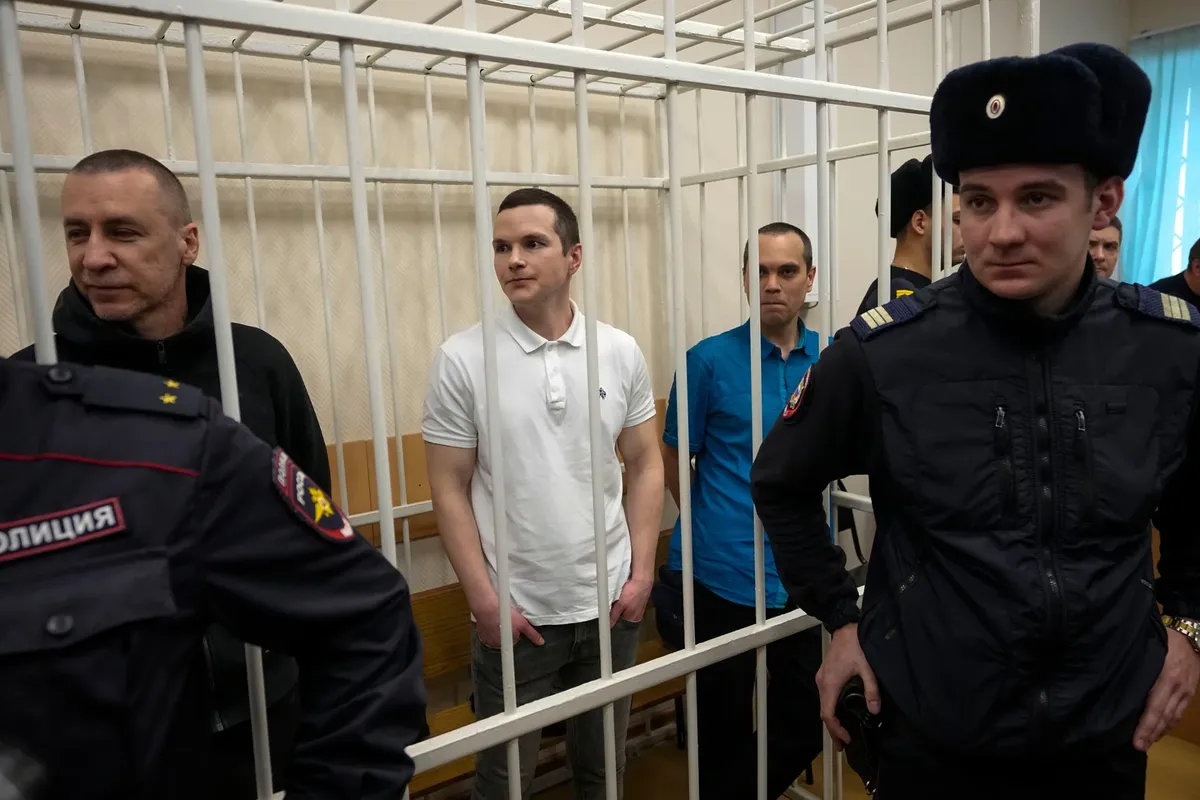
Vadim Kobzev - for five and a half years of the colony,
Alexei Lipzer - for five years of colony and
Igor Sergunin - for three and a half years of the colony,
Despite the fact that he pleaded guilty and, according to the judge, "contributed to the investigation of the crime."
How it all began
The trial in the Petushinsky court was held closed, and we learned many details about how this unprecedented business began and developed only on the first day of appeal.
This case began in the spring of 2021, when the operational department of the Federal Penitentiary Service for the Vladimir Region appealed to the Vladimir Regional Court for permission for the operational-search event (ORM) “Observation” using audio-seeing in premises for short-term and long-term dates of Alexei Navalny with his wife, relatives, lawyers and persons providing him with legal assistance. The operatives justified the need for such an Orm of information received to them that Alexei Navalny was going to give a bribe on an especially large scale to the unidentified employee of the Federal Penitentiary Service in the Vladimir region. When this information was not confirmed, other reasons for the need for the need for the ORM: Alexei Navalny arose, they say, was involved in the "creation and leadership of the extremist community and involving other persons in this activity."
The Vladimir Regional Court issued three decisions on the resolution of audiovideiofixation of the meetings of Alexei Navalny with any persons.
Thus, the operational employees of the two colonies of the Vladimir region (in Pokrov and in Melekhovo), where Alexei Navalny was in the IK-3 in Harpe, recorded all his meetings for almost one and a half years. And all the objections of the defendants and their defenders that such operational measures violate the right to a lawyer secret are divided in the verdict that the court had carried out permission to listen to Alexei Navalny, and not his lawyers. Moreover, the verdict emphasizes that “the fact of the production of ORM regarding Navalny did not prevent the investigation authority to turn to their results as evidence of the guilt of Kobzev V.D., Lipzer A.E. and Sergunina I.S. in the commission of a crime. "
That is, the operatives, listening to Navalny's meetings with lawyers, found that the defenders of Navalny “violate the law”, and turned to the Investigative Committee with a proposal to conduct an audit of lawyers and, according to its results, initiate a criminal case.
Which was done.
It is clear that there was no “reverse”, the point of persecution of the lawyers of the opposition policy number one is unequivocal: it was decided to completely isolate Alexei Navalny from communications with the will so that there was no information about what is happening behind bars.
The verdict as a constant
Navalny’s guilt in the sentence is proved by the results of the ORM, the interrogations of the colonies, who indicate that the defendant Navalny talks with his defenders on a variety of topics: he tells them that he is happening to him in the colony, what kind of inquisitive conditions are arranged for him there, organizing constant surveillance behind him, sitting down his crazy prisoner, and once informs the lawyers that he was It seems as if they are “fitting”. Defenders tell him about all this to relatives, write in social networks, and, in general, such behavior of lawyers is their professional duty-to ensure that the rights of their client are not violated behind bars.
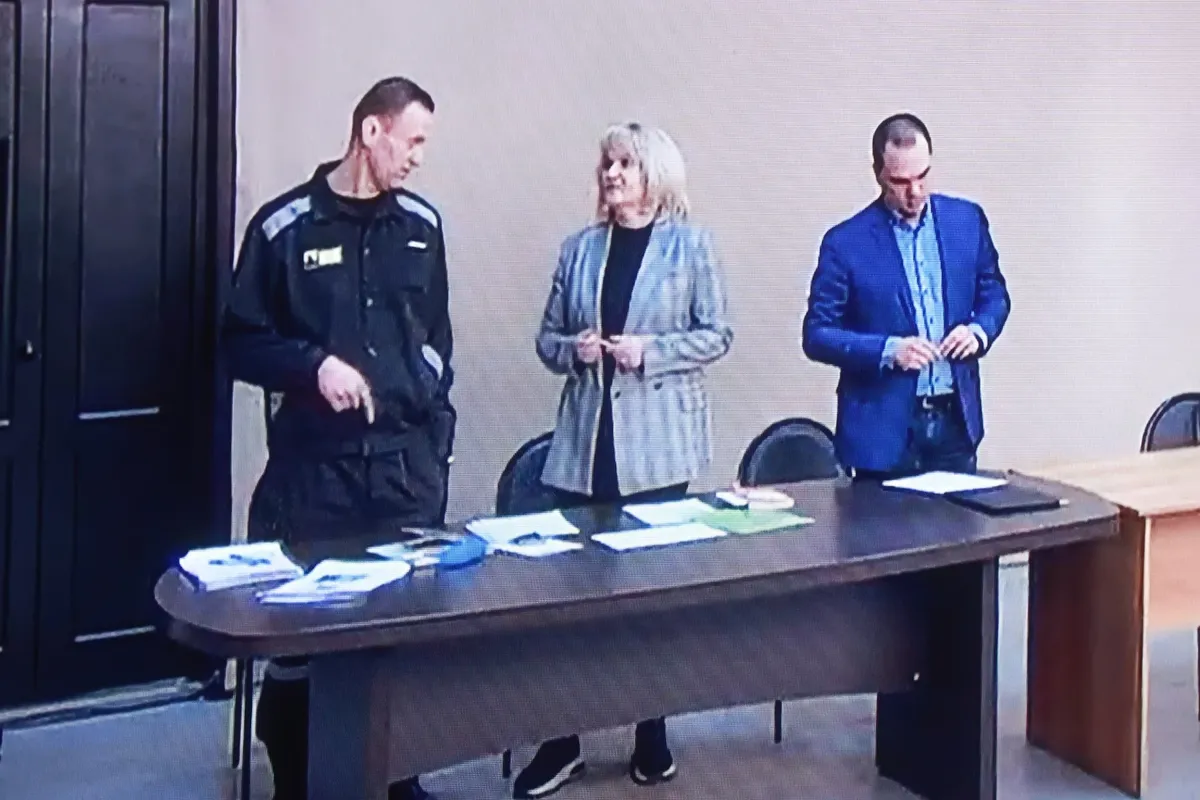
As for the fact that, according to the investigation and the court, the lawyers received a letter from Navalny and transferred them to his relatives and associates, then, according to the defense, this is not a crime, but a disciplinary violation that does not draw on criminal liability.
Naturally, the court did not agree with this, especially since, in the opinion of the investigation and the court,
The legal assistance that lawyers provided Navalny is not just the help of the accused, it is help from an extremist Navalny, and his lawyers are not just lawyers. They are members of the extremist community.
The arguments of the defenders and the arguments of the accused that there is no evidence when, where and how they entered this very extremist community, neither the investigation nor the court of first instance, and I will assume that they would not ultimately excite the appeal authority of the Vladimir Regional Court.
The verdict, for example, shows the application from Ivan Zhdanov*, a member of the FBK **, that neither Kobzev, nor Lipzer, nor Sergunin are members of the extremist community, and that they provided a purely purely legal assistance received.
The court considered that this is just the subjective opinion of Zhdanov, which is also not confirmed by other evidence collected in the case.
And the “evidence collected in the case” is a confession of the fault of lawyer Igor Sergunin, who said in the investigation that he received from Navalny’s letter and texts. At first, Sergunin did not read the texts transmitted to him, and when he read, he realized that they were extremist content, and then he decided to terminate the legal assistance agreement with Navalny, which he did on December 6, 2022. That is, "voluntarily left the extremist community." Both in the investigation and in court, Igor Sergunin said that he did not know what other lawyers with Navalny discussed.
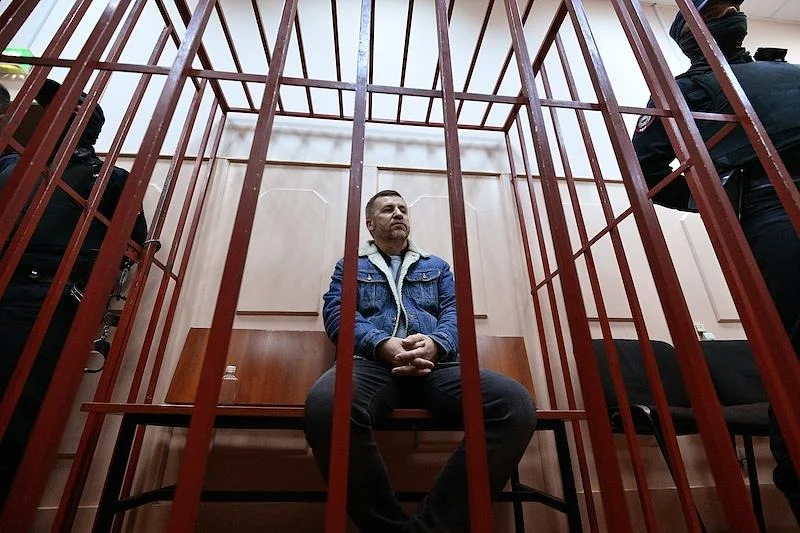
Other evidence mentioned in the verdict is records of interviews of FBK employees of various media. In these interviews, Navalny's associates say that they receive information about the conditions of its maintenance and support communications with him through lawyers. However, they do not give the details of these communications, although journalists crave details, especially since many want to know if Navalny wrote their posts. At the same time, it is known that the politician conducted an extensive correspondence on the Service of the FSIN-Pisemo with his associates and sent them his texts.
The most “frank” was an FBK employee Leonid Volkov*, and his performance on October 15, 2023 on the square in Vilnius also appears in the verdict as “other evidence”. Volkov says literally the following: “After last Friday ( the day of the arrest of Navalny’s lawyers. - “ New ” ) posts, instructions and tasks will no longer be from him.”
"We are all lawyers, and here they judge lawyers"
Here is such a completely unambiguous accusatory and uncertain sentence, to which both the accused and their colleagues have accumulated a lot of questions, had to evaluate the judicial three: the chairman-Judge Yuri Pallev-and his colleagues Alexei Matskievich and Anton Balashova.
Convicted lawyers attended a meeting on video communications from the Vladimir pre -trial detention center. Kobzev and Lipzer were busily talked, Sergunin sometimes entered into a conversation with them.
The first in the debate was the state prosecutor Irina Kolotilova. She offered to tighten the punishment of all three defendants: Vadim Kobzev - up to five years eight months, Alexei Lipzer - up to five and a half years old, Igor Sergunin - up to four years old.
Kobzev’s lawyer Andrei Gryvtsov, turning to Judge Polsev, tried to briefly and capaciously state the essence of this unprecedented case: “Your honor, we are all lawyers here, and here they judge lawyers. You have stated my complaint well. But in order to understand our arguments, you need to work at least a little to a lawyer.
And then it will become clear that the invasion of a lawyer secret is unacceptable. It is impossible to invade these absolutely intimate, trusting relationships of the principal with his lawyer. After all, our clients are not in vain called principals.
There is no precedent right in Russia, but high -profile cases are formed by judicial practice, ”continued Grivtsov. - And this is a high -profile case, which is followed by the entire lawyer community and the entire law enforcement community. If you say that this is possible, then the lawyer activity will end there. It will not be possible to protect people. They will no longer trust us, ”the hryvtsov summed up and asked the court to justify Vadim Kobzev.
Aleksey Lipzer lawyer Andrei Orlov, in turn, drew the attention of the court to a flagrant violation in relation to his client:
Lawyer Andrei Orlov:
“A criminal case was not instituted against Alexei Lipzer on the fact of his dates with Alexei Navalny in IK-6, since he terminated the contract with his client on June 8, 2022, nevertheless he was charged with“ extremist activity ”until October 2023. The criminal prosecution of Alexei Lipzer should be stopped at the stage of preliminary investigation. My client did not admit his guilt, he did not participate in the extremist community. Navalny was recognized as an extremist in August 2023, he was entrusted with extremism a week after Alexey Lipzer was the last time visited him in the colony. But the most egregious - Judge Julia Shilova recognized the extremist activity of my client in the interests of Alexei Navalny, which he filed on June 30, 2022. That is, the provision of advocacy is equated with extremist activity, and what is then its extremism from June 30, 2022 (the day of filing a complaint) until October 2023? After all, for this period of time there are no episodes of the criminal activity of my client. ”
Lawyer Orlov reminded the court that not one of the letters or texts of Navalny, of which Alexei Lipzer was accused, was included in the list of extremist materials. We are talking about letters, which refers to raising prices for products or learning English by cards. “The transfer of letters to the client is an administrative offense, not criminal. How could Lipzer foresee that Navalny is charged with extremism? ” - He asked the judges a question and asked them to justify his client.
"It is difficult to recognize legal actions illegal"
Defender Alexei Lipzer Anna Stavitskaya spoke about the illegality of the sentence, which is 95% a copy of the indictment, and even the verdict migrated typos from the indictment.
“And I understand the court,” explained the Stavitskaya three judges, “because it is quite difficult to recognize the legitimate actions of lawyers illegal, so it’s easier to use the indictment for this. The court in the sentence did not evaluate the evidence, he simply transferred evidence from the prosecution of the sentence and thereby confirmed the unnecessary trial. ”
The lawyer of Stavitskaya and the arguments of his colleague Grivtsova supported. “If the institution of lawyer secrets will be blown up, this will affect justice as a whole,” she convinced the judges, recalling that according to the Law of the ORM, the ORM could be carried out only on the basis of a court decision regarding a specific lawyer, and exceptional circumstances should be described in this decision, due to which these ORMs can be carried out. “In the present case, nothing of the kind was done,” continued Anna Stavitskaya, “the lawyers were listened to by court decisions related to Alexei Navalny and his dates with all persons. Thus, the lawyer secret was roughly broken. ”
Anna Stavitskaya, following other lawyers, Alexei Liptser, asked the court to justify him.
Lipzer himself performed after his defenders. He does not agree with the proposal of the prosecutor to exclude mitigating circumstances related to the difficult material position of his family in relation to him. He had previously appointed five years to him, without aggravating circumstances and with mitigating circumstances, without aggravating circumstances and with mitigating circumstances - an almost maximum sentence. The prosecutor Kolotilova proposed to increase this term by another six months. Lipzer explained to the court that his family took a loan for an eight -digit amount. He does not work, and his wife has a small child in her arms.
“These are what amounts they earn in the prosecutor’s office per month if they consider the monthly six -digit payment amount of the payment insignificant, but the situation of the family is not difficult?” - Lipzer was indignant.
The last lawyer Igor Sergunin Nikolai Guryanov was the last, he was short and concern: he asked the court to stop criminal prosecution against his client.
"How many letters are given under Putin?"
Наступает время последних слов. Дольше всех говорит Вадим Кобзев. Он зачитывает шестистраничный текст, который написал еще к прошлому заседанию. Текст, построенный на воображаемых разговорах с солдатом Швейком и неизвестным ведущим онтологического баттла. Кобзев говорит об исторических аналогиях своего уголовного преследования с приговорами Федора Достоевского и Александра Солженицына.
Он читает громко, и хотя текст довольно «густой» и непростой для понимания, судья Юрий Пальцев слушает как будто бы с большим интересом. Чуть отклонившись назад к спинке своего судейского кресла, он внимательно смотрит на адвоката Кобзева. А тот продолжал: «В чем заключались мои действия? Ключевое слово моего преступления — «письма». It is found in the verdict hundreds of times. Letters of Alexei Navalny. I listened to them from the author of the author, I picked them up from the author’s hands, I wrote them with my own hand from the author’s words, I discussed them with the author, I retold the content of these letters to other people. So indicated in the verdict. Among the letters for which I was convicted, an interview with Alexei Navalny newspaper New York Times. The court found that with the help of this interview, Navalny overthrew power in Russia.
<…> Итак, при Николае I за письма давали четыре года, при Сталине — восемь лет. Мне за них дали срок почти посередине — на полтора года больше царского и на два с половиной года меньше советского. Своим решением вам предстоит поставить точку в вопросе «сколько за письма дают при Путине?».
Как ни странно это звучит, но чем меньше мы просидим в тюрьме, тем выигрышнее будет выглядеть нынешняя власть по сравнению с царской и советской, а ввиду недавних событий еще и с современной белоруской. In your hands, no less image of Russia and Vladimir Putin. You had a lot to show the lots not in words, but in fact, what is Russia today. Мелочно-обидчивая и мстительная или разумная, отдающая себе отчет в том, что политические страсти — еще не повод для издевательских приговоров. Принц итальянской Пармы Эрнест IV, по утверждению Стендаля, руководствовался принципом «главная цель наказания — потрясти страхом воображение подданных». Насколько вам, уважаемый суд, близка такая пенитенциарная философия?» Судья Юрий Пальцев ответит на вопрос Вадима Кобзева меньше через час, выйдя из совещательной комнаты.
«Считаю добродетелью защищать тех, чьи права нарушаются»
Алексей Липцер выступает после Кобзева, он очень эмоционально объясняет суду, почему однажды решил стать адвокатом. «Потому что считал добродетелью защищать тех, к кому чрезмерно, а зачастую и необоснованно применяется сила правоохранительной и судебной систем, тех, чьи права нарушаются в силу существующего общественного строя либо силами людей, которые имеют для этого возможности». Поэтому он и защищал «таких людей, как Ильдар Дадин, Константин Котов, Кристина Хачатурян и Алексей Навальный. И всегда считал это правильным, нормальным и не видел в этом ничего предосудительного».
Игорь Сергунин оказывается лаконичнее своих коллег: он говорит, что раскаивается, встал на пусть исправления и просит освободить его из-под стражи.
Выслушав осужденных, тройка судей: Юрий Пальцев, Алексей Мацкевич и Антон Балашов, — не говоря ни слова и не объявляя, когда будет вынесено решение, быстро-быстро удаляются в совещательную комнату. Примерно через час они выходят оттуда, и судья Юрий Пальцев зачитывает их решение, утвердив приговор первой инстанции.
«Стокгольмский синдром»?
Вот так, с фактическим утверждением приговора Петушинского городского суда, закончилось во Владимирском областном суде это дело, как и началось несколько лет назад в том же здании с нескольких судебных постановлений, разрешающих прослушку в адвокатских кабинетах.
После оглашения решения апелляционной тройки многие журналисты с облегчением написали: суд не ужесточил наказание адвокатам Навального, оставив приговор в силе и изменив его лишь в некоторых аспектах. Так, судья Петушинского городского суда Юлия Шилова запретила осужденным после освобождения в течение трех лет заниматься юридической деятельностью, а апелляционная тройка заменила «юридическую деятельность» на «адвокатскую», милостиво разрешив тем самым осужденным работать если не адвокатами, то хотя бы просто юристами.
Апелляционные судьи также сократили на несколько месяцев ограничение свободы каждому фигуранту дела после освобождения, эта дополнительная мера наказания была прописана в приговоре. Что ж, вполне вегетарианские изменения, призванные показать, что судьи Пальцев, Мацкевич и Балашов думали над своим решением.
Но общий вздох облегчения от того, что приговор не ужесточили, как того просила прокурор, — это, конечно, в чистом виде «стокгольмский синдром». И с ним нам, наверное, придется жить еще долго. Мы уже не удивляемся, что адвокатам за их профессиональную работу назначают сроки в пять лет лишения свободы, а то и больше, не возмущаемся, что оперативники и судьи нарушают адвокатскую тайну, обставляя это как «спецоперацию» по поимке предполагаемого взяточника. И разве это не тот самый распад правосознания и на общественном и на государственном уровне, о котором говорили защитники осужденных юристов на заседании во Владимирском областном суде?
«Кого-то можно защищать адвокату, а есть те, кого нельзя»
Вадим Кобзев, Алексей Липцер и Игорь Сергунин провели два года под стражей, под стражей же узнали о том, что их подзащитный Алексей Навальный погиб в колонии при невыясненных до сих пор обстоятельствах.
Вопрос, который очень бы хотелось им задать: «Если бы вы знали, как на вашей судьбе отразится участие в защите Алексея Навального, отказались бы вы его защищать?»
Впрочем, Кобзев и Липцер уже своеобразно ответили на этот вопрос в своих последних словах.
Вадим Кобзев:
«Наш приговор по большому счету — пустяки, частные трагедии трех московских семей. В своей речи в суде первой инстанции я обращал внимание на то, что это уголовное дело — прямое последствие и наглядное свидетельство нашего погружения в диктатуру».
Алексей Липцер:
«Для меня очевидно, что меня преследуют не потому, что я в действительности совершил какое-то преступление, а преследуют за ту добродетель, которая послужила причиной моего выбора профессии. В какой-то момент вдруг оказалось, что есть люди, которых можно защищать адвокату, а есть те, кого нельзя».