
Translated material
War tax
The authorities have found a way to finance growing military expenses at the expense of all Russians - VAT will increase to 22% from next year. What will this lead to?
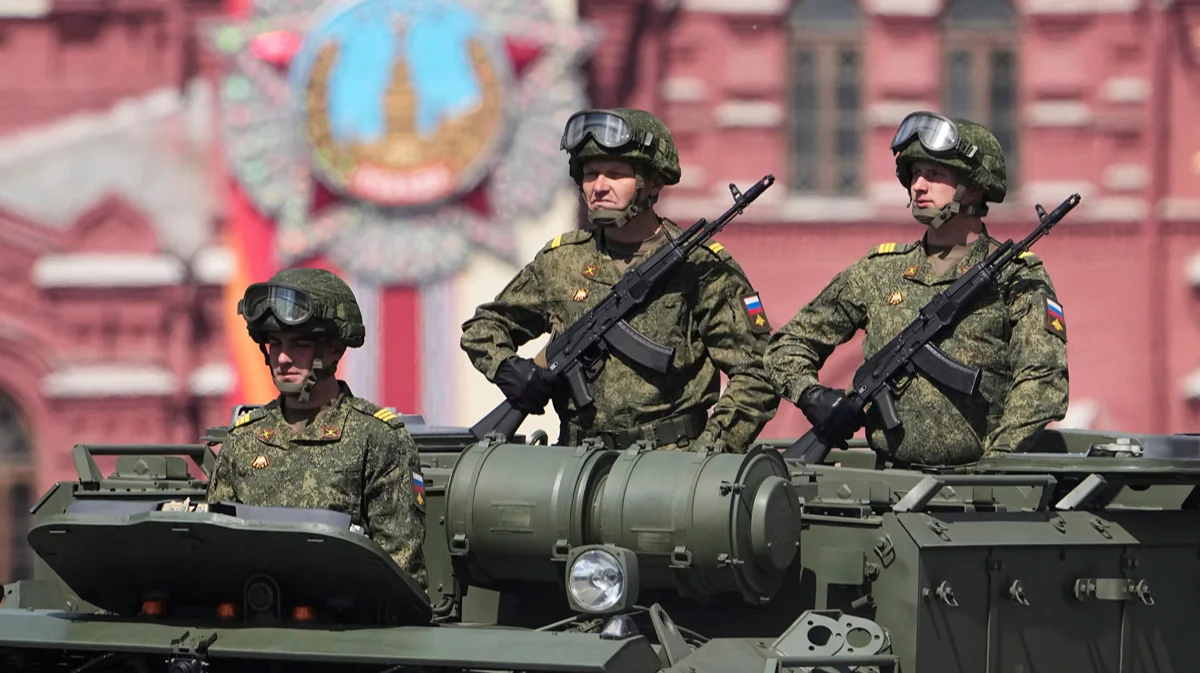
Russian troops go to the BTR in Red Square during the Victory Parade in Moscow, May 9, 2025. Photo: Alexander Zemlyanichenko / Ap Photo / Scanpix / Leta
The Ministry of Finance proposed to increase VAT to 22% to cover the budget deficit caused by military spending. New bets, according to the draft budget, will be introduced from next year.
According to the estimates of the economists, with whom the New Evrope spoke, an increase in VAT will slow down the economy, will lead to a new wave of inflation and rise in the price of most goods and services, which will hit the pocket of every inhabitant of the country. We tell the main thing about the proposal of the Ministry of Finance: why do they increase VAT, how much they rise in price in the store and increase what other taxes can be expected.
Why does the Ministry of Finance increase VAT?
The Ministry of Finance introduced a draft budget to the government for 2026 and the planning period 2027–28, which provides for an increase in value added tax (VAT) from 20 to 22%. The preferential rate of 10% will remain on products, medicines and children's goods, promised in the ministry. In the case of adoption of amendments to the budget and tax code, they will enter into force on January 1, 2026.
What is VAT?
VAT is an indirect value added tax, which is laid in prices for goods and services. VAT is charged from the entire business chain, which is involved in production and sale. However, in fact, VAT pays only the end consumer - that is, the buyer.
An increase in VAT will give the budget 1 trillion rubles a year, estimated The Bell. The funds that this measure will bring will be directed, first of all, to “financing of defense and security”, the financial department emphasized.
“The resources planned in the budget will ensure the equipment of the armed forces with the necessary weapons and military equipment, the payment of monetary allowance for military personnel and their families, as well as the modernization of enterprises of the defense and industrial complex,” the Ministry of Finance says.
As the New European Europe wrote , a third of the current state expenditures are a third of the current expenses and the defense industry. It was these expenses that inflated the budget almost by half compared to 2019–2020, which, in turn, dispersed inflation.
The deficit of the federal budget of Russia for the first eight months of 2025, previously amounted to 4.19 trillion rubles, and it must somehow be covered, the economist notes in a conversation with the New European ( he chose to remain anonymous for security reasons. - approx. Ed. ).
- We see that, apparently, Vladimir Putin is not going to stop the war. And the easiest way to plug the hole in the budget is the growth of tax rates. In this case, we are talking about VAT,
-noted the interlocutor of Novy-Europe.
Professor of the Barcelona School of Economics Ruben Yenikolopov also agrees with him: in a conversation with Novo-Europe, he noted that earlier the deficit was closed at the expense of reserves and public debts, but now both of these sources have become more difficult to use: reserves are melting, and taking new debts has become very expensive.
- Therefore, the only way is to either reduce civil costs even more, which also most likely happens, but the main thing is to increase income. The only way to increase income in a sanctions economy is to increase taxes, ”he summed up.
The authorities promised not to raise taxes? In fact, it turned out differently
Vladimir Putin, speaking last year before the Federal Assembly, spoke about the need to fix the main tax parameters until 2030 after the approaches to the modernization of our fiscal system are thought out, to a more fair distribution of tax burden in the direction of those who have higher personal and corporate income. ” In June 2025, the head of the Ministry of Finance, Anton Siluanov, also promised that taxes would not change, despite the fact that the Russian budget “Stormit” would not be changed.
Today, commenting on the budget entered in the State Duma for 2026–2028, Putin’s press secretary Dmitry Peskov called it “absolutely balanced”. Such measures - “a completely normal process for a certain stage in the development of our state,” added in the Kremlin. He explained his position by the need to wage war, which Russia should win "for the sake of children and grandchildren."
“But now is the most acute stage of the war, and it is quite fateful <...> Hence the patriotic feelings, hence the discussion of how all this should develop further, and so on,” Peskov said.
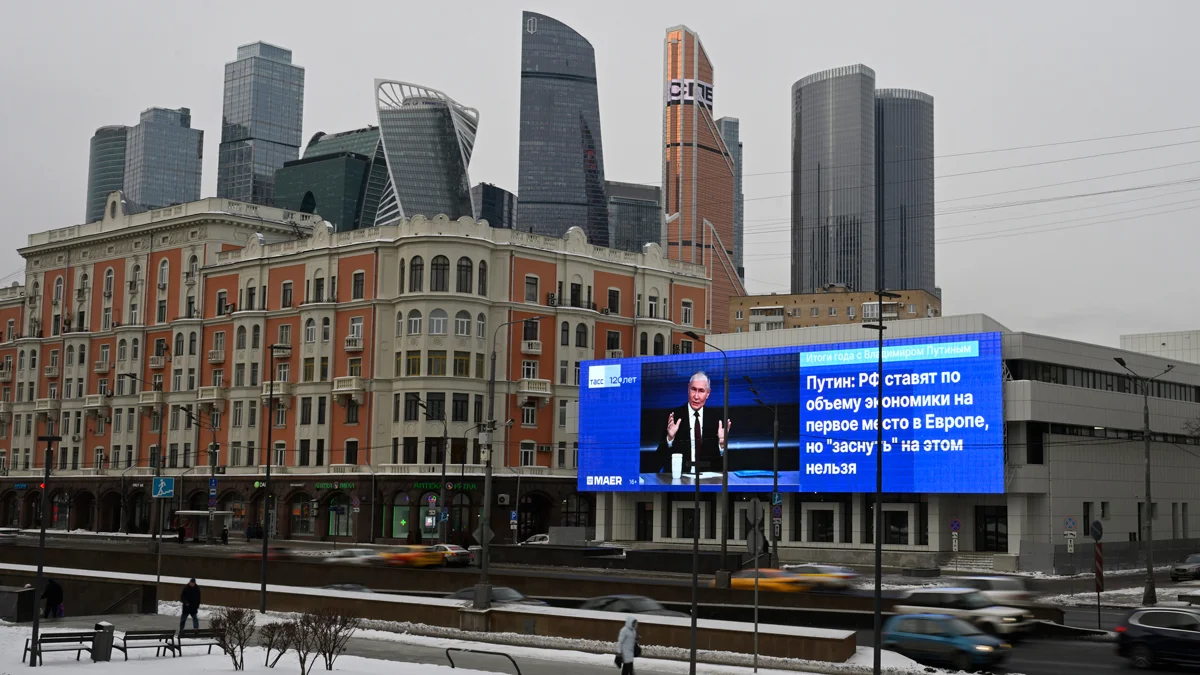
Why do they increase VAT?
Unlike income tax (personal income tax), which drives salaries in the “shadow”, or income tax, which companies can be artificially underestimated, VAT is easiest to assemble VAT , an anonymous economist notes in a conversation with Novo-Europe. It is built into the price of the goods, it is more difficult to evade it, and the money into the budget goes by a constant and predicted stream.
Among other things, despite the fact that value added tax is one of the most noticeable for people - everyone sees it in checks every time when buying goods in a store - from all taxes he does the least harmful to economic growth, explains the Professor of the Barcelona Economy School Ruben Enicolopes. It is considered the “least distorting”, the professor continues: that is, an increase in VAT least of all affects the decisions of people and companies and does not force them to work less, refuse to purchase or go into a “shadow”.
“If you increase taxes, but at the same time do not completely strangle the economy, then VAT seems to be a reasonable choice for this,” he says.
Other taxes (for example, excise taxes on the oil sector), according to the interlocutor of Novo-Europe, could harm the economy stronger, and the oil and gas sector already gives the maximum in the current situation. Thus, an increase in VAT is the “smallest evil” to replenish the treasury without a sharp strangulation of the economy, the expert summed up.
Do products in the store rise in price?
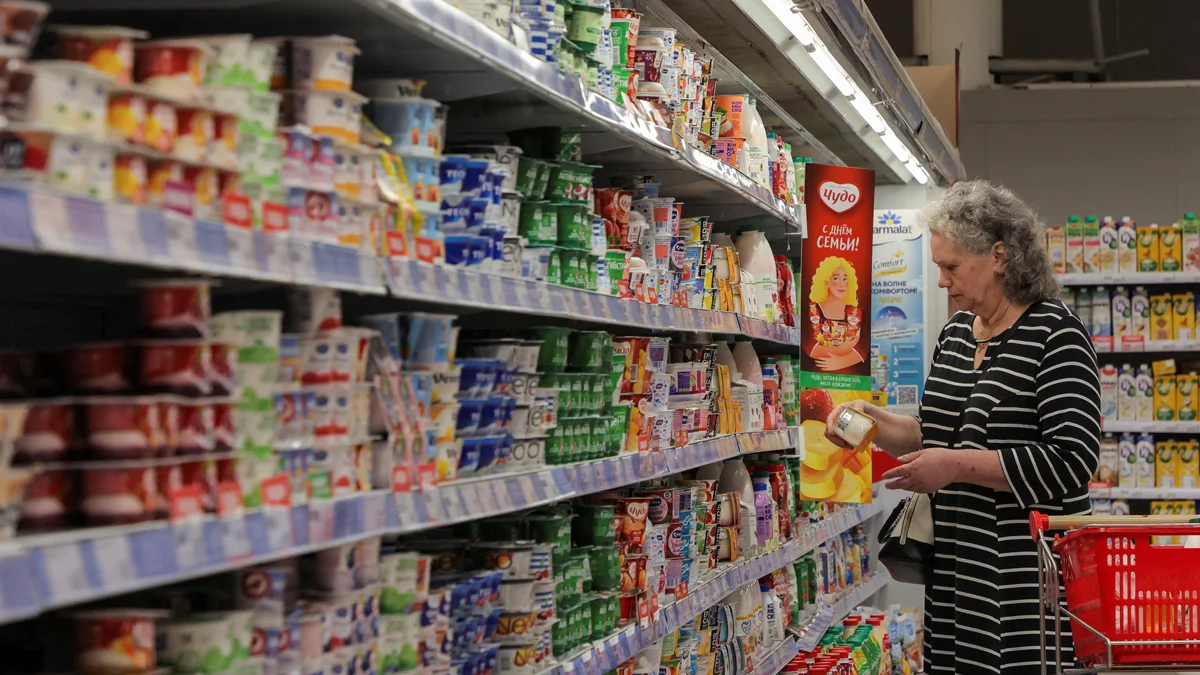
Yes, goods rise in price: increasing VAT, first of all, leads to an increase in inflation and prices for consumers. The Ministry of Finance in its press release promises that price increases will be “moderate and limited”. At the same time, Professor Ruben Enicolopes predicts that increasing the rate by 2% will lead to an increase in prices by 1-2%, or maybe a little more.
At the same time, an anonymous economist in a conversation with Novo-Europe believes that the total price growth will exceed 2% due to the chain effect, when each market participant (manufacturer, wholesaler, retailer, and so on) winds the tax on his value. According to him, people will feel the rise in price in the coming months, and not from January, since enterprises will prepare for tax raising now.
Due to price growth, the real purchasing power of people will fall, Enicolopes notes. Since the main driver of the Russian economy is consumption, its reduction will directly slow down economic growth, he added.
What else is tightened by the Ministry of Finance?
In addition to a direct increase in the VAT rate, the authorities will also indirectly increase the tax burden on a small business. Among other additional sources of budget replenishment that the Ministry of Finance proposed:
Tighten the rules for the simplified tax system (“simplified”): companies on the simplified tax system will be required to pay VAT with much lower annual income (not from 60 million, but from 10 million rubles).
Reducing benefits for insurance premiums for small and medium -sized businesses in some industries (for example, trade). The benefits will remain for production and transport.
The introduction of the gambling tax in the amount of 5% of the accepted bets for bookmakers.
The introduction of income tax of bookmakers in the amount of 25% (now the tax is levied depending on the region).
However, these measures are secondary and insignificant in their budgetary effect, notes Ruben Enicolopes. According to him, against the backdrop of VAT increase, these are just “small grains” that do not play a decisive role.
Is it to wait for the increase in other taxes?
If the budget deficit is preserved and the VAT is not enough, the government will be forced to look for new sources of income, the professor of the Barcelona school of economics Ruben Yenikolopov emphasizes. However, “it is very difficult to climb into the head of the Ministry of Finance and predict what he still wants to sacrifice,” the expert continues.
The government will close any loopholes to replenish the budget, summed up Enicolopes.
Taxes and benefits may be at risk, including taxes for self -employed ( that tax benefits for more than 13-14 million self -employed “need analysis” are already saying in the government. - Approx. Ed. ). As Enicolopes recalls, the government promised not to touch the institution of self -employed within 10 years after its introduction, and this period expires only in 2028, but in the future the situation may change.

An increase in VAT will hit economic growth, which, in turn, will reduce future budget revenues, creating a vicious circle, an anonymous economist notes in a conversation with New Evrope. The expert draws attention to the fact that since external income from gas and oil falls, and war requires more and more money, the state will be forced to look for new internal sources of replenishment of the deficit. Therefore, according to him, “you can wait for anything”, including increasing other taxes.
-If the state is going to continue the war, then it must find some reserves in order to plug a hole from growing military expenses. And since external sources, obviously, are not expected-it is not yet visible that “friendly” regimes, China and India, give some money-then, respectively, the main sources will be internal. And which ones depends on the imagination of [the authorities], ”he says.