
Translated material
Emperor
Six stages of Mikhail Piotrovsky as director of the Hermitage
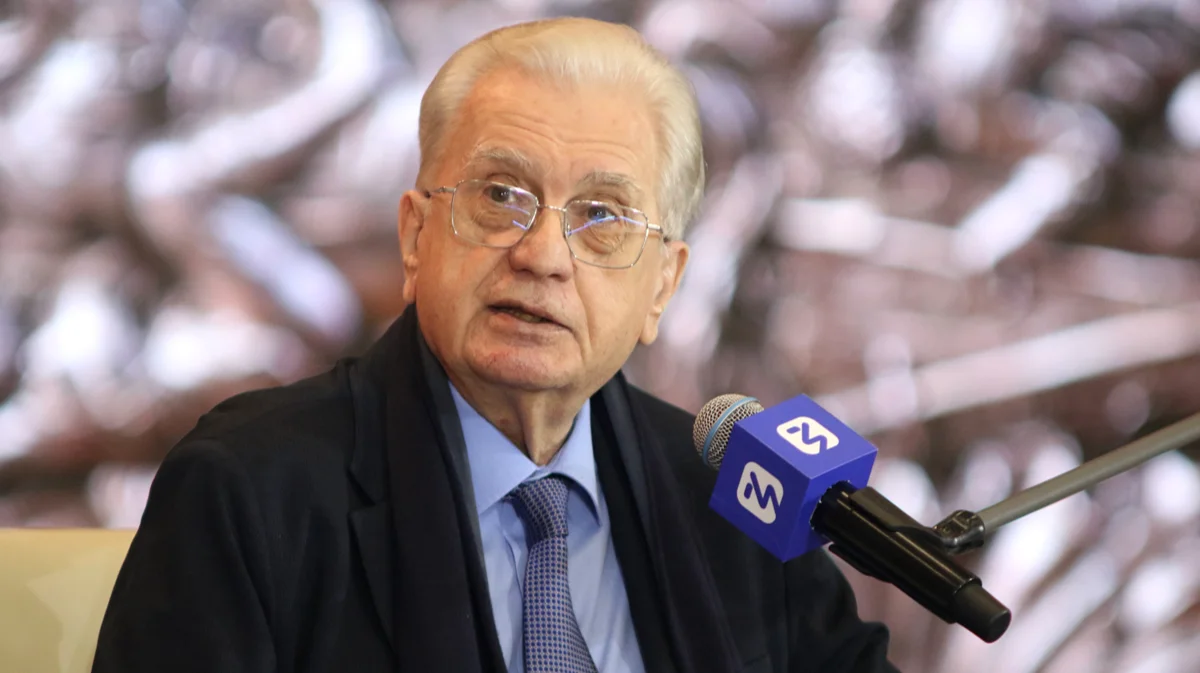
General Director of the State Hermitage Mikhail Piotrovsky, April 28, 2025. Photo: Maxim Konstantinov / Sopa Images / Sipa USA / Vida Press
On September 9, the government extended the contract of Mikhail Piotrovsky as director of the Hermitage. Over the years of his leadership, one of the main museums of Russia and the world went through several eras, and Piotrovsky himself became an epoch -making figure. The “new newspaper Europe” traced how he and his museum changed, and with it public policy.
Mikhail Borisovich Piotrovsky - 80 years old. Thirty -three years of them he heads the Hermitage. His whole life is connected with the museum: father, academician Boris Piotrovsky, led the institution from 1964 to death in 1990.
Like his father, Mikhail became an orientalist, went to numerous archaeological expeditions to the Caucasus, Central Asia and the Middle East. The Hermitage was his “home” from the diapers, but he became working in the state only after his father’s death, but immediately the deputy director for scientific work, and a year later he became the director. Between them, from 1990 to 1992, the director of the Hermitage was Vitaly Suslov, according to contemporaries, a deeply conservative person who did not leave any significant memories in his way. So it even seems to many that the director’s position has passed from the Piotrovsky-father directly to my son.
Heir
Mikhail Piotrovsky became the director of the Hermitage at the age of 47, which was considered boyish for the head of this level. He was appointed “from above” to his position, although in many museums then, including the second main museum of St. Petersburg - the Russian Museum - the election of the leadership was held by voting employees. Nevertheless, his figure inspired great hopes, and many of them were justified. Art critic Kira Dolinina, former editor -in -chief of the Hermitage magazine, and then a long -term artistic observer of the Kommersant newspaper, recalls:
“It was known that he was the secretary of the party committee at the Institute of Oriental Studies and that he is an Arabist historian with a very decent education, an active scientist who speaks many languages-not only eastern, but also European ones. By 1993, when I met him, he seemed a very encouraging figure: young, unconditionally educated, freely felt with foreign colleagues - the liberal face of post -perestroika Russia. ”
The country's cultural policy was then aimed at openness and cooperation with the whole world, and Piotrovsky, as a man of world culture, capable of not only in position, but also in intellect, and simply humanly speak equal with the heads of other top museums of the planet, was ready to become a symbol of this openness, which was not enough for many other cultural officials of Soviet hardening.
In the world cultural arena, the Hermitage is not just a big name, but one of the few “universal museums” that cover the entire world culture, from ancient Sumer to the present. These are less than a dozen, among them the Parisian Louvre, the Madrid Prado, the New York Metro, the British Museum in London. They have existed for centuries, in theory, they do not exchange officials and lead their own policy, focusing not on the change of rulers (they only suffer them as a temporary phenomenon), but to collect, preserve and analyze the diversity of cultural heritage, which will survive all kings, Secretary Generals and presidents.
Mikhail Piotrovsky presented the intellectual who understood this and could take on such a task.
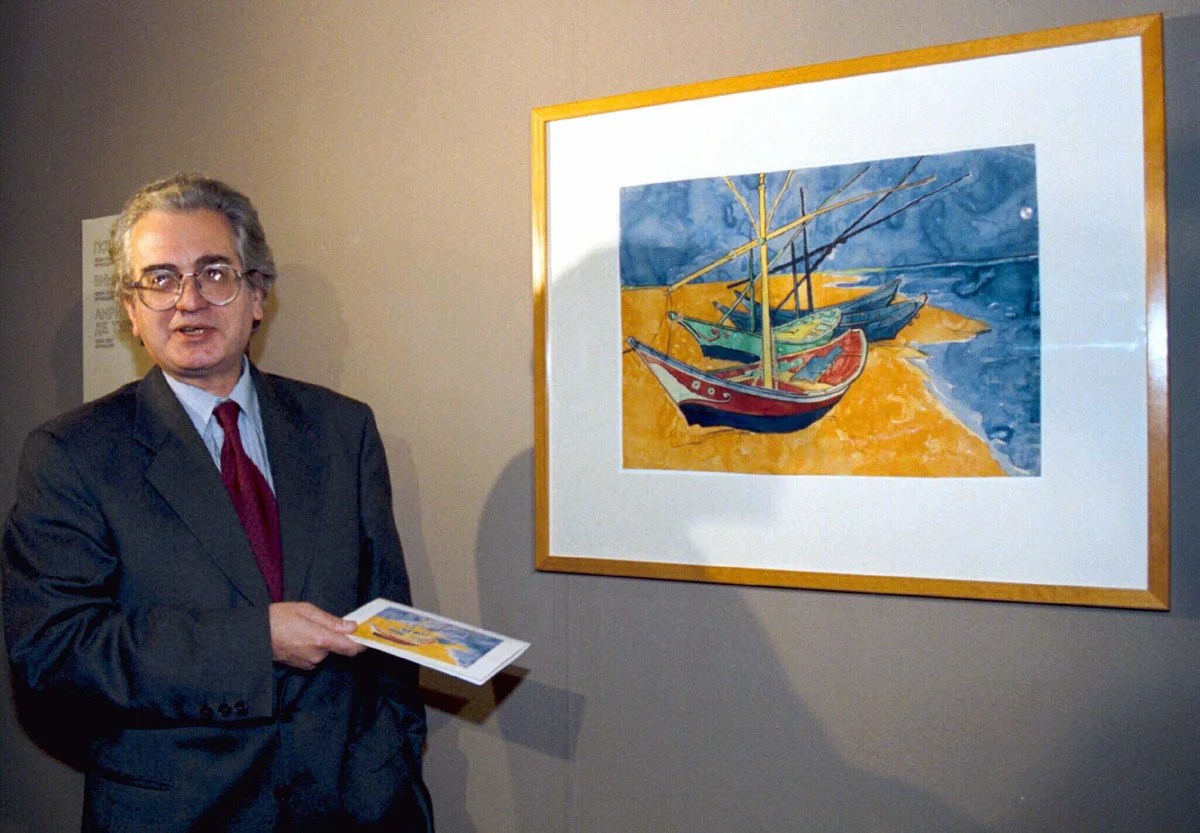
Innovator
The young Piotrovsky was quite consistent with the young state. He headed for openness and modernization. His first major step in this direction, as Kira Dolinina recalls, was a decision concerning a painful issue of restitution: Russian museums did not know what to do with the masterpieces that were exported by Soviet troops from defeated Germany in the second half of the 1940s. Their legal status was doubtful, the Germans tried to bring the rights to them as illegally captured.
“The story of restitution has become a kind of Lakmusova pap on which Piotrovsky received European fame,” recalls Dolinin. - It was already clear that the German state was not going to abandon the attempt to return what was exported by the Red Army, and to keep silent that the “trophies” are stored in the “forbidden funds” of Russian museums would no longer be impossible. Director of the Moscow Plane, Irina Antonova, said that all these are legal trophies, acting as an open Stalinist.
And the young Piotrovsky in St. Petersburg turned out to be a liberal: he stated that we will open and show these things, and most importantly - we will allow Western colleagues to study them.
In 1995, the exhibition "Unknown masterpieces" of things taken from Germany from private collections opened. It was a bomb of an unthinkable scale. The director of German museums and descendants of the owners arrived. Later they adopted a law on restitution, according to which almost nothing could be returned, but Piotrovsky acted as a symbol of openness. He entered the museum elite, and she fell in love with him, he was one of the equals for many years - not only in position, but also in personal contacts. ”
Marina Kolneskaya agrees with her-an artist and former director of the St. Petersburg branch of the State Center for Contemporary Art, who made many projects in cooperation with the Hermitage:
“Piotrovsky as a director became a public figure in the mid-1990s and seemed very cool. The Hermitage was extremely conservative. A sort of temple, where priests in white clothes store shrines. And Piotrovsky is a person who is acutely feeling the spirit of time. He understood that he needed to turn to life, and introduced modernity into the Hermitage. On this basis with Hermitage, there were very productive connections among institutions engaged in contemporary art. There were many exhibitions of contemporary artists of world significance: Sai Touomb, Bill Viola, George Sigal, Louise Bourgeois. There were always some ventures, ties were built with both the St. Petersburg cultural environment and with the collection of the museum. Under the Piotrovsky museum, the USR Friendly became: I remember the Hermitage where I was taken in childhood-there were hissing aunt-shit, long queues, smelly toilets and a buffet with inedible cakes. And with him, the Hermitage became civilian, new museum technologies were introduced, the exhibition process has become much more intense. It is difficult to overestimate what shift has occurred, because large cultural institutions are very difficult to modernize. ”
Under the Piotrovsky, the museum, which was previously engaged in the main classic, really turned to modern art. The Department of Contemporary Art - the project “Hermitage 20/21” - was launched in 2009, Dmitry Ozerkov, an ambitious young art critic with international fame, became its leader. The new department brought exhibitions of superstars, modern classics from the main museums in the world and collected its own collection. In 2014, the Hermitage adopted one of the main European forums of contemporary art - the Biennale "Manifesto". Even the manner of Piotrovsky dress - instead of the official tie, his branded bohemian scarf - created the image of an enlightened European, a person from art, and not from bureaucracy.
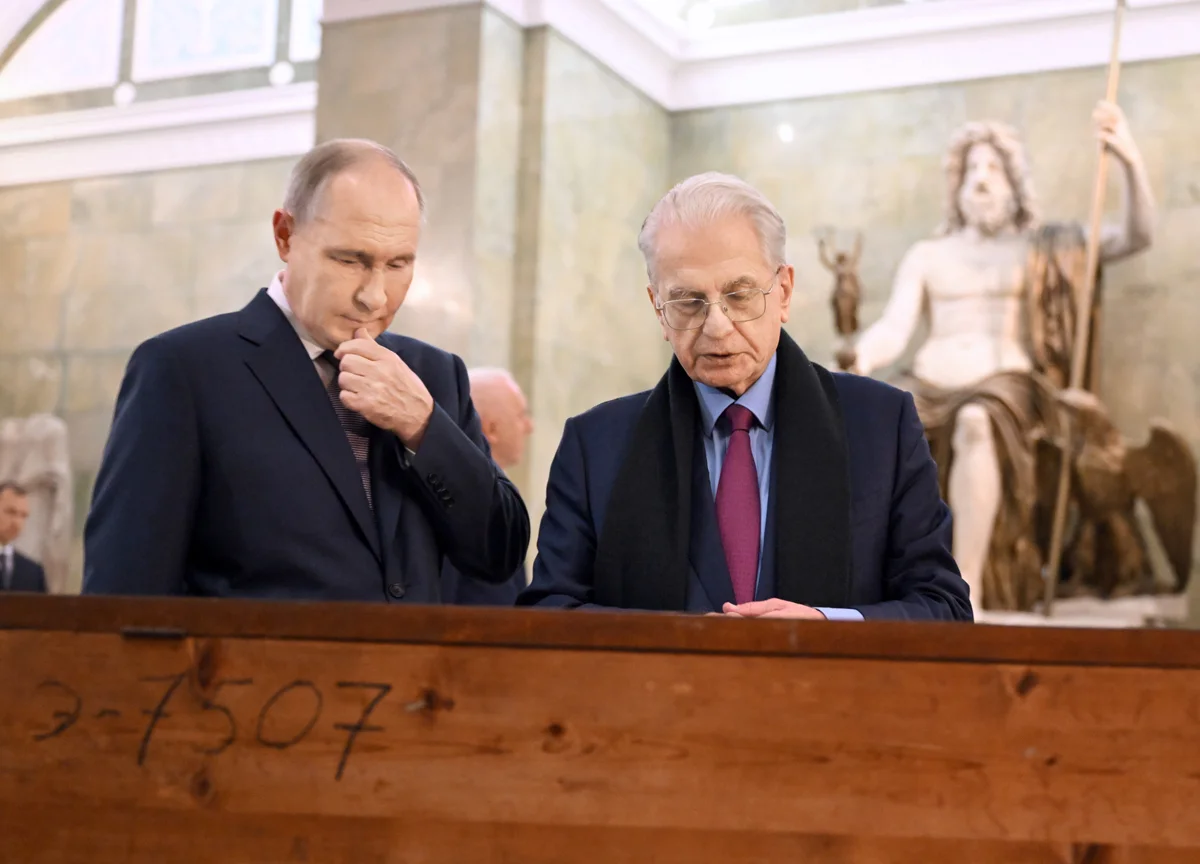
Builder
Mikhail Piotrovsky always positioned himself rather as a celestial-intellectual than a business executive, but he surrounded himself with competent business executives. Together, they even learned to attract sponsors in the hungry 1990s and finance museum projects, and not only exhibition.
Piotrovsky - this is my personal evaluative judgment - perceives the Hermitage as his estate, almost as part of his body, and tried and tries to expand it as much as possible: both in the sense of cultural influence, and simply territorially.
After many years of disputes from the Ministry of Defense, he managed to get the building of the main headquarters opposite the Winter Palace on Palace Square: after a radical reconstruction, historical expositions and halls of contemporary art were located there. The Hermitage depository was built-a huge building in the old village (this is the area in the north-west of St. Petersburg), where funds are stored, restorers work and “open storage” is practiced, that is, spectators can come to look at the exhibits and the work of restorers. There are also exhibitions, for example, stored in the Hermitage of historical carriages and costumes that would have been waiting for places in the main buildings for a long time.
Under the Piotrovsky Museum, overgrown with commercial structures: including the Logistic company Khepr, which is engaged in the transportation of works of art from the Hermitage collection, but accepts third -party orders and the Arca Publishing House, which was headed by the son of Piotrovsky Boris.
Corruption?
It is unlikely that in Russia there is at least one project related to the state budget that would be 100% free from corruption, kickbacks and cuts. With regard to the Hermitage, such accusations periodically also surfaced. The most noticeable case was in 2013, when the Accounts Chamber discovered embezzlement during the restoration of the Hermitage Corps. The cost of work in contracts was unreasonably overstated, the estimated damage amounted to more than six billion rubles. As a result, a number of those involved in the work were arrested, including the Ministry of Culture of the Ministry of Culture Boris Mazo, who was subsequently convicted of eight years in prison.
The construction industry is one of the most corruption, and the Hermitage at the Piotrovsky Jr. was built in a stealth, and many witnesses recall the “oddities” at construction sites. The St. Petersburg art critic (we do not call it a name for security reasons) recalls a tour that the Hermitage arranged for the press to show the construction of the future depository in the Old Village:
“How many scandals happened there! A group of journalists was taken to the construction site, released into impassable autumn dirt, and the foreman said: “Here is a plan for the scolding of the new library of the Hermitage, here there is so many piles. Show what you want to see, we will dig up this place under the cameras and show you pile. ” It was very funny: the excavator arrived, everyone in the mud, the workers are swearing, for the journalists they excavated a meter of dirt and showed that there really was pile. ”
“Some of these scandals were probably initiated specially,” our interlocutor believes. - Planted the deputy director for construction. The Hermitage fought back as best he could. But if Piotrovsky now, even as the director, will want to take it in one place - there is something to take it for. ”
The Project publication in 2021 wrote that many businesses with a close relationship with the Hermitage belong to the friends of the Piotrovsky family. However, the family lives, according to their acquaintances, quite modestly. Kira Dolinina, who followed the investigations of the financial affairs of the Hermitage, claims: “Personally, in the 90s I have not seen large abuses, although the journalists were looking for. Doubtful transactions have already belonged to the 2000th and 2010s, and rather belonged to state contracts.
The story of Mikhail Piotrovsky is not about money, but about power. ”
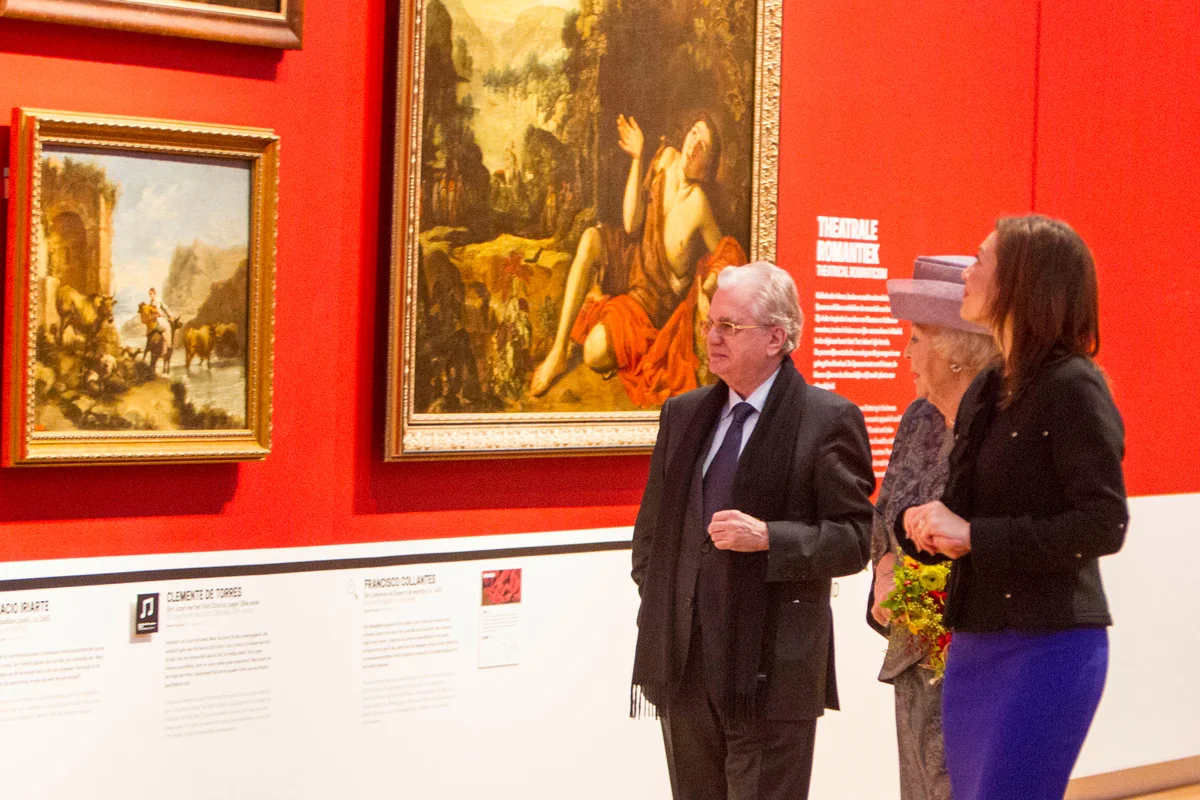
Lord
With decades in the director's chair, Mikhail Borisovich Bronzeel. His merits to the Hermitage and the International Cultural Arena were undeniable. He received numerous awards - both Russian and other countries, and for business. Perhaps he merged more and more with the museum, starting to consider it his property. It was good in many respects: everyone knew that Piotrovsky, under any attack, would defend the museum as his own house, to the last drop of blood. He gave an unprecedented rebuff to the famous Director of the Moscow Pushkin Moscow Concrete Irina Antonova, when she turned to Putin with a nonsense request from the Hermitage and transfer to Moscow the pearls of the collections of Schukin and Morozov - French impressionists. He perceived as a blow to his own back several not even very significant facts of theft from the Hermitage, carried out by his employees. He took care of the old Hermitages, the veterans of the museum, keeping them at work to the last and never throwing fate to the mercy of fate. He really felt like a master and took care of his economy at all costs.
However, over time, Piotrovsky became more and more authoritarian, and this began to affect the team. The promotion of people in the service slowed down, he himself looked like an increasingly closed leader who did not grow up a shift and new candidates for the director's post.
“A certain system of transferring posts has developed in the Hermitage,” says St. Petersburg art critic. - There are “old people”, and then a huge gap between them and younger employees, and only one who went the entire career path to the post of deputy director can become the director. Even just the elderly keepers complained that they did not know who, after their departure, to transfer the funds, because young employees who are quite worthy, “too young” and have not yet been marked by regalia.
Hermitage youth is the hope of the museum. Smart, competent, with different strategies and different characters and landmarks, but nothing shines on them, because in the Hermitage, as in the CPSU, you need to go the whole career from and to, this is a long way. ”
Details are revealed by Kira Dolinin: “Once in the Hermitage, the Keeper could refuse Piotrovsky. Employees could influence management decisions. But gradually we began to notice that he took over more and more decisions, more and more issues had to be resolved in his office, less and less young employees were allowed to discuss. Employees were forbidden to directly communicate with journalists-only a written request through the press service.
Piotrovsky became more and more irritable, began to listen to employees less. He began to lose people when the young began to leave - they used to work in the Hermitage to death, and from a certain moment they began to quit, realizing that career growth was very slow and there are other prospects in the museum world. He did not notice this on time. As a result, the Hermitage stagnated. In the 2010s, Moscow GMIA began to make large cool exhibitions, for example, Caravaggio. The Hermitage was not going to do this, he believed that he was already great. There was no drive to make exhibitions with a Wow effect. In Piotrovsky’s head, the word “Hermitage” grew into such a huge and eternal something that he no longer needed to do anything, just exist. Piotrovsky himself began to play with the authorities and become a trusted person. ” (Mikhail Piotrovsky was a confidant of Vladimir Putin in the presidential election 2012, 2018 and 2024. - Approx. Ed. )
The potential of the Hermitage would really be enough for centuries - in the end, people will always come to look at the masterpieces of Leonardo da Vinci, Rembrandt and Rubens. And for a long time the potential of its director, who protected and expanded his museum, would have been enough. If in 2022 Russia did not attack Ukraine, and the Russian authorities would not demand the oath of allegiance to everyone who is associated with them.
War
In February 2022, Russia invaded Ukraine. The situation with the sanctions at first was chaotic, and museums did not understand whether economic measures were relate to their activities.
The Hermitage had problems with the return of exhibits from European exhibitions through Finland: some of the cargo was stuck at customs, the lawyers of the two countries have been negotiating for some time about whether museum exhibits are falling under sanctions or not. All of them managed to return, but in June 2022 the Hermitage announced that he was introducing a moratorium on any exhibitions from his funds in “unfriendly countries” - even a day earlier than the same moratorium for all Russian museums will introduce the Ministry of Culture.
The attention of many paid an interview with Piotrovsky “Rossiy Gazeta” in June 2022. In it, the director of the Hermitage spoke about exhibitions abroad as a “cultural special operation, a powerful cultural offensive”, condemned attempts to “cancel” Russian cultural initiatives abroad, not mentioning their reason, said that the museum compiled its “black list” of possible partners (“we were watered with mud of the Khodorkovsky”), and stated that it would always be with his own with his own The country, no matter what it does. In fact, he justified Russian aggression.
“On the one hand, war is blood and murder, and on the other, self -affirmation of people, self -affirmation of the nation. Everyone wants to assert himself. And in his position in relation to war, he undoubtedly asserts. Well, we are all brought up all the same in the imperial tradition, and the empire unites many peoples, unites people, finding some common and important things for all, ”Piotrovsky said then.
The St. Petersburg intelligentsia, which is mostly liberal and anti -war, previously knew Piotrovsky as “its own”, the carrier and even the embodiment of European values that built the Hermitage as part of the international culture. Reading interviews to Rossiy Gazeta described their impressions in one word: shock.
Piotrovsky can be understood, alone said, in his hands - a museum that his dear to him, for the sake of preserving the museum, he can agree to say anything. No, others answered: authority and merits are already so great that he does not have to repent before the authorities. So it is he from a pure heart? Is he really for the war? My friend, who worked with the Hermitage and its director for many years, was surprised: “With his power and influence, he could tell reporters: guys, I am 78 years old, I am sick, go to the ass.” "Why does he need this?" — звучало от всех.
Некоторые предполагали, что если бы Пиотровский высказался против войны, ему могли бы не продлить рабочий контракт. С другой стороны, так ли это важно в его возрасте? Могли бы, как сказал выше петербургский искусствовед, «взять за одно место» и припомнить сомнительные сделки при строительстве. Но в начале войны масштаб репрессий был не настолько силен, а уж Пиотровский — неприкасаемая фигура.
Так или иначе, культурная общественность осознавала , что Михаил Пиотровский «перешел на темную сторону». Что ж, политические разногласия разделили в 2022 году многих, и что говорить о разочаровании в коллегах — семьи рушились. Однако интервью Пиотровского удивило не только российскую культурную среду. Кира Долинина вспоминает:
«Он стал нерукопожатным. Мы с мужем, бывшим сотрудником Эрмитажа, были уже за границей, и когда мы встречали коллег на конференциях, их первый вопрос был: «Что это такое? Как это возможно, мы же его знаем?» Все понимают, что он сидит в стране, должен что-то говорить, если бы он выдавил из себя что-то дежурное, ему бы это простили, это было бы понятно. То, что он сказал, было непонятно. Он закрыл себе все выходы, это просто моральная катастрофа».
Даже не сам факт начала полномасштабной войны, а слова Пиотровского стали причиной того, что Эрмитаж потерял многих важных сотрудников.
Глава отдела современного искусства Дмитрий Озерков, искусствовед европейской значимости, вхожий в высшие музейные круги — его многие рассматривали как человека, который когда-нибудь возглавит Эрмитаж, — покинул Россию и заявил , что не считает больше возможным работать в музее, чей директор поддерживает российскую агрессию в Украине. Тихо и не хлопая дверью уволились многие менее знаменитые, но уникальные специалисты.
Реакция на слова Пиотровского в 2022 году была однозначной : «Испортил себе некролог». И музею навредил.
Искусствовед из Петербурга: «Он сказал слова, которые говорить нельзя, и повторил несколько раз — нельзя сказать, чтобы из него их клещами вытянули. Раньше Пиотровский был крайне уважаем в художественном и музейном сообществе. Но после начала войны в Украине, после того, что он сказал, и после отъезда многих очень значимых сотрудников все резко сместилось. Их места заняли ученые, которые сейчас заперты в этой клетке, они не могут развиваться и сотрудничать с западными музеями».
Марина Колдобская: «Многих повергла в шок его пропутинская имперская риторика. Возможно, для себя он объясняет это тем, что спасает музей от варваров: мол, если придут новые начальники, будет еще хуже. Но сейчас, скажем откровенно, это больше всего похоже на брежневскую геронтократию и выглядит уже не вполне пристойно. Хотя я не знаю, конечно, какой у него реально есть маневр».
Кира Долинина: «Это интервью гораздо трагичнее, чем многое, что произносили. Он сказал то, чего от него никто не требовал. Никто не требовал говорить, что «это наша война, мы тоже воюем», — это его личное решение. Он не вошел в раж. Он сказал то, что убило его биографию. Он сам себе вогнал гвоздь в гроб. Если бы он просто что-то мямлил — «мы поддерживаем, потому что это наша родина…» — конечно, было бы нехорошо, но это не произвело бы такого чудовищного впечатления и внутри страны, и снаружи. Трагическая история: человек, который действительно много сделал, потихоньку превращался в самодержца, а потом — в лизоблюда. Если бы он ушел вовремя, весной 2022-го, никто бы с ним ничего не сделал».
В августе этого года, незадолго до своего переназначения, Михаил Пиотровский дал еще одно большое интервью «Российской газете». В нем он рассказывает, что Эрмитаж вводит первоочередные льготы для участников «СВО» ( «специальной военной операцией» российские власти требуют называть войну в Украине. — Прим. ред. ) в обход льгот для студентов и школьников, что в Эрмитаже прошло дефиле одежды, приспособленной для инвалидов, прежде всего причастных к военным действиям, и обещает , что в программе Эрмитажа будет и «патриотическая триада », то есть «православие, самодержавие, народность».