
Translated material
About whales, quanta and teapots
In Novosibirsk, the festival of scientific cinema "Silicon" opens

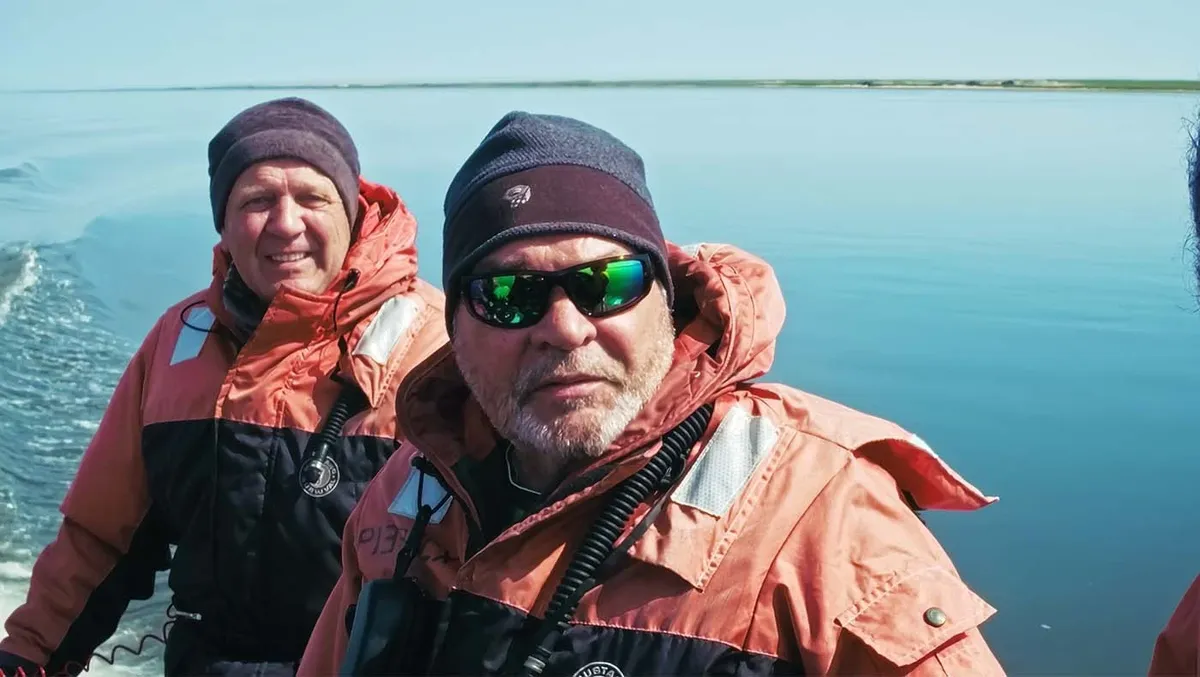
Frame from the film "About People and Whales"
It is customary to talk about elegant “central” festivals with stars on red carpet - in the capitals or the sun -warm places like Gelendzhik or Rosa Khutor. But the filmmaker is carried out throughout Russia. And the farther from the center spoiled by the cultural events, the more important the most diverse educational film programs.
Such, for example, "silicon" in Novosibirsk. The Siberian Festival of Scientific Cinema "Silicon" for the fourth time is held in Novosibirsk and its environs. A review as a unification of science and culture - in the traditions of both the city and Akademgorodok, where the best bards, directors, writers, poets came in Soviet times. The key topic this year was science fiction. A special program of fantastic films of recent years, a retrospective of film adaptations of Soviet science fiction, thematic exhibition and pitching of modern fantastic books are attached to this leitmotif. The scientific and industrial cinema of Siberia is highlighted in a separate program. In the main competition - non -game films of scientific and industrial topics that help to figure out what is happening around us ... inside us.
"About people and whales"
Director Vladislav Grishin
Beautiful quiet movie.
A group of scientists and students comes to Sakhalin and Kamchatka to study gray whales and killer whales. Each of them has their own reasons to go here. For 30 years in a row, scientists, students, volunteers stubbornly come to South Sakhalin to track the population of gray whales. Biologist Alexander Burdin says that almost all laboratories are already closed and work is carried out on a bare enthusiasm. Kit -shaped appeared about 30 million years ago, and passed to a water lifestyle 50 million years ago. And a reasonable person (however, his grandmother said about his rationality) - only 300 thousand years ago. For whales, the ocean is a native house. For us is someone else's element that we gradually destroy.
The ocean is beautiful here. The white lace of the waves taken from above, the endless free spaces. Thanks to the authors for the fact that the ocean here is alive, changing shades, mood. And giant marine animals with beautiful eyes live in it.

They live under water, breathe air, feed the kids with milk. Scientists have been conducting their mammalian catalog - a kind of census - since 1995. From year to year. Know all marine animals. They know how whales talk to each other. How the killer whales communicate.
As they understand each other, despite different “dialects” that researchers have already learned to distinguish. Sea animals are non -aggressive - on the contrary, desperately peaceful ... unlike people.
The number of whales is inexorably reduced every year. The feed base is catastrophically depleted. The situation is tragic. This is especially acutely felt when at least a little close to their lifestyle, to the global problem of survival. Thanks to the work of enthusiasts, gray whales are included in the Red Book. Man continues to feel like the king of nature, not realizing that without these smart inhabitants of the ocean, our ecosystem will become even more vulnerable.
"Quantum time"
Director Sasha Agafonov
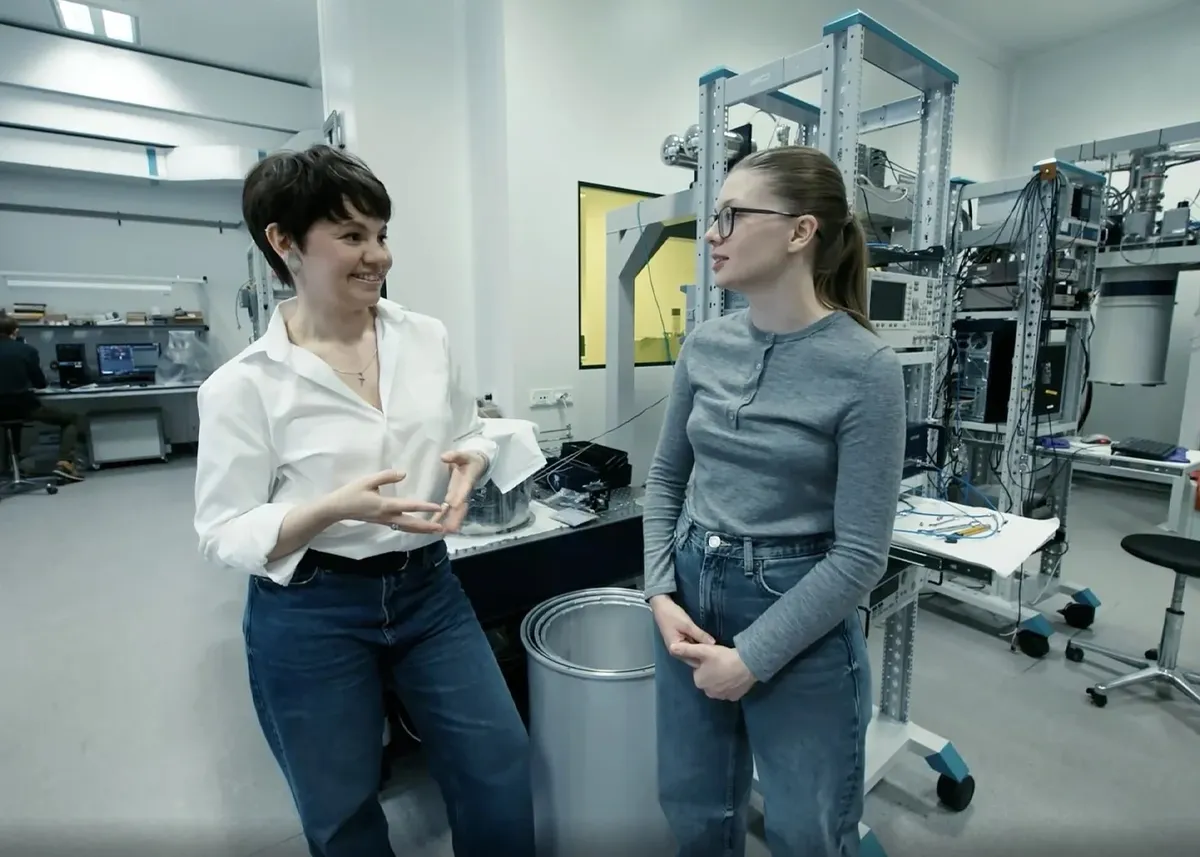
Immersion in one of the most mysterious and promising areas of physics. The heroine is the popularizer of science Elena Mastyukova. She is a physicist by education. But such ... an atypical physicist. Rather, it looks like a model or a TV presenter. At the same time, it is occupied by the scientific areas and topics of quanta, teleportation of particles, and the management of the life of ions. Elena with enthusiasm leads a dialogue with scientists about the photon level of God. She is a translator: speaks with researchers in the same language and then intelligibly explains to us the most difficult things. He tries that at least to some extent we could appreciate the contribution of scientists, the current revolutionary breakthrough in the field of modern nanophysics. Undoubtedly, this is an important work that allows science not to marginalize.
"Science fantasy"
Directors: Andrey Ananin, Margarita Morozov, Pavel Tikhonov, Vladimir Golovnev

Cinema about folk science and Shukshinsky “worlds”, supporting it. According to HSE statistics, almost every tenth resident of Russia is an inventor. Just imagine: 9.5%, or 14 million people in our country are somehow connected with invention.
It turns out that today, as in ancient times, the discoveries of a new one, research, experiments live not only in the walls of the capital's universities, in the laboratories of science city, but also in the farthest parts and open spaces. Where the researchers live. Fantasers. Inventors. Kulibins. Their finds, creations, inventions are born in small villages, on the outskirts of county cities, in home workshops, garage laboratories, in kitchens.
A film about people who transform reality.
Novella No. 1. The teacher is engaged in students of robotics. Under his leadership, children create a puppet theater ... from robots, that is, a school robotheater. They themselves write computer programs, they themselves make the scenery, robots. Together, they put a performance about Pope Carlo, Buratino and Karabas Barabas, who has one black desire - to break the Buratino robot. The most beautiful here, of course, Malvina - more precisely, is the robot of Malvina. The audience is delighted.
Novella No. 2. Cyril launches into the stratosphere, that is, in the nearest cosmos, Nanosnutnik. The guy has long been engaged in the remote study of the Earth ... from the sky. He has a constant residence permit. The weather interferes a little. But Cyril and his friends for clouds see a clear sky.

Novella No. 3. About Ivan - the inventor of the generator, who, in the field of the North, outside the civilization, under any weather conditions, gives light (not very bright, only one light bulb) and even heat. A slyly arranged generator is located in an ordinary iron kettle. Ivan defends his invention at the television competition. But the glossy fashionable jury does not like the generator in the kettle. Mom is worried about Ivan: we should think about the prospects, about the family, and he is all bored with his teapots. Thirty -eight already. The heart attack has experienced. And no glee. And the stubborn Ivan goes to the reindeer herders to the Far North, trying to interest the inhabitants of the plague to interest the generator so necessary ...
What unites them all? Stubbornness? The desire to live not in today, boring and anxious, but in tomorrow? And of course, a childish, not pragmatic attitude to the world. But, as one of the heroes of the film says,
“If everyone were completely adults, we would have to join the“ sadness ”party.
More about the cinema
Larisa Malyukova leads a telegram channel about the cinema and not only. Subscribe here .