Translated material
Battlefield - Moldova
In the parliamentary elections on September 28, the future of the republic is decided: a course in Europe or revenge of pro -Russian forces
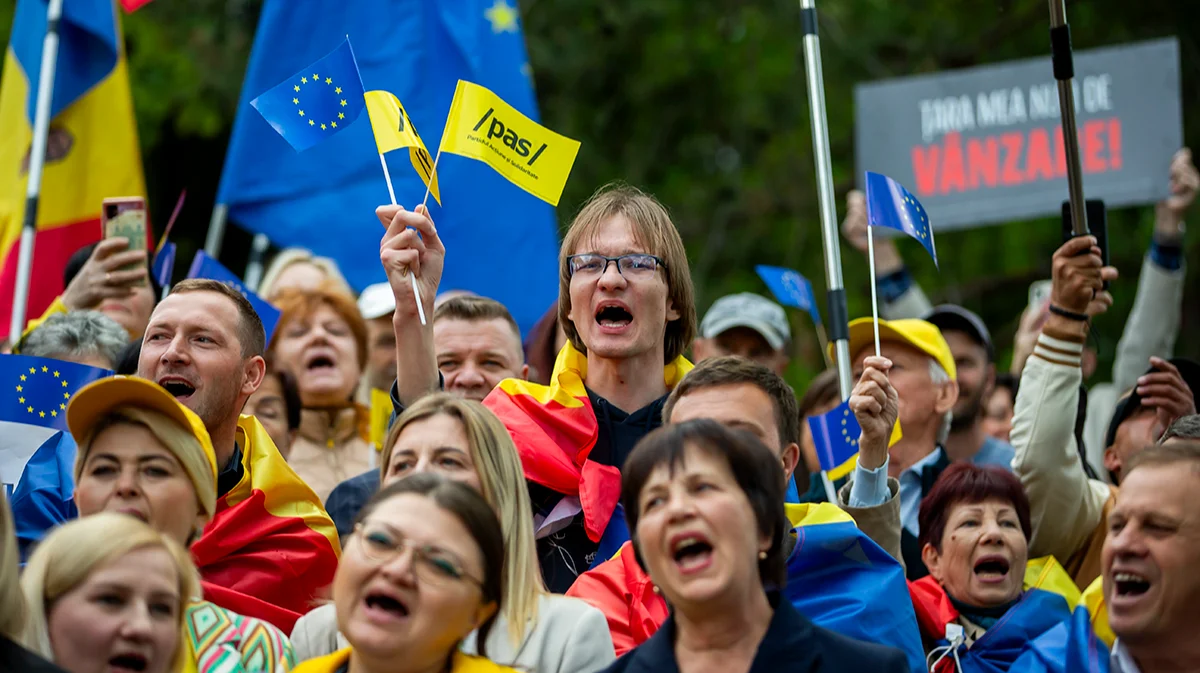
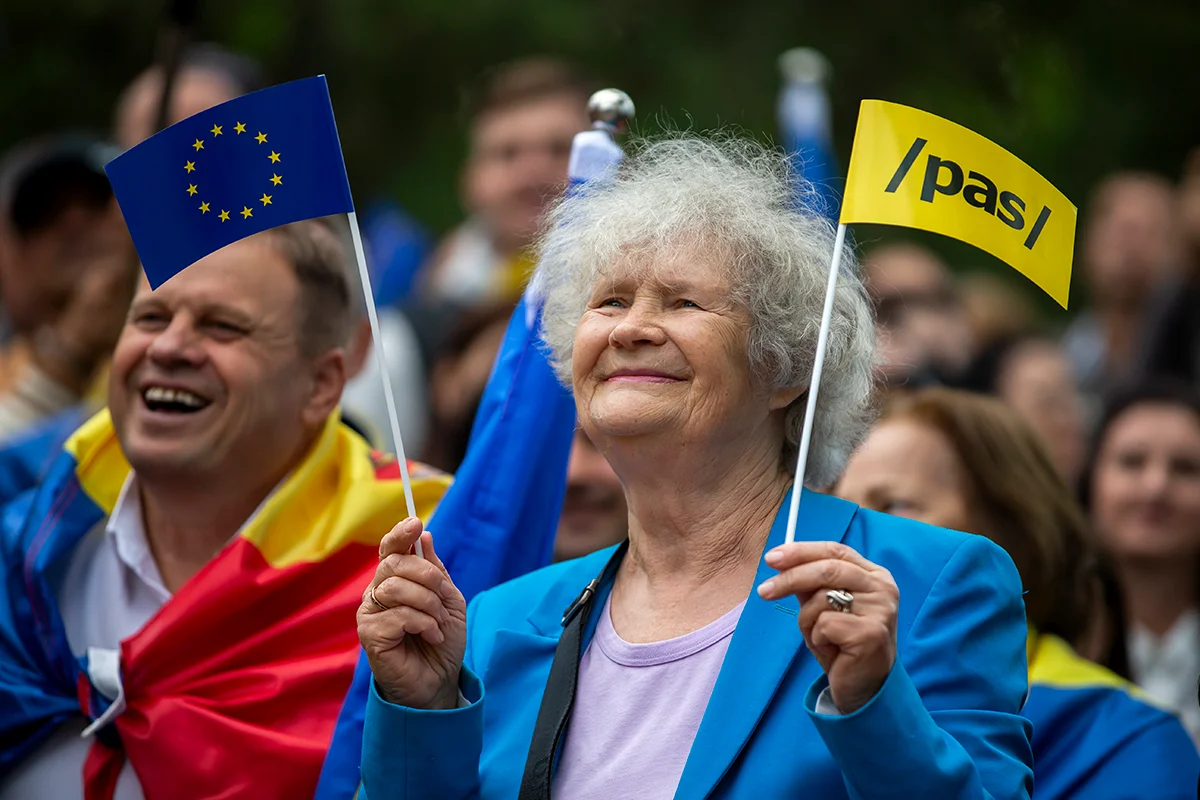
Supporters of the PAS party on the march on the occasion of the upcoming parliamentary elections, Chisinau, Moldova, September 26, 2025. Photo: dumitru doru / epa
In Moldova, on September 28, parliamentary elections will be held, in which, according to the pro -European authorities of the country, the choice will be made “not just between the East and the West, but between the world and the war”. According to such an interpretation, the world is a confident victory of the now ruling party “Action and Solidarity” (PAS) and, accordingly, the continuation of the country's movement in the EU. To the war, it follows from such a version, the victory of the opposition, which is ready to establish relations with Russia to one degree or another.
About the pre -election layouts in Moldova and why the republic has become the "Laboratory of hybrid intervention" of Moscow - in the material of the New Newspaper Europe.
Testing ground
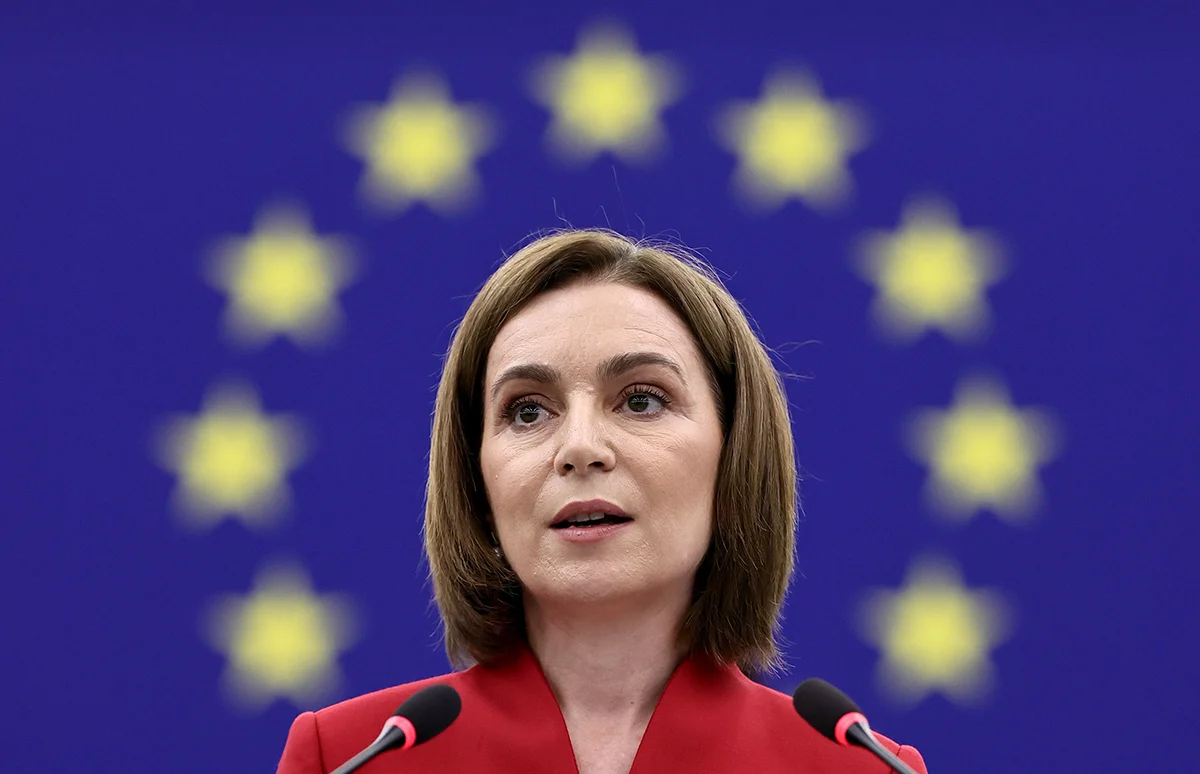
From the very beginning of the election campaign, which ends with a vote on September 28, President Maya Sandu called on fellow citizens to take their choice as seriously as possible. A de facto leader of the ruling party “action and solidarity” (although formally Sandu is non-partisan) warned that “sovereignty, independence, integrity and European future” could be under threat. According to her, this will inevitably happen in the event of the victory of the opposition.
In contacting the nation on September 22, Sandu outlined what exactly such a scenario could threaten: “Europe will stop on the border with Moldova. European funds will be frozen along the river Prut ( that is, on the Romanian border. - Approx. Ed. ). Freedom of movement may end, and our land - to become a bridgehead for the penetration of [Russian troops] into the Odessa region. The Transnistrian region will be destabilized. " “We are obliged to preserve Moldova peaceful, free from the war and Russia's attempts to attack or destabilize other states,” the head of state summarized.
Without listing PAS political opponents by name, Maya Sandu called them "people who have already proved many times in the past that they were ready to sell their country for money." And the money, as she made it clear, the Kremlin allocated very significant: "Hundreds of millions of euros." First of all, we are talking about financing direct participants and tools of hybrid war.
For example, the Reuters agency, in the investigation issued on September 26, spoke about the active involvement of Moscow to the information war of priests of the Moldavian Orthodox Church, controlled by the Moscow Patriarchate: after traveling to Russia they were given bank cards with amounts of up to $ 1.2 thousand, and in return was asked to convince the parishioners of the “dangers of European integration”, criticize the power of the power And at the same time promote “traditional values” as opposed to the so-called “gay Europe”.
And before that, on September 4, the Moldavian edition of Ziarul de Gardă (ZDG) spoke in detail about the scheme for the spread of anti -European propaganda texts using hundreds of accounts specially created in Tiktok and Facebook.
The non-profit organization Promo-Lex, the purpose of which is to develop democracy in Moldova, also reported a coordinated campaign to “create fake accounts and clones of web pages that artificially distorted the information” and were aimed at discrediting the election process. This was stated in the report of the Promo-Lex mission to observe the parliamentary elections. The study covered the period from 11 to 24 September.
It was also reported about attempts at corruption in the elections, and the preparation of cyber attacks for a critical state infrastructure. In particular, according to the police, some hackers were going to attack the servers and infrastructure of the Central Election Commission on the election day, thereby blocking its work.
As noted by the expert of the Fund. Konrada Adenauer Sanda Sandu, Moscow made a "Laboratory of hybrid intervention" from Moldova:
“This is a testing ground for the updated tools of Russian pressure, including mass misinformation, illegal financial networks and targeted splitting of society ... If Moscow succeeds in Moldova, the lessons obtained will be used in other places.”
Meanwhile, the Russian authorities categorically deny the intervention in the Moldovan elections, while harshly criticizing the current authorities of the republic for the supposedly used non -treasure methods of struggle. “In an effort to maintain power to preserve power, the ruling circles [Moldova] and their European sponsors involved the whole spectrum of totalitarian mechanisms - arrests and searches in order to eliminate political competitors, the closure of independent media, primarily Russian -speaking, and non -judicial persecution of disagreements,” the representative of the Russian Foreign Ministry Maria Zakharova listed .
Three in parliament, not counting pas
The destabilizing activity of Moscow in Chisinau is associated, first of all, with the fugitive oligarch Ilan Shor and his associates living in Russia. At the public level, Shor gives an interview to the Russian State Media, calling himself “the future Prime Minister of Moldova” and dreaming aloud about the “single [Russia] economic and foreign policy, general security policy”. And non-publicly-as claimed, for example, in the BBC investigation -he controls the network of "Troll factories". The United States, the European Union and the UK back in 2022–23 imposed against the show of sanctions for "participating in the harmful operations of the influence organized by the Kremlin."
Ilan Shor is headed by the Pobeda political block, which was not allowed to the election. Until the evening of Friday, it was assumed that one political force associated with the fugitive oligarch would participate in the vote - the Moldova Mare party (“Great Moldova”), led by Victoria Furtune. The party was registered for the elections in early September, that is, literally at the last moment, and it did not apply for a serious result. But on the evening of September 26, she was removed from the elections - on suspicions of illegal financing, bribing voters and communications with Shor.
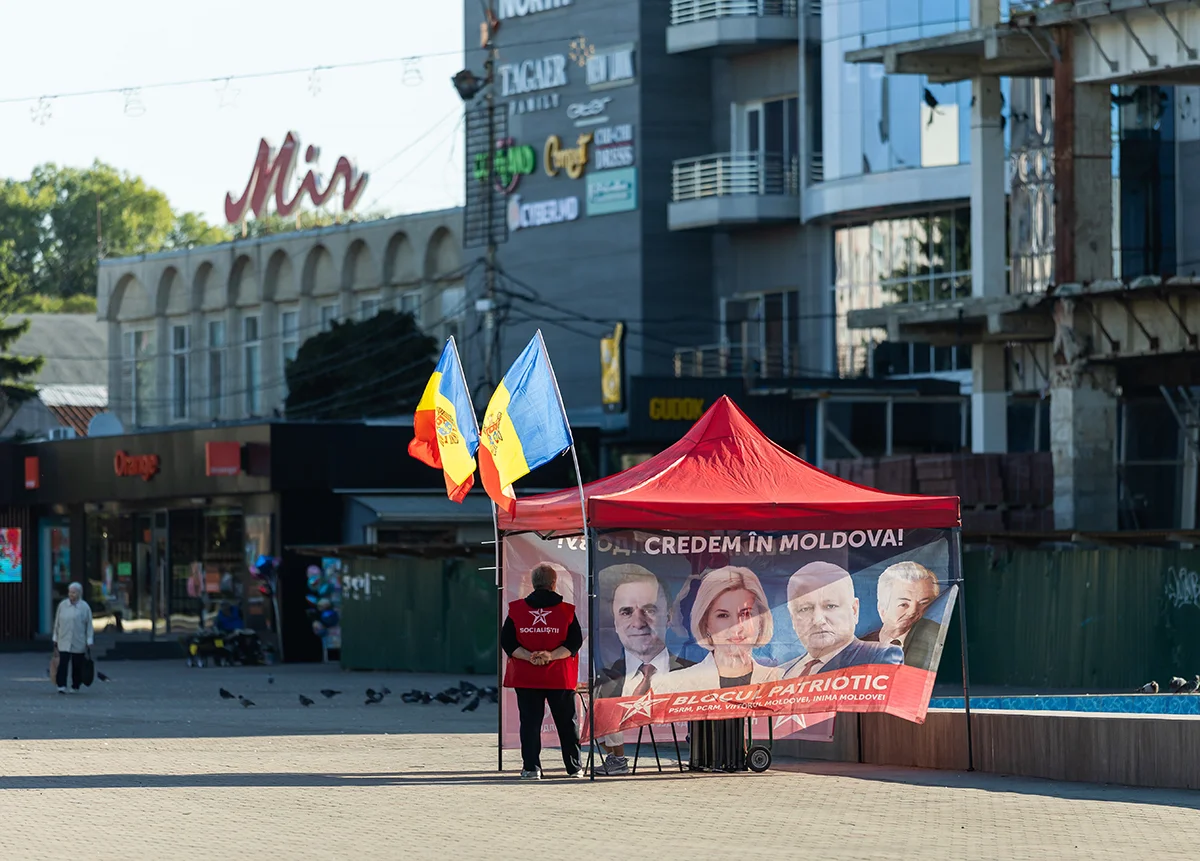
Meanwhile, other pro -Russian forces will make up the ruling PAS real competition. First of all, we are talking about the left patriotic electoral block. It included the parties of the two ex-presidents of the country Igor Dodon and Vladimir Voronin-socialists and communists, respectively,-the “future of Moldova” by Vasily Tarlev and the “heart of Moldova” of the ex-head of Gagauzia (autonomy, where the pro-Russian sentiments are extremely strong) Irina Vlah. True 26, the CEC removed from the participation of elections not only Moldova Mare, but also the “heart of Moldova”. She is also suspected of obtaining illegal funding.
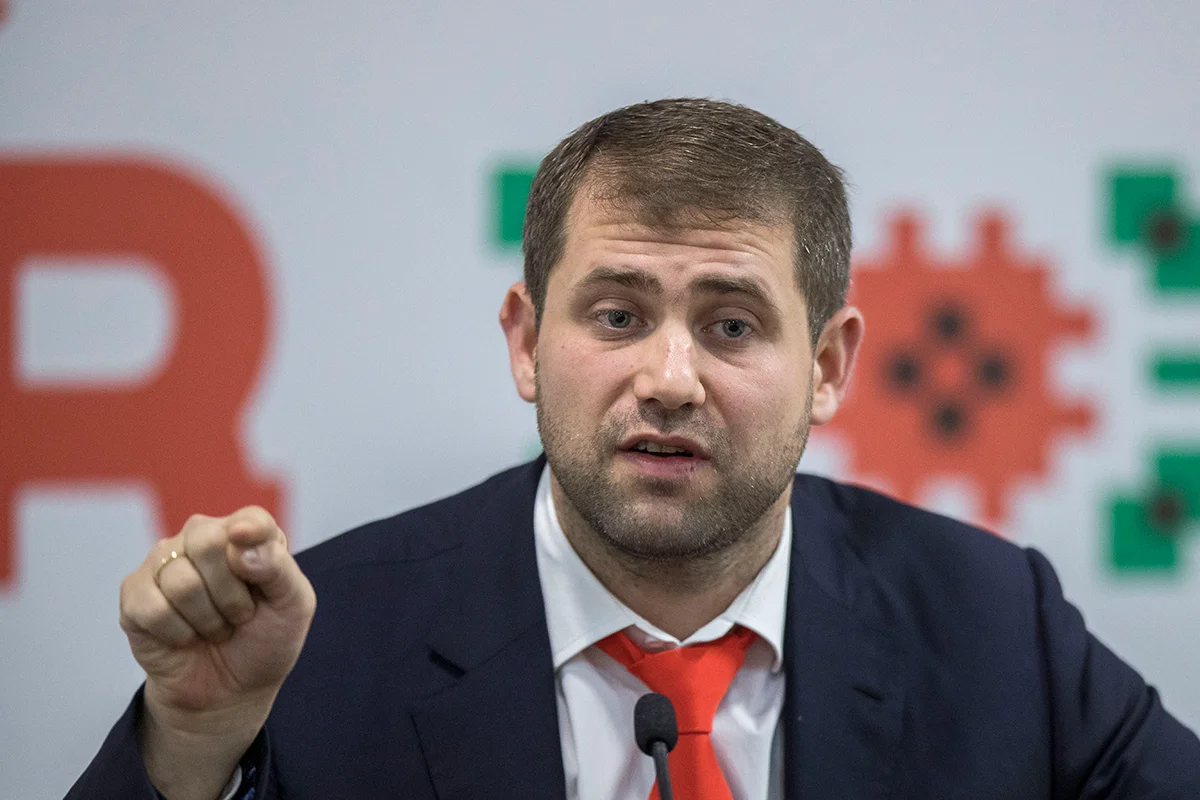
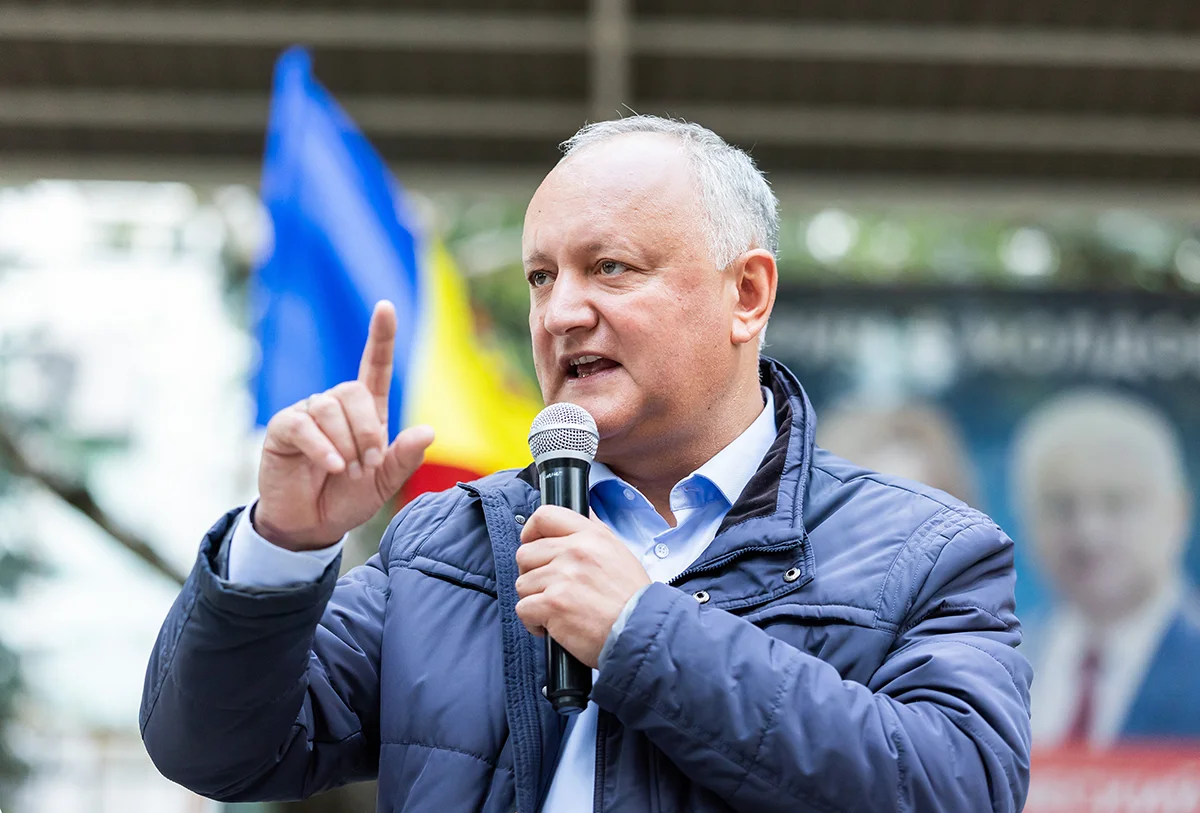
In the patriotic block - as in PAS - during the campaign they actively used rhetoric in the style of "with us - the world, with them - war." But the theses and arguments were directly opposite. “We advocate the restoration of strategic ties with Russia. We want peace, not war. Our block will put an end to foreign interests and NATO [in Moldova], ” said Igor Dodon. However, more often more restrained statements sounded from Blok members - for example, that Moldovashould become a “bridge of cooperation between the EU, Russia, China and the Turkic world”.
According to a survey conducted by the sociological company IDATA on September 7–19, the patriotic block can count on 33.9% of the vote (counting among those determined with the choice of respondents) is a minimum lag behind PAS (34.7%).
Probably, two more forces go to parliament. 9.8% of the survey promised the Alternative block, led by Chisinau, Jonah Cheban, ex-Prime Minister Jon Kiku, former Prosecutor General Alexander Stoyanolo and ex-adviser to President Voronin Mark Tkachuk. The block was aimed at the central electorate, not trusting either frankly pro -Western or obvious pro -Russian forces. Calling the multi -vector, the “alternative” at the same time maintains a course for European integration.
Finally, by 7.4%, according to IDATA, the “our party”, led by an extravagant populist Renato Usat, could count on an anti -corruption struggle. In terms of European integration, he calls to focus on real rather than populist purposes: for example, on joining the Schengen zone, and not on receiving EU membership.
Fall will help them
This survey from IDATA - like all other similar studies - has an important feature: sociologists did not interview Moldavians living abroad. And their voices will seriously affect the results in favor of PAS. In any case, the country's authorities have done everything for this in their power.
On Sunday, 301 polling station will open abroad - and this is already 151 more than in the previous parliamentary elections in 2021 (and 70 more than in last year's presidential election). In the leaders - Italy (75 sites), Germany (36), France (26), Great Britain (24).
The opposition sees the authorities in this, because in the Russian Federation it will be possible to vote only in two sites (both in Moscow). There were 17 of them in the elections-2021.
In May 2022, 76.6 thousand citizens of Moldova lived in Russia. The newer statistics were not made public, and for sure the indicators have decreased markedly, but in any case two sites - this is clearly not enough for more than 26 thousand Moldavians, which, according to the Russian State Agency Sputnik Moldova, were registered to participate in the vote in the Russian Federation. For comparison: in Italy, according to the same data, a little more than 23 thousand people registered, but they will be distributed according to 75 locations.
In addition to the votes of the diaspora, the votes of IDATA did not take into account the votes of the inhabitants of the pro -Russian Transnistria - but this factor, for the most part, can be neglected. The fact is that in autonomy only 12 areas will open. Local authorities asked to open 41 sites-as in elections-2021-but Kishinev ignored their request.
Such tactics will surely help PAS to gain a foothold in the first place in the final protocol. But to dial the absolute majority of votes by the party, which in the elections-2021 received 52.80%, this time is hardly capable of. And this means that the post -sided political structure in the country will be extremely unstable. As the expert on Eastern Europe, Balash Yarabik, in the material for the Carnegie Foundation for the International World, “the threat of direct and full -scale destabilization - for example, canceling the results, as it was in Romania, is small, but Moldova will wait for the period of unstable alliance and constant schisms.”
This will probably satisfy this Moscow. There is no need to say about the script with the unification of all key opposition parties and blocks for the sake of creating the Anti-Pas coalition: there are too large disagreements between them and the ambitions of their leaders are too strong. Meanwhile, PAS may well extend the hand separately - ready for cooperation with the party in power - representatives of the patriotic bloc, “our party” or “alternative”. And then, with the new motley coalition government, the Moldova movement in the EU will inevitably slow down.
Probably, some reforms that Brussels expect from Chisinau as part of the European integration process will intentionally or inaccurately slow down. And ultimately, this can lead to an increase in disappointment in European integration itself.
Such a development of events will be a clear success of Moscow.
In anticipation of the titles
However, there is another, more radical hypothetical scenario. The American Institute for the Study of War (ISW) suggests that the Kremlin may intend to provoke fierce protests in Moldova to try to remove President Sandu from power. Experts made this conclusion, in particular, from the statement of the foreign intelligence service of Russia (SVR) of September 23. With reference to a certain “information entering the SVR,” it said : “European officials are afraid that the gross falsification of voting results preparing for Brussels and Chisinau will force the desperate Moldavian citizens to take their rights to protect their rights. Then, at the request of President Sandu, the Armed Forces of the European states will have to force Moldavan to reconcile with dictatorship under the sign of EuroDemocracy. ”
This version was reinforced by the operation, which the Moldavian security forces organized on September 22: they conducted more than 250 searches in the case of the preparation of riots and detained 74 people as a result. According to investigators, the detainees previously trained in training camps in Serbia, where they were taught to break through the police cordons, resist the security forces, use batons and firearms. As a rule, each participant in these training received a reward of about 400 euros. According to the information and security service of Moldova (SIS), a certain person, known as a “demon” who called himself a representative of the Russian special services, was engaged in the coordination of this activity in Serbia. It is possible that not all involved were detained.
“The Kremlin is trying to accuse the Moldovan authorities in advance of active actions, which Russia itself is probably planning to conduct,” the foreign intelligence service commented on the ISW. “The SVR probably included allegations of the“ spontaneity ”of protests in Moldova in order to hide Russia's own preparation for provocations and violent protests.” Experts believe that Moscow wants to organize something similar to the 2014 Euromaidan-protests, which eventually led to the removal of the President of Ukraine Viktor Yanukovych from the power of the President of Ukraine. Only, of course, with the exact opposite ideological content.
On the eve of the voting day, Igor Dodon appointed Monday, September 29, a meeting of the carriers of the country's parliament - to “defend the victory” of the opposition. From this call it followed that neither in the victory of the patriotic bloc, nor in the desire of PAS to “usurpery power”, the ex-president of Moldova did not doubt at all.