
Translated material
Battle scarecrow
Parliamentary elections were held in Moldova. All parties frightened the electorate as best they could. But the pro-Russian opposition failed

Photo: Sergey Karpukhin / TASS
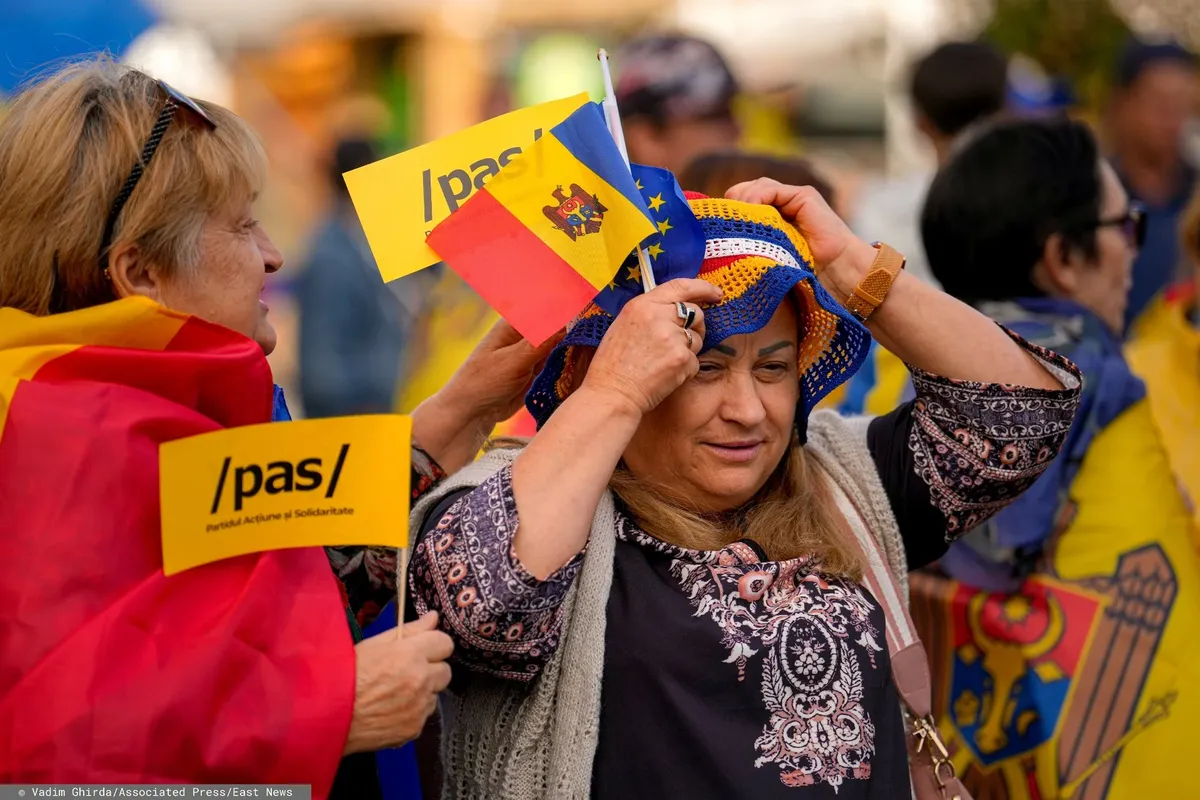
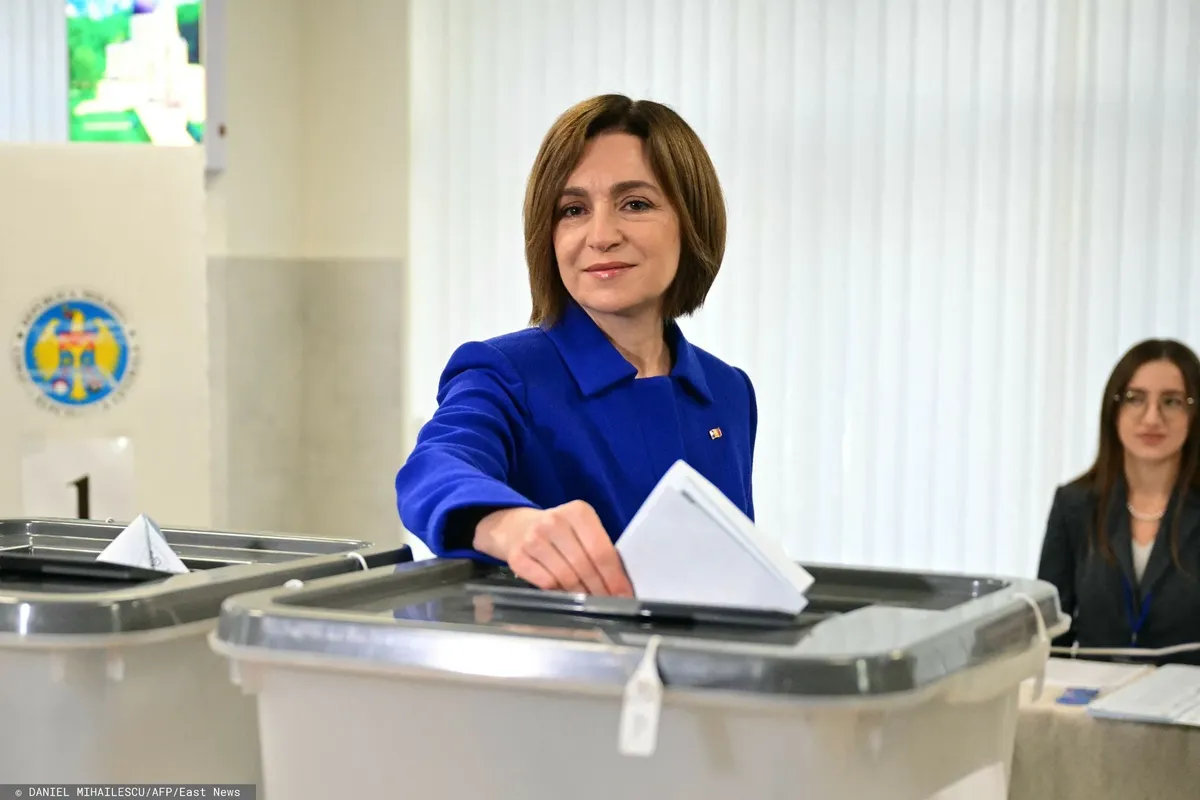
Parliamentary elections were held in Moldova, as a result of which the pro-European party of the country’s President Maia Sandu “Action and Solidarity” (PAS) received a parliamentary majority - 55 mandates. This means that PAS can form a government without entering into a coalition with anyone, without regard to both the deputies of the pro-Russian Patriot bloc, which received 26 mandates, and the Alternative bloc of the country’s former prosecutor Alexandru Stoianoglo and the current mayor of Chisinau, Ion Ceban, who has eight mandates. Moreover, without regard to “Our Party” and the “Democracy at Home” party, which each had six deputies in parliament.
On Sunday, September 28, at about three o'clock in the afternoon I was carried to the Kuznetsky Bridge. I was surprised to see a half-empty Moscow street. Although in the morning, judging by social networks, there was a crowd of Moldovan citizens who arrived at the country’s embassy, where all two (!) polling stations open in Russia for the parliamentary elections were working.
But, according to police officers on duty at the Moldovan embassy, by midday the crowd had subsided.
I stood there for about fifteen minutes. During this time, no more than ten people passed to cast their vote .
I returned to the embassy at half past eight in the evening, half an hour before the polling stations closed. The Kuznetsky Bridge was still deserted. No one broke into the Moldovan embassy. 20 minutes before the polls closed, a young girl ran by . She was the last voter to vote.
After summing up the voting results, it turned out that 4,204 citizens of the republic voted at two polling stations opened in Moscow.
This is less than, for example, even in Canada, where 5,770 Moldovan citizens voted at eight polling stations. Or in the USA, where 10,607 Moldovans cast their votes at 23 polling stations. But more than, for example, in Israel, where 2,229 people also voted at two polling stations.
Meanwhile, the Central Election Commission of Moldova sent 10,000 ballots to Russia. It turns out that almost six thousand ballots were unclaimed. And this is puzzling.
Because, firstly, a year ago, when Moldova was choosing the president of the country (both on October 20, 2024, during the voting in the first round, and on November 3, 2024, when the second round took place), thousands of Moldovan citizens crowded onto the Kuznetsky Bridge from the opening of polling stations and even after closing. In both the first and second rounds of the presidential elections, all 10,000 ballots delivered by the Central Election Commission of Moldova to Russia were used.
Secondly, the day after the parliamentary elections, Moldovan President Maia Sandu said that “Moscow spent $100 million” on bribing Moldovan voters.
And the leader of the PAS party, Igor Grosu, turned out to be even more eloquent, saying that Russia threw “tons of money and tons of lies” into the elections, but Moldovans “protected the country from the pro-Russian majority.”
The question inevitably arises: who and where was bribed, if even in Russia the pro-Russian political forces of Moldova were unable to mobilize the diaspora to select a “limit” of 10,000 ballots.
Of course, out of 4,204 voters who voted in Moscow, 2,771 Moldovans (or 67.44%) chose the “Patriotic Bloc”. But 479 Moldovan citizens living in Russia also voted for PAS. This is 11.66% of those who voted in Moscow.
It seems that the pro-Russian political forces in Moldova have completely failed to work with diasporas. Even in Russia itself. And even more so in Europe and overseas. Or they left everything to chance.
It must be said that both pro-European and pro-Russian political forces in Moldova built their election campaigns on horror stories. Maia Sandu and PAS frightened voters that if their opponents had a majority in parliament, Europe would immediately deprive Moldovan citizens of visa-free entry. That Ukraine will block the rivers and drought will begin in Moldova. That the Kremlin plans to use Moldova as a springboard for an attack on Romania and an advance on Odessa. And to implement this plan, Moscow is allegedly ready to transfer tens of thousands of military personnel to Moldova.
The “Patriotic Bloc” also did not lag behind, painting apocalyptic pictures of the future. They say that Moldova is not welcome in Europe, Moldovans are interested in Europe solely as a cheap labor force and a sales market, and a break with Russia will lead to a vertical rise in prices for electricity, gas and heat.
The horror stories of Sandu and PAS, apparently, turned out to be much more convincing. The “Patriotic Bloc” failed in the election campaign, gaining 381,669 votes (24.18%), losing many of its supporters in August-September. Immediately after the formation of the bloc, which included the parties of ex-presidents of Moldova Igor Dodon and Vladimir Voronin, ex-prime minister of the country Vasily Tarlev and ex-head of Gagauzia Irina Vlah, opinion polls showed that this coalition was gaining 40-42% of the votes.
But this pro-Russian political bloc can take credit for the victory over Renato Usatii and his “Our Party”. Usatii was so endlessly showered with slop by political strategists and PR people hired by the patriotic bloc that he lost half of the electorate.
In the fall of 2024, in the first round of the presidential elections, 213 thousand Moldovan citizens voted for Renato Usatii, and he received 13.74% of the votes. And now, when Renato found himself under a tide of criticism and slander, 97 thousand citizens of Moldova still did not turn away from him and voted for “Our Party,” which received six deputy mandates in parliament.
But the 116 thousand Moldovan citizens who voted for Usatii in 2024 seem to have succumbed to the horror stories and on September 28 most likely voted for Maia Sandu’s PAS party.
In general, the Patriot bloc can congratulate itself on its tactical victory over Renato Usatii’s Our Party, while losing the main battle with PAS, which was helped to gain a parliamentary majority.
Another political force, the Democracy at Home party, which advocates the annexation of Moldova to Romania, did not even hold meetings with voters during the pre-election period, did not distribute leaflets, and did not call for people to vote for themselves from street banners. But party leader Vasily Kostyuk filled TikTok with videos criticizing officials. As a result, “Democracy” also received six mandates in the new parliament. Kostyuk admits that his party “popped out like a jack-in-the-box.”
Meanwhile, the leader of the patriotic bloc, ex-president of the country Igor Dodon, already on Monday gathered several hundred of his supporters for a protest rally, during which he stated that the opposition parties actually won the parliamentary elections, gaining more than 49% of the votes in the country, while PAS received only 44%. That it was possible to maintain the majority of the ruling party only thanks to the votes of the diaspora and falsifications. That in Moldova itself many people hate PAS: “The people are dissatisfied. The people are not afraid of you. The people hate you. 20–30% were afraid to go to the polls because you scared them. But the people are waking up,” Dodon said. But the train left - the elections took place, all that remained were phantom pains in my fists.