
Translated material
Dispute about glass
Rogozin and Zaluzhny in their speeches formulated the main problem of military operations
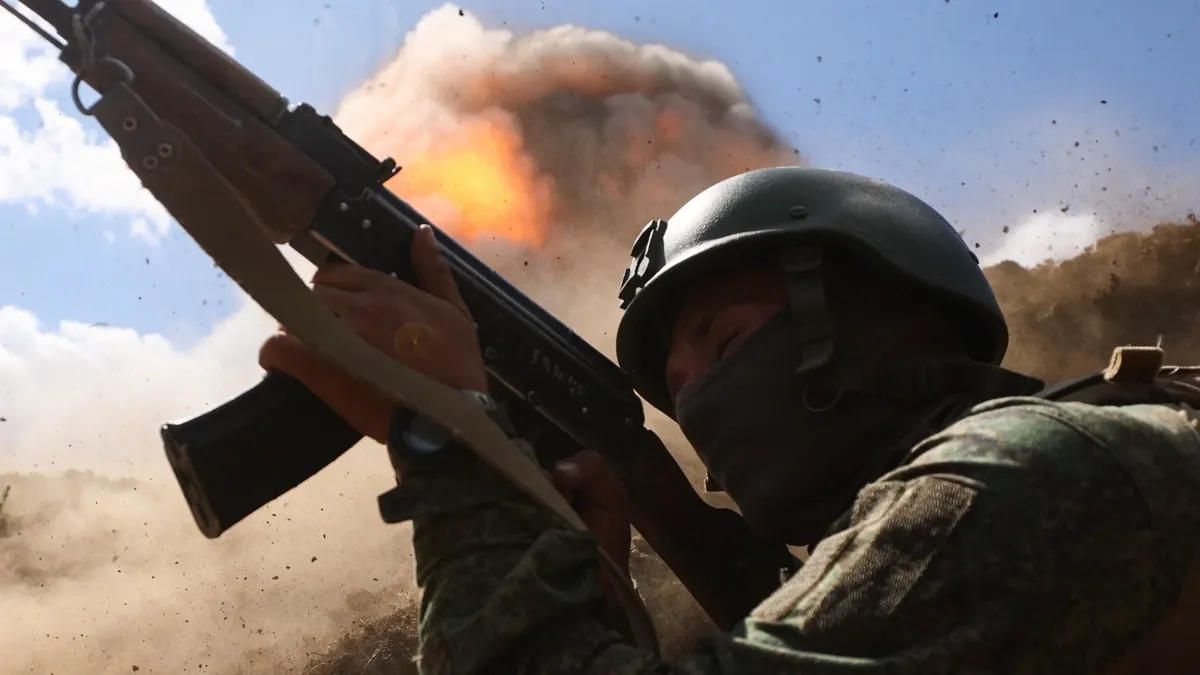
Photo: Alexander Reka / TASS
Vladimir Putin signed a decree on the autumn conscription. From October 1 to December 31, 135 thousand people will be called up for military service in the Russian Army (in the fall of 2024, 133 thousand were called up). This can be seen as a sign of stability. Although mobilization has not been canceled since September 21, 2022, soldiers will definitely not be recruited to the front through this mechanism for the next six months. There are no changes in the replenishment of troops in the Northern Military District with personnel, including according to the methods of authoritative European researchers.
Stability reassures citizens worried about their youth, but at the same time raises questions. Will the end of hostilities be achieved through purely military means?
The situation on fronts about 1.5 thousand kilometers long is so stable that in the eyes of the same citizens it looks frozen.
People who have direct experience in command and control of troops speak out very rarely. The more valuable such evidence is. A prominent conservative politician, and today also the head of the BARS-Sarmat Special Purpose Center, Dmitry Rogozin, gave almost an hour-long interview to the media “Blokpad” on September 19. And five days later, the Ukrainian publication “Zerkalo Nedeli” published an article by Valery Zaluzhny, the former commander-in-chief of the Armed Forces of Ukraine, and now the ambassador of Kyiv in London.
They mainly discussed the question of the practical achievability of victory. We are, of course, talking about the Russian army. The difference in the potentials of the two countries has manifested itself so clearly that not a single serious observer has written about the victory of the Armed Forces of Ukraine in achieving the goal declared by President Zelensky (reaching the 2014 borders) for a long time.
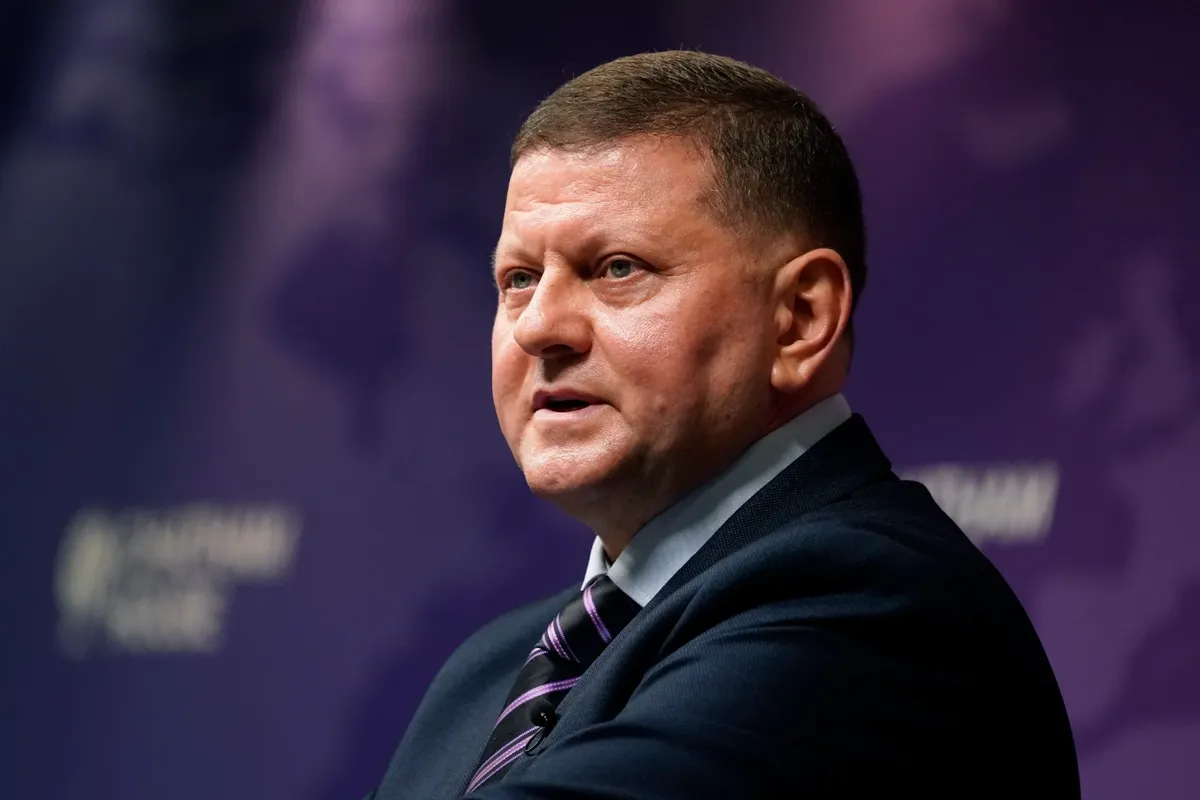
Zaluzhny’s article is literally instructive - it is a mature look at the current stage of the armed struggle with an assessment of the previous one, from which everything follows. He returned to the term for which Zelensky removed him from command: “strategic deadlock.”
Back in November 2023, in an article for The Economist, General Zaluzhny stated that the Armed Forces of Ukraine are not able to go on the offensive, since a situation of strategic impasse has developed at the front, which he defined as follows: “the inability to carry out operational tasks, including entering the operational space.”
At that time, such a statement directly contradicted the statements of Zelensky and his associates about an imminent transition to an offensive, during which the Russian Armed Forces would be pushed back to their previous borders. Zelensky informed citizens that victory was just around the corner, while Zaluzhny at the same time argued that an offensive was impossible. In the same article, the commander-in-chief listed steps that would help the Armed Forces of Ukraine cope with the situation. And yet, Kyiv could not tolerate such a direct objection and removed the general from his post.
The course of events confirmed that Zaluzhny was right. The entire military world began to talk about the impasse. But gradually events began to occur at the front, from which it followed that the disgraced general had correctly predicted the situation, but only for one year. The front line began to move again. At first, almost imperceptibly, from the fall of 2024 - everything is faster.
Dmitry Rogozin spoke about exactly the same thing, but in more colorful details. The demands placed on the infantryman by the now almost insurmountable gray zone, which is often called the death zone, are almost impossible to bear in the literal sense of the word. Personal electronic warfare devices, a hunting rifle for shooting at FPV drones, supplies of water, provisions and ammunition for long-term operations without supply - all this is only part of the problem.
In the very recent past, such loads fell to the lot of special forces. And now all units attacking or actively defending must stand on a par with the elite units. Physical activity on the front line has reached its limit.
Now the Ukrainian ambassador in London has again acted as a military man. And most importantly for everyone, he stated that there was no longer a deadlock. That is, he constantly talks about it as an existing reality, but at the same time very clearly and consistently describes how the Russian army overcomes it. In essence, this is a recognition: a new stage of armed struggle is at hand.
Rogozin, describing the almost superhuman efforts that underpin the newly developed Russian tactics of overcoming the Ukrainian defense without extraordinary losses, acknowledges its limitations. Yes, it has been providing steady progress for over a year now. Every week, several settlements come under the control of the Russian Armed Forces, as scheduled.
But the speed of the advance, which cannot even be called an offensive, is such that it takes two years to occupy the Donetsk region. The Russian General Staff has placed much greater emphasis on the depletion of the Ukrainian army and the rapid collapse of its defensive potential. But this is also a hypothesis that has yet to be proven - will there be such an effect? Ukraine is also taking retaliatory steps as best it can.
Can the current speed of advance of the RF Armed Forces be considered sufficient? This question is like an optimism test: is the glass half empty or half full?
Everyone who interprets any events at the front in favor of Ukraine believes that half empty: the Russian army is unlikely to achieve its goals, moving at this pace. Kremlin supporters believe that the glass is half full and the time is not far off when they will fill it to the brim. They are optimists: they have to walk five kilometers a month for 29 months. If the situation does not change.
However, there is a dynamic of events; they are not at all similar to the classic battles of attrition of the First World War. Almost all bloggers and commentators, following Zaluzhny and Rogozin, were divided on the level of water in the glass. Yes, as the disgraced commander-in-chief of the Armed Forces of Ukraine himself admitted, there is movement at the front. This is no longer a dead end. But for now it still looks like a dead end.
The recipe for Kyiv from Zaluzhny and for Moscow from Rogozin is still the same: develop innovations in military affairs. It is absolutely impossible to predict anything. This uncertainty prevents Ukraine’s allies from making reliable plans.