
Translated material
"Man is a scandal." Why was Rector Zapesotsky, Putin’s confidant, removed from work?
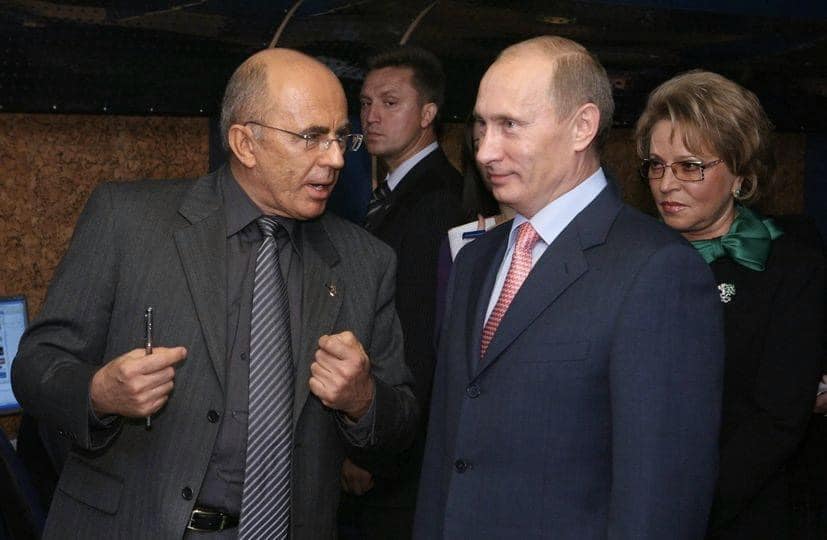
The Prosecutor General's Office, through the court, wants to reclaim real estate with a total area of more than 55 thousand square meters from the St. Petersburg Humanitarian University of Trade Unions. To secure the claim, the Arbitration Court of St. Petersburg and the Leningrad Region suspended Alexander Zapesotsky, the first and until September 25, the only rector of this university. Zapesotsky, a confidant of President Vladimir Putin in elections and a friend of pop singer Philip Kirkorov, spent almost 35 years in his post. It is remembered for a series of media scandals and beauty contests for eleventh grade girls. For a long time, Zapesotsky seemed absolutely “unsinkable.”
Text: project "Window"
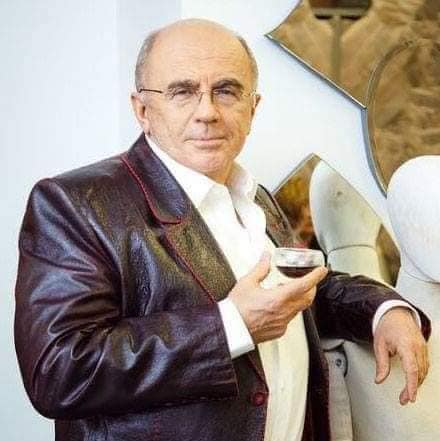
“The best businessman among rectors , the best rector among businessmen,” they wrote about him in Komsomolskaya Pravda back in 2003. “A scandalous man, a lover of the fair sex and expensive cars, a gourmet, a typical dictator, an adventurer, a dreamer and a pragmatist with an iron grip, the soul of society, a gloomy workaholic, a visitor to elite Las Vegas casinos and the famous Dirty Club aesthetes in St. Petersburg. Without people like him, our life would be gray and insipid."
"Incredibly active gopnik"
Alexander Zapesotsky was born on April 14, 1954 in Kursk. He graduated from the Leningrad Institute of Precision Mechanics and Optics in 1976, then postgraduate studies at the Leningrad Institute of Culture (Candidate of Pedagogical Sciences, 1986; Doctor of Cultural Studies, 1996). He defended his dissertation on the topic “Disco as a form of organizing leisure time for youth.”
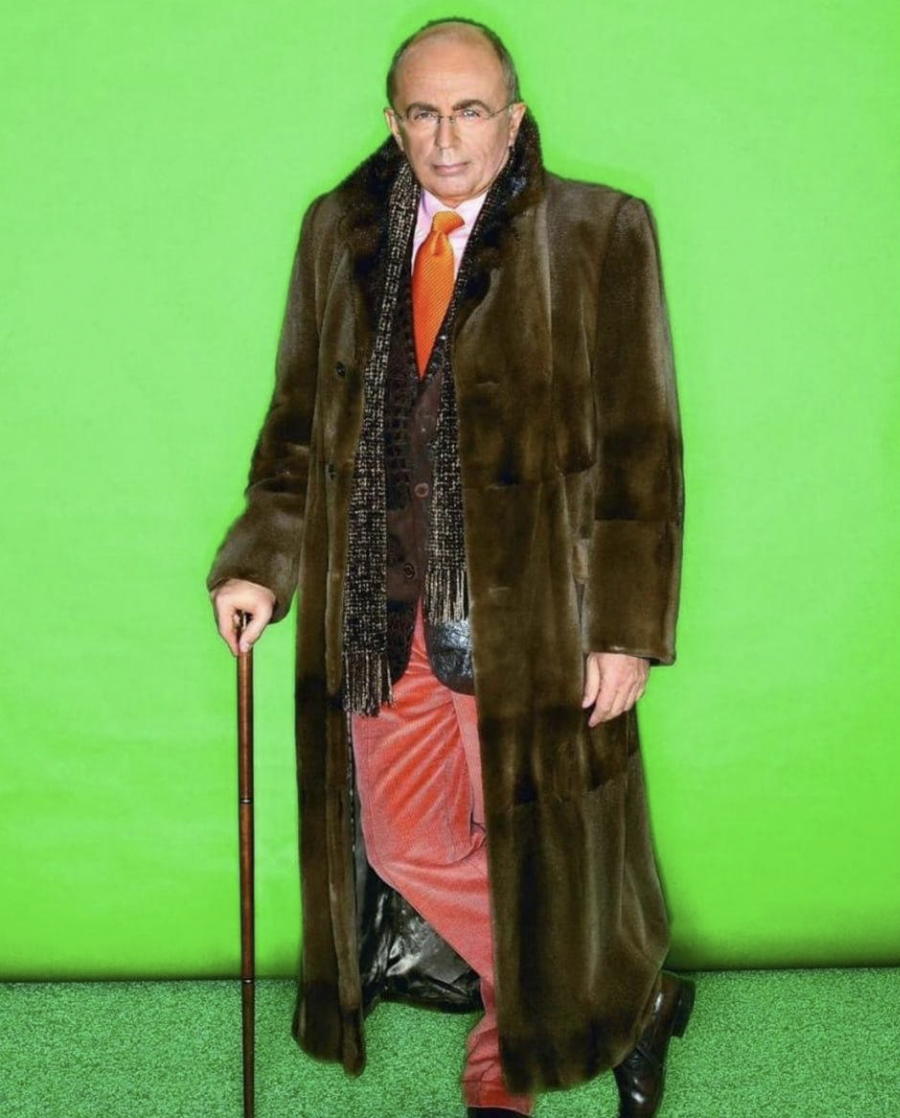
St. Petersburg journalist Sergei Shelin recalls how he first saw Zapesotsky in the early 1990s.
“I came to his office and listened with interest to his rantings, wondering how unique, strange and, as it seemed to me then, not a very long-lived character in the administrative sense. But I was very wrong. He promised to organize prosperity in this provincial, but fairly well-built trade union school. He seized it and renamed it a humanities university, and a couple of months later he convened journalists to advertise himself and show that he would now defeat the previous teaching staff, with whom he immediately had a conflict.
Shelin believes that Zapesotsky had connections “in the most specific circles,” which helped him become one of those who then seized the property of trade unions.
“He organized a certain issuance of diplomas for money, widely advertised himself - he was an incredibly active gopnik who realized that the time had come when a gopnik could become an official and a businessman. He had numerous scandals due to poor quality of education, due to payment, due to the fact that he kicked out some students, and especially due to harassment of female students. From the first days and throughout this story, we heard that something was boiling loudly in this place and smelled quite bad.
This is explained, according to Sergei Shelin, quite simply.
- There is some kind of higher education institution, but still. It is taken over by a man qualified as a DJ. He really was a DJ, but he considered himself a propagandist, popularizer, scientist and was incredibly self-confident. He seized the legacy of famous people, made respected scientists honorary doctors, became the organizer of the Likhachev readings , and in this sense ideologically seized the legacy of Dmitry Sergeevich Likhachev. Whatever he reached for, he snatched it all up.
Even more surprising, according to Shelin, is that although all these years Zapesotsky was accompanied by revelations in the press, endless complaints throughout the authorities, the rector managed to get out of all the scandals for a long time.
– In recent decades, reputation has ceased to matter; a person with a very bad reputation felt great in any position. On the one hand, Zapesotsky was too noticeable and tried too hard to catch the eye. He really liked to assign himself an endless number of statuses, which looked strange in front of him: scientist, academician, artist. And this was too much for the gray era of Putin. But, on the other hand, it seems they could have strangled him 20 years ago. And he surfaced time after time. So it probably has more connections and a more developed root system than we think. And the fact that it has now fallen means, perhaps, the food supply has narrowed. Or simply old age, a person already in his eighties.
Shelin calls the Humanitarian University of Trade Unions a “kiosk” where higher education diplomas were sold.
– There was no need to be able to do anything, to learn something. But this kiosk was camouflaged as a serious educational institution. True, with a good material base - he started by capturing this base, all these buildings. At some stage, Zapesotsky tried to remove the word “trade union” from the name - he wanted it to be just a humanitarian university, but he was not allowed to do so. So he had to bear that mark. I remember how some students, apparently not really understanding where they were entering, suddenly discovered that the teaching did not correspond to what they had paid, and he attacked and destroyed such people. Another would have put out the scandal, but this one always simply smeared the student. He never put out scandals at all; I think he reveled in them. This was his way of existence.
Shelin says that some of the students of St. Petersburg State University quickly realized that they were being deceived, that they were slipping some kind of crusts without giving any knowledge, and such people were quickly dealt with. But others were satisfied with this system: we paid, they give us a diploma, everything is okay, this is a mutual commercial transaction.
"Diamonds are a girl's best friend"
Zapesotsky’s “trade union” career began in 1986, when he was from the State Optical Institute named after. S.I. Vavilova went to work at the Higher Trade Union School of Culture. It was on its basis that the St. Petersburg Humanitarian University of Trade Unions was created in 1991, of which Zapesotsky then became the rector. And he held this post for 34 years - longer than any other university rector in Russia (Moscow State University rector Viktor Sadovnichy gives him five months, MGIMO rector Anatoly Torkunov - almost a year).
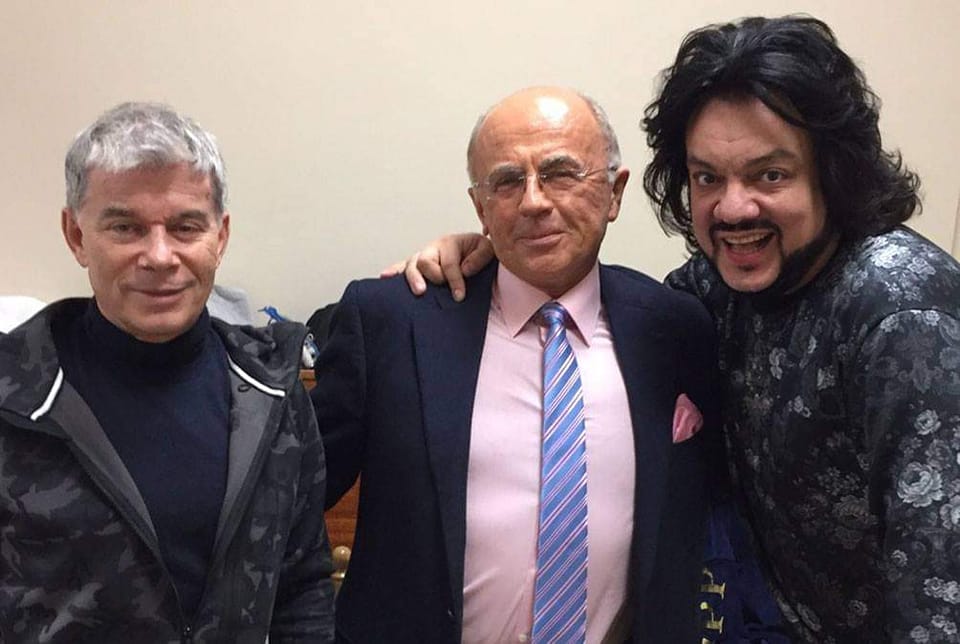
Over the years, he has acquired many honorary statuses and positions: corresponding member of the Russian Academy of Sciences and deputy chairman of the St. Petersburg branch of the academy, academician of the Russian Academy of Education, professor, “Honored Scientist of the Russian Federation” and “Honored Artist of the Russian Federation.”
On the website of the free online community "Dissernet" a separate page is dedicated to Zapesotsky. Incorrect monographs, textbooks with plagiarism and massive self-citation, duplicated publications and management of fake dissertations - this is Zapesotsky’s list of academic violations, which is discussed by Dissernet project coordinator Larisa Melikhova.
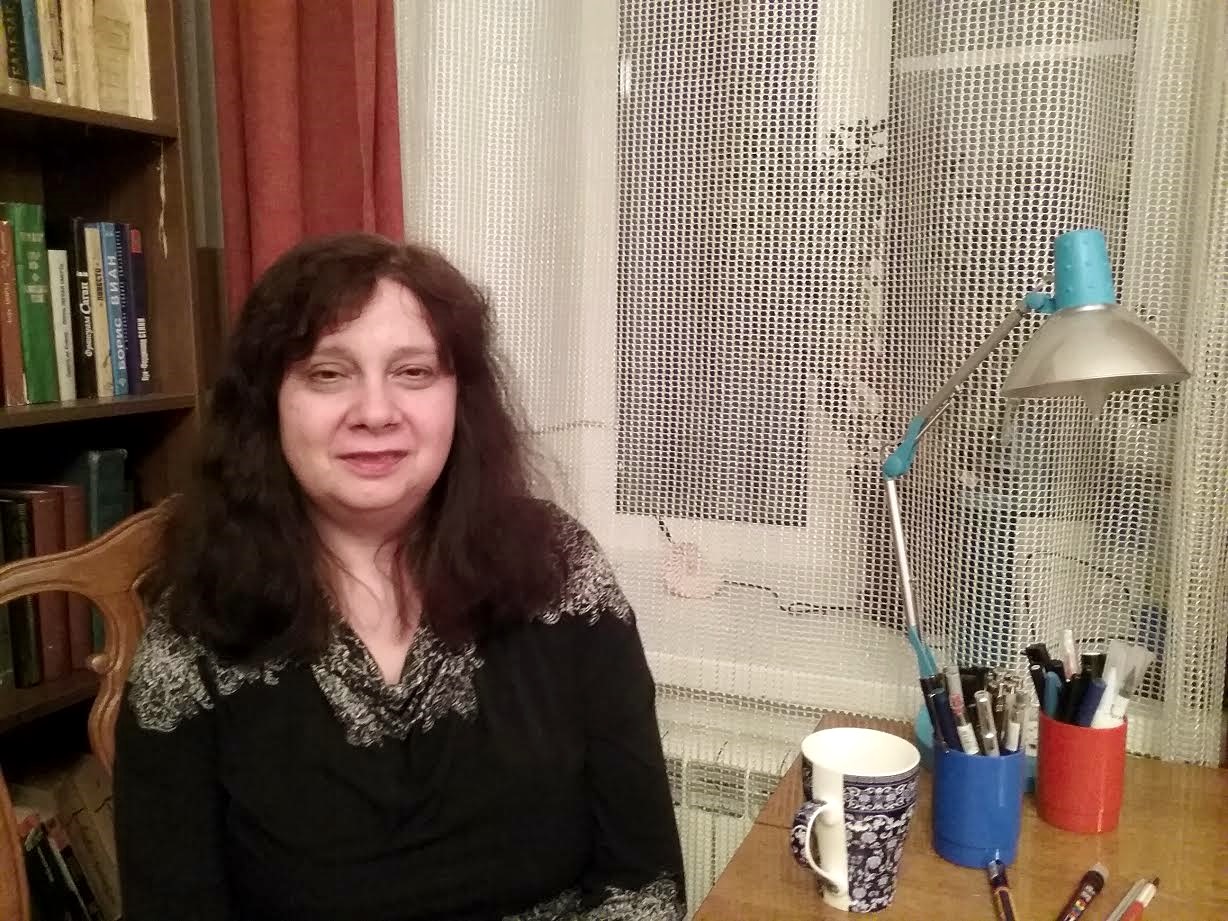
– Zapesotsky is a well-known master of fan distribution of his publications to various magazines. This is the so-called self-plagiarism, which by all Russian and international standards is considered a violation of scientific ethics. True, the hero himself calls this term - self-plagiarism - “a malicious invention of Dissernet activists.”
The Dissernet website contains four articles by Zapesotsky, published in different journals over a short period of time.
– Of course, this does not mean that there are only four violations. According to Alexander Sergeevich, he has 3 thousand publications, 896 articles are listed in the eLibrary, which, of course, is also a lot, and Dissernet activists have no way to check them all. But even from four publications one can see the skill with which this man shuffles his articles, publishing them in different magazines under different names.
In addition, Dissernet discovered a monograph by A. S. Zapesotsky with plagiarism from four other people’s dissertations, says Larisa Melikhova.
According to her, Zapesotsky’s participation as a dissertation supervisor also raises many questions. The Dissernet website provides three examples of such guidance.
– One of the dissertations was copied entirely from one source, replacing the city of Kholmsk in the Sakhalin region with Norilsk, preserving all data and results. The author of the second dissertation, Zapesotsky’s ward, was recommended to be deprived of his academic degree by the Expert Council of the Higher Attestation Commission, but for some reason the Presidium of the Higher Attestation Commission refused to do this. Well, the author of the third dissertation was still officially deprived of his degree - which even imposes some restrictions on the scientific supervisor, although it is unlikely that Alexander Sergeevich felt them himself.
As you might guess, Zapesotsky did not like Dissernet too much and tried to discredit its activities.
– In 2019, the leadership of the Russian Academy of Sciences decided to hold the most transparent elections in history. Dissernet experts took part in this process: we presented in advance lists of academic ethics violators from among academic candidates, among whom was Zapesotsky. The elections were accompanied by a series of scandals and a whole “war of publications.” As a result, Zapesotsky did not become an academician; he expressed his complaints about Dissernet in the publication “Academician exposed Dissernet,” and in addition, speaking at the final meeting of the General Meeting, he said : “Our openness is a little like public undressing. It seems to me that here we need to think about what our openness should look like,” says Larisa Melikhova and adds, that, in her opinion, the Academy seemed to have listened to the scandalous rector: its openness ended with these elections.
At his university, Zapesotsky combined the post of rector and head of the department of philosophy and cultural studies. In 2012, he was included in the pool of Vladimir Putin’s proxies for the presidential elections. In April 2024, Putin awarded him the Order of Alexander Nevsky.
In 2007, Zapesotsky published the column “Diamonds are a girl’s best friend” in the St. Petersburg Gazette. In it, he harshly attacked the chairman of the Union of Journalists of St. Petersburg and the director of the Agency for Journalistic Investigations, Andrei Konstantinov, actually accusing him of serving the interests of a “well-known authoritative entrepreneur.” On the same day, Fontanka published Konstantinov’s response, which was followed by a series of lawsuits for the protection of honor and dignity. Zapesotsky lost them: the Kuibyshevsky District Court of St. Petersburg partially satisfied Konstantinov’s claim against Zapesotsky and the newspaper, collecting compensation.
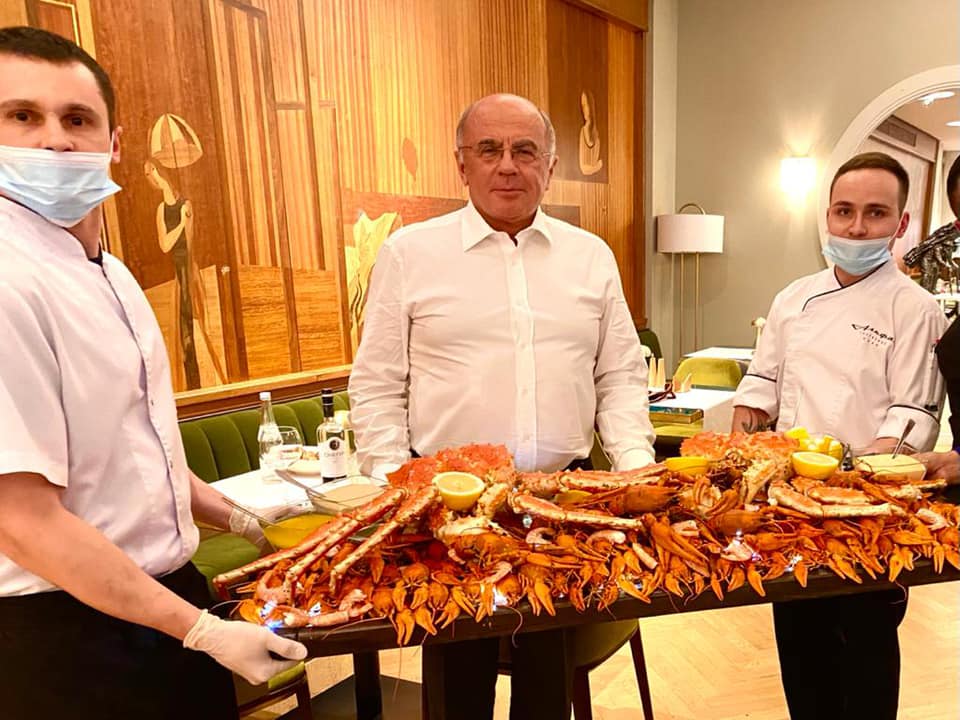
Among those who sued Alexander Zapesotsky was the St. Petersburg publication “Paper”. Its director, Kirill Artemenko, does not personally know the former rector of St. Petersburg State Unitary Enterprise, but he knows him as a plaintiff.
SPbSUP filed a lawsuit against Bumaga over the 2014 news that the rector of the university, Alexander Zapesotsky, ordered the expulsion of 150 students for, in his opinion, incorrect statements on social networks. "Paper" quoted a statement from the Russian Student Union, which said: "The decision of SPbSUP infringes on the freedom of speech and thought guaranteed by Article 29 of the Constitution of the Russian Federation. Also, the actions of the SPbSUP administration have signs of an administrative offense." These allegations were disputed by the University of Trade Unions, demanding 1 million rubles from Paper for reputational damage.
“We were in court for two years. We lost in the first instance, but won in appeal and cassation. The trial was very funny: the lawyers of the University of Trade Unions confused the documents, could not properly attach them to the case, or say anything of substance. That is, the qualifications were very low, and we wasted a lot of time trying to figure everything out. Then they tried to sue us again for another publication, but they were unable to formulate a claim, draw up documents - they failed to cope with the task. In general, he sued a lot of people and mostly lost, which was funny,” recalls Kirill Artemenko.
In addition to "Paper", the University of Trade Unions sued the publications "Zaks.ru", The Village, "Lenizdat" and demanded more than a million rubles in compensation from everyone, but in not a single case were these claims satisfied.
– For me, the phenomenon of Zapesotsky as a media character is that he was a city freak. At the same time, he was not a harmless freak; he got students pregnant, he systematically humiliated students, and offended teachers. He, without any hesitation, wrote on his Facebook, on the forum of the University of Trade Unions, about his adventures, how he cheated people out of money, that is, there was always absolute savagery there. Everyone knew about it, and at the same time it was such a fact of the city landscape. Nobody was surprised by this anymore. Although, in general, all this is a complete disgrace,” says Artemenko.
On social networks (the rector actively wrote on VKontakte and Facebook until May 2022), Zapesotsky appears as an imposing gentleman - he loves Michelin-starred restaurants, Parisian hotels, and Swiss ski resorts. He also behaved like a lord in his own university.
In 2013, a first-year student complained about expensive lunches in the university cafeteria, Zapesotsky responded by calling her “powerless weakness.” In 2014, the university publicly announced its intention to “gently get rid of the ballast” - it was about 150 “C” students and violators of “university standards,” including behavior on social networks. In 2016, he issued an order directly prohibiting members of the university community from participating in erotic photo and video content under threat of sanctions (the reason was explicit photographs of one of the students on a popular porn site). Also in 2016, on the poster for Freshman’s Day, the face of a Bashkir was replaced with a “Slavic” one. “Can I die? Get my self-esteem from the bottom of Marianska,” the injured student Ruslan Vareny wrote on his social network.
During the Covid-19 pandemic, St. Petersburg State University first sent all students to distance learning, and then refused to compensate for the difference in the cost of correspondence and full-time courses, although it is significant. Then Zapesotsky showed himself as an ardent fighter against Covid dissidence, saying that unvaccinated students could be denied a diploma.
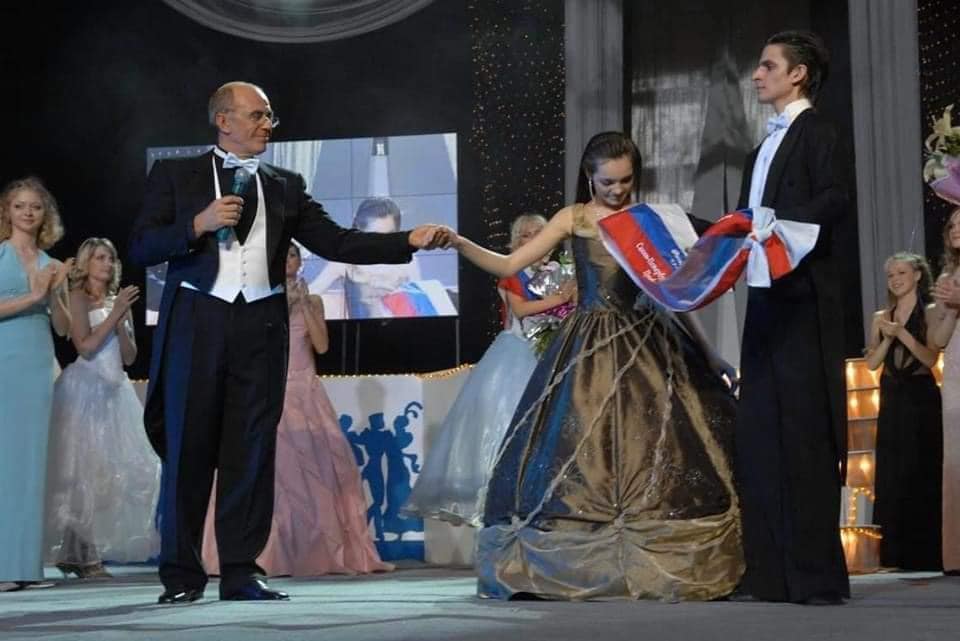
But Zapesotsky’s most famous initiative is beauty contests for school graduates instead of entrance exams. From the early 2000s until 2017, the university annually held its own competition for graduates: “Highest score/l, or Intelligence + Beauty = Student.” The final was held within the walls of St. Petersburg State Unitary Enterprise (sometimes announced as the venue of the Theater and Concert Hall named after A.P. Petrov), contenders for victory came to St. Petersburg for two weeks to receive training from university teachers. The main prize is admission to the budget without exams, as well as a Skoda car.
At such a competition, Alexander Zapesotsky met his future wife. In 2007, Alina Danilevich became the silver medalist; she is half a head taller than the rector and 36 years younger than him. In 2012, they got married, and in 2013, the university website reported that a graduate student at St. Petersburg State University gave birth to a daughter, Elizaveta Zapesotskaya.
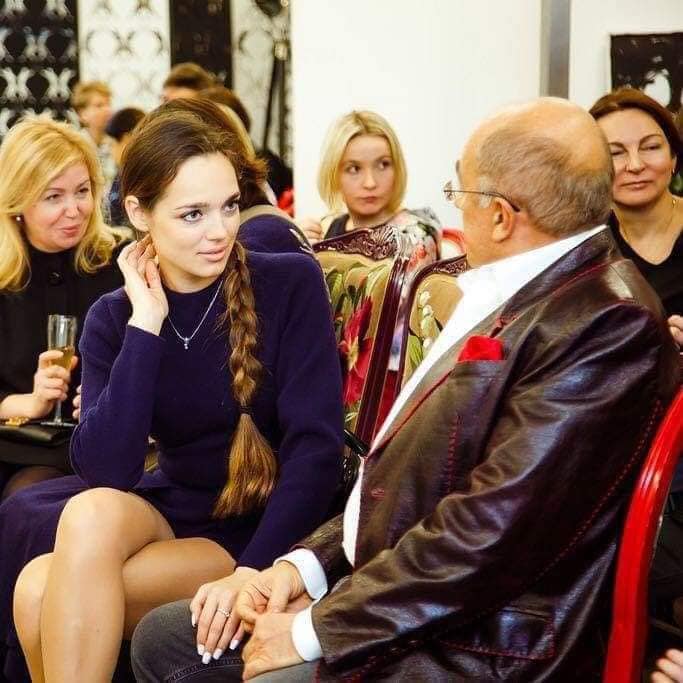
In 2021, the couple broke up for some time - in April, the rector sadly announced that he “decided to draw a line under our romance with Alina.” The beautiful student did not live up to his expectations: “Only in the inner world we ended up from different galaxies. And you can’t build a family on physiological joys alone. At first it became uninteresting, then sad.” Photos of other young and beautiful girls began to appear on Zapesotsky’s social networks, but at the end of July he again posed in an embrace with Alina, noting without sadness that “the professor’s moment of freedom was in the past.”
Rector Zapesotsky met the beginning of the war in Germany , and in his social networks he compared Munich boutiques with Moscow ones (in favor of the latter). He warmly supported the invasion of Ukraine, as well as the “partial mobilization.” On the air of Radio Komsomolskaya Pravda, he regularly made comments about “the need for import substitution of elites,” “a historical chance for Russia to get rid of colonial dependence” and “the inevitable victory in Ukraine over the Americans.”
"We ate it in 3 days"
The Prosecutor General's Office demands that the key assets of St. Petersburg State Unitary Enterprise be converted into state income. This is the main educational building on Fuchika Street, 15, with an area of about 46.4 thousand m² and a dormitory located there for 1000-1200 people, as well as the Olgino country complex, where the list of seized property includes “building No. 3” and “building No. 4”, an educational building with a hotel (approximately 7045 m²), a dance hall pavilion, garage, a transformer substation and a separate boiler house on Lesnaya Street, 2. All these objects were registered to the Federation of Independent Trade Unions of Russia, the founder of the university, and the Prosecutor General’s Office insists that this was done illegally. The department's position is that "in Soviet times, the state did not transfer ownership rights to school facilities to trade unions."
As follows from the lawsuit, which Kommersant studied , Zapesotsky annually collected up to 1 billion rubles from students for tuition, but he reported losses to the Federal Tax Service and the Ministry of Labor and artificially inflated the costs of the university. The total amount of subsidies issued to the university by the state since 2012 amounted to 3.2 billion rubles.
The lawsuit describes several schemes by which Alexander Zapesotsky and his son Yuri siphoned off the university’s assets. For example, one of the university buildings, with an area of 2000 square meters, was sold offshore in the Seychelles for 3.2 million rubles, and then re-registered to Zapesotsky Jr. and sold by him at the market price - for 200 million rubles.
According to the Prosecutor General’s Office, Zapesotsky Sr. gave his son loans for 48 million rubles from the university’s funds and repaid them with state subsidies. He withdrew 670 million from the university’s coffers and used part of it to develop a real estate management business in Monaco and Estonia, and the other part to purchase a house in France. According to prosecutors, father and son Zapesotsky took 813.6 million rubles from banks on the security of university property and used them for personal purposes, and used money received from students for education to repay loans. Zapesotsky is also accused of fictitiously renting university premises to affiliated companies, as a result of which 168 million rubles were stolen.
SPbGUP real estate is not the first approach of the Prosecutor General’s Office to the property of the Federation of Independent Trade Unions of Russia (FNPR). In St. Petersburg and Moscow, following claims from the Prosecutor General's Office, large historical and sports facilities have already been confiscated: in 2024, the House of Unions with the Hall of Columns was taken away from the Moscow Federation of Trade Unions, in 2024-2025, through arbitration and the Supreme Court, the Krylatskoye cycling track was transferred to the state, and in St. Petersburg, in November 2024, Nikolaevsky became federal property palace (Palace of Labor). In September of this year, the Arbitration Court of St. Petersburg and Leningrad Region seized the Kirov House of Culture from the current owners, recognizing the disposal transactions from state property as fictitious.
In the south of Russia, prosecutors are trying to nationalize the resorts and sanatoriums of the FNPR in the Caucasian Mineral Waters. However, the first attempt failed: on December 6, 2024, the cassation left the sanatoriums to the trade unions. But in parallel, there is a struggle for Black Sea assets: in Sochi, the courts are confiscating dozens of objects, including the former Vesna boarding house, and in Gelendzhik one of the oldest sanatoriums, the Cote d'Azur, has been arrested, and the cases continue.
After the collapse of the USSR, the FNPR became one of the richest real estate owners. In 1992, the entire Soviet trade union economy was registered under this federation - sanatoriums, holiday homes, Palaces of Culture, hotels and sports facilities. Already by the beginning of the 2010s, hundreds of sanatoriums and over two thousand units of real estate appeared in open assessments, and in the claims of the Prosecutor General’s Office in the “resort case,” 34 sanatorium and resort institutions, including 1,763 objects, were directly listed.
Sergei Shelin does not undertake to predict Zapesotsky’s fate now.
– I think that now in Russia there is another redistribution of property. I don’t understand, rather, why he didn’t fall under the previous divisions, but the fact that he did now is quite logical.
Kirill Artemenko says that he does not fully understand why such an “unsinkable centenarian was eaten in three days.”
“It’s amazing, he’s been behaving this way for 34 years, you can make a rating of his madness, he gets away with everything, and then suddenly he’s eaten in 3 days.” It's not clear what happened. I'm just guessing - maybe there's a new property limit going on and he no longer has his old roof. Or it never existed at all, and he himself is just a fake. Or maybe he offended the wrong person; students are different too. We understand that you can walk into the wrong door. Or maybe he’s just fed up everyone, even the prosecutor’s office; in fact, that can’t be ruled out either. People looked - well, as much as possible. In any case, this is a kind of significant phenomenon - the legends of St. Petersburg are passing away.