
Translated material
The Constitution of Joy at the World Crossroads
Before the elections, the Prime Minister of Armenia declared the country’s transition to a different quality and found a place for it in the world

Photo: Veronica Tsotsko
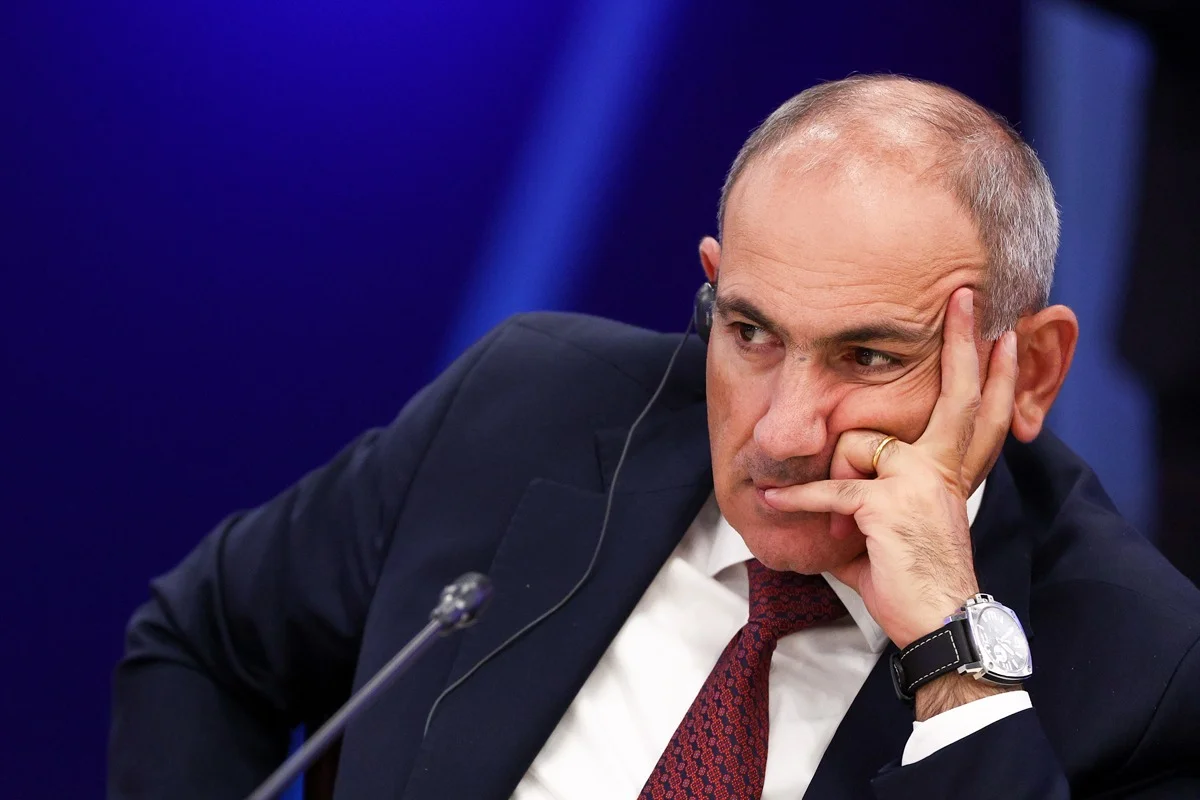
Prime Minister of Armenia Nikol Pashinyan declared the end of Armenian history and announced the beginning of the next. The Third Republic, he said, is being replaced by the Fourth. It will finally come next year, when his party and he personally, having received a new mandate in parliamentary elections, will adopt a new constitution.
The third republic declared closed is, strictly speaking, the Armenia that declared its independence in 1991 (the Second Republic, by the way, according to this historiography, was Soviet Armenia). Since this latest history is being written in the rhythms of the election campaign, it is in many ways perceived as a political technology, according to which (like a company with its debts) an entire state is bankrupt and nullified, the failures of which, as follows from Pashinyan’s declaration, cannot be overcome in any other way.
“The life of the Third Republic, unfortunately, turned out exactly like this: blockade, war, economic recession, emigration did not allow the dream of a referendum on independence to become a reality...” Pashinyan said on the 34th anniversary of Independence - an anniversary that, in this logic, may be the last.
Quadrature of a closed circle
According to the project, the Fourth Republic will be built on the ideology of joy, because joy is inextricably linked with the idea of peace...
The entire logic of the project is built on the idea of peace. And there is a lot in it that many agree with. The basis of the security system can only be peace with its neighbors, which is largely hampered by myths of a wide variety of properties - from historical to geopolitical. Or both at the same time, like, for example, Mount Ararat in all its possible manifestations. Hours of speeches by the Prime Minister, sometimes very sparkling, and sometimes disarmingly frank and self-exposing, are devoted to getting rid of these myths, which in fact have been reproduced for decades, starting from school. “Yes, at the cost of thousands of victims, but a way out has been found...” he answers his opponents, who, while leading the Third Republic, did not find this way out.
The task facing Pashinyan looks unsolvable, like squaring a circle: to present a project for a way out of the disaster to those who know that the author himself is to blame for this disaster.
Pashinyan solves it this way: the disaster is the result of the Third Republic, with which he breaks ties and starts from his own scratch, therefore, his recent history is pristine.
But this plot also has its 25th frame.
Knowing how vulnerable this thesis is, he gets ahead of his opponents and himself comes out to them with this topic, but from a different perspective: yes, thousands of victims, yes, he himself does not understand how mothers can forgive him, but mothers, he continues, answer him: everything is so, but now there is peace, and it is worth everything.
And one more thing: yes, he is responsible, but at the same time only he, who has nothing to lose, can make those concessions that everyone, perhaps, considers humiliating, but deep down, necessary.
Of course, let Pashinyan suffer punishment for this, but only later, when the world becomes irreversible. Therefore, even if there is a Republic of Joy and life without Ararat, all these scores are for later. This is the formula of the social contract and the key to solving an unsolvable problem: Pashinyan is given the opportunity to win in a situation where he cannot lose.
Far from Moscow
All foreign policy theses are built on this logic, especially since issues of war and peace make it possible to convert any domestic political debate into geopolitics. Changing everything in the global Armenian positioning so that, as one famous literary character said, everything remains unchanged. Not because Pashinyan does not want, say, to Europe. It’s just that he, apparently, has to go into it with a full understanding of the futility of this undertaking.
However, Yerevan’s European impulse itself was initially more likely a situational consequence of resentment towards Russia, which Pashinyan successfully used. On the one hand, perhaps partly and quite sincerely. “Over the past 20–25 years, Russia has been taking away our sovereignty from us, grain by grain,” oppositionist Pashinyan said a year before his revolution. On the other hand, it was precisely this resentment that allowed Pashinyan to at least to some extent ease the burden of his own responsibility for the Karabakh disaster, shifting part of it to Moscow. But even then, his rebellious actions were clearly and rationally dosed: attacks on the CSTO did not pose any particular risks for Yerevan, since Moscow had already lost a fair degree of interest in him, and Yerevan regularly complied with most of the other obligations that were important for Moscow (and important for Yerevan). In addition, Pashinyan, probably better than others, understood the transience of emotional impulses - as did the opposition, which at the right pre-election moment was preparing to present him with “betrayal” not only in the Turkish-Azerbaijani direction, but also in the Russian one, which would cost Armenia very dearly.
However, it would be a bit of an oversimplification to consider that maneuvers in search of one’s place in the world are exclusively a pre-election event.
The axis of all political logic for Armenia will remain for a very long time building relations with Azerbaijan, and it is on it that all other problems will be strung.
Intertwined with the very different interests of the parties involved in these collisions, they can become the basis for unexpected stability, in which (at least today) everyone is interested. And Armenia itself, first of all. And Azerbaijan, which has solved all its problems, and today it needs at least a pause to calmly monetize what has been achieved. And Türkiye, since it claims to be the guarantor of calm in the entire region. And Iran, which today only needs an escalation on its borders on the Araks.
And even Trump, for reasons that are somehow inconvenient to formulate.
And certainly Russia, which, in fact, lost the Karabakh war, which at first it considered itself won.
Georgian lessons
Meanwhile, Pashinyan has already abolished one myth that was considered fundamental in Armenian politics - about Russia as a strategic ally, and this did not require any effort from him. After all, in fact, everyone understood before that Moscow would not fight for Armenia, especially not with Azerbaijan. It’s just that while this knowledge was theoretical in nature, this toast could still be pronounced at every meeting of any fraternal level. Then moving away from Moscow turned out to be a way to protect itself from its actual unity with Baku, and in order to balance the balance of power, Yerevan used rapprochement with the West. But when Baku insistently proposed making the settlement format bilateral, this movement also slowed down.
However, since the fall of last year, relations with Moscow began to stabilize, and here the logic of compromise looked arithmetically simple. The resource for Western repositioning was initially small, and the arsenal of practical measures was limited to a rather exotic initiative - the law on Armenia’s accession to the European Union, which was immediately officially recommended not to be confused with an application to join the EU, but to be considered solely as the aspirations of the people.
Dependence on Russia, both economically and politically, remains, although not critical, but significant enough to think about the discomfort that it can create.
Moreover, further exacerbations did not promise any bonuses anyway.
Major infrastructure in Armenia is controlled by Russia, and there have been no major misunderstandings, except for short-term claims against the South Caucasus Railway, owned by Russian Railways at the very beginning of the Pashinyan era.
However, this economy is also politics. “Electric Networks of Armenia” is owned by Samvel Karapetyan, a native of the village of Tashir located near the Armenian-Georgian border, which gave its name to a large Russian corporation. He maintained constructive relations with Pashinyan for quite a long time, but, having supported the Armenian Church in its conflict with the authorities, he became its enemy, and therefore was immediately arrested, and the state adopted a law on the nationalization of Electric Grids. Which gave many reasons to assume that the further development of Armenian events could follow the Georgian scenario, in which, having removed Saakashvili from power in the elections, it was captured for a long time by billionaire Bidzina Ivanishvili.
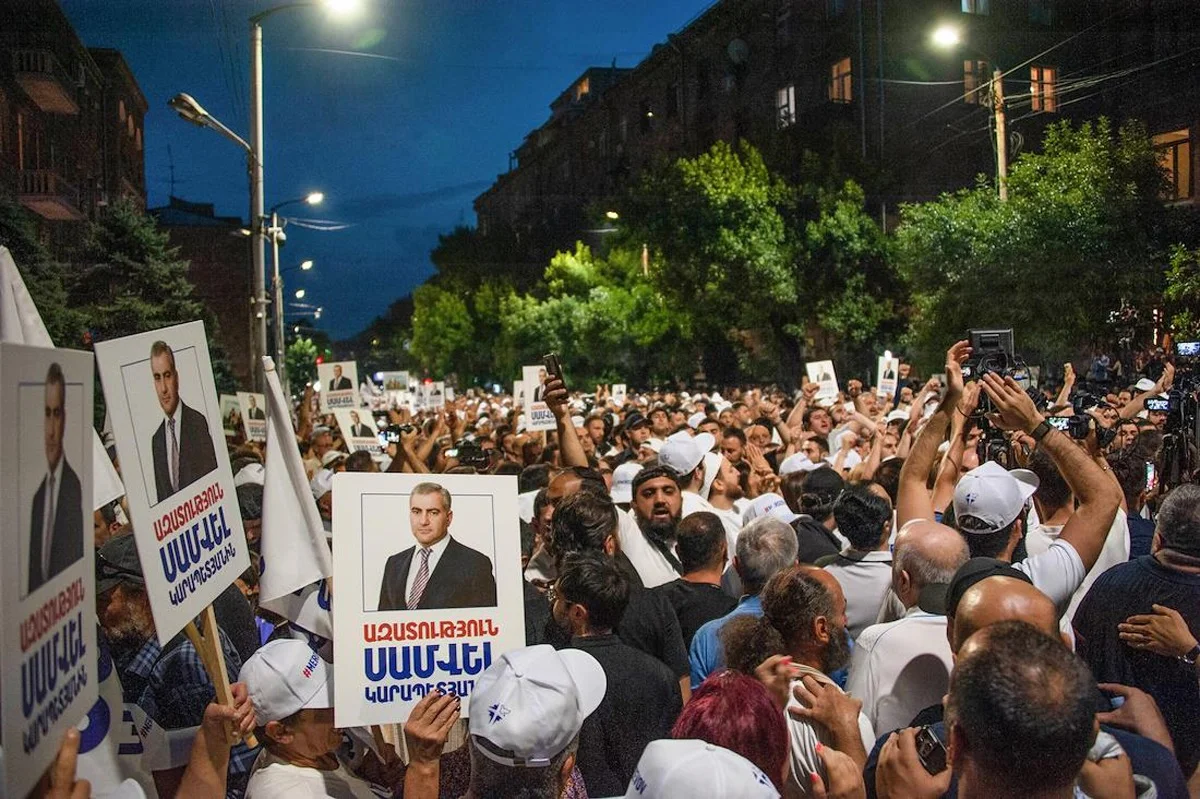
But at the same time, two questions remain open: how ready is Karapetyan himself for the fight - politically and, most importantly, technologically? Pashinyan, who has probably learned the lessons of Georgian, is ready for any preventive measures to avoid such repetitions. And secondly, how ready is Moscow to help Karapetyan? So far, Yerevan has not heard any threatening warnings; even the season of expansiveness of the controlled information heralds was short and unimpressive. Which leads to suspicions about a compromise reached, the essence of which hardly corresponds to traditional geopolitical ideas about the world, in particular, about a decisive battle between Moscow and Trump for the countless resources of the South Caucasus.
Calendars don't lie
In fact, the corridor from Azerbaijan to its Nakhichevan exclave, control over which Moscow already considered a done deal, was lost not to the West, but to Baku, partly to Ankara, and, what was most offensive, to Yerevan. The concept of the “Trump Path”, in which everyone is free to see something of their own, be it the “Zangezur Corridor” or the Armenian “Crossroads of the World”, due to its obvious rawness, leaves Moscow the opportunity for maneuver and agreements.
Moscow still has enough resources and positions in the region to present them as an argument in trade. Why, say, build new roads? - she may ask, after all, this is not why the South Caucasus Railway, which took over the Armenian railways as a concession back in 2008, has been working at a loss all these years. It will no longer become a monopolist in the hub that may open here, but it can preserve and develop its segment and allotment, especially since the region in question is gradually becoming wider than just the South Caucasus. And if this is so, then the topic of idiosyncrasy that Pashinyan evokes in Moscow will remain politically played out as the last hope of the Armenian opposition and individual Russian TV presenters.
And in order to reduce Russia’s share in the fate of Armenia, it is not at all necessary to break off relations with it. The degree of its presence can simply be diluted by activity in other global endeavors.
In the same SCO, which from a regional association has finally become a form of institutionalization of China as a special center of global power and the formalization of a system of bilateral preferences into an official club. And in this regard, Yerevan simply follows the general trend (which again saves it from misunderstandings with Russia) of establishing equal communications with all members of the large quartet - Washington, Moscow, Beijing and Brussels, which can be supplemented with the conditional Budapest. It is this style that replaces the usual West-East dualism.
And in relations with Russia itself, Yerevan, by the way, is looking for other formats: less ceremonial and striking in the eyes with their loyalty to the ideas of integration, but more intimate and providing an opportunity to communicate at the level of top officials without outsiders without large round tables. Unlike, by the way, from the same SCO. Instead of another summit within the EAEU, there will be a forum of environmentalists in Altai with the participation of Putin, of course. Instead of the Intervision, which Yerevan avoided, let’s say World Atomic Week, in the company of the IAEA Director himself, Rafael Grossi. And after that you can go to New York. To the UN General Assembly. Fitting correctly into a calendar is no less an art than creating it.