
Translated material
It's all Darwin's fault
And other cultural triggers of the outgoing September

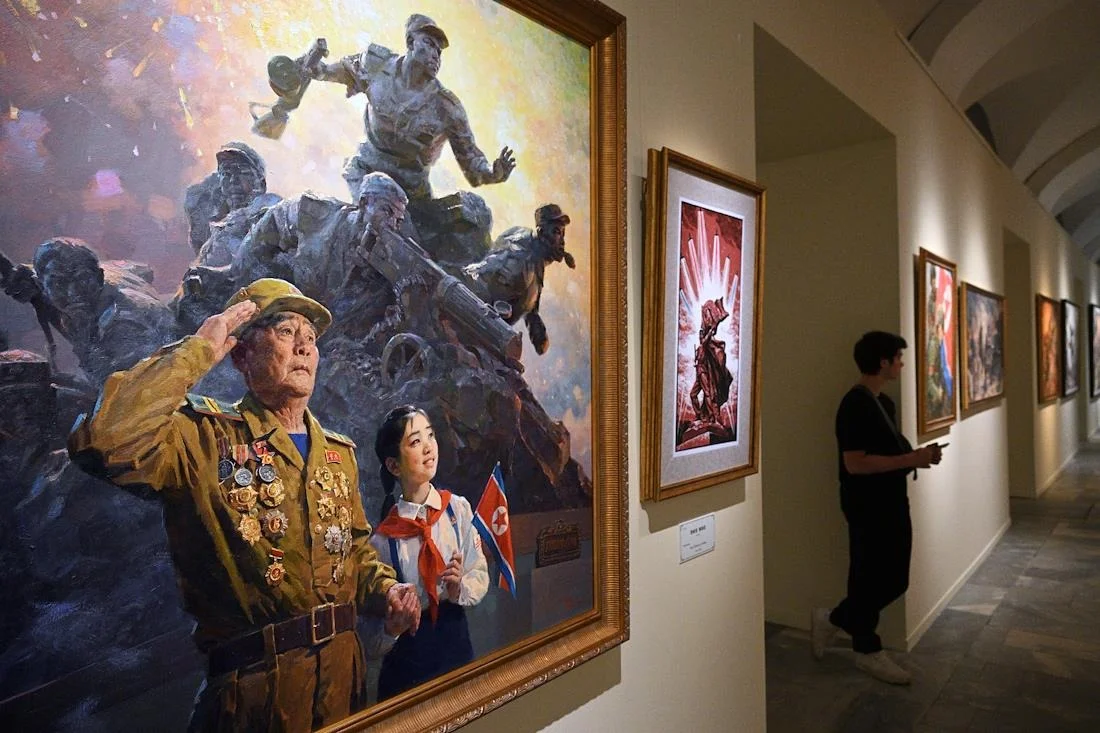
Opening ceremony of the exhibition of art of the Democratic People's Republic of Korea "Art Exhibition of the DPRK". Photo: Evgeny Razumny / Kommersant
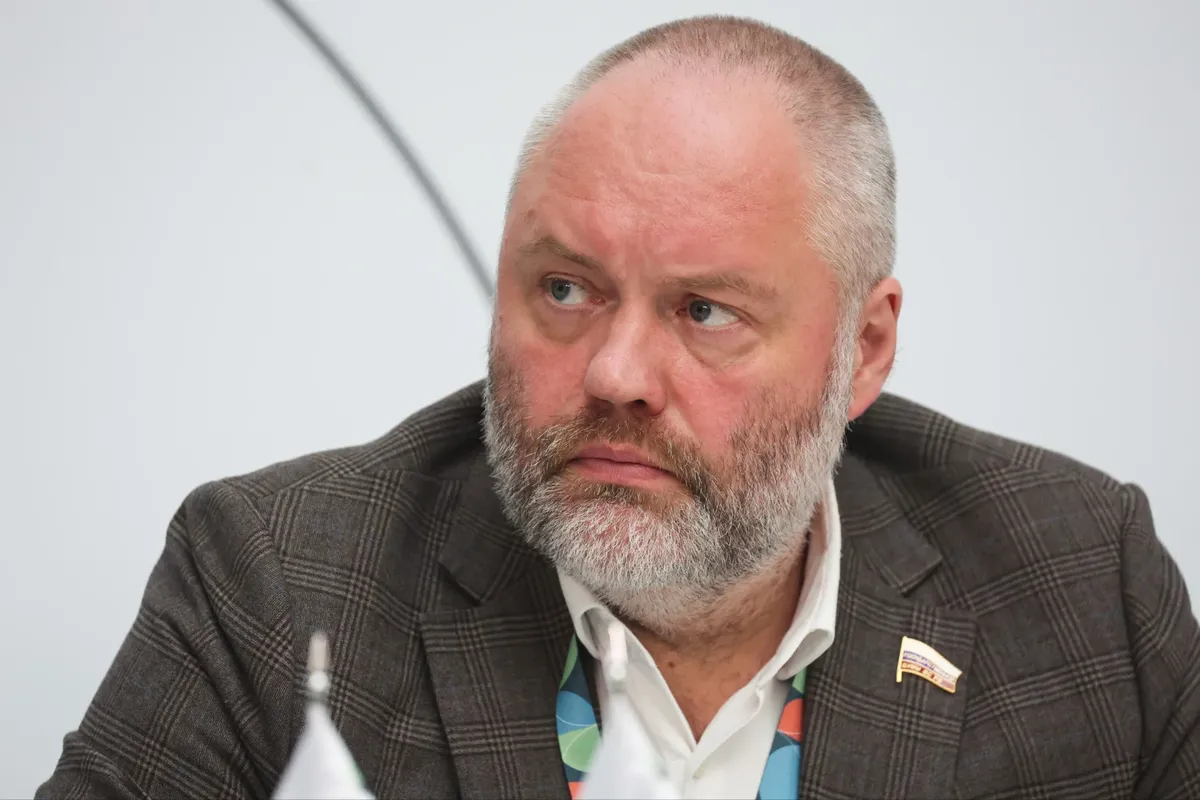
State Duma deputy Nikolai Novichkov spoke in favor of creating a register of people who like and repost “foreign agents.”
He told NEWS.ru that this measure should be the next step after the introduction of a warning system on social networks. “In my opinion, it would be useful to oblige social networks to inform citizens in personal messages that they are visiting the pages of foreign agents or persons included in the register of terrorists and extremists. After repeated similar messages and warnings, if they are ignored and persist in the desire to communicate with the enemies of Russia, you can think about Roskomnadzor introducing a register of persons supporting foreign agents,” Novichkov said.
“If a citizen, after all the warnings, continues to cheer for the enemies of Russia, like their provocative statements, comment and repost, then, of course, we need to pay attention to this,” says Novichkov.
However, this proposal did not find support even among the deputy’s colleagues. Thus, the deputy head of the Chamber Committee on Information Policy, Alexander Yushchenko, in a conversation with RBC, expressed the opinion that the proposal to create in Russia a register of people who like the publications of “foreign agents” was probably put forward for the purpose of self-PR.
***
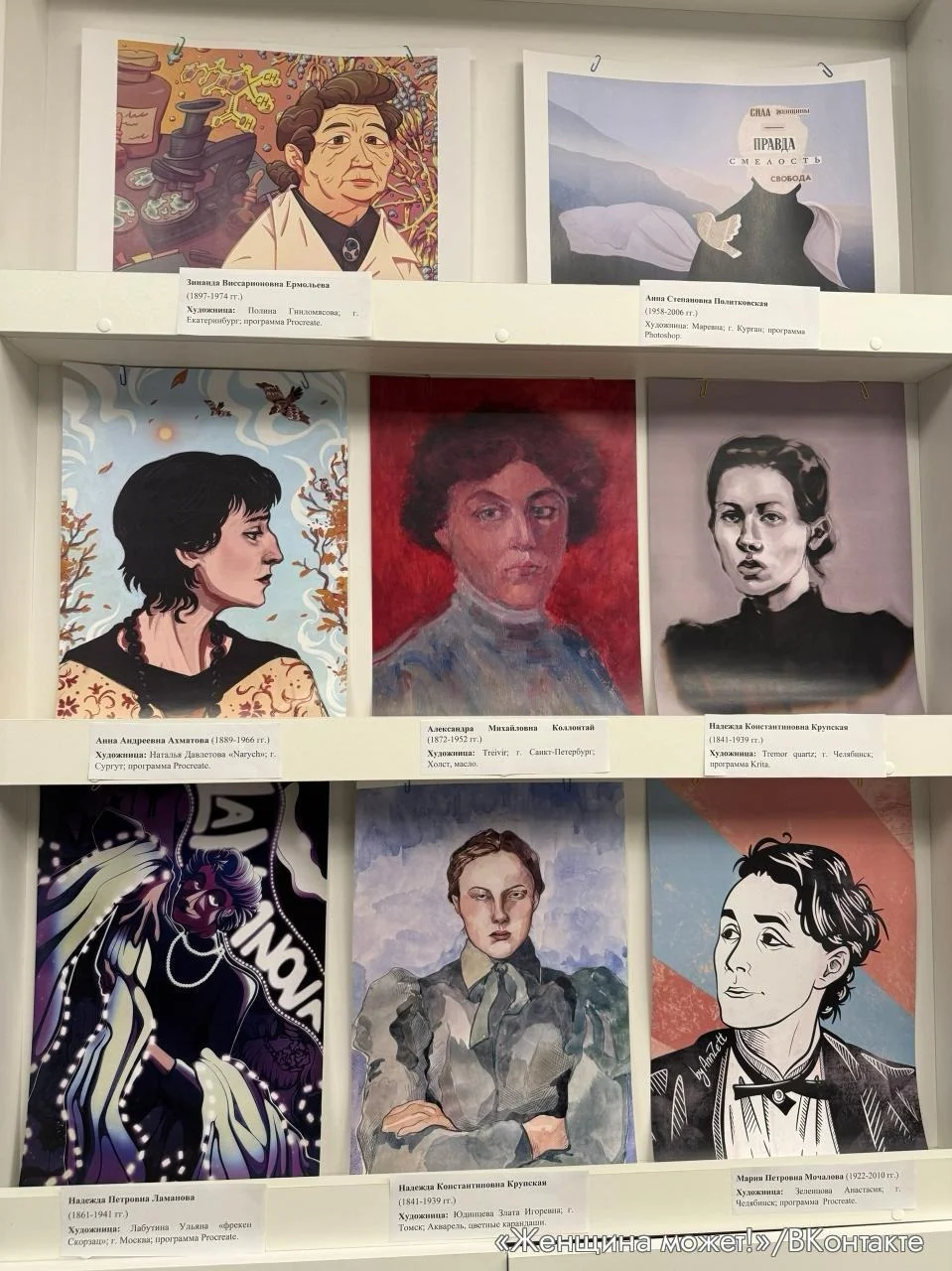
A complaint about the portrait of Ekaterina Shulman* became the reason for closing an exhibition about outstanding women in Chelyabinsk. The exhibition, which was supposed to last until the end of September, was only able to run for a day.
“The fact is that the management of the library was put under pressure from above because of the denunciation. The reason for the slander was the mention of a woman who has the status of a foreign agent. Indeed, one of the heroines to whom the portrait was dedicated is such. And we honestly made all the markings, both in the presentation and on the information cards, in accordance with the law,” says a message in the telegram channel of the organizers, the femme community “A Woman Can.”
“A woman with the status of a foreign agent” is political scientist Ekaterina Shulman. Among other works presented in the exhibition were portraits of Anna Akhmatova, Anna Politkovskaya and others.
***
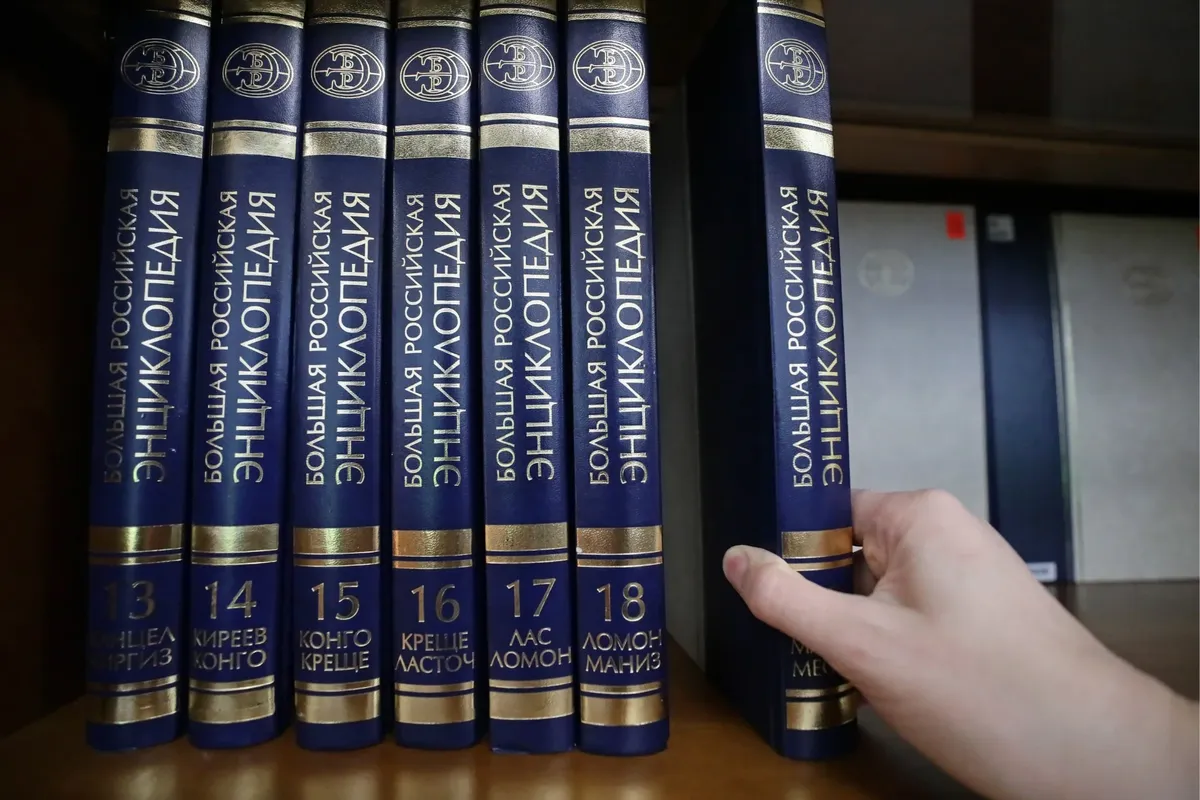
The government will allocate 303 million rubles to complete the liquidation of the Great Russian Encyclopedia. The corresponding order was signed by Russian Prime Minister Mikhail Mishustin.
The Great Russian Encyclopedia is the successor to the Great Soviet Encyclopedia. In 2019, a national interactive scientific and educational portal “The Great Russian Encyclopedia” was created on its basis. The project was positioned as an analogue of Wikipedia with verified content. Initially, the cost of the project was estimated at almost 2 billion rubles, and the work was planned to be completed in 2022, but then the launch of the resource was postponed to 2023, and in 2024 they decided to completely liquidate the project with the transfer of the accumulated materials to the Internet encyclopedia “Ruviki”, which, it was believed, “will strengthen its competitive advantages.”
According to one of RBC's sources,
During its work, ANO "BRE" prepared 98 thousand articles, but only half of them were published on the portal of the Great Russian Encyclopedia.
***
Russian Minister of Culture Olga Lyubimova took part in the opening of the “DPRK Art Exhibition. Country of the Great People" at the All-Russian Museum of Decorative Arts. In her opinion, the exhibition not only demonstrates the outstanding artistic skills of the authors, but also serves as a bridge for cultural dialogue between the Russian Federation and the DPRK, allowing for a deeper understanding of the worldview of the Korean people.
“Particularly noteworthy are the paintings that reflect key milestones in the history of the Democratic People’s Republic of Korea, the heroes of the Northern Military District, the modern architecture of the country, majestic natural landscapes about five meters in size, jewelry-made inlaid and engraved products with patterns, mosaics made of mother-of-pearl and paintings made of gems,” the Ministry of Culture said in a statement.
And in Novosibirsk Akademgorodok it is planned to open the first representative office of a North Korean university in Russia - the country's largest University named after Kim Il Sung (Pyongyang). The search for the necessary premises is now underway, Rector of Novosibirsk State University (NSU) Mikhail Fedoruk told TASS. He explained that the opening of a representative office will allow universities to develop more intensive interaction, in particular the academic mobility of students and teachers. There are also plans to exchange students.
Meanwhile, a restaurant serving North Korean cuisine opened in Moscow. Inside the restaurant, North Korean television programs are broadcast, showing the performance of the Russian singer SHAMAN in front of North Korean leader Kim Jong-un.
Guests are asked to show their passport at the entrance and are asked if they have visited South Korea.
***
Member of the State Duma Committee on International Affairs Dmitry Kuznetsov said that the BRICS countries are developing a list of common traditional values. The main task is to find them.
“Our task, as we set it last year at the first “Traditional Values” forum, which was in Moscow, is to find these very common traditional values,” Kuznetsov said at a press conference (quoted by TASS).
He noted that the list of Russian spiritual and moral values was determined by the corresponding decree of Russian President Vladimir Putin, but not all of them were included in the general list of traditional values of the BRICS countries.
***
The Vladimir diocese called on the media, cultural figures and teachers to refrain from “romanticizing” and “glorifying” Venedikt Erofeev. Journalist Ksenia Luchenko* was the first to draw attention to the statement posted on the diocese’s website. “His work, in our deep conviction, carries a destructive charge that is detrimental to the individual and society,” it says.
Venedikt Erofeev was charged with five counts: “distortion of national identity,” “destructive and eschatological nature of the text,” “propaganda of vice,” “blasphemous idea of God,” and “lack of a moral ideal.”
For his part, the chairman of the Synodal Department for Relations between the Church and Society and the Media, Vladimir Legoida, in an author’s column in Kommersant, expressed understanding of the position of the Vladimir diocese and agreed that “there is no need to romanticize or glorify the hero of the poem “Moscow - Cockerels,” but noted that “the book itself has long entered the cultural space as an artistic phenomenon that cannot be ignored.”
***
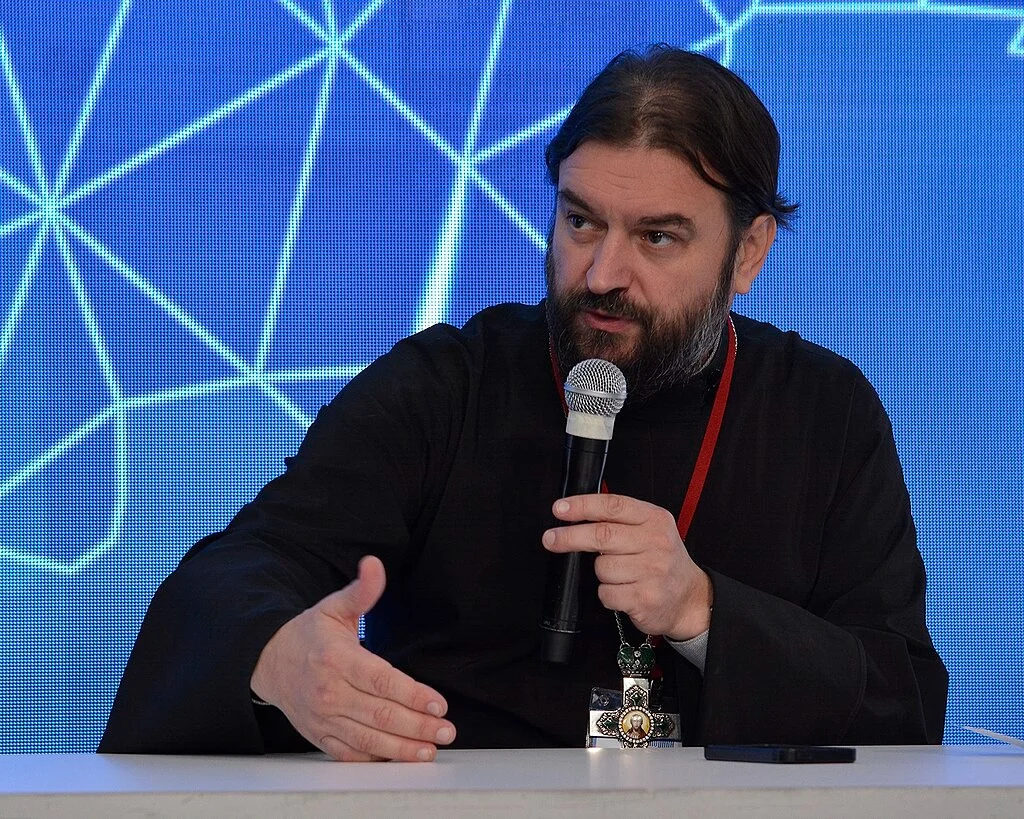
Archpriest Andrei Tkachev found the source of all troubles - education. During his sermon, he stated that all troubles come from educated people.
“From people like Charles Darwin, from people like all sorts of other biologists, talkers, all sorts of economists, Adam Smith, Doon Scott,” the archpriest clarified. In his opinion, “they have all saturated the whole world with theories that a person can live without God.”
In turn,
Archpriest Alexander Ilyashenko proposed to legislate the right of spectators to throw rotten eggs at “bad artists.”
“If artists corrupt the audience, the Church treats them in the most strict manner. Art should awaken good feelings. Pushkin also spoke about the need to protect the writer from the reader and the reader from the writer. If they act on stage and say vulgar things, are they allowed? In the 19th century they threw tomatoes at a bad actor, but today you can’t. Why such inequality? The legislation needs to be revised so that bad artists receive rotten eggs for their antics,” he said in an interview with Paragraph.
And Archpriest Sergei Kulpinov proposed collecting tithes from Russians for the needs of the church. “Where does all this come from? State? No, he does not participate. Who is taking part? And it wasn’t the priests who said this. This is not the Church, God said it. He said: “You must bring a tenth of your entire income to my house in order to maintain my house, these walls. So that you can come to me, so that my servants can live,” said the archpriest, quoted by Kommersant. He complained that priests would have to work six days a week if parishioners did not support the churches.
At the same time, the publication “Rise” in the Irkutsk Church of the Kazan Icon of the Mother of God, where Archpriest Sergiy Kulpinov serves as rector, was told that he visits his church only on weekends. It was not specified what he does on weekdays.
Later, Vakhtang Kipshidze, deputy head of the synodal department of the Moscow Patriarchate for relations with society and the media, said that the Russian Orthodox Church never proposed “to oblige believers to pay tithes.” And Vladimir Legoida reminded in his telegram channel that an individual priest, even “with a certain fame,” is not authorized to speak on behalf of the entire Russian Orthodox Church.
***
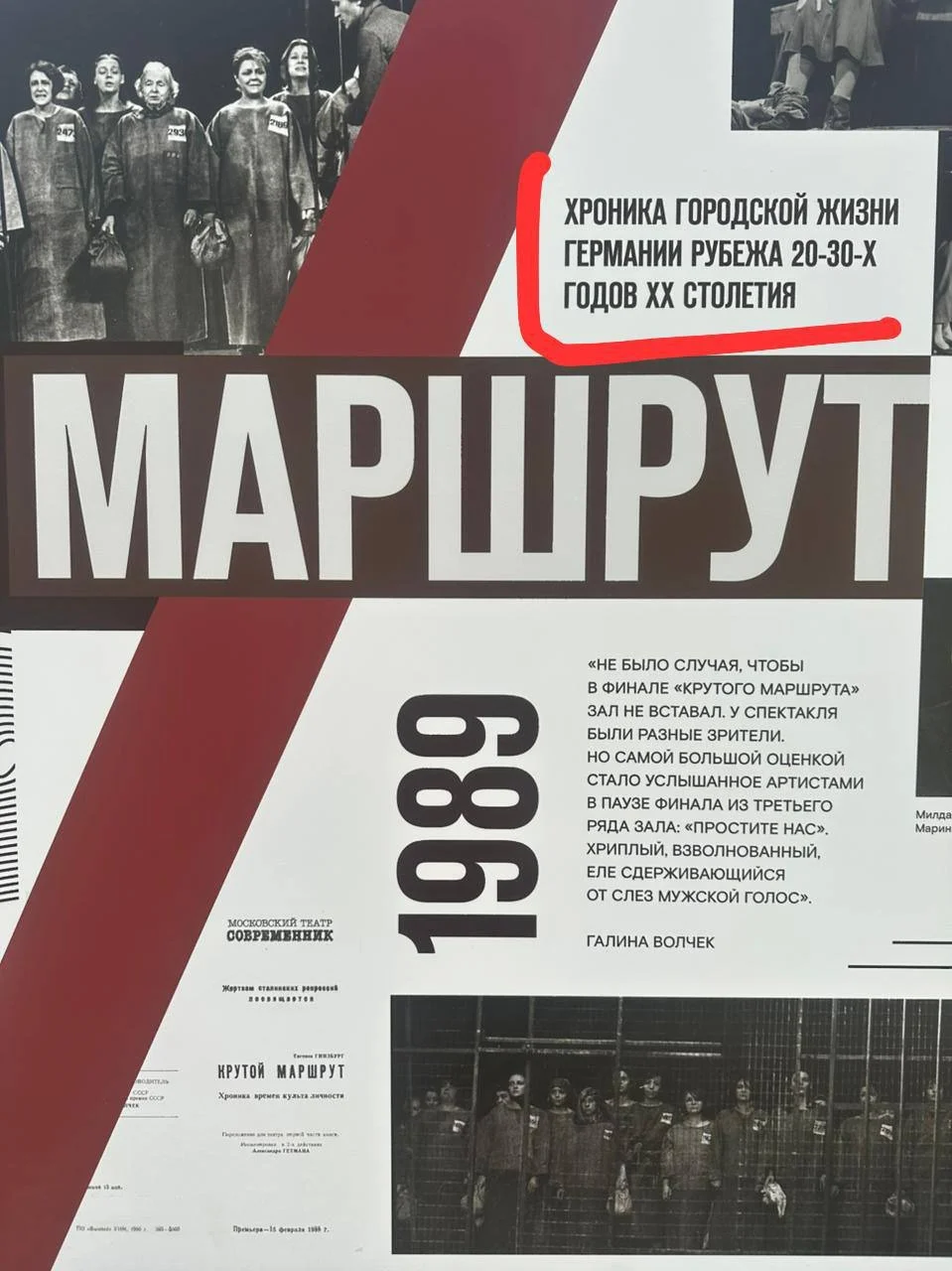
At a photo exhibition at the Sovremennik Theater, the descriptions of performances based on Evgenia Ginzburg’s books “Steep Route” and “Three Comrades” by Remarque were mixed up. As a result, it turned out that the play about Stalin’s repressions is “a chronicle of urban life in Germany at the turn of the 20–30s of the twentieth century.” Spectators mistakenly drew attention to the stand.
The press service of the Sovremennik Theater stated that “there was an inaccuracy in the description of the exhibition on Chistoprudny Boulevard. At the stand dedicated to the play “Steep Route”, due to a technical reason, a glitch occurred during the layout. The genre definition of the production “Three Comrades” (“a chronicle of urban life in Germany at the turn of the 20-30s of the 20th century”) was mistakenly included on the stand of the play “Steep Route”, which does not correspond to either historical or artistic truth.”
“Due to the fact that the information on the stand caused dissatisfaction, measures have been taken to replace it,” the press service said in a commentary.
***
Russia took last place in the grave-digging competition in Hungary. The competition took place in the Hungarian city of Szekszard. It is not the first year that it has been held, but this time a team from Russia from the Novosibirsk crematorium took part in it for the first time.
“The competition conditions are difficult: heavy ground, hot weather and a high level of competition require a demonstration of real skill, strength and endurance. The Siberian team took an honorable last place,” the KP-Novosibirsk publication wrote in its Telegram channel.