
Translated material
Korotich's smile
There was a feeling that something unprecedentedly new was being born in Ogonyok. Unprecedented. Something that makes you even a little dizzy

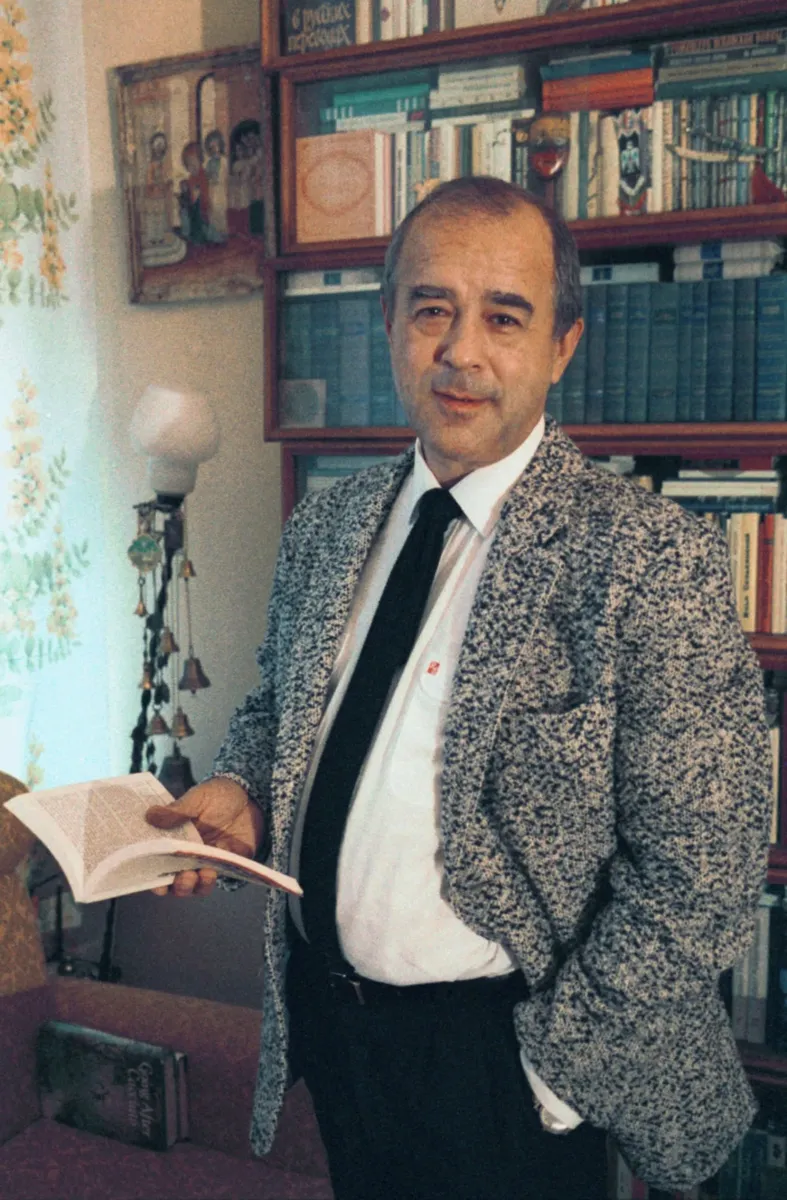
Vitaly Korotich. Photo: Vladimir Repik / TASS Photo Chronicle
Korotich was a great editor-in-chief. Rare talent. There are much more great writers or, say, poets.
For the entire post-war period - until 1986, when Korotich appeared in Ogonyok, perhaps only Tvardovsky, the editor-in-chief of Novy Mir, can be named in this series. There were other editors - professional, skillful, strong, cool, who put their publication on “solid rails” (the very complex and very contradictory figure of Chakovsky, the editor of Litgazeta, comes to mind) - but there were probably no great ones, except for “Trifonich,” as Solzhenitsyn affectionately calls him in the book “The Calf Butted an Oak Tree.”
When the little-known Kiev poet Vitaly Korotich, little known in Moscow, suddenly became the editor of Ogonyok, no one, of course, even thought that a second such poet was born after Tvardovsky.
And he himself, of course, didn’t think so either. Although, however, Tvardovsky’s shadow probably hovered over him. And he probably tried on the fate of “Trifonych” - it must be said, a very tragic one.
I tried on the very situation of those 60s, first of all - the “window of opportunity”, editorial courage for which they will not be punished (at least immediately), the “highest mandate” for criticism and sharpness, reliance on those forces, those ideas that remained driven deep, squeezed almost to the death rattle by the suffocating, “soft” Brezhnev repressions - still since those New World times.
In short, I tried on the Tvardovsky tradition.
A “liberal” magazine in a very illiberal country.
However, with Tvardovsky it was not so simple. Solzhenitsyn writes about this in “The Calf” - he writes biasedly, in detail, lovingly and at the same time quite harshly. “Trifonich” for him was in many ways an anachronism: he despised and did not understand samizidat, and at first was afraid of it, played gambling with his superiors and was proud of this skill, recognized only “verified”, official, that is, texts passed through censorship, was a deputy and a candidate member of the Central Committee, hated emigrant “jackals”, had difficulty parting with his faith to Stalin.
Not everything was so simple with Korotich - he was afraid to publish emigrants in his magazine, played gambling with his superiors and was proud of it, slowed down a lot of things, at least at first (then missed them), and closely monitored the mood and course of the party leadership.
...And yet the degree of freedom was already different.
What was allowed to Korotich, Tvardovsky would never have been allowed to do.
But “systemic liberalism” itself, which Solzhenitsyn analyzes in detail, cell by cell (just like, say, Felix Svetov in his book of memoirs), is not such a simple phenomenon.
Yes, samizdat overwhelmed and eclipsed the courage of the “New World”, but without the “New World” the very liberal mentality of the intelligentsia, the huge literature of samizdat, and even the dissidents themselves would have been impossible.
The same is with Korotich’s “Ogonyok” - political ideas, political rhetoric and, I would say, political poetry, which spilled out in the late 80s into street rallies, into leaflets and posters, in the speeches of deputies from the rostrum of the Kremlin Palace of Congresses, and all republican tribunes, in the end, into newspaper texts - already significantly exceeded the courage of “Ogonyok”. But without Ogonyok, these new informalities from politics would also be simply impossible.
Korotich’s “Ogonyok” is the midwife of this new political language, and most importantly, of political protest and action.
...How did it all happen?
Speaking about Yegor Gaidar’s reforms, economist Yevgeny Grigoryevich Yasin once used the following expression: “Gaidar untied the main knots, and then everything went much simpler.”
These nodes: of course, price liberalization, free trade, and so on (in the era of Korotich in Ogonyok this could only be dreamed of).
But society, the language that society speaks, also has these “knots” that must first be untied. And then “it will go away on its own.”
The first such publication, in the opinion of many, was the poems of Nikolai Gumilyov with a foreword by Vladimir Enisherlov, the first short essay about his life. This is still 1986.
Among the list of “Ogonyovsky bombs” there are, of course, some favorites from 1987–1989. This and the interview with Bukharin’s widow Anna Larina - in it “a bourgeois opportunist”, a “Trotskyist”, a “German spy”, “a mad dog of world imperialism” (according to Stalin’s prosecutors and Soviet newspapers) - suddenly appeared as a living person, immensely suffering and honest, and not a dry line in a school textbook.
This is “Zhdanov Liquid” by Yuri Karyakin, where, using the example of A.A. Zhdanov, the author and inspirer of the party “resolution” of 1946, which erased Akhmatova and Zoshchenko from literature for 20 years, the author showed how an explosive mixture of lies, slander, hatred, brought down from a high rostrum, works, and how it later resonates in culture and history.
This is the author’s column by Vitaly Shentalinsky, where he - thanks to the revealed KGB archives - reproduced verbatim Stalin’s telephone conversations with Bulgakov and Pasternak, looking for “material evidence” of how the leader ruined the fate of Akhmatova, Mandelstam and many others.
Not immediately, but gradually, from issue to issue, a feeling of a flow arose, which has its own inertial movement, internal strength, and it, this flow, can no longer be stopped. He carries himself. The reader (having gotten up early and excitedly stood in line at the newsstand) always eagerly leafed through Ogonyok in search of the main article.
Certainly,
First of all, they looked for articles about Stalinism. About executioners and victims. And here abysses simply opened up, of course. After all, before Ogonyok, not everyone could (or wanted) to read samizdat.
Many people told me personally that in those years, after reading articles in Ogonyok (and the Gulag Archipelago, they added), the ground simply shook under their feet. The world has turned upside down.
And the point was not that Ogonyok rehabilitated Bukharin, yes, Bukharin was a “progressive leader”, a communist, a Bolshevik - no, the theme of “open trials” originates in this article. Open processes are one of the most shameful pages in our history. Bloody dogs, fascists, destroy, shoot - this was the signature of the entire flower of Soviet literature. All, so to speak, the cream of society. It was impossible to ignore this. But Ogonyok opened these terrible pages in every issue. The “doctors’ case” was followed by the “geneticists’ case,” the “Komsomol case,” the “Leningrad case,” and so on.
And this was not just “opening the archives.” This was a much more significant thing: “from us,” that is, from society, from the country, they hid the truth - which means there was something to hide. This means that it was a global, total deception of the people. And deceiving the people is a crime. And you have to pay for crime.
This is how the idea of total cleansing was born. That this system can no longer exist in default mode.
I believe that the articles in Ogonyok largely closed the Soviet project, the Soviet era - and they opened a new one, and I do not mean democracy and the market economy, the fate of which is still in question, no - in the articles about the Pamyat society, about the "sovereign leaders" and "patriots" in literature, the magazine discovered that new force that has now developed in full power, and has taken dominant positions. And then all these Prokhanovs and Rasputins (with all due respect to the latter’s talent) seemed to be a relic of the past. But they turned out to be a relic of the future.
Did Korotich know (and, by the way, did Gorbachev know?) that things would go so far when that very “first knot” was untied? I didn't know, of course. But it seems to me that his intuition told him that if this knot is untied, other knots will unravel themselves, texts, authors, themes, ideas will come on their own, that is, the flow will carry him along itself.
And he had the courage to surrender to this flow, that’s what’s important.
…“Great editor” does not always mean “great person.” Tvardovsky, for example, had severe binges, suspicion and hysterics, and attacks of cowardice. Korotich had something different - he was an incredibly artistic person, but elusive. It is difficult to measure scales, to measure moral qualities with a tape measure. I only compare the publications themselves.
They were each key in their era - “New World” and “Ogonyok”.
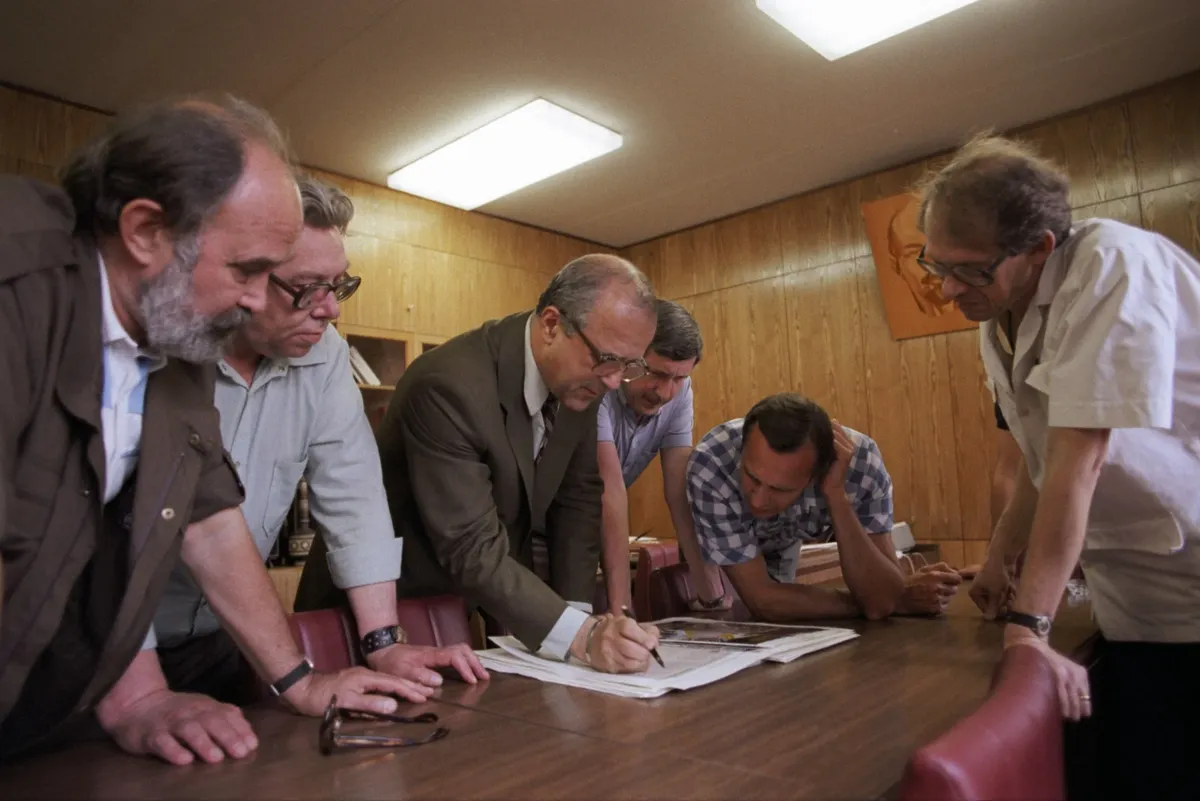
...I worked with Vitaly Alekseevich for only nine months. Came in January 1991. It was very scary to sit in the chair that Oleg Khlebnikov occupied before me. One of the creators of that Korotichevo “Ogonyok”. After all, the magazine, of course, was not limited to publications about the Great Terror. There were poems and prose (Tatyana Tolstaya, Vyacheslav Pietsukh, Evgeny Popov, Viktor Erofeev, almost for the first time opened by Ogonyok to the reader). There were “Lubera” by Volodya Yakovlev, reports by Artem Borovik from Afghanistan and then from the American army. There were very deep articles about the economy by Yuri Chernichenko and Nikolai Shmelev. There was an amazing art department under the leadership of Vladimir Chernov, with articles about modern culture, informal culture and “new forms” in general, as Treplev said in “The Seagull”. Volodya was responsible for “new forms” in the magazine. Feuilletons by Alla Bossart*: you'll cry and laugh. Finally, there were publications for which they literally wanted to crucify Korotich - the generals, the party apparatus, veterans, “Afghans”, God, whoever didn’t want to crucify - the most striking example: the “Uzbek case” of Gdlyan and Ivanov with all the subsequent beating of Korotich on the high party platform. The battle of the two Ivanovs - Tatyana and Natalya - with the soil writers, “patriots and fighters,” as they were called, and so on.
This entire editorial board, this entire system of headings and materials, by the way, was created together with Korotich by his first deputy Lev Gushchin, with whom Korotich later became mortally offended.
...In general, it was a whole world. Reading into this world, immersing yourself in it, following it was much more interesting than watching even the most intriguing series today.
That's where the intrigue was.
And that’s why I was scared to come to Ogonyok, to my office, and talk to Korotich. The fame of the magazine was too great. But I tried.
...One of the experienced members of the editorial board advised me:
- Listen, Korotich comes to work at 10 in the morning, when no one is there yet, and fights against the locked doors like a wounded animal. If you want to establish contact, also come right at 10 and go to him for advice on any matter.
I came at 10 (I had never done this before or since), took an article from the table, a selection of poems, prose - and went to consult.
Gradually, Korotich got used to me, although by about the fifth time he was already looking at me a little scared, but he probably realized that I was not an intriguer and was not trying to extract any personal benefit of my own. This was one of the important criteria for him.
And gradually I realized: this was, despite his eternal “slipping away,” an open editor, so to speak, an editor in the world. Very dependent - in the good sense of the word - on the team. Not standing above him. Not making his office an impregnable fortress.
The executive secretary of Ogonyok, Vladimir Glotov, recalled, for example, that all the most important issues were then decided not in closed offices, but right in the corridor. Korotich came out with proofs in his hands - and everyone followed him. “Like somnambulists,” he writes, “we walked back and forth along this corridor for hours. They stopped, argued, and right there, literally on the wall, changes were made.”
Artistry, lightness, charm, and the ability to enchant were perhaps his main weapons. In short, it was a different editor.
But, alas, I came to Ogonyok at a difficult moment for Korotich. A serious conflict has just broken out within the editorial board, with showdowns, mutual accusations and even mass dismissals. Who managed to quarrel with the editors and weave this intrigue - we can only guess, I don’t want to get into the details now, and I can’t, all this happened before me.
Korotich then began teaching in America; he was often away. He was not there at the moment when tanks entered Moscow on August 19, 1991. He rejoiced, and publicly, that he did not get into a “muddle,” as they now say, was not arrested and did not have to see how his brainchild, his magazine, was destroyed and closed. And he, an experienced wolf who once had a history of relations with the KGB, had no doubts about either the first or the second.
Gushchin immediately returned from abroad at that moment.
In September 1991, we held a meeting at which Korotich's long letter of renunciation was read. He urged the editors to rely on young people. It was a generally accepted concept then - young people would come and sort it out.
The vote was almost unanimous; there was only one person against it - Ilya Milstein.
Then Korotich came to Moscow, there was even a farewell friendly dinner with the editorial board, warm words. And then more time passed, and Korotich changed his understanding of what had happened. Ideas arose about a conspiracy, that he had been framed, and many unfair, in my opinion, words arose about his colleagues with whom he had worked for a very long time and to whom he owed a lot.
But that's another story.
These five years at Ogonyok were so bright, I would say, sublime, flying, that his whole life is divided into two unequal parts - in Ogonyok and outside it.
His Kiev period, the life of a young talented poet who wrote in Ukrainian, the author of the prophetic song “Take me across the Maidan”, editor of the Kyiv magazine “Foreign Literature”, who was friends with the Ukrainian intelligentsia and dissidents, who later had big troubles with the KGB.
Then another period - the “struggle for peace”, trips abroad, brochures about the nuclear threat and cruise missiles, as well as about American imperialism, as without this. Many have asked this question - where did it come from? How did you maintain this inner courage? And why did you choose him?
And that’s how they chose it. A chance helped: at the request of Alexander Nikolaevich Yakovlev, who was then the ambassador to Canada, during his next foreign business trip (already in the 1980s, when he was forgiven and became a passionate fighter for peace), he wrote a memo on the language of Soviet foreign policy propaganda, on how to build a new image of the Soviet leadership and its policies in the West.
Yakovlev liked the note so much that he remembered Korotich and entered it into his own special notebook.
Accident. But there is nothing random in the world.
It was necessary.
Tvardovsky died shortly after he was deprived of the New World. Korotich lived a long time after Ogonyok, almost thirty-five years. Throughout the nineties and even at the beginning of the 2000s, acquaintances often asked me: well, does Korotich live like this in America? And he lived in Moscow since the mid-nineties, or even earlier.
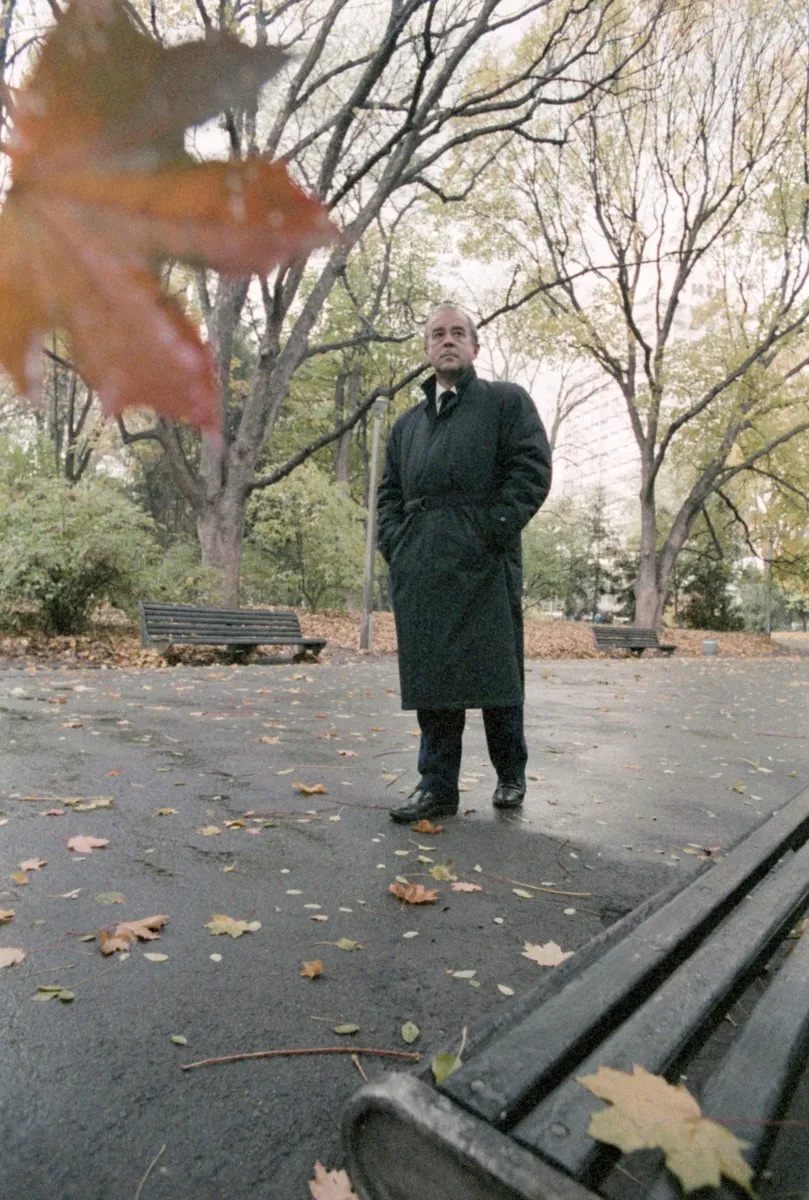
Then they began to ask - is he even alive?
And he was alive, he wrote memoirs, published and republished them, reflected on the past, settled scores, summed up the results, but not only that - there was a joint newspaper with Dmitry Gordon* in Kyiv, there were other Kyiv projects.
But this was only a long afterword, rather sad at the very end - complete loneliness, the serious illness of his wife. Country house.
The five years that he spent in the editorial chair on Bumazhny Proezd, where Ogonyok was located, were his main life. And the main glory, of course. It’s not easy, I think, when it’s like this.
It is believed that after Korotich left, “Ogonyok” died.
This is, of course, not true. After Korotich there were three or even four different magazines. At first, under Gushchina, we made a magazine based on the same patterns of the late 80s; Ogonyok published such authors as Valeria Novodvorskaya (who was not there under Korotich), Ilya Milshtein, Andrei Kolesnikov*, Dmitry Bykov*, Georgy Tselms, Vladimir Chernov and many others, so to speak, classics and contemporaries.
There were also new “bombs,” but it’s a pity that in the reality of the 90s, these dull explosions on our pages no longer reached everyone—the reader seemed to cover their ears.
Then, perhaps the first in the country, Ogonyok tried to master the niche of a business information weekly. The notes became short and compressed, and the photographs were bright and colorful. And you received from Ogonyok complete information about what filled this week - events, people, in general, everything.
Then there was “Ogonyok” by Chernov, another of Korotich’s pets, then came the era of Viktor Loshak - and if under Chernov the magazine was unkempt, fancy and even violent, then under Loshak it was precisely balanced and correct.
But all three magazines, in all three different eras, were always similar in one thing - there was no advertising, and therefore no money. Advertisers strongly associated the magazine with a bygone era; this was its main Achilles heel.
Well, actually, that’s the reason it ended. Not fitting into this new life.
...I think that Korotich’s departure was absolutely natural, it was the right departure. I absolutely cannot imagine him in the new economic reality, with new prices, with dependence on advertising, trying to overcome problems with retail. This was a man entirely from the Gorbachev era. He was born of the Gorbachev era.
And along with its end, he himself logically left the magazine.
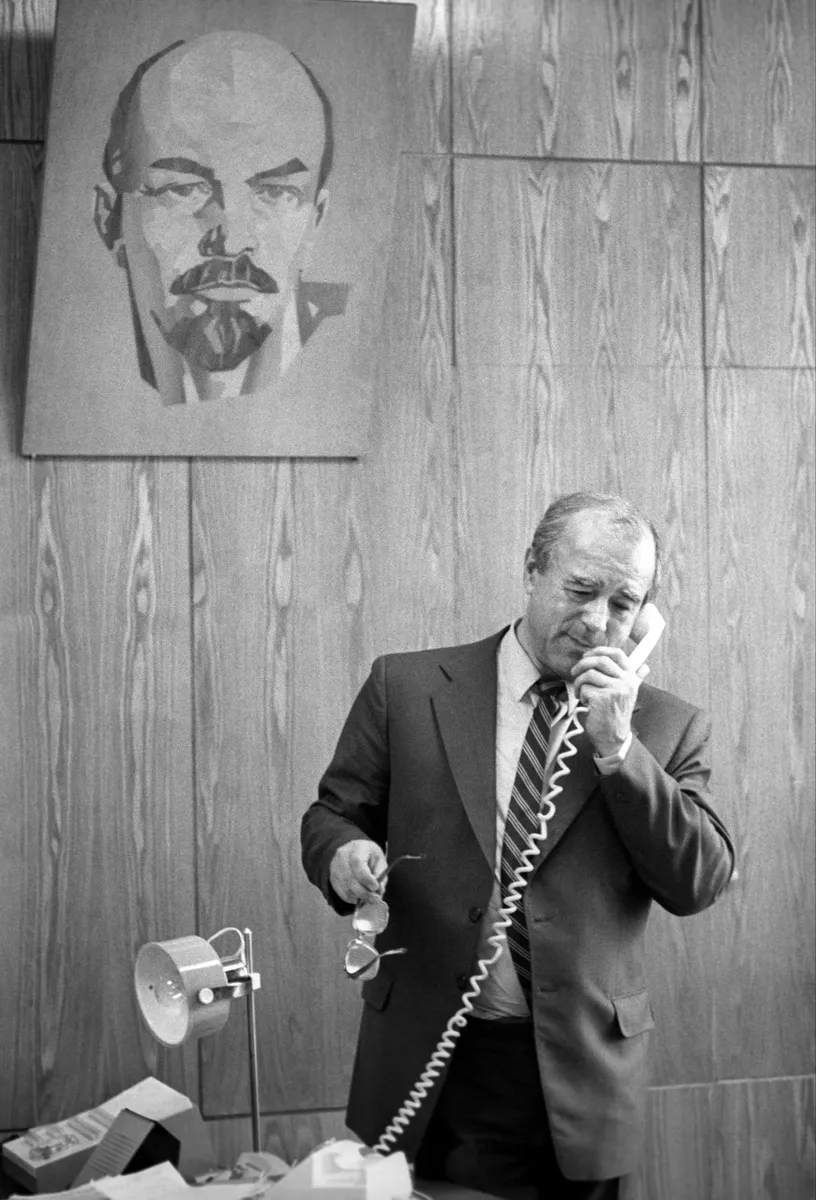
I often remember that editorial office. She was extremely old-fashioned. There were, of course, no computers, techreaders cut out each spread with long scissors and then glued them out, the machine bureau rattled with six hands, proofreaders read out the blues, artists drew large illustrations with ink and paint, photographers developed photographs in the laboratory, in a terribly uncomfortable building without air conditioning on Bumazhny in the summer it was it's hot as hell, and wildly cold in winter. In the assembly hall where the meetings were held and where I listened to such people “giving reports” as Novodvorskaya, Sinyavsky and Rozanova, Mamonov, Lesha Didurov, and so, in this hall, when I came to Ogonyok, there was still a portrait of Lenin hanging.
But at the same time there was a feeling that in all this old-fashioned, slightly dusty splendor something unprecedentedly new was being born. Absolutely unprecedented. Something that even makes you feel a little dizzy.
Sometimes I dream about these offices. These corridors.
And especially the chief’s office. A long table around which the editorial people gather. A bunch of manuscripts.
And his chair. Behind which Korotich sits and smiles with his eternal smile of the Cheshire cat.
There is a smile, but the cat is no longer there.