
Translated material
Right to evade
How the work of those who help conscripts has changed
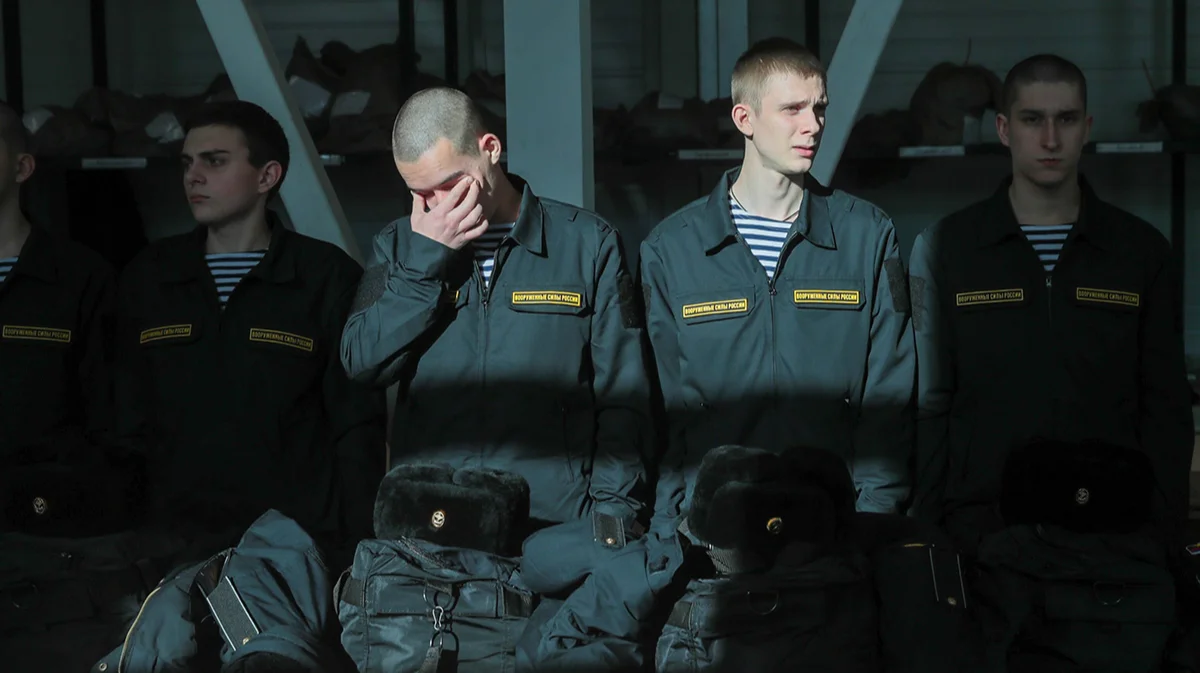
Военнообязанные осенней призывной кампании Московского военного округа, 25 октября 2024 года. Photo: Vasily Kuzmichenok / Moscow Agency
Сегодня, 1 октября, в России начинается осенний призыв: 135 тысяч мужчин в возрасте от 18 до 30 должны отправиться в армию. It is becoming increasingly difficult to avoid military service, but it is even more difficult to protect the rights of conscripts and military personnel; This is evidenced by the number of “foreign agents” among organizations working in this area, as well as recent arrests and searches of human rights activists. “New Europe” figured out what path the anti-army movement in Russia has gone through, what its fate is like today, and who turns to such organizations for help.
From the HRO to “enemies of the people”
In 1982, in the third year of the Afghan War, many students lost their deferment from the army: a corresponding amendment to the law “On General Military Duty” came into force, limiting the list of universities that were allowed to issue such documents. Parents of conscripts looked for an opportunity to protect their sons, united in initiative groups, and when full-time students began to be conscripted en masse into the army, they formed the first movement in the country to protect the rights of conscripts. The movement is not yet an official organization, but simply a community: the Committee of Soldiers' Mothers.
At first, the movement had one main goal - to return students to the classroom. Activists wrote to the authorities, appealed to the General Secretary of the CPSU Central Committee Mikhail Gorbachev, stood on pickets - and in 1989 the rules on deferment for all students were returned to the law, and then the students themselves were returned ( according to the Committee of Soldiers' Mothers, more than 17 thousand young men were released into the reserve and returned to study).
The committee continued its work after the end of the Afghan war. He began to fight hazing and other types of hazing in the army. A hotline appeared, activists met with the Minister of Defense, held round tables and forums - and not without results. Thus, thanks to the initiative of soldiers’ mothers, insurance for soldiers and sailors was introduced, medical requirements for conscription were gradually changed, and a law on the right to alternative civil service (ACS) appeared.
With the beginning of the First Chechen War, the movement of soldiers' mothers began sending humanitarian aid, releasing prisoners, organizing anti-war marches, and opened a hotline to collect information about military personnel in the combat zone.
The Committee of Soldiers' Mothers, according to Maria Kirbasova, one of its founders, was the only organization that accepted applications to search for military personnel:
“We sent them to headquarters, received answers and told the mothers where their children were. We ran a hotline for two weeks. Based on the results of the hotline - this is very important - we began to demand that the lists of the wounded and dead be published."
“It was a very important, the most important grassroots initiative of that time,” Alexander Cherkasov, a Russian human rights activist who was chairman of the board of the human rights center Memorial, says about the Committee in the “She Said No” podcast.
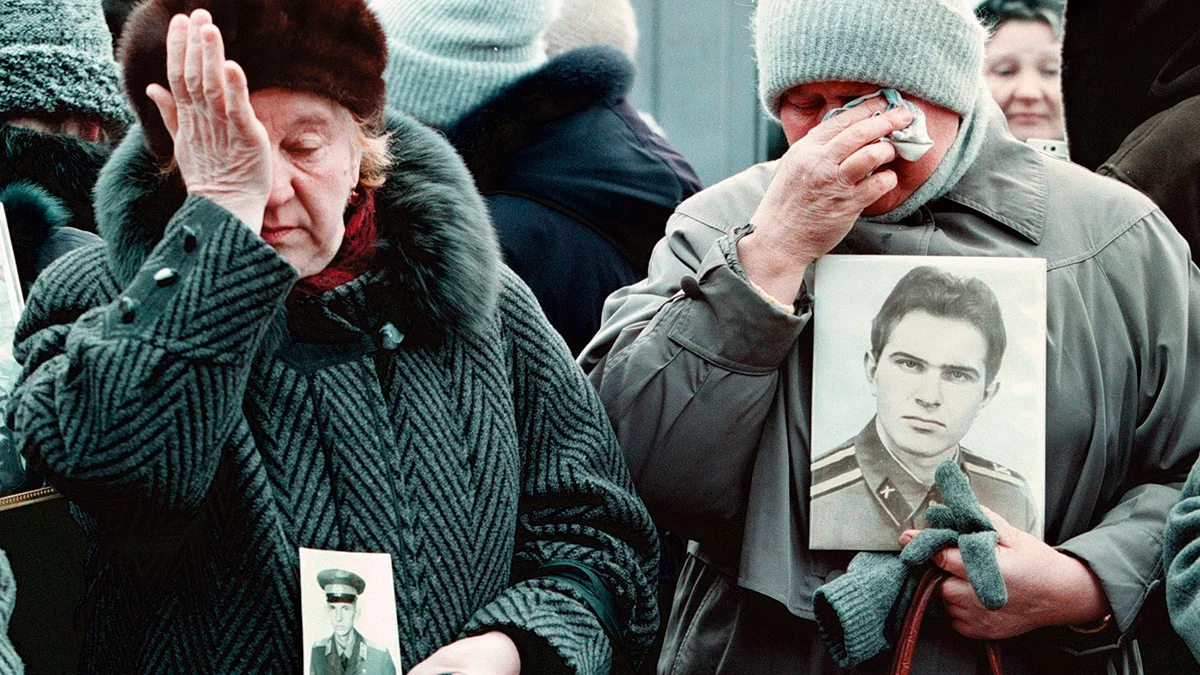
In 1997, the movement of soldiers' mothers was divided into two separate organizations that united regional initiatives: the "Union of Committees of Soldiers' Mothers of Russia" headed by Valentina Melnikova and the "Committee of Soldiers' Mothers of Russia" (KSMR) headed by Maria Kirbasova.
The movement of soldiers’ mothers is expanding, forming a whole field of specialized human rights organizations helping conscripts, military personnel and their families: regional, municipal, working under the auspices of the “Union of Committees” and completely separate or even “competing” . Today, when asked “committee of soldiers’ mothers,” the Unified State Register of Legal Entities database returns hundreds of organizations.
In the 2000s and 1900s, new organizations separated from the general movement, focusing on narrower tasks. For example, former employees of the human rights organization “Soldiers’ Mothers of St. Petersburg” opened the “Movement of Conscious Objectors” (DSO) in 2013 to specifically engage in alternative civil service.
“They [ “Soldiers’ Mothers of St. Petersburg.” — Approx. ed. ] are engaged in human rights advocacy, and I became interested in promoting things related to refusal of military service. First, a group appeared on VKontakte, we called it “For Alternative Civil Service,” explained Elena Popova, co-founder of the DSO.
Commercial projects are also appearing: law firms helping to legally exempt a client from conscription for military service.
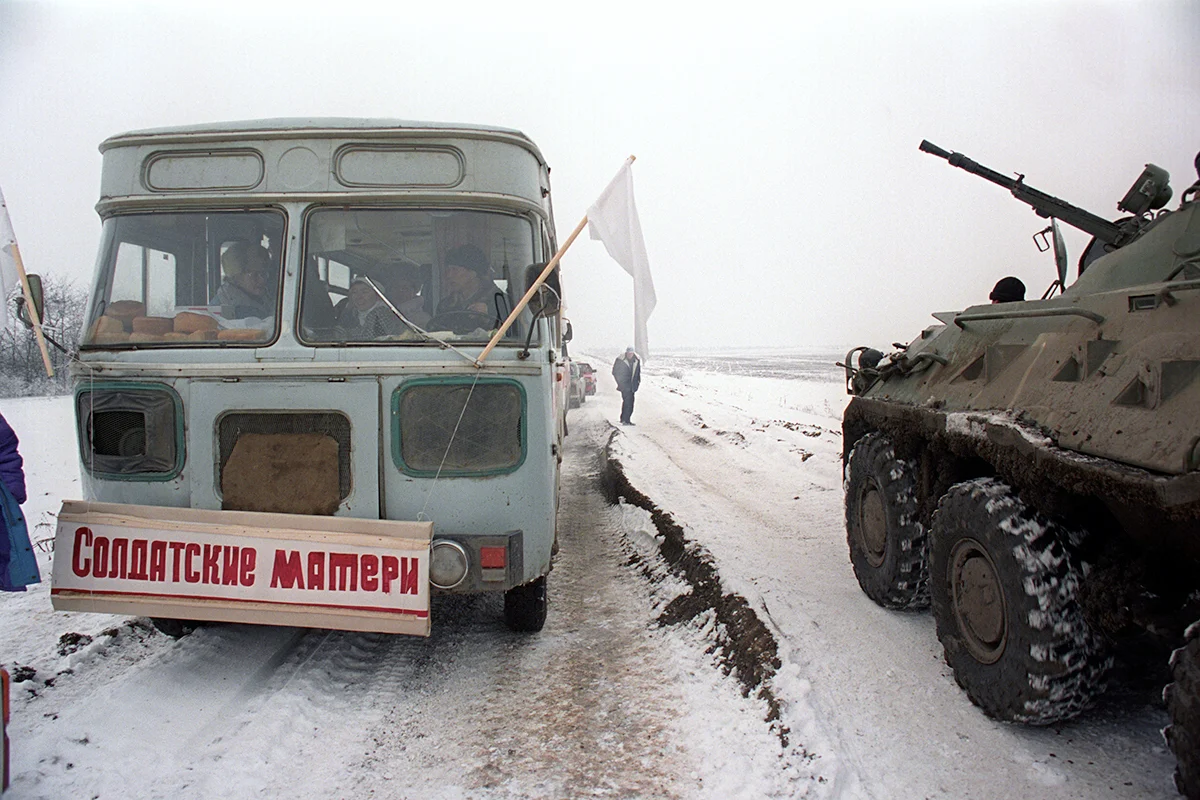
Since the nineties, the “Committee” has participated in joint events with the Ministry of Defense, met with the head of the department, proposing its initiatives, members of the Committee were members of the Human Rights Council, and it seemed that the authorities were open to cooperation.
Everything changed in 2012 with the advent of the first foreign agents law. A year later, the Kostroma regional organization “Committee of Soldiers' Mothers” received the status of a foreign agent. In 2014, “Soldiers’ Mothers of St. Petersburg” was included in the register of NGO-foreign agents, despite the fact that the head of the organization, Ella Polyakova, was at that time a member of the Human Rights Council under the President of Russia. In 2015, the organization managed to prove the absence of foreign funding and remove its foreign agent status.
At the end of 2021, due to an FSB order prohibiting the collection of information about military personnel, Soldiers' Mothers of St. Petersburg stopped providing assistance in this area.
In 2023, the “Conscious Objector Movement” was recognized as foreign agents, and the organization’s website was blocked by a court decision - this happened almost simultaneously with the nomination of the “Movement” for the Nobel Peace Prize. At the same time, the “Conscript School” project was included in the register of foreign agents. In May 2025, a court in Kaliningrad arrested local lawyer Maria Bontzler, who created the Committee of Soldiers' Mothers of the Kaliningrad Region. In August, they came with a search and detained Elena Popova, co-founder of the Movement.
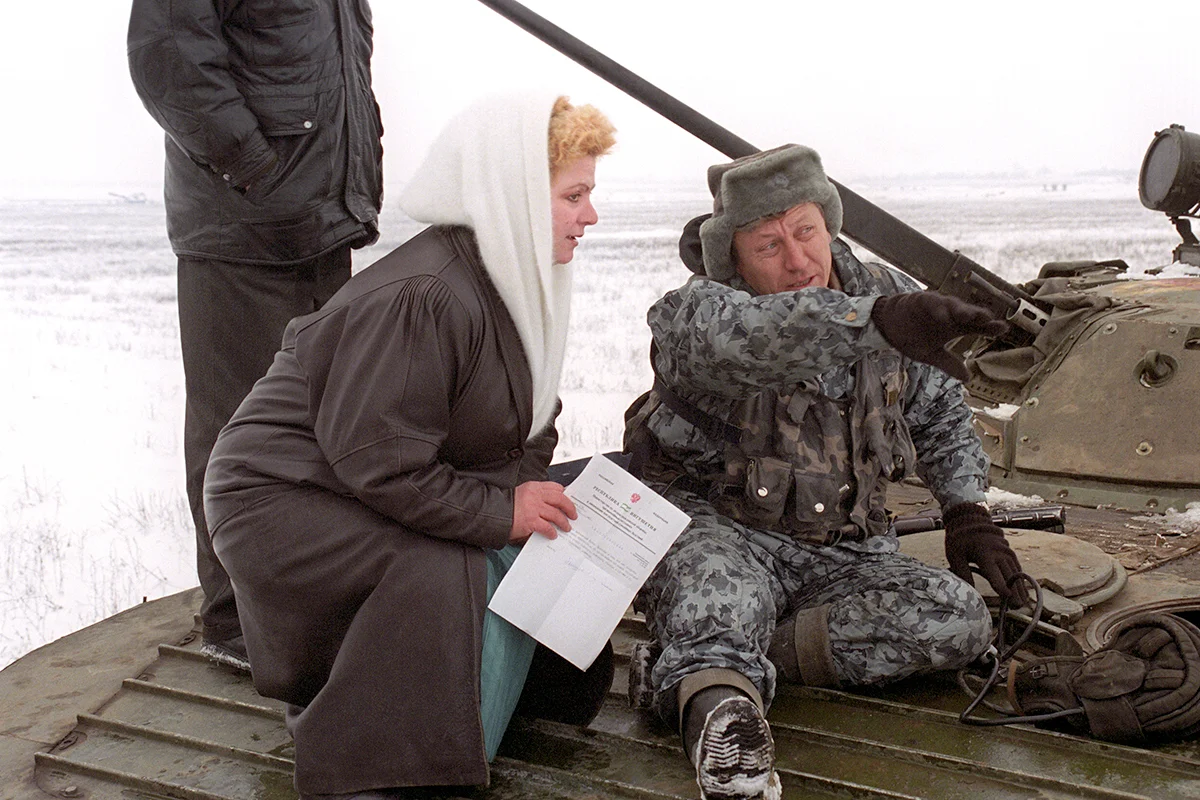
The path from membership in the HRC to “enemies of the people” looks rapid, but Valentina Melnikova, who stood at the origins of the anti-army movement and the head of the “Union of Committees of Soldiers’ Mothers,” noted in an interview with Katerina Gordeeva that this attitude has always been there. She recalled how USSR Defense Minister Dmitry Yazov, hosting activists in 1989, said: “Here, the agents of imperialism have come.” According to Melnikova, there are many structures in the Ministry of Defense, and everyone treated human rights activists differently: some tried to “raze them to the ground,” while others understood that they were all doing the same thing. That it would be difficult for human rights organizations was clear back in the early 2000s, when they lost political representatives in the State Duma, Melnikova is sure.
After the start of Russia’s full-scale invasion of Ukraine, new initiatives emerged: “Call to Conscience” protects the right to refuse military service and helps resist arbitrariness in this area, the “Go through the Forest” project (recognized as a foreign agent) helps to evade conscription and leave the country. Communities of mobilized wives, trying to protect the rights of their spouses, laid the foundation for the movement - this is how the movement of soldiers’ mothers was once formed. On the basis of this movement, the organization “The Way Home ” emerges (in 2024 it was included in the register of foreign agents). It is curious that in 2023, a project with the same name, “ The Way Home ,” appears on the Internet, urging people to move to Russia.
“For military personnel, the situation is the most difficult”
Protecting the right to refuse military service becomes more difficult not only because of the risks of becoming a foreign agent or criminal prosecution, but also because the laws and regulations themselves are changing not in favor of conscripts.
A representative of the “Call to Conscience” project anonymously told Novaya-Europa that by the fall of 2025, the “Schedule of Illnesses” - a document that is used during a medical examination of conscripts to determine their category of fitness for military service - has changed. Other decisions on conscription are also in effect; military registration and electronic summons registries have become operational - they have already begun to prohibit travel after the summons is sent.
The Moscow Military Commissar, according to the human rights activist, is ahead of changes in the law: the “conveyor” of the Unified Conscription Point has been operating for more than a year, decisions on unrealized conscriptions are no longer “reset” (that is, they can be drafted into the army on the basis of a decision made in one of the previous conscriptions), people are fined and delivered after failure to appear on notice of summons from Mos.Ru (analogue of State Services for Moscow), medical examinations and draft commissions began to work outside the framework of conscription.
“High-tech” raids are unfolding in Moscow:
The military commissar creates a list of conscripts who are tracked using a facial recognition system - they can come to work or home, but most often a separate operator simply signals the police at a specific metro station when the system identifies someone.
At the same time, arbitrariness during conscription campaigns is growing: they try to send detainees to the army one day or at least make a decision about conscription. However, there are also improvements: in the spring of 2025, compared to the autumn conscription of 2024, employees of the “Call to Conscience” project recorded only one case of violence at a collection point.
Finally, helping becomes more difficult due to the fact that smartphones are taken away from conscripts and lawyers are often not allowed in.
When the project first began, at the beginning of 2022, it was mainly military personnel who sought help - and thanks to the participation of the “Call to Conscience”, they successfully left contract service before the Mobilization Decree. “Back then it was possible to demand early termination of the contract on the basis of formed convictions,” says a project employee.
But in the fall, after the announcement of mobilization, the number of requests increased greatly, and their nature and audience became much more diverse. “Now, three years after the start of mobilization, absolutely all the people affected by military service and their loved ones write to us,” the organization notes. And everyone has their own problems.
For military personnel, according to the human rights activist, the situation is the most difficult: from the fall of 2022, you can resign due to serious health conditions or having received a real prison term. The third way is unauthorized abandonment of the unit or desertion, but in this situation they try to return many and send them to the front by force (often in an assault) as punishment for escaping. Therefore, now one of the organization’s tasks is to reduce these risks.
As the interlocutor of New Europe notes, at first people did not believe that the contract was indefinite, and those mobilized hoped for rotation. Now a prison sentence is a desired outcome for many, which is no longer so easy to achieve.
“Paradoxically, it turns out that we help to achieve both the opening of the case and the completion of a sentence with a real term,”
- they share in the project. Cases are opened reluctantly, about a thousand a month.
In addition to military personnel, conscripts write a lot: they need help with alternative civilian service, during a raid, and with preparing for conscription in general.
The largest group of people in Russia are those in reserve. “That’s why the mobilization had such a wide resonance, it frightened and outraged society, and they are in no hurry to carry out a “second wave,” says the representative of “Call to Conscience.” Now the project receives requests from reservists who have received subpoenas for clarification of data, fees, or notification of inclusion in the Military Registry.
In the last year, requests from people who received Russian citizenship not by birth have become more frequent. Call to Conscience also regularly receives messages from people who have recently signed a contract and have changed their minds, or their relatives.
“Very often people were in a fit of passion, had a fight with someone, or were addicted to alcohol, sometimes those who signed a contract in a pre-trial detention center, as well as conscripts, write. They have not yet begun to fulfill the contract, and there is a big chance to refuse it,” the human rights activist assures.
In the third year of the war, people whose health and psyche had deteriorated began to contact us, therefore, in addition to human rights assistance, project employees now provide emotional assistance: “In correspondence on the hotline, we need to help a person calm down, support him, somewhere, on the contrary, to convey the importance of active actions, somewhere - to provide basic psychological assistance; We consult about this with colleagues from helping organizations and psychologists.”
At the same time, in recent years, interest in alternative civil service has grown, more and more people are taking it (and many more applications are being submitted). Moreover: basic information about the AGS can be found in regional media, despite military censorship; and every year the list of professions that can replace military service is growing.
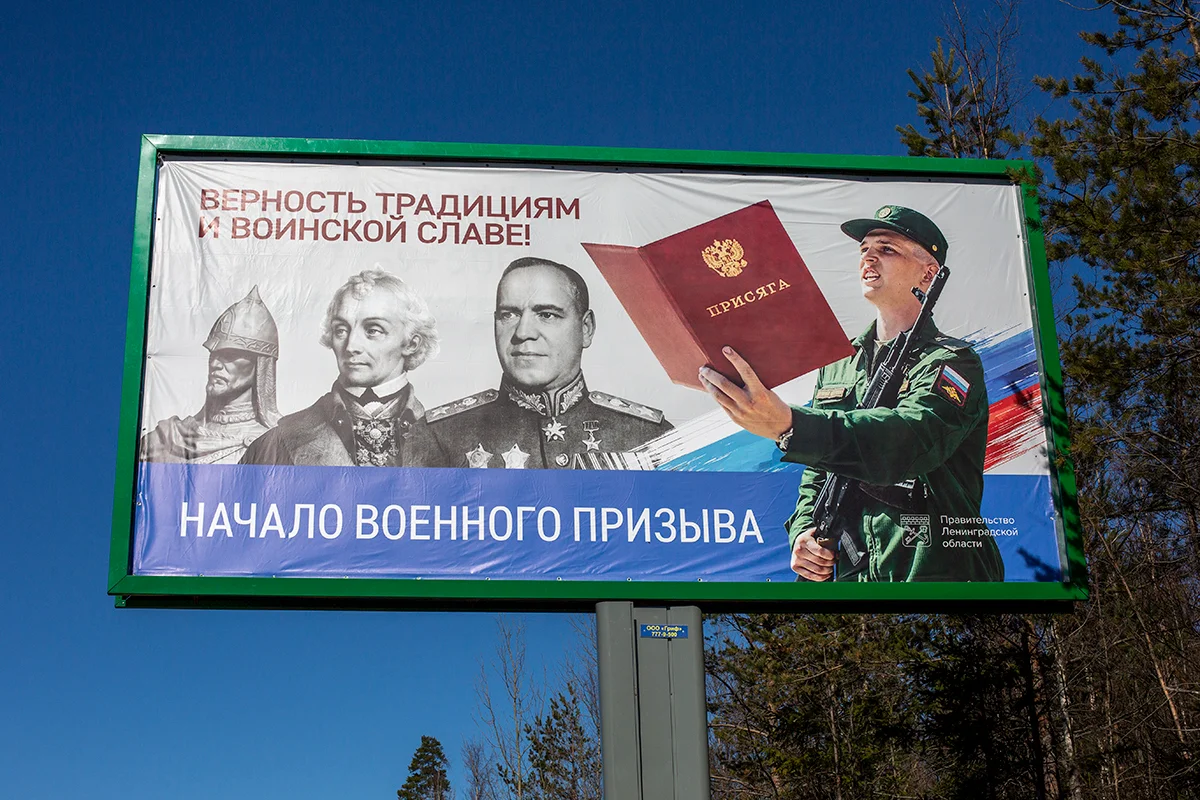
“Everything became longer and more difficult”
The Conscientious Objector Movement is another organization that defends the right to refuse military service. Movement lawyer Valeria Vetoshkina told Novaya-Europa that over the past three years, since the beginning of Russia’s full-scale invasion of Ukraine, mobilized conscripts and their families have been added to the usual category of conscripts. The nature of the problems remains similar: violations during conscription, difficulties with alternative service, pressure from military registration and enlistment offices. In addition, new regulations have appeared in the legislation - for example, on electronic subpoenas - which have significantly influenced practice. At the same time, even without formal changes, law enforcement has become less predictable: the same legal guarantees can work differently in similar situations.
“Individual procedural details” of conscripts’ cases and attempts by the authorities to circumvent the guarantees established by law began to require more attention from lawyers, the specialist noted. For example, in recent years there has been more controversy around medical examination: military registration and enlistment offices often try to declare a person fit without a sufficient examination or do not take into account chronic diseases. Formally, the procedure is carried out, but the quality of its implementation raises questions, and it is necessary to carefully prove the discrepancy of the conclusions with the established rules.
Despite the fact that the Movement relies exclusively on legal mechanisms, as the lawyer clarifies, they have begun to work “less predictably.” For example, it has become more difficult to count on effective judicial protection,
Administrative procedures take longer and are more difficult. In some cases, legal mechanisms still work, in others, the same arguments suddenly cease to be taken into account. Efficiency did not disappear completely, but it became much less stable and predictable.
On the other hand, the team has accumulated enough expertise to systematize it in the form of methodological materials - now the Movement offers a catalog of legal materials that any conscript or his relatives can use: “This makes help more systematic and accessible: even if a person has not applied directly, he can find the information he needs.”
The pressure on the “Movement” is manifested in a generally difficult psychological situation, the lawyer says, and notes: there are no direct repressions against employees, apart from blocking the website and recognizing the organization as a “foreign agent”.
“Work has really become more difficult and stressful: more risks, less predictability in the legal system. But we continue, because the demand for help remains very high,” noted Valeria Vetoshkina.
"Bureaucratic hell with minimal chances of success"
Employees of law firms providing assistance with draft exemption did not notice any significant changes in their work. One of the employees of such companies, on condition of anonymity, told Novaya-Europe what is happening in this area. So, according to him, after the conscription age was raised, older people began to contact them, as well as people who had recently received citizenship or were planning to become citizens.
“The nature of the problems is always the same - the absence of diseases leading to release from service. The background of the problem can be different: from expulsion from the university to the need to obtain a foreign passport,”
- notes the interlocutor of New Europe.
At the same time, military registration and enlistment offices began to look more strictly at the details: what they could previously turn a blind eye to, today they will not leave without a fine.
At the same time, as the lawyer notes, everything has become much more complicated: “Some things have completely lost their meaning, such as the presence of a lawyer in the military registration and enlistment office or court. Without really serious illnesses in the European part of Russia, it is almost impossible to be released from service legally. Список «работающих» заболеваний из призыва в призыв сокращается всё больше и больше. Всё больше эта сфера юридических услуг становится похожа на уголовную адвокатуру».
Также стало меньше клиентов, готовых платить за услуги: «Больше стало тех, кому легче отслужить, несмотря на все обстоятельства. Освобождение от службы планомерно превратилось в бюрократический ад с минимальными шансами на успех».
Несмотря на то, что государство стало более бдительным, давления собеседник «Новой-Европа» не чувствует: подобные компании всерьез не трогают, пока они не мешают выполнять и перевыполнять планы по призывам.