
Translated material
California captive
“Battle after Battle” with Leonardo DiCaprio and Sean Penn - a postmodern thriller about the struggle between dementia and courage, similar to the comedy of Leonid Gaidai
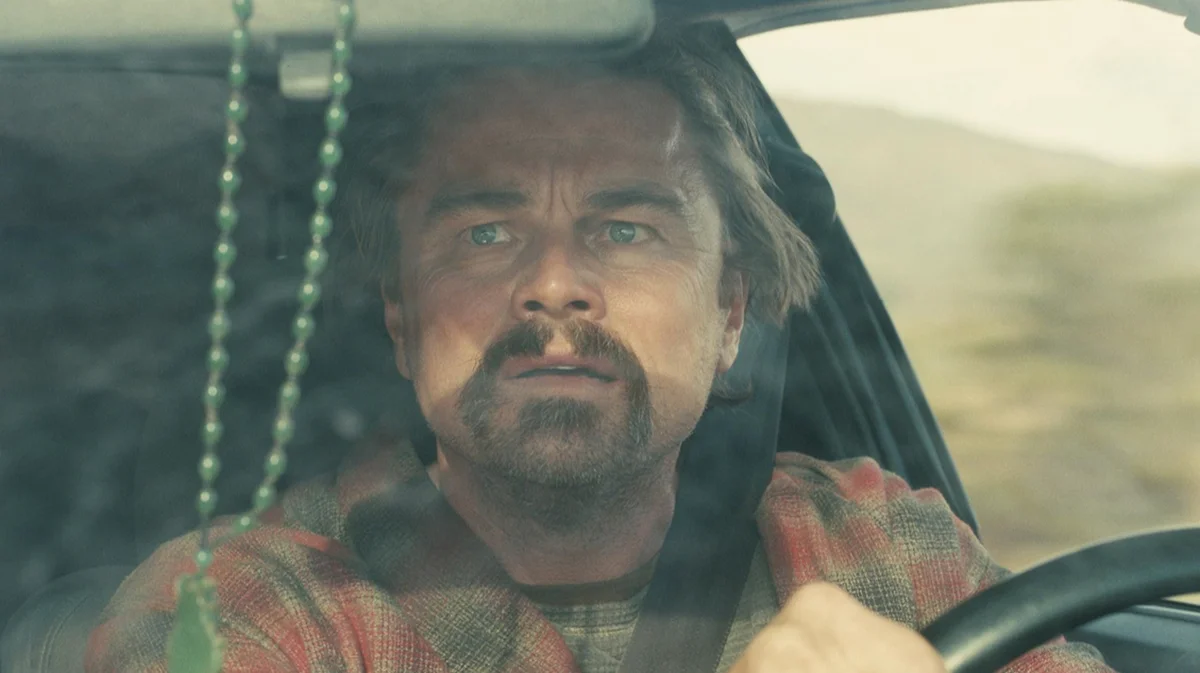
Still from the film "Battle after Battle". Photo: imdb.com
The film “Battle after Battle” by the famous American director Paul Thomas Anderson is being released worldwide, and this is his second – after “Inherent Vice” in 2014 – appeal to the work of Thomas Pynchon, a free adaptation of the novel “Vineland”. Film critic Irina Karpova watched the film and, to her surprise, discovered that after several historical dramas, Anderson made a film about our days.
"Battle after battle" is confusing. One of the film's posters depicts an endless American highway, over which Leonardo DiCaprio's monumentally serious face looms like a mountain. The film's working title was The Battle of Bactan Cross, so there seems to be a sense of dramatic historical bloodshed in the air. But despite the fact that blood will be shed more than once or twice in the film, this is not a drama, but an attraction of concentrated madness.
DiCaprio's character spends almost the entire film wearing a robe, cap and sunglasses and cannot remember the secret password; he is so heavily addicted to substances that he has already caused irreparable damage to his cognitive abilities.
DiCaprio plays his version of the Dude from the Coen brothers’ “The Big Lebowski” or a kind of homage to him, only in Anderson’s film it was not the bandits who came for his soul, but the feds.
But first things first. DiCaprio's hero is a leftist terrorist, a member of the group "France 75" (French 75) nicknamed Ghetto Pat, his specialty is demolition. The group's goal is world revolution... well, almost: the abolition of all borders and governments, starting with the United States. The head of the group, Perfidia Beverly Hills (Teyana Taylor), Ghetto Pat's lover, shot and killed a bank security guard during an armed robbery and, in order not to end up behind bars, made a deal with the authorities: she turned over members of France 75 to the feds, ended up in the witness protection program, and then completely fled to Mexico. Colonel Stephen Lockjaw (Sean Penn) helped her in this - their paths once crossed, and since then he has been sexually obsessed with her. Perfidia's betrayal resulted in the murder of several members of the group and the flight of the rest. Ghetto Pat and his and Perfidia's young daughter acquired new identities and documents - now they are Bob and Willa Ferguson - and moved to the fictional town of Bucktan Cross in northern California.
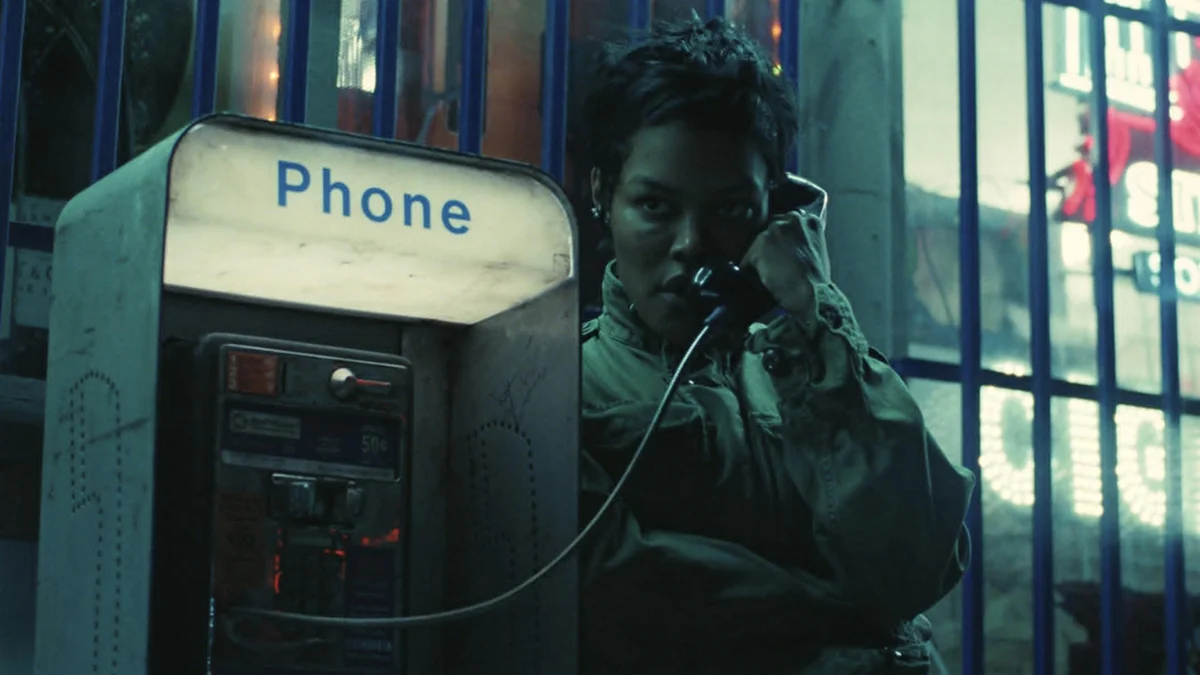
15 years have passed. Bob Ferguson (aka Ghetto Pat) wears a robe and carries a weed bong. His daughter Willa (big movie debut Chase Infinity) goes to school and practices karate. But everything will change in an instant: Lockjaw is going to join a closed club of influential racists and chauvinists, and there the fact of his connection with Perfidia will emerge: perhaps Willa is his daughter. And after about 40 minutes of screen time, the adrenaline, almost tachycardic action begins: Lockjaw throws all his militaristic forces into finding Ghetto Pat and his daughter, and Bob and Willa Fergusson go on the run.
The highlight of this adrenaline chase is its satirical and at the same time political content: the movie is filled to the brim with caustic, almost poisonous comedy. The two opposing forces are the right and the left, in each case caught at an extreme. Lockjaw and the club of influential businessmen and politicians called the Christmas Adventurers are the rot of the American establishment, narcissistic, die-hard racists for whom the period of segregation never ended. Conspirators and murderers, they would be completely unbearable if not for the degree of idiocy - Anderson, following Pynchon, presents them as complete cretins.
The other pole is the radical left, idealists with homemade bombs and underground radio broadcasts covering the protests in the country. While trying to save his daughter, DiCaprio’s hero himself is caught by the police, falls from the roof and only thanks to the help of his friends remains alive. He is the embodiment of a conservative's nightmare, a slacker and drug user, with greasy, always unwashed hair.
When these two extremes meet, the fascist scythe finds the SJW stone (SJW - English Social justice warrior, fighter for social justice. - Author's note), - a comedy is born.
“Battle after Battle” is a kind of Californian “Prisoner of the Caucasus”; yes, it is filled with serious violence, somewhat drug-like (given the addictions of DiCaprio’s hero), but at its core there is a conflict between idealists and corrupt authorities. DiCaprio embodies both the romantic builder of communism Shurik and the comedic trinity of the Coward, the Goon and the Seasoned, and the place of comrade Saakhov, who stole his bride without her consent, is taken by Colonel Lockjaw, who, on his own whim, organizes a raid with a search at a school disco in a small town. And, as in Leonid Gaidai’s film, in “Battle after Battle” the main character will have to save herself.
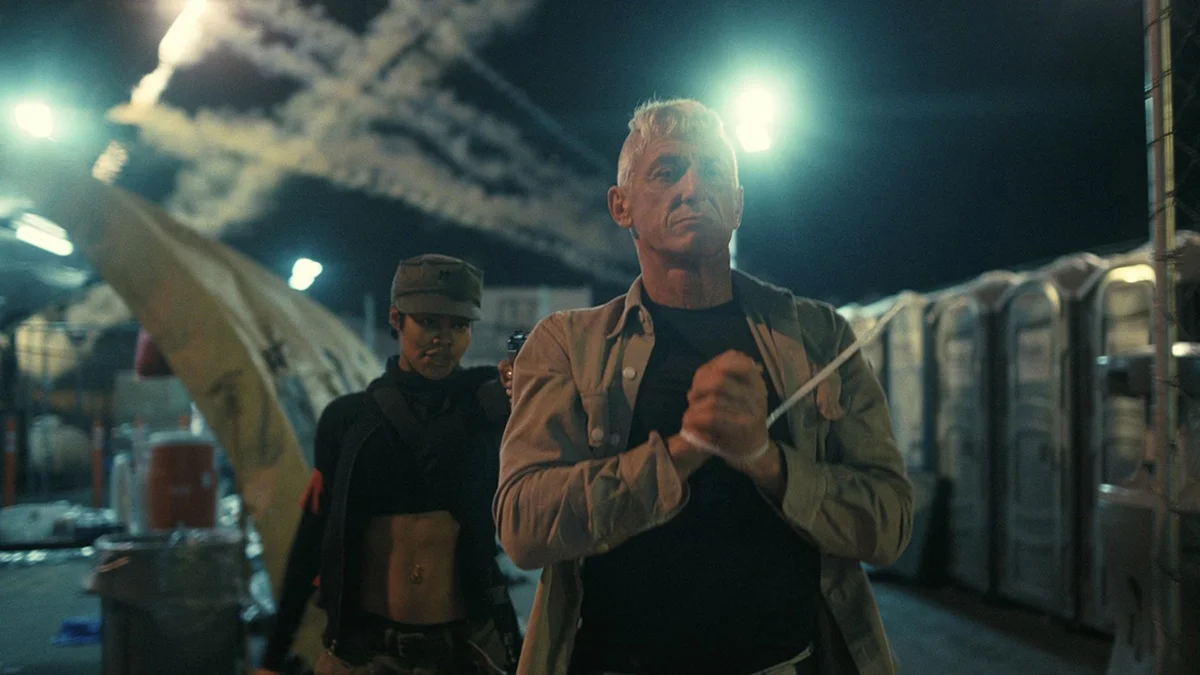
Leonardo DiCaprio has not been so relaxed and funny for a long time, and Sean Penn is doing everything to be among the Oscar nominees next year: he obviously copies the facial expressions of Robert Kennedy Jr., conspiracy theorist and US Secretary of Health, and moves around the screen with a gait as if his hero had swallowed a poker. Debutante Chase Infinity, who looks very similar to the young Maya Rudolph, wife of Paul Thomas Anderson, is not lost against the background of such lumps as DiCaprio and Penn. Her character, Willa, provides a powerful emotional counterbalance to the waves of madness and idiocy emanating from DiCaprio and Penn's characters. She is the very link of normality and rationality, a representative of “Gen-Z”, forced to disentangle the mess brewed by her parents. And if the Soviet “Prisoner of the Caucasus” ended with a cloying establishment of Soviet justice, then in the postmodern Californian “Prisoner” there is a spark of hope, without jokes and grimaces, but also without pathos. Despite the small box office receipts (only $48 million on the opening weekend against a budget of $130 million), American critics and audiences are in ecstasy with Anderson’s film, and they can be understood: what other film so brightly and funnyly illustrates our hope that the power of corrupt cretins is not eternal and that the bell will one day ring for them too.