
Translated material
The US has reached a shutdown
For the first time in six years, the government is paralyzed by budget disputes. What will this affect?
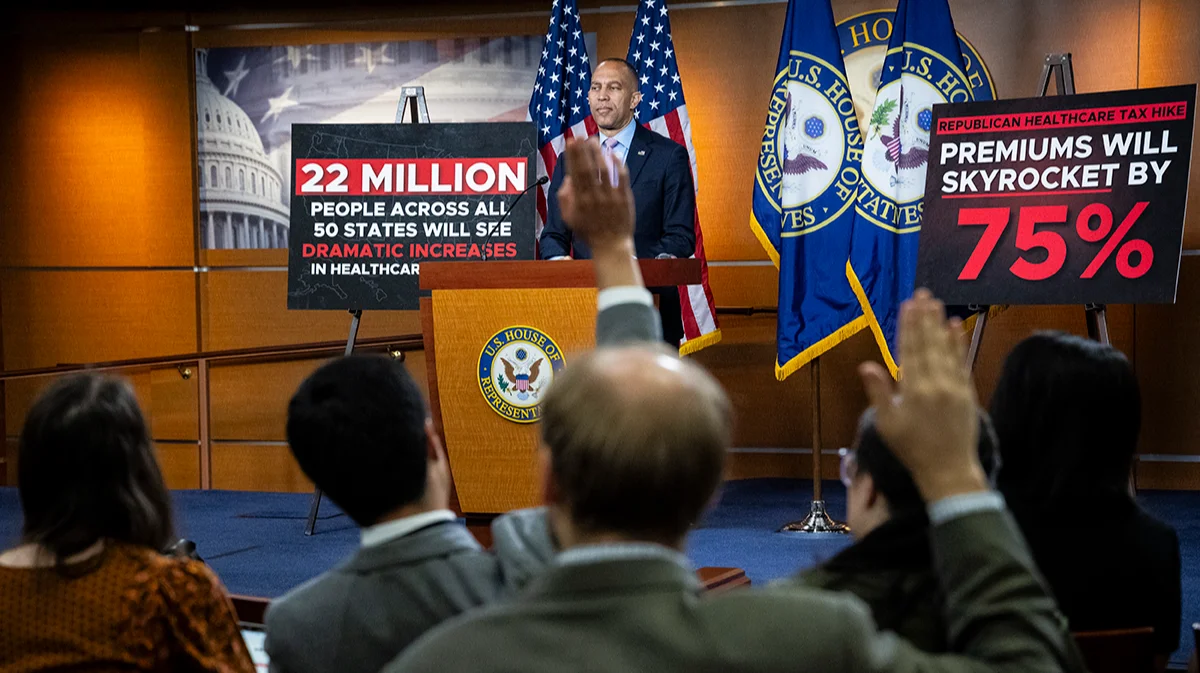
Republicans discuss short-term funding options to prevent a government shutdown at the end of September, Washington, USA, September 10, 2025. Photo: Graeme Sloan/EPA
On October 1, the US government officially shut down as Democrats and Republicans were unable to agree on a budget for the new fiscal year due to differences.
Congress traditionally must approve the budget by the start of the new fiscal year. Spending bills must be passed by the House of Representatives, passed by the Senate, and signed by the President before departments and agencies can use allocated funds. Millions of employees across a variety of industries will now be furloughed, including food inspectors, park rangers and other federal employees across the country. Read more about the reasons for the shutdown and the consequences in the material of Novaya Gazeta Europe.
What are the differences between the parties' positions?
Democrats are pushing to include health care tax breaks, including continuing subsidies for health insurance and repealing cuts to Medicaid (government insurance for the poor), as well as returning some of the social welfare spending that Republicans previously cut. While the distribution of Social Security benefits, Medicare and Medicaid, continues.
Republicans believe health care and other issues should be discussed outside the context of government funding to avoid budget bloat. They called on Democrats to support a temporary funding bill to prevent a shutdown.
Although Republicans hold majorities in the House and Senate, most bills require a 60-vote threshold to pass in the upper chamber. There are 53 Republicans in the Senate, so they need Democratic support.
Consequences of the shutdown
The struggle for funding often goes to extremes, but rarely to a shutdown: the suspension of work can be too costly. The shutdown from December 2018 to January 2019, during Donald Trump's first term, cost the U.S. economy an estimated $3 billion in deadweight losses, according to data from the Congressional Budget Office.
That shutdown turned out to be the longest in history. Since fiscal year 1977, there have been 20 funding shortfalls in the United States, some lasting only a day.
Now up to four million federal employees, including Immigration and Customs Enforcement (ICE) officers, may be left without pay, writes ABC News. The consequences will be felt not only by workers in Washington and its environs: at least 85% of employees work outside the city (including employees of federal prisons and courts), the publication notes. National parks are under threat of closure. Lawmakers at the Capitol will continue to receive their $174,000 annual salary.
Which services continue to work and which don't?
Airport employees and air traffic controllers are required to report for shifts: more than 13 thousand air traffic controllers continue to work, although salaries are not paid. Two million military personnel will also likely have to work without pay, although officials say most will be paid on Oct. 1.
“Active-duty military personnel, including reservists on federal active duty, will continue to report for duty and perform duties,”
- says a document published by the Pentagon.
Law enforcement agencies, including the FBI, DEA and Coast Guard, continue to work. Immigration judges and ICE officers remain on duty since Trump declared illegal immigration a national threat.
Social benefits are still being maintained: pensioners and disabled people continue to receive benefits, although 12% of the department’s employees have been sent on leave. Medicare and Medicaid continue to be funded. About 59% of Department of Health and Human Services employees remain in place, while the rest have been furloughed. The National Institutes of Health will employ about 24% of its staff, almost all without pay.
Food assistance through SNAP (food stamps) and WIC (Women and Children) continues, but the funding will not last long. The head of WIC has already warned in a conversation with ABC News that if the shutdown lasts longer than a week, funds will run out. This puts nearly seven million women with children and low incomes at risk.
The United States Postal Service (USPS) continues to operate because it is not dependent on federal funds. The Internal Revenue Service (IRS) is operating for the first five days of the shutdown thanks to emergency funding introduced by Democrats in 2022, but future plans are unclear.
Federal courts could be out of funds as early as Friday, and civil trials will be delayed unless they involve a threat to life or property.
The Labor Department retains only about three thousand employees out of nearly thirteen thousand.
The published shutdown plan said the IRS would be able to use special funding Democrats introduced in 2022 to avoid furloughing nearly 75,000 of its employees within the first five business days of the shutdown. What will happen if the closure lasts longer is not yet clear, Politico writes .
FEMA (the emergency agency's Disaster Assistance Fund) has $2.3 billion in reserve funds so it can handle a hurricane or other disaster. But four thousand employees will still be sent on vacation.
Office of Management and Budget Director Russell Vought has threatened massive staff layoffs. But Democrats call it a scare tactic.
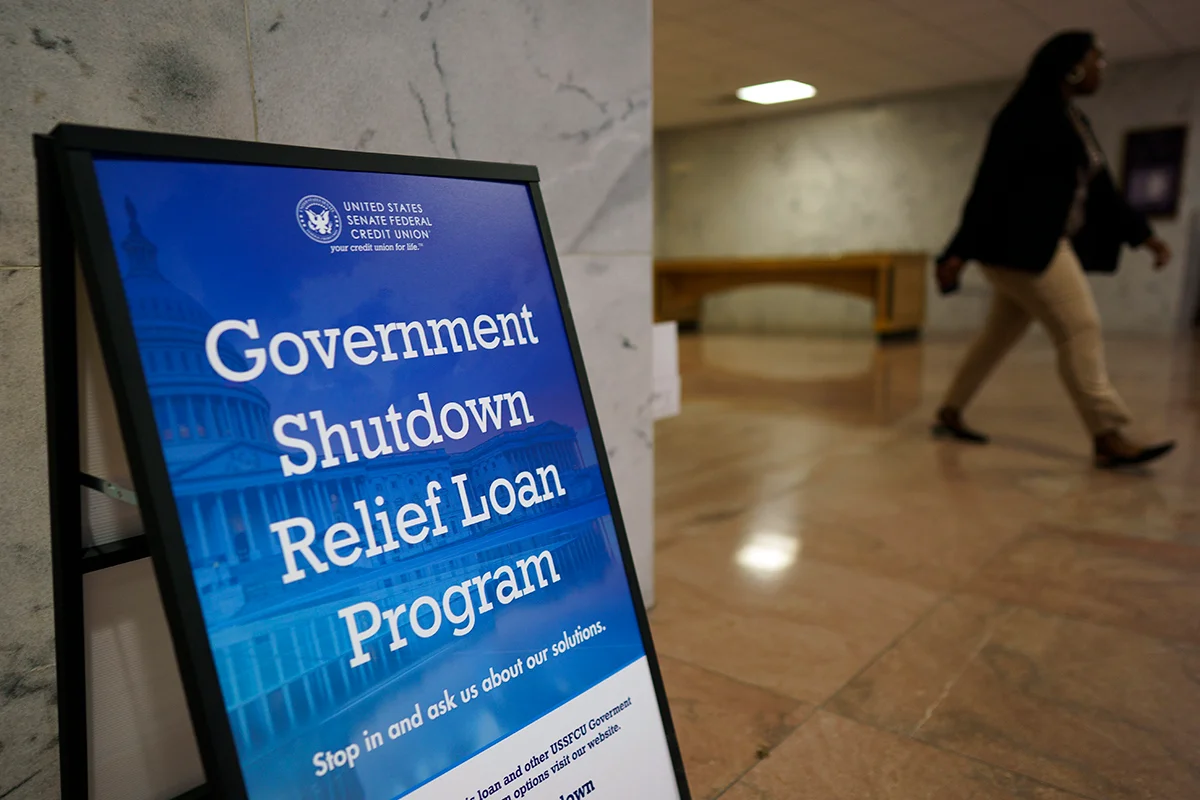
Shutdown price
During the last shutdown in 2018-19, many essential workers took sick leave. Union officials said many could not afford day care or the gas needed to commute to work. About 380 thousand federal employees were sent on unpaid leave, and another 420 thousand worked without pay.
However, this suspension was partial, since Congress funded several large departments, including the Department of Defense. This time the suspension affected almost the entire government, explains The Time. Such a large-scale shutdown has not happened since 2013, when about 850 thousand federal employees were sent on unpaid leave. “Then, as now, federal employees became the most visible victims of political struggle,” the publication recalls.
Transportation Security Administration employees were more likely to lose their jobs due to financial hardship during the previous shutdown. In addition, the US Department of Justice had to cancel about 60 thousand immigration hearings.
The nonpartisan Congressional Budget Office noted in a new report:
During the shutdown, about 750 thousand federal employees could go on unpaid leave every day, which would entail a loss of approximately $400 million in unpaid wages and, accordingly, future compensation.
The agency warned that prolonged delays in wage payments would reduce consumer spending and disrupt services across the country.
Typically, federal employees are compensated for their salaries after shutdowns end, but employees of contractors and government-related businesses remain without payments.
The economic consequences of the shutdown depend on how long Democrats and Republicans fail to reach an agreement and how many departments stop working, according to the Congressional Budget Office. Moody's Chief Economist Mark Zandi warned Business Insider that a prolonged break could derail the Federal Reserve's monetary policy and undermine investor confidence. Markets are already reacting: stock futures are falling , the dollar is under pressure, and gold is breaking records.
As Politico notes , the government shutdown provides new opportunities for Trump and his Budget Committee chairman, Vought, to exercise greater control over federal personnel and spending.