
Translated material
New kings
The monument to Erekle II in Tbilisi caused fierce controversy: for the authorities it is “pragmatism”, for opponents it is a symbol of dependence on Moscow
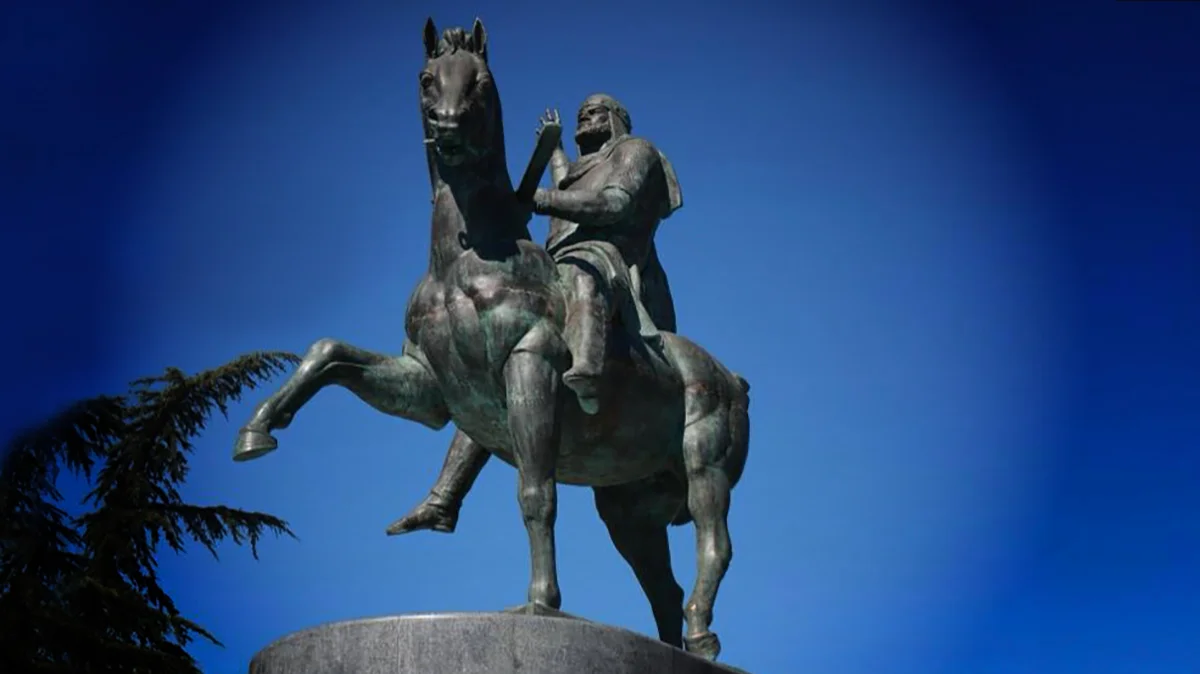
Monument to Irakli II in Tbilisi. Photo: Facebook
In April, Margarita Simonyan promised at a propaganda show that the “new kings of Irakli” would be on their knees asking Russia to “take them home,” and less than six months have passed since the Georgian Dream government solemnly opened in Tbilisi a monument to King Irakli II, who concluded an alliance treaty with Russia in the 18th century. The authorities very transparently hinted that the monument to this particular ruler, erected at the entrance to the capital, was chosen because of his “pragmatic” policy.
The tragic fate of one of the last Georgian rulers has always caused debate in Georgian society, but now supporters of Georgia’s pro-Western path of development are outraged that the government is simplifying and falsifying history in an attempt to justify its defeatist policy towards Moscow. In “Dream,” on the contrary, they are confident that only suspicious foreign ambassadors and representatives of their “agents” doubt the wisdom of Irakli II. Why did the Georgian Dream make a king from the 18th century its role model and did Irakli II really dream of “handing over his people to Russia”, Iya Barateli looked into it.
Soviet sketch on the background of Italian design
Kakheti Highway is the name of the highway leading to the city from Tbilisi airport. Those who drive on the highway for the first time often ask: “What is this?” - about the huge undulating and completely glass building of the Ministry of Internal Affairs. Built in 2009 according to the design of the legendary Italian architect Michele de Lucchi, the building became a symbol of the police reform successfully completed by the government of Mikheil Saakashvili, thanks to which “thieves in law” have degenerated in Georgia, and the streets have become even safer than in many European capitals.
Recently, the “Georgian Dream” also made its contribution to the architectural appearance of the Kakheti highway: not far from the ultra-modern building of the Ministry of Internal Affairs, there now stands an equestrian statue of King Erekle II, who united the regions of Kartli and Kakheti in Eastern Georgia, which was a great achievement for Georgians in the 18th century. The Tsar also went down in history as the ruler who signed an allied treaty with the Russian Empire in 1783, known as the Treaty of St. George. This led to the fact that soon after the death of King Heraclius, the Georgian kingdom was abolished and became a province within the Russian Empire.
Many people did not like the statue of the king on the highway. First of all, the new monument is involuntarily compared with the one installed back in 1971 in Telavi, the hometown of Erekle II. This work by the renowned Soviet sculptor Merab Merabishvili is truly impressive: the monument to the Tsar against the backdrop of his own palace fits perfectly into the landscape. In his highly raised right hand, Heraclius II holds a sword in such a way that it resembles an overshadowing cross. The historical fact is that Heraclius II, who lived for 78 years, fought hundreds of battles, trying to fight off the expansion of the Ottoman and Persian empires by war and diplomacy.
With the new Tbilisi monument to King Heraclius, the authorities did not try to be clever: they simply took one of the surviving sketches of the sculptor Merabishvili (obviously not the best) and sent it to be cast.
The main complaint of those who did not like the monument is that the warrior-tsar turned out to be not at all warlike. In Tbilisi, the king has an open right palm - either in greeting, or in a call to go somewhere, and his left hand, in an awkward gesture, holds both the reins and the sword in its sheath. Moreover, the weapon is so hidden behind the horse’s head that it can only be seen from a certain angle.
In principle, it is worth considering whether the method of installing equestrian sculptures to promote any ideas is so effective in the 21st century. After all, even the beautiful monument in Telavi is popular among tourists mainly because this is “the same place” that Frunzik Mkrtchyan passes by on the Kirovets in Georgy Danelia’s film “Mimino”.
Nevertheless, a year ago, Georgian Dream announced the installation of a new monument to the king as an important cultural event from the point of view of preserving identity, traditions and religion - recently this has been the main argument of the authorities in their reluctance to fulfill the conditions for the development of democracy that are mandatory for a candidate country to the European Union.
Ambassadors and their agents
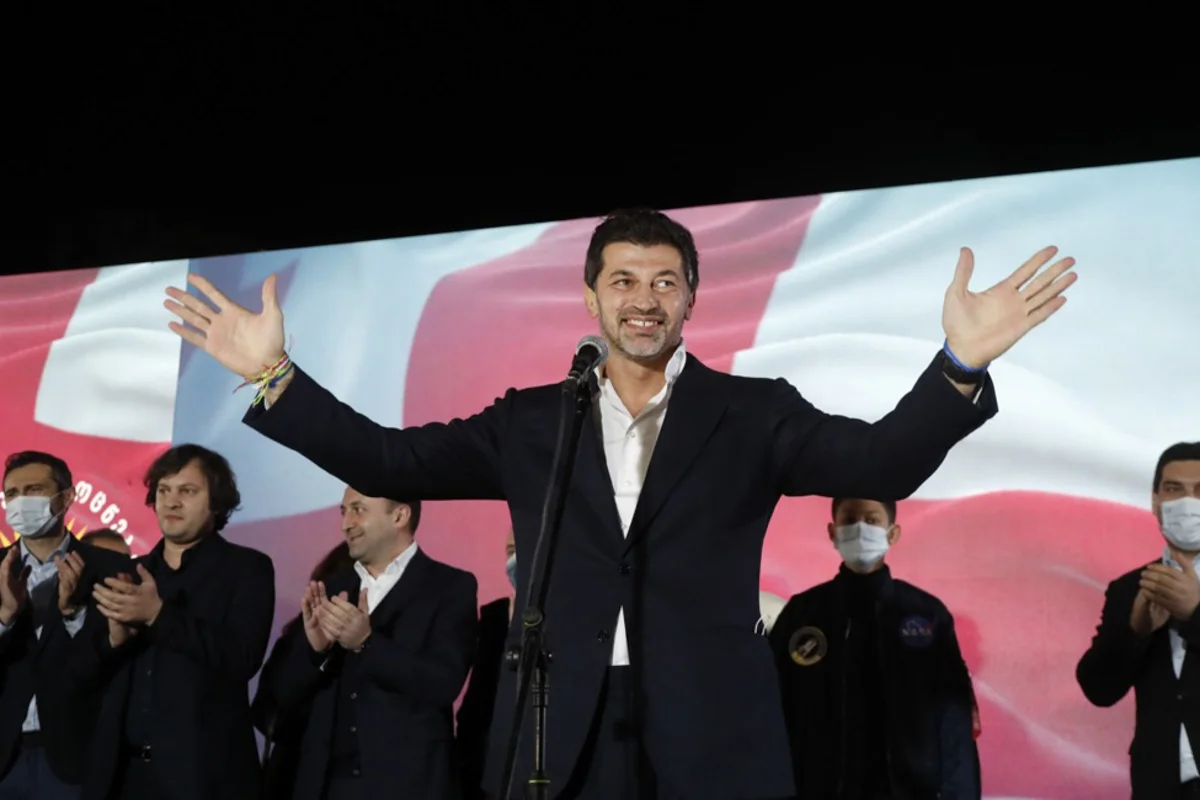
Georgian Dream also warned in advance that Saakashvili’s National Movement party would oppose the installation of the monument because they, as Tbilisi Mayor Kakha Kaladze put it, “are against everything traditional and national.”
Saakashvili really preferred other kings and other objects. During his presidency, two new airports were built: the international airport in Kutaisi was named after King David the Builder, and an airport named after Queen Tamara appeared in the mountains of Svaneti.
As for the monument to “Tsar Heraclius, deceived by Russia,” the National Movement regarded this as the Georgian Dream’s readiness to take “another step towards the annulment of Georgian statehood.”
Meanwhile, at the opening of the monument, speakers from “Dream,” on the contrary, emphasized the “far-sightedness” and “pragmatism” of the 18th-century ruler, implying that this was combined with the semi-official slogan of “Dream,” adopted after the outbreak of the war in Ukraine: “What, do you want war?”
“The merit of Heraclius II is that today our country has preserved its religious and national identity. It was the wisdom of Heraclius II that gave us such an opportunity, and therefore we must pay special respect to our outstanding king - today expresses exactly this. He is a true symbol of patriotism, pragmatism, love for the motherland, and he gave us an example that each of us should be guided by... We must protect our roots. A country that does not protect its roots will never be able to create a decent future,” the prime minister said.
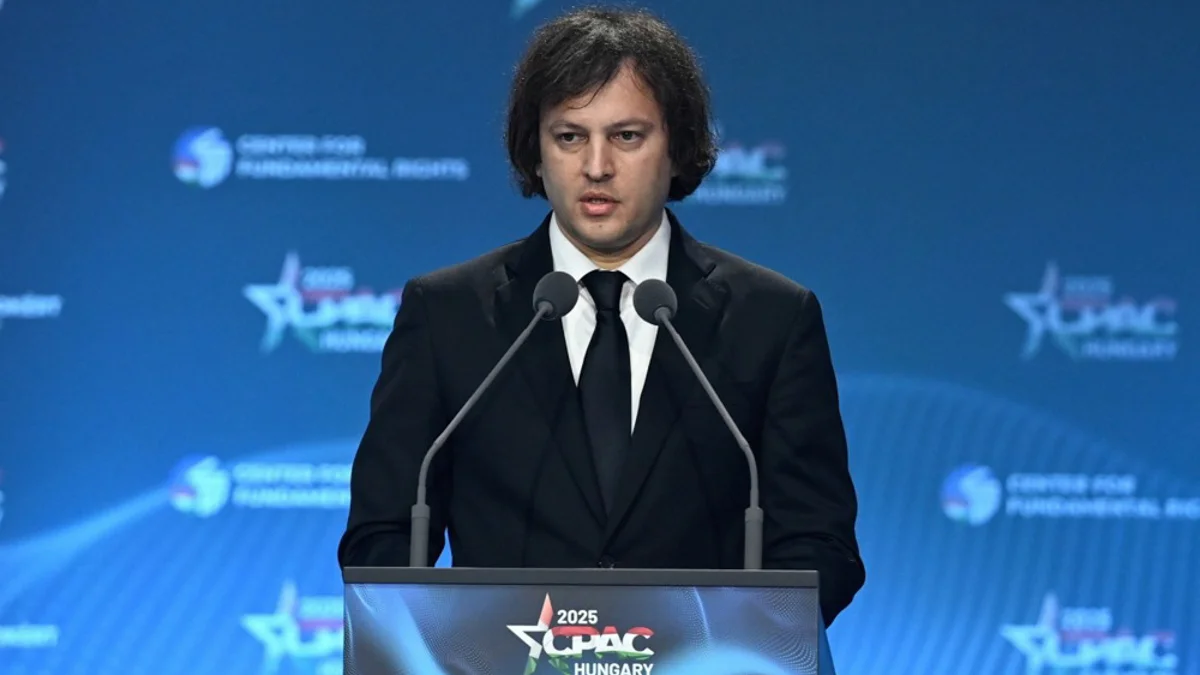
Later, answering questions from journalists, Kobakhidze said that Tsar Irakli, it turns out, especially irritates foreign ambassadors from those states that forced Georgia to open a “second front” to divert Russia’s attention from the war with Ukraine. The prime minister did not name the names of the ambassadors and countries, but confidently accused the famous Georgian philologist and publicist Levan Berdzenishvili of visiting these bad embassies.
“This demonstrates coordination between local agents and their patrons. There is a lot of aggression against Irakli II precisely because he is a symbol of pragmatism and devotion to the homeland. Our foreign agents and their patrons cannot stand this."
72-year-old Levan Berdzenishvili is a Doctor of Philology, who managed to be a Soviet dissident in the 1980s, a deputy of several convocations of parliament, a translator from Greek and Latin, and the author of a popular video course on literature.
Three years ago Berdzenishvili actually expressed the opinion that the agreement with Russia was a “historical mistake” by Tsar Irakli. This is nothing new; the issue has always been controversial: in the 18th century, Georgia was three kingdoms with different rulers. The poet Nikoloz Baratashvili dedicated an entire poem “The Fate of Kartli” to the dispute between the king of Kartli-Kakheti Irakli and the king of Imereti Solomon, who was categorically against an alliance with Russia. These poems are included in the compulsory school curriculum.
Berdzenishvili's reproach was made in an expressive journalistic manner; he asked whether it was really necessary to declare Tsar Heraclius a traitor so that the authorities would stop using his treaty with Russia as a justification for their capitulatory policy.
As one would expect, many were offended by such disrespectful treatment of the tsar, and those who were offended were mainly those who had not seen the interview itself, but had read “quotes” taken out of context.
Then open persecution began against Berdzenishvili: his lectures were disrupted, and eggs were thrown at him on the street. In the city of Telavi, public figures from supporters of the authorities organized a meeting at which they cursed the “rootless” writer and demanded that the king be canonized. A petition was even created demanding that Berdzenishvili be banned from communicating with students, but this initiative was subject to public criticism and was not successful.
Friendship with Russia in monuments
Historian Beka Kobakhidze, associate professor at Ilia Chavchavadze State University, at the height of the controversy surrounding the “betrayal” of King Heraclius, wrote on social networks that it is at least “unscientific” to evaluate the policies of the king from the 18th century in modern realities.
At the same time, today Beka Kobakhidze agrees with those who perceive the new monument to King Heraclius as hidden propaganda of the pro-Russian course of the authorities.
According to him, “the reputation of Tsar Irakli was disfigured first by Soviet propaganda, and now by the Georgian Dream: in both cases, the tsar is presented as a “pro-Russian politician who dreamed of Russian annexation.” After Russia violated the Treaty of Georgievsk and Georgia was annexed in 1801, almost all the descendants of Irakli II were killed or expelled from the country. It is a tragic irony of fate that propaganda has made a man to whom Russia has brought so much misfortune a symbol of friendship with Russia.”
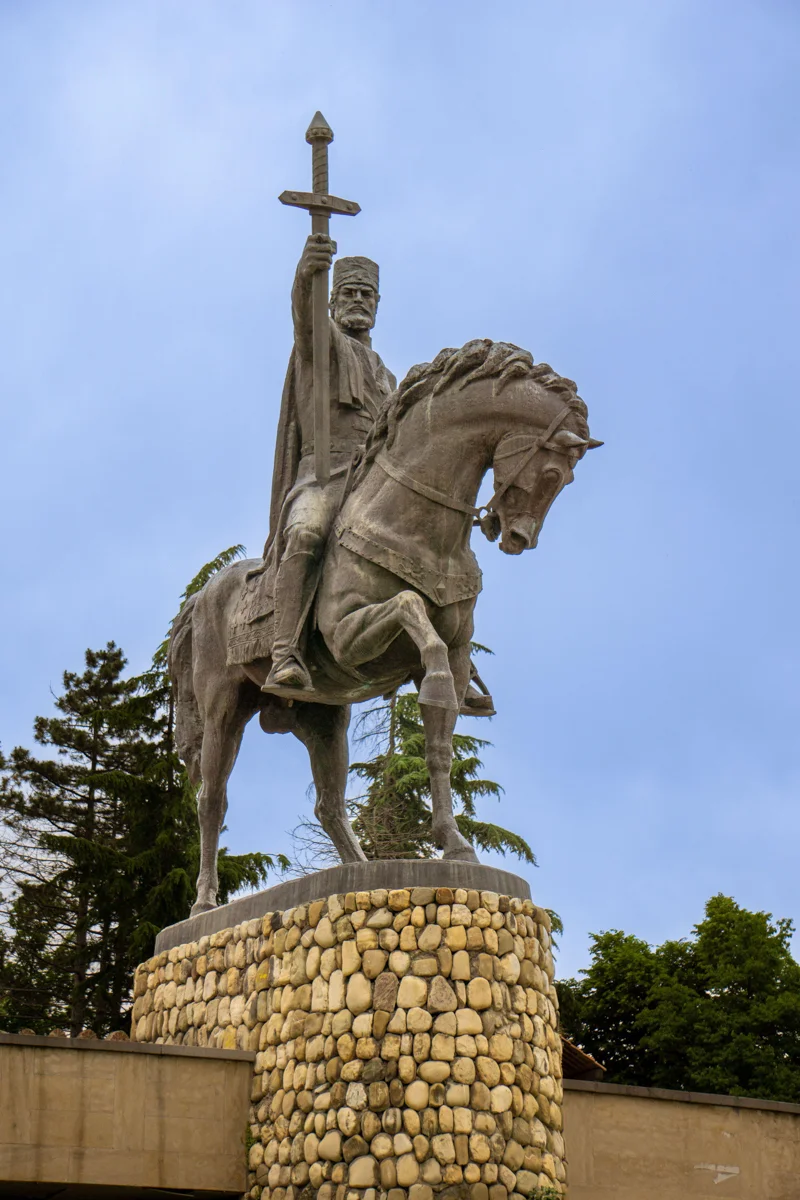
The historian believes that the new monument to the king with a lowered sword “corresponds to the policy of pacifism of the Georgian Dream and was installed at the exit from the airport for the sake of the Russians. Just this summer, the number of flights between Moscow and Tbilisi doubled - to 24 flights per week.
The historian recalls that during Saakashvili’s reign, the government had other messages: in 2005, part of the route to the airport was named after US President George W. Bush after he visited Tbilisi.
However, what is happening now reminds him of the Soviet Union in the 1980s, when, on the occasion of the 200th anniversary of the Treaty of Georgievsk, three monuments dedicated to friendship with Russia appeared in Georgia.
In 1981, the 80-meter stele “Man and the Sun” by Zurab Tsereteli was installed at the intersection directly in front of the road to the Tbilisi airport and became a reflection of the words of Eduard Shevardnadze at the Communist Party Congress: “ The sun for Georgia rises from the north .”
An equestrian statue of the hero of the Battle of Borodino, General Peter Bagration, appeared in Tbilisi in 1983 in the Krtsanisi region. In the same area there was a government residence and dachas for guests from the Politburo and the Central Committee of the Communist Party. “When they left the dacha, they should have seen a monument to a Georgian waving a saber for Russia.”
The “Georgian-Russian Friendship” memorial with a mosaic of Zurab Tsereteli is the first thing a person sees when entering Georgia from Russia along the Georgian Military Road. It is wildly popular with tourists due to its fantastic view of the Cross Pass.
Prince Heraclius
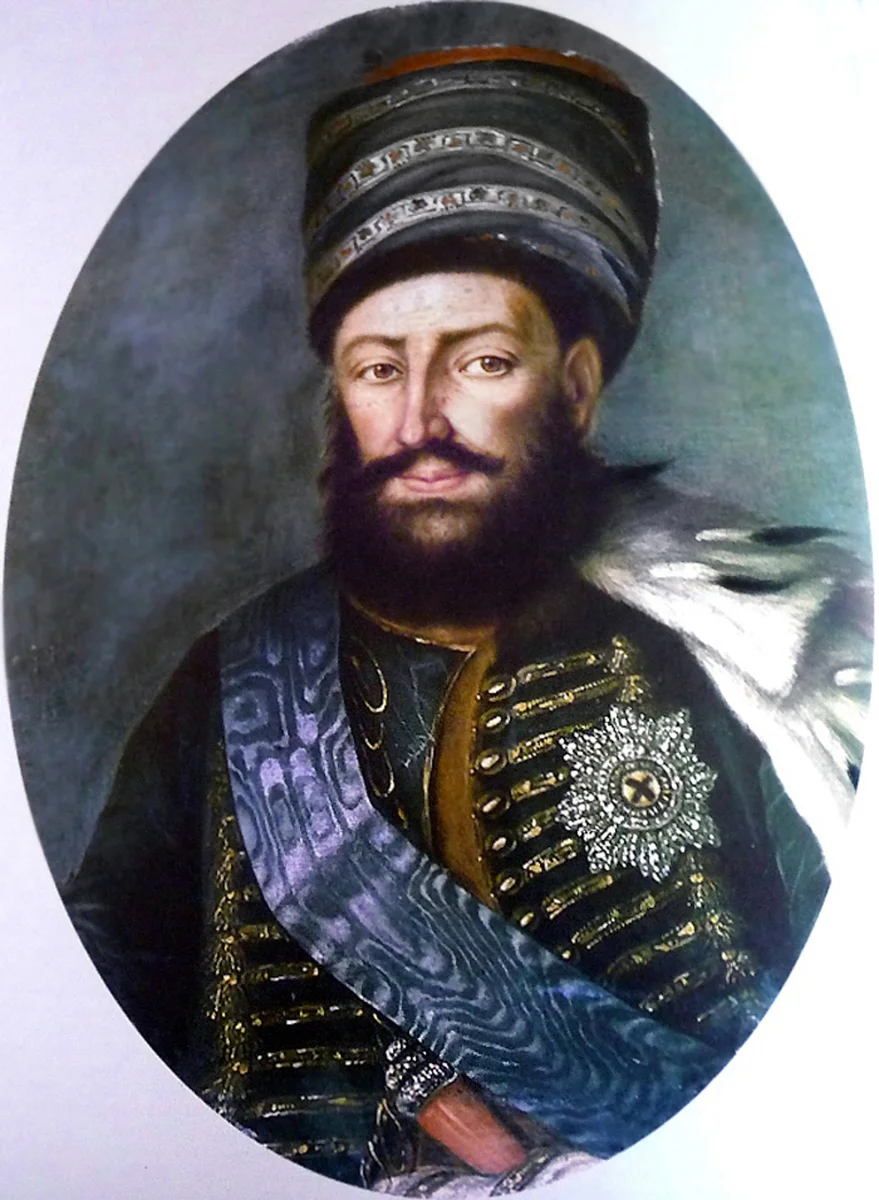
The fact that Irakli II lived in a difficult historical period can be understood even from his portraits: he wears an oriental turban (he spent part of his youth in Iran and participated in the Georgian-Persian army in successful campaigns against India), a Georgian traditional chokha, a Russian order and an ermine robe in Western fashion.
According to ancient tradition, the kings of the Bagrationi dynasty are called by Georgians not “Heraclius”, but “Erekle”, that is, more euphoniously and solemnly. As it turned out quite recently, in Europe the Georgian king from Kakheti was also called specially - “Heraclius”.
Enthusiastic notes in the British and Irish press of the 18th century about the young Georgian king were found in the National Library of Ireland by historian George Kalandia, director of the Tbilisi State Palace of Arts.
He found notes about “Prince Heraclius” in 29 printed publications, including the Public Advertiser, London Evening Post, London Chronicle, and Covent-Garden Journal. The young king from a Christian country was seen by the European press as a hero capable of ruling an outpost of Europe on the border with Asia.
“Prince Heraclius, whom our readers remember from the noise he made in the world, has reappeared on the political scene,” Kalandia quotes one of the British notes from 1766. The “noise” in the 50s of the 18th century was the military victory of King Heraclius over the three strongest contenders for the Iranian throne.
“If you believe eyewitnesses and people who know him, Heraclius is the most experienced prince of the East. He is 27 years old, amazing courage is combined with the calmness of a sage. His virtues made him the idol of his people and army, the object of admiration of his neighbors and the cause of fear of his enemies. His height is above average, he is well built, his features are attractive, his manners and clothes are simple, however, in general this personality leaves such a majestic impression that you perceive him as a magnificent general of your army and a worthy prince of your palace,” London Magazine, or Gentleman’s Monthly Intelligencer wrote about King Heraclius in 1755.
“There was an impression in the West that the power of Iran and the Ottoman Empire could be shaken. Of course, this was just an expectation, but King Heraclius then stood out to Europeans as a strong political figure,” explains Kalandia.
In contrast to Soviet historiography, which denied the European orientation of the Georgian rulers, Kalandia believes that Irakli II was “the first Georgian monarch with a strong orientation towards Europe.”
This is evidenced by his letters to the Venetian doges, to the Prussian king, the Austrian emperor, the head of the Corsican Republic Pascal Paolo, as well as a draft agreement between Heraclius and the king of England on the opening of a university in Tbilisi.
Kalandia emphasizes that King Heraclius concluded the Treaty of Georgievsk with Russia only after he failed to establish a military or political alliance with England, Austria and Venice: “Everything was very difficult, the king was in a hopeless situation. Three empires fought against him at once: Ottoman, Persian and Russian.”
Expectations of Margarita Simonyan
And again about propaganda. In April, RT editor-in-chief Margarita Simonyan gave a whole speech about the history of Georgia, predicting that the “new kings of Iraklia” would soon be on their knees asking Russia to “ take them home .”
Not at all embarrassed by the fact that the Treaty of Georgievsk, according to which Irakli II was supposed to receive military assistance from Russia, was signed in 1783, Simonyan described the horrors of the Persian Shah’s attack on Tbilisi, which occurred in 1795, that is, when the treaty was already 12 years old and should have been observed. How the bloody details of the destruction of the Georgian capital could become an argument to confirm the correctness of the choice of King Heraclius is logically incomprehensible, but Simonyan found special parallels with today’s war in Ukraine.
Simonyan said that in 1795, a “terrible massacre took place in Tbilisi, where almost the entire population was slaughtered,” who were “forced to spit in the face of the Mother of God,” and those who refused were inhumanly abused.
“After this, Tsar Irakli submitted a petition on his knees, on his knees, to be taken to Mother Russia. And who supported those who slaughtered Georgians in Tbilisi at that time? Britannia! Just like in Ukraine: Britain fully supported with weapons, Britain trained, Britain paid salaries to the Persian military because Britain was playing a big game with us (geopolitical rivalry, who is “cooler” in the southern lands) ... They play, and we protect. And they didn't succeed. And we did it.
Georgia joined us, and if there were 50 thousand Georgians of the entire ethnic group, <...> then when we let them go home, to freedom, which they were also not able to use well, then there were already a million of them, several million, when the Soviet Union collapsed, I don’t remember how many there were then, well, there were definitely two million of them.”
Also, according to Simonyan, in the USSR Georgia lived “like in paradise”, and in general “under the Russians everyone lived together”... “Now Mother Russia is returning its own. <…> And I assure you, unless something completely unforeseen happens, then with God’s help, this conflict that is now happening will end this year, and we will still see how the new kings of Irakli on their knees will again ask Mother Russia to take them home.”
Historian Beka Kobakhidze considers Simonyan’s statement about the “new kings Irakli” to be no coincidence, especially since both the previous and the current Prime Minister of Georgia are called Irakli.
As for Russian policy towards Tsar Heraclius, the historian points out another feature: Georgia in the 18th century played the role of a “second front” for Russia, which the “Georgian Dream” is now so demonstratively trying to avoid.
In addition, Russian allies failed to fulfill their promises to the Georgian king at least three times. Beka Kobakhidze lists them:
“Starting in 1768, when the war began between the Ottoman and Russian Empires, the main front was in the Balkans, but Russia wanted to open a second front for the Ottomans in order to draw part of their troops to the Caucasus. Therefore, the Russians encouraged Heraclius by sending him one battalion led by General Totleben. As a result, Tsar Heraclius opened a second front in the war with the Turks, even without receiving any serious guarantees from Russia that he would achieve something by this.
В 1770 году царь Ираклий пошел против Ахалцихского паши, генерал Тотлебен бросил его перед битвой при Аспиндзе, но грузинский царь всё равно победил. Что в это время делал Тотлебен — он ездил по Картли и Кахети и заставлял народ присягать на верность Российской империи и императрице Екатерине. То есть пока Ираклий сражался, генерал пытался присвоить Грузию.
Второй эпизод. По условиям подписанного в 1783 году Георгиевского трактата Россия предоставляла Грузии защиту от любой внешней угрозы, в том числе от набегов северокавказских горцев. Однако через два года после заключения трактата из Дагестана в Грузию вторгся правитель аварского ханства Омар-хан и разорил владения Ираклия. Россия ничего не предприняла, чтобы этому помешать.
Также по договору Россия обязалась держать в Грузии регулярную армию, но перед вторжением в Тбилиси 35-тысячного войска Аги Мохаммед-хана Каджара в 1795 году ( которое красочно описывала Маргарита Симоньян. — Прим. И. Б. ) Россия вывела войска и в очередной раз оставила Ираклия одного. Иранский шах за год до вторжения требовал от Ираклия отказаться от союза с Россией, однако грузинский царь ему отказал. В итоге Крцанисская битва была проиграна, а Тбилиси уничтожен. Отступивший в Телави Ираклий II умер спустя три года, в 1798-м.
Превращение в губернию
Грузинским царем, «удрученным своим венцом» и «вручавшим России свой народ», согласно поэме Лермонтова «Мцыри», был совсем не Ираклий, а его сын, последний правитель Картли-Кахетинского царства, Георгий XII. Он предложил России свое подданство, пытаясь войти в состав империи на правах автономии и при условии сохранения за ним и его потомками титула и престола. Однако никакого хеппи-энда для династии Багратионов союз с Россией не предусматривал.
После смерти Ираклия II среди его многочисленного потомства — у него было 16 сыновей и 12 дочерей от трех жен — началась борьба за власть. И если Георгия XII поддерживала Российская империя, то за царевича Юлона были грузинская знать и Турция, Иран делал ставку на царевича Александра, а на престоле в качестве регента после скорой смерти Георгия XII в 1800 году оказался его сын, Давид XII, что на фоне общей междоусобицы было чистой формальностью.
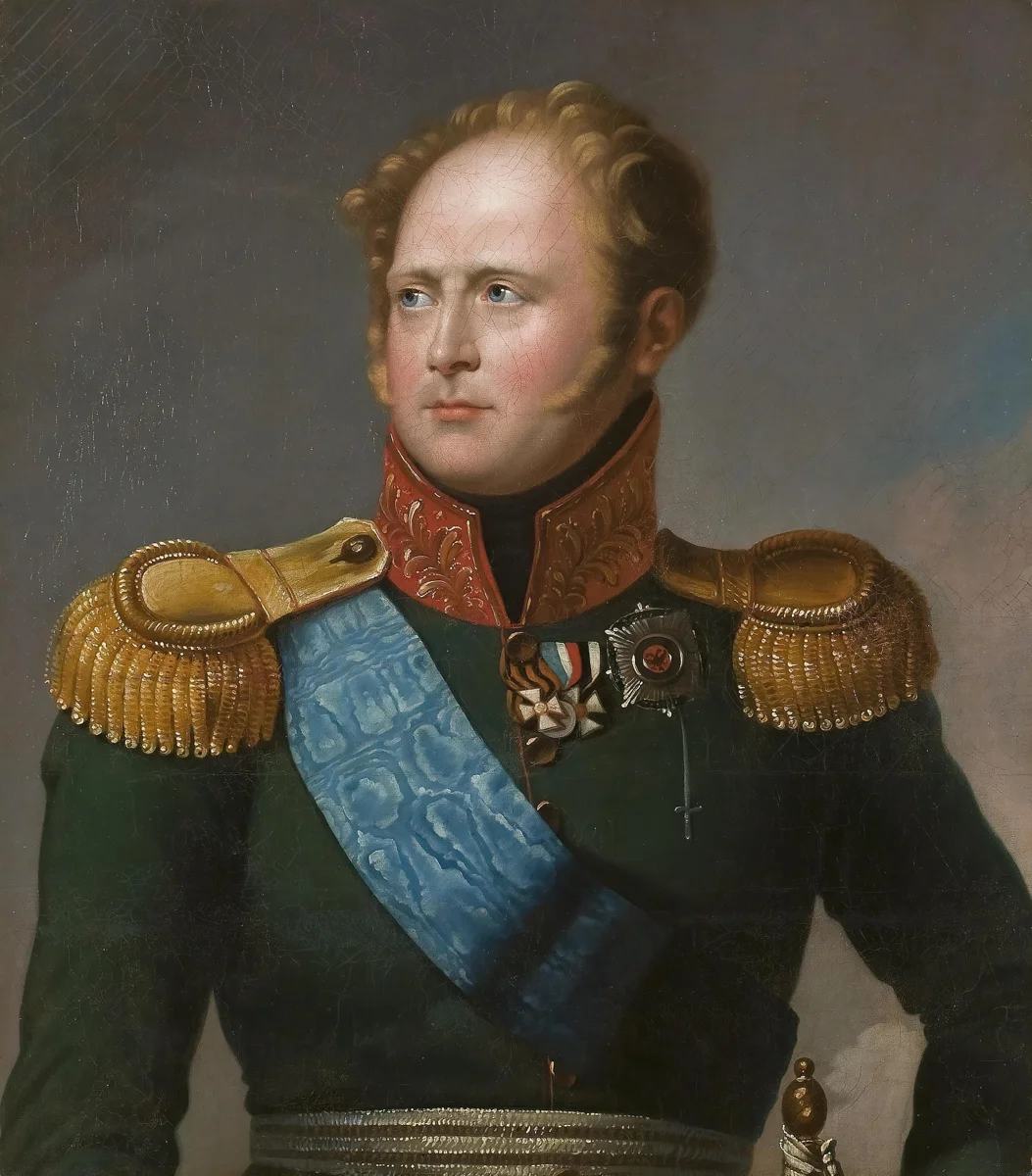
Георгиевский трактат к этому времени окончательно потерял смысл, так как император Александр I издал манифест об упразднении Картли-Кахетинского царства и его присоединении к территории Российской империи в качестве Тифлисской губернии.
О присоединении Александр I объявил в сентябре 1801 года в Москве, в дни своей коронации, что стало, по мнению историков, одним из украшений этой церемонии.
После этого направленный Александром в Тифлис генерал Карл Генрих фон Кнорринг отстранил от власти Давида XII и создал временное правительство во главе с генералом Иваном Лазаревым.
В апреле 1802 года в Сионском соборе Тифлиса состоялось «приведение к присяге» на верность российскому императору. В церковь для этого пригласили нескольких еще не сбежавших царевичей и представителей разных сословий. Собор был окружен российскими войсками, и тех, кто отказывался присягать, брали под стражу.
В конце концов все «неспокойные царевичи» из кахетинских Багратионов, кто мог претендовать на престол, были отправлены в Россию, включая Давида ХII: его в Санкт-Петербург везли арестованным и под прикрытием. Там Давид оставался всю жизнь: получал императорскую пенсию, занимался наукой и даже заседал в российском сенате.
Уезжать в Россию хотели не все. Например, категорически отказывалась покидать Тбилиси вдова Георгия XII, царица Мариам Цицишвили. Вдовствующая царица сорвала со стены кинжал и нанесла генералу Ивану Лазареву рану, из-за которой он умер, «не дойдя до двери». Перед этим, по свидетельству очевидцев, русский генерал пытался силой заставить царицу покинуть дворец и говорил с ней «с некоторого рода насмешкой».
После торжественных похорон генерала Лазарева царицу Мариам и всех малолетних детей Георгия XII всё равно отправили в Россию и определили в Белгородский Рождественский монастырь.
Только через десять лет кахетинские Багратионы были помилованы и получили разрешение жить в Москве.
Автокефалия Грузинской церкви будет упразднена в 1811 году, когда уже и Западная часть Грузии войдет в состав империи как Кутаисская губерния. Подчинение государственной администрации традиционно независимой грузинской церкви вызывало особое неприятие, ведь на такое не решался никто из мусульманских завоевателей. В итоге если в XVIII веке грузинская церковь и поддерживала союз с «единоверцами», то в XIX веке стала одним из очагов борьбы за независимость.
Если добавить сюда тот факт, что после присоединения к России во всех учебных заведениях Грузии вплоть до 60-х годов XIX века обучение велось исключительно на русском языке, а статус государственного грузинский вернул себе только в 1918 году, то станет понятнее, почему либеральный и проевропейский Илья Чавчавадзе провозгласил такой консервативный, на современный взгляд, лозунг, заключавшийся в трех словах: «Язык, отечество и вера». Естественно, что и этот лозунг власти используют, когда намекают, что Грузии не стоит спешить с интеграцией в Европу.