
Translated material
“And somewhere above Musk is looking and smiling sadly.” How the Kamchatka authorities brought the region to the brink of information collapse due to elections
A key fiber optic cable has not been repaired for six months

The recent gubernatorial elections in Kamchatka could result in a real collapse of communications in the region. According to Vorstka, for the duration of the campaign, which ended on September 14, the authorities paused all possible “unpopular” work - including the necessary repair of a fiber-optic cable at the bottom of the Sea of Okhotsk. Now they cannot replace it due to the onset of the storm season, and a broken line can lead to a long-term loss of fast Internet for the vast majority of Kamchatka residents. Local residents on social networks blame the head of the region, Vladimir Solodov, for what is happening, who barely managed to be re-elected for a second term.
In order not to miss new texts from “Layout”, subscribe to our telegram channel
High-speed Internet for all 288 thousand residents of Kamchatka depends on one fiber-optic cable at the bottom of the Sea of Okhotsk. It has been in need of repair for a long time - and Rostelecom should have done this back in May. But the necessary work threatened the residents of Kamchatka with many inconveniences. Deputy Chairman of the regional government Nikolai Kiselyov said that due to cable repairs for a period of “two to ten days,” any Internet except satellite would completely disappear in the region. “You need to be patient. Minimum services will be provided that are important for the life support of the region - but not the ones we are used to: Wi-Fi at home at speeds of up to 100 megabits or more, IPTV, downloading films in various formats and Rutube in quality mode - this is impossible to reserve, these are only the capabilities of the FOCL [fiber optic line],” the official said on local radio Kamchatka 1.
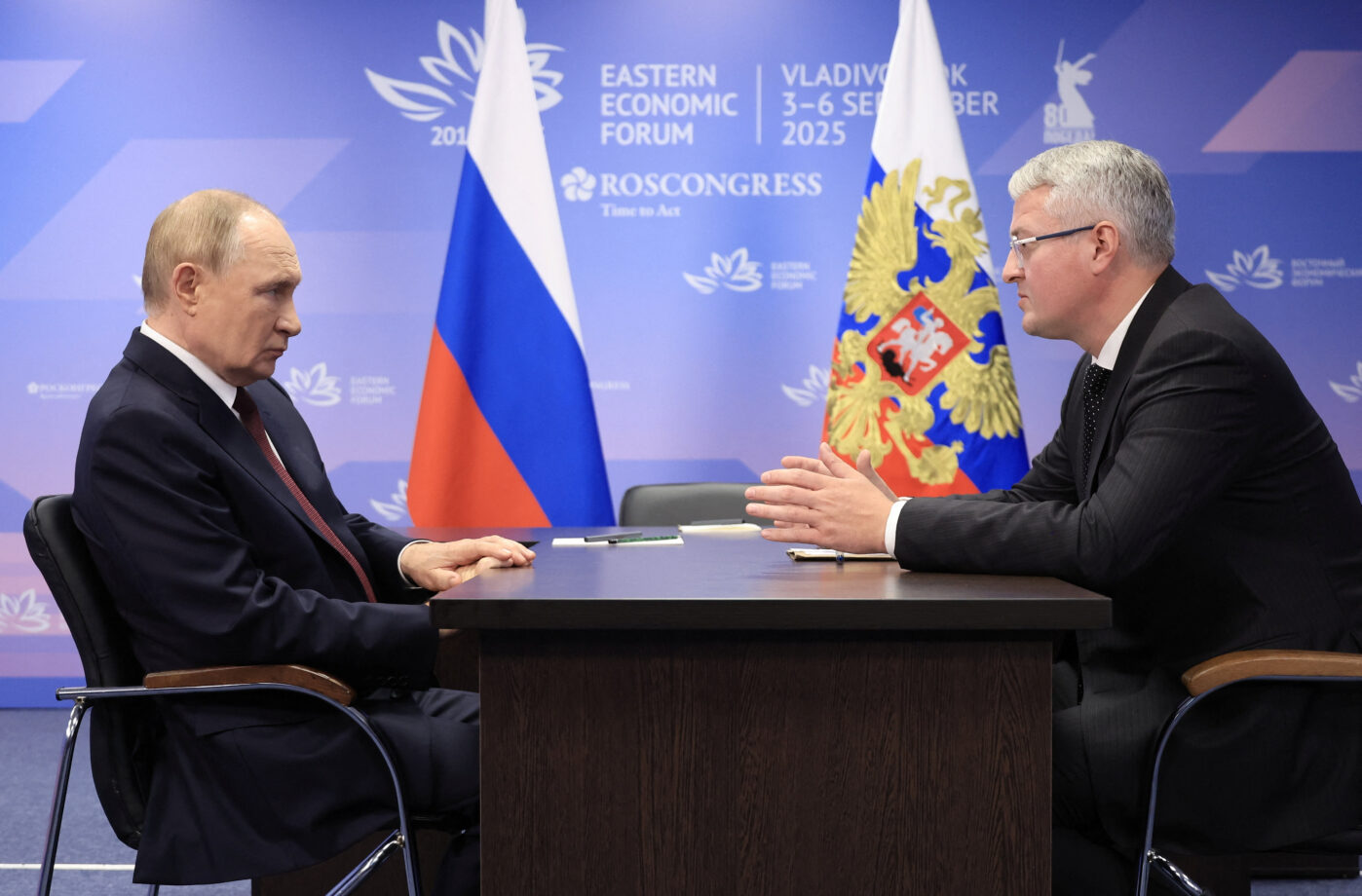
Representatives of the regional authorities even pointed out that not all the most important services will be connected to the network via satellite. For example, certification services “Mercury” and “Honest Sign” were to go offline during the work, acquiring was promised to be retained only for the largest local network of gas stations “NNK” and “Sbera”, and stable communications were to be preserved for the Aeroflot office and the state administrative apparatus.
The regional Ministry of Digital Development reported that if the cable is not repaired in time, its break will leave the peninsula without high-speed Internet “for several months.”
However, the work was postponed several times: first from May to July, then to August, and finally to the end of September. In the fall, divers were forced to postpone work again. This time - due to deteriorating weather in the Sea of Okhotsk. The deputy chairman of the regional government, Kiselyov, even explained that the underwater part of the repair required calm, which was not available either at the end of September or at the beginning of October for the required amount of time - about two days. The necessary weather is also not expected in the next few days.
Rostelecom did not explain the summer postponements. The ocean scientist, who asked Vestka not to publish his name, said that this could not be related to the weather: storm seasons in the Sea of Okhotsk region occur regularly, and they are quite predictable. And the ideal weather for work, according to the specialized service Ventusky, which tracks the height of waves and storms, was at least almost the entire first half of August.
What kind of cable?
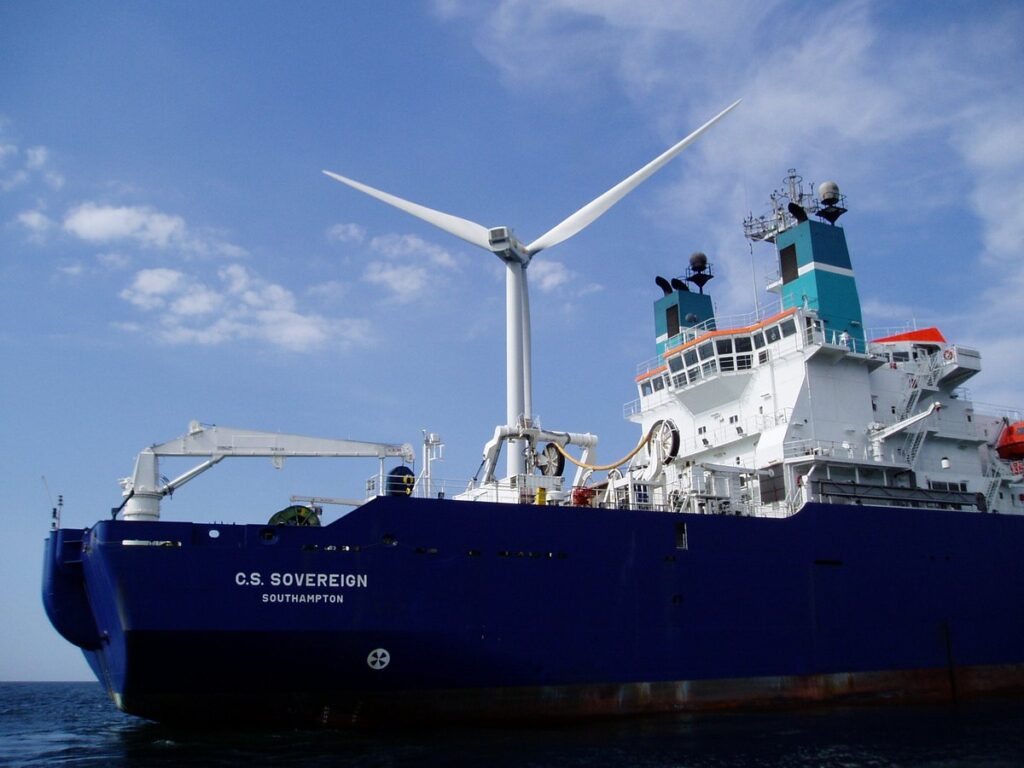
Expand ↓A fiber optic line along the bottom of the Sea of Okhotsk between Sakhalin, Kamchatka and the Magadan region, commissioned by Rostelecom and the Chinese Huawei, was laid by the British company Global marine in 2015-2016. To Kamchatka, the line runs from the Sakhalin city of Okha along the bottom of the sea, and reaches land in Ust-Bolsheretsk, and from there it reaches the capital of the region, Petropavlovsk-Kamchatsky, and goes north to Chukotka. Rostelecom became the line operator. All private projects for laying alternative cables remained on paper - the number of potential subscribers in Kamchatka and Chukotka only slightly exceeds 300 thousand, which makes such work virtually unpayable. Thus, the entire fast Internet of two north-eastern regions of the country at once was stuck on one underwater cable, which required scheduled repairs.
But the Kamchatka authorities could not cause inconvenience to local residents either in late spring or summer. The fact is that the campaign for the re-election of United Russia Governor Vladimir Solodov to a second term was in full swing.
“And I could have lost”
The head of the region entered the campaign with an extremely low level of support. A source from “Vestka” in Kamchatka and an interlocutor close to the presidential administration then said that Solodov was supported by just over 30% of residents, with an anti-rating exceeding 50%. The regional government tried to turn the situation around by demonstrating major successes. They decided to concentrate PR efforts on the two largest construction projects in the region: a new complex of buildings for the regional hospital (more than 13 billion rubles from the local and federal treasury) and a new airport terminal (over 10 billion rubles). Sources of “Verstka” reported that local officials even waited for Vladimir Putin to open the air harbor, but he never made it to Kamchatka before the elections. And on the way to Alaska, he preferred to visit Chukotka.
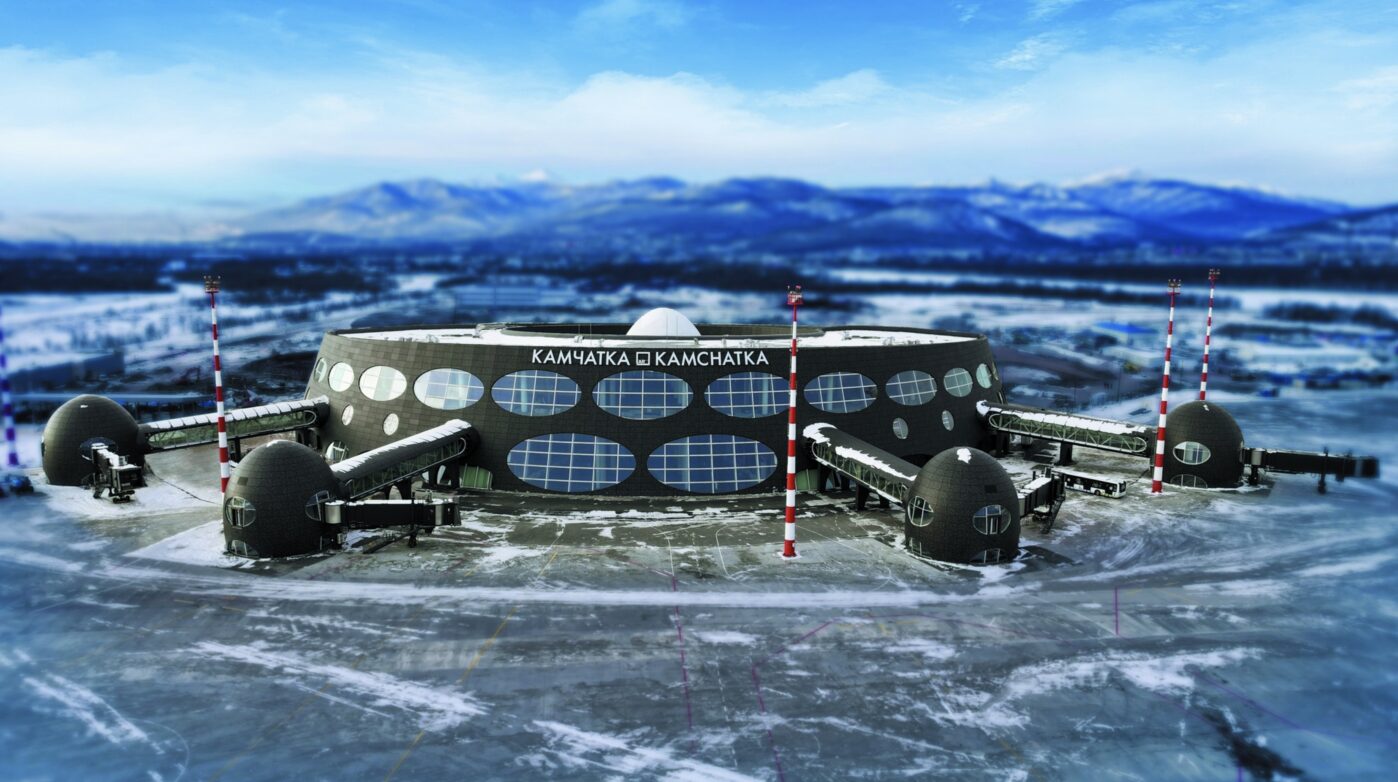
The regional authorities organized bus excursions to the non-working hospital, located on the outskirts of Petropavlovsk. And the terminal was opened, in fact, unfinished. The shortcomings were so noticeable that even the presidential envoy to the Far East, Yuri Trutnev, did not praise the airport during his visit to the peninsula - although he is considered the “patron” of Vladimir Solodov. And Irina Yarovaya, vice-speaker of the State Duma, elected from the region, criticized the quality of work right during Solodov’s annual report to regional deputies, traditionally a “ceremonial” event.
A whole group of political strategists came to the region in May to save Solodov’s campaign, the most famous of whom is Maria Sergeeva, a former employee of the presidential administration and ex-adviser to businessman Oleg Deripaska. At this point, road repairs were added to all the problems of the region's residents. Thus, the authorities closed a number of key highways, including the central street of Petropavlovsk-Kamchatsky - Leninskaya. The city was stuck in long traffic jams, and this did not add a good mood to voters.
“We had a choice - either to use all possible federal money, or to refuse some work without guarantees that Moscow would provide money for it in the future. We chose the first one and started digging everywhere at once. Which turned out to be a clear out of sync with the election campaign,” one of the regional officials justified himself in a conversation with a Vestka journalist. Vladimir Solodov himself indirectly admitted this to be a mistake during his already mentioned report.
The political strategists who arrived corrected the situation in their own way. The region was literally inundated with campaigning for the governor’s “People’s Program,” which included all budget projects - from local improvement to the regional hospital, and they talked about it from all sources - from speakers in shopping centers to stories on local TV.
At the same time, they tried to reduce the turnout of disloyal voters at the elections. Neither the voting date nor the addresses of the polling stations were mentioned practically anywhere. Even the regional election commission did not launch the traditional mass mailing campaign this time.
Solodov’s competitors, who could potentially steal votes from him, were not allowed to participate in the elections. For example, local journalist Alexandra Novikova was first nominated by “A Just Russia - For Truth!”, but after a few days the federal leadership of the party withdrew her candidacy. Solodov’s rivals, who reached the elections, complained in private conversations about the “strict restrictions” on campaigning that officials set for them.
“The visiting specialists ensured that all work that was bothering residents was either postponed or paused,” a local official adds to Vorstka. As an example, he cites the postponement of cable repairs, as well as the partial opening of the blocked Leninskaya and the freezing of work on another important city highway - Vysotnaya Street, the actual backup of Leninskaya. “With a high turnout and any strong opponent, the governor of Kamchatka Solodov would have run into the second round. And there, hypothetically, I could even lose,” stated political scientist Konstantin Kalachev, who previously worked in Kamchatka, in early September.
In such conditions, almost the main “positive” theme of Solodov’s campaign was the fight against the consequences of a strong earthquake of magnitude 8.8 that occurred in Kamchatka on the night of July 30. The governor publicly dealt with its consequences and praised local residents who showed courage during the cataclysm. For example, doctors from one of the local hospitals who were able to continue the operation despite the tremors. Solodov discussed the consequences of the cataclysm a week before the elections with Vladimir Putin in Vladivostok. The cost of restoring damaged facilities is still being assessed, and residents of the peninsula still feel aftershocks almost every day.
“The places are beautiful. But I still don’t understand how people survive there.”
The elections took place on September 12–14. Solodov won them with 67.8 thousand votes - almost the same as in 2020. But if then he received more than 80% of the votes, this time he had only 62.97%. Moreover, in several northern regions of the peninsula that are usually loyal to the authorities, the governor did not receive the 50% necessary to win in the first round, and in Bystrinsky he completely lost to the communist Roman Litvinov (33.19% versus 39.69%). The outcome of the elections was decided by low voter turnout in the regional capital and loyal voting in its southern part.
The very next week, all the “frozen” problems of Kamchatka residents returned. In addition to critical cable repairs, road work has begun again in the regional capital, plunging the city into daily traffic jams. Retail gasoline prices, which remained almost stagnant in the summer, rose twice in the second half of September. Discount air tickets to Vladivostok for local residents, which appeared right before the elections, suddenly disappeared from sale. The new building of the regional hospital was never opened, and its head physician Andrei Kislyakov, together with his deputy Oleg Kuzmenkov, quit at the end of September and went to work in the Altai Territory. Rumors in the medical community of Kamchatka directly connect this with the reluctance of both leaders to participate in the hospital’s move to a new building, where, allegedly, “critical technical shortcomings” were discovered. Kislyakov did not answer Vorstka’s calls, and the authorities did not give public comments about this.
The fact that the region cannot solve pressing problems in any way is directly linked by local residents to the elections of “Bespectacled”, “Trunk” and “Elephant”, as Solodov is insultingly called on the peninsula. One of the most popular comments on the telegram channel of a local media in response to the question why the necessary work was not carried out earlier sounds like this: “For the sake of Solodov’s reassignment! What’s incomprehensible here?” Some users were ironic, hinting at the satellite high-speed Internet from Elon Musk’s Starlink: “And somewhere above Musk is looking and smiling sadly.”
The deadlines for work on the undersea cable are going to be pushed back to October. And Kamchatka media, citing discussions among signalmen, say that the repairs may even be postponed until 2026. Local residents are taking these reports less and less seriously: while at the end of September, after the announcement of upcoming work, there was a real rush at gas stations and ATMs, at the beginning of October there was no longer any increased demand for fuel and cash.
There are no recent survey data on the popularity of the Kamchatka governor and satisfaction with the work of the authorities. But in the draft federal budget for 2026, Kamchatka entered the top subsidized regions , along with the DPR, Dagestan and Chechnya. And one of the political strategists who worked for Solodov’s campaign this summer, after returning from Kamchatka, described his impressions to VERSTKA as follows: “The places are incredibly beautiful. But I still don’t understand how people survive there.”
Photo: Eruption of the Shiveluch volcano after the earthquake in Kamchatka. August 18, 2024. Viktor Frolov via Reuters Connect
You can support “Layout” from any country in the world - it is still safe and very important. We really need your support now. How to help us →