
Translated material
War
One thousand three hundred and twenty-first day. Ukraine is increasingly striking Russian refineries - and thus changing Trump's opinion about the prospects of war
Since February 24, 2022, Meduza has been broadcasting live about the Russian-Ukrainian war. We publish your letters in our daily materials because we are sure that we need to continue talking about the war. How do you feel about the ongoing war? How is it affecting you personally right now? How has your attitude to what is happening, to Russia, to Ukraine, to the world changed over these three years of war? Find the feedback form at the end of this article. You can read the previous day's review here .
Ukraine
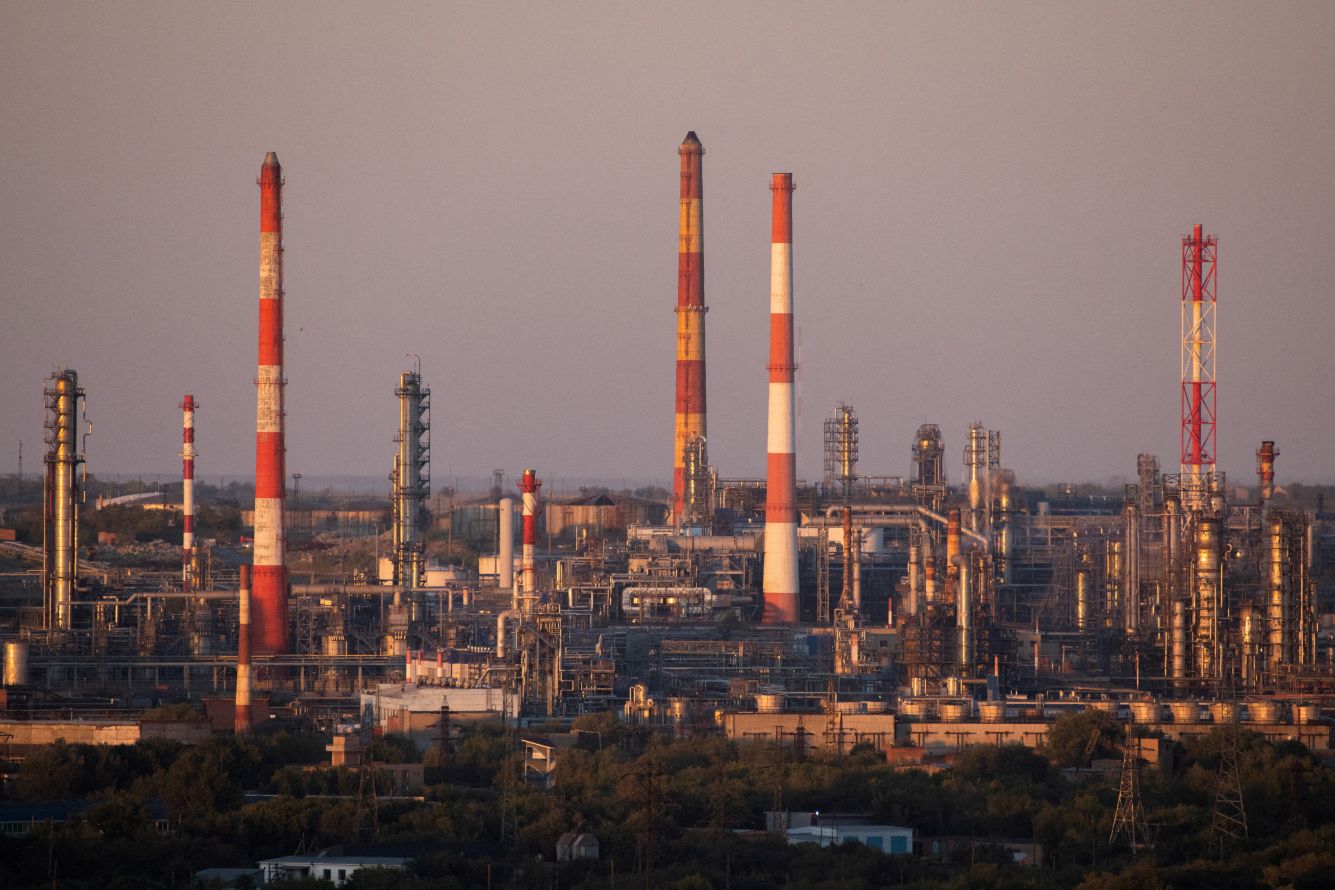
The Ukrainian Armed Forces' strikes on Russian refineries have intensified - and, apparently, they are helping to change Trump's opinion about Ukraine's prospects in the war
The Ukrainian army is increasingly striking at Russian energy facilities, writes The Economist magazine. Coordinated attacks by Ukrainian drones on oil refineries in Russian regions began in August, and the number of strikes is growing: from two or three a week to four or five, and “soon they will become daily,” journalists note. The emphasis on such strikes has the biggest impact on perceptions of the war right now - and also appears to be helping change Donald Trump's view of Ukraine's prospects, The Economist writes. Journalists do not specify how this opinion is expressed now. At the end of September, Trump, after a meeting with Vladimir Zelensky during the UN General Assembly, unexpectedly stated that “Ukraine, with the support of the European Union, is able to fight and return all of its territory within its previous borders” and “maybe even go further.”
At the end of August, according to Reuters estimates, about 17% of Russia's oil refining capacity was out of commission - at least temporarily. Now this figure is probably higher - according to unconfirmed data, up to 40% of capacity is affected. Research group Energy Aspects estimates that this means a loss of more than 1 million barrels per day.
Ukraine has hit 16 of Russia's 38 refineries, and while repairs are possible, the damage becomes long-lasting when plants are hit again, according to Benedict George, a senior executive at research firm Argus Media. George notes that in 2025, diesel fuel exports from Russia decreased by 30% compared to last year - and are at their lowest level since 2020. This leads to fuel shortages within the country as well.
Oil pumping stations and oil storage facilities are also being hit, but according to Sergei Vakulenko, a senior fellow at the Carnegie Berlin Center for Russian and Eurasian Studies, such facilities are more difficult to put out of action for a long time, and so far there are few signs of a reduction in Russian oil exports. But exporting crude oil is significantly less profitable for Russia than selling petroleum products.
According to The Economist, about 60% of strikes deep into Russian territory are carried out by the Ukrainian Armed Forces using FP-1 strike drones produced by the Fire Point company. Their flight range is 1,500 kilometers, and they are cheap to produce. Also used for attacks are heavier and more expensive “Fierce” drones with a flight range of up to 2,000 kilometers. But in addition, as The Economist writes, there have been reports of Ukraine using its own FP-5 Flamingo cruise missiles. They are much faster than drones. The missiles have a range of more than 3,000 kilometers and are powerful thanks to a warhead weighing 1,150 kilograms. If the Flamingo can penetrate Russian air defenses, it will “take Ukraine’s campaign of strikes against targets deep inside Russia to a new level of destructiveness,” The Economist notes. Fire Point currently makes two to three of these missiles per day, and by the end of the month, production is expected to increase to seven missiles per day. At the end of August, Vladimir Zelensky reported the successful test of the Flamingo missile, and later announced that new strikes deep into Russia were planned.
The Ukrainian military is finding it difficult to contain the Russian offensive due to a lack of people and “holes” between infantry positions
On the front line, the Ukrainian Armed Forces have several main problems that prevent them from containing Russian troops, writes Ukrayinska Pravda, whose journalists spoke with the military. Journalists call one of the main factors the continuing shortage of people in the Ukrainian army - and the resulting shortage of infantry. “At the current stage of the war, when the work of heavy equipment is as difficult as possible, the role of soldiers in the trenches increases significantly. When there are not enough of them, it is not easy to organize defense,” writes Ukrayinska Pravda. Russian troops take advantage of this and end up advancing in small tactical groups through understaffed Ukrainian Armed Forces positions.
As the Ukrainian military says, the lack of people also results in “holes” between infantry positions. The distances between them can be 200–300 or 500–700 meters, and sometimes even a kilometer. “There are positions that are purely for show—they have shell-shocked, three-hundredths (wounded - note from Meduza ). They stand there so that from above they will be happy that we have positions there,” says the interlocutor of Ukrayinska Pravda. As a result, the Russian military penetrates between Ukrainian positions, and the infantry “are forced to become drone pilots and mortarmen who stand 3–5 kilometers from the front line,” journalists write.
In addition, as Ukrayinska Pravda notes, problems arise due to the unfinished transition to the corps system in the army (Zelensky approved the plan for this transition back in the winter) and the “micromanagement” of the Commander-in-Chief of the Armed Forces of Ukraine, Alexander Syrsky. According to journalists, Syrsky often resorts to “manual control” at the front, and at the end of September he disbanded the operational-strategic group of troops “Dnepr” (formerly called “Khortitsa”), commanded by Mikhail Drapaty. Its functions will fall on the groupings of troops that arose with the advent of the corps, but one of the interlocutors of Ukrainskaya Pravda believes that in this way Syrsky also tried to “remove a competitor.”
Russia
Ukraine has launched more than 250 drones across Russian regions. Belgorod remains without electricity after the attack
On the night of October 6, as reported by the Russian Ministry of Defense, Russian air defense forces intercepted and destroyed 251 Ukrainian drones. The Nizhny Novgorod, Kursk, Belgorod regions and other regions were attacked.
Belgorod was left without power the night before - after the shelling of the thermal power plant. By morning, power supply in the region could not be fully restored. According to Governor Vyacheslav Gladkov, 24 settlements and about 5,400 residents of Belgorod and the region remained without electricity on the morning of October 6. Around noon Moscow time, Russian “military correspondents” and local publicists again reported about the attack and subsequent problems with electricity.
Gladkov reported that a missile strike was carried out on Belgorod, as a result of which a man was killed who was helping “to cope with the consequences of the previous shelling.” As a result of the strike on the infrastructure, problems with electricity are being observed on a number of streets in Belgorod, Gladkov added.
War through the eyes of Meduza readers
How we choose letters
Meduza's readers live in different countries and have different attitudes towards the war. We publish your letters to see this event through your eyes. Our editors try to present all points of view, even if they do not coincide with the editorial position. However, in accordance with the Meduza code, we do not publish messages that contain “hate speech,” justify the murder of civilians, or express direct support for an aggressive war.
Alexander (Chelyabinsk region). I condemned the war from its very first day. Due to many personal circumstances, I did not have the opportunity to leave and do not foresee it in the near future.
I apologize to Ukrainians for suffering from my state and on my behalf. I did not choose this and did not support it. I hope that sooner or later justice will be achieved. I can't understand your pain. Just let me make this apology.
To my compatriots who left and have been pouring slop on those who remained for the last four years, I want to say: we remember everything, I remember everything. You wrote things on the verge of dehumanization. Close to her. I can understand people under fire, but you are not them. And there is no need to hide behind other people's suffering. For some reason, it’s easier for my compatriot to confuse me with crap than to understand that I personally have never taken the war for granted even once in all my time.
I will not respond to compatriots who say so in the same coin. I won’t say that all those who left were like “pumpkin emigration”, “sausage emigration” and so on. We are not you. Therefore, I will do without cheap theatricality and without retaliatory dehumanization. Not everyone who left thinks so about those who stayed. Not everyone who left needs to kick those who stayed behind from time to time, without making any distinction, just to confirm that they made the right choice - and life in a foreign land is not easy. Leaving was not an easy choice. And a very bold step. And to these people I want to say “Thank you very much!” Especially for those who try to see those who remain not as a faceless mass, but as people.