
Translated material
Rose resolution
Why did the October Revolution 2.0 fail in Georgia?

Protest rally in Tbilisi. Photo: Inna Kukudzhanova / TASS
On October 4, municipal elections were held in Georgia. The Georgian Dream (GM) party of billionaire Bidzina Ivanishvili won an unconditional and predictable victory. She won the mayoral elections in all cities without exception, including Tbilisi, as well as in the proportional elections of “Sakrebulo” - local representative bodies, gaining more than 70% of the votes throughout the country.
And if we take into account that in the Georgian parliament after the 2024 elections, the GM is represented in “comfortable isolation” (all other parties that have overcome the 5% threshold have either abandoned their mandates or are boycotting the meeting), we can conclude that the GM has completed the current election cycle by creating a “fundamentally strong” architecture of one-party rule.
This foundation could be destroyed on the same day, October 4, by a new revolution in the style of the “Rose Revolution” of 2003, when Mikheil Saakashvili burst into parliament with a rose in his hands.
But now Saakashvili is in prison, serving a many-year prison sentence, and his followers lacked not only experience, “revolutionary talent” and dexterity, but also a mass of militant passionaries ready to break into the palaces, thereby violating the idyll of the “party in power” and the philistine majority, which always votes for maintaining the status quo contrary to the aspirations of the “creator and mover.” history" - the passionate minority of the nation.
Georgian oxymoron
A record 75 percent of GMs in municipal elections did not surprise anyone in Georgia. Turnout at the “local elections” was very low: less than half of the voters came to the ballot boxes; and those who came were mobilized by the so-called. “coordinators” of the GM: all day long, “Aunt Zhuzhuny” and “Uncle Nodari” were on duty at the polling stations, as they are called in the country, with lists of “party voters” in their hands.
They called the mobile phones of those who were too lazy or could not come, and insinuatingly reminded them that during the preliminary door-to-door survey they had promised to vote for the ruling party.
In fact, a similar system of mobilizing party voters successfully operates in all democratic countries. That is, even in America and Europe. But for some reason it is always very difficult for the global promoters of electoral technologies in the countries of the Third World and the Global South to explain that the same system in post-Soviet countries, with their administrative resources, works differently than on both sides of the Atlantic.
In Georgia, for example, it has always worked “five” over the past thirty years. But always in favor of the authorities, and not the opposition with its meager financial resources
Secondly, a significant part of the opposition generally boycotted the municipal elections and was largely busy preparing for the next Georgian revolution.
This was said openly and directly: “on the fourth of October, hundreds of thousands of Georgians will gather on the central Freedom Square and peacefully overthrow the pro-Russian government of the Russian oligarch Ivanishvili,” - in various variations, this narrative dominated on opposition television channels.
Everyone understood perfectly well that “peaceful overthrow” itself was an oxymoron, that is, an absurd phrase, but it was a “figure of revolutionary speech”, a “rule of the game”, which could turn against the organizers only in case of failure and defeat. Which, by the way, is what happened in the end.
The inexorable river of history
The impression was created, not at all deceptive, that the leaders of the “Rose Revolution 2.0” themselves sincerely believed in the inevitability of victory. And indeed, if in November 2003 people gathered in the same square burst into the parliament building, from where they carried out the elderly President Eduard Shevardnadze in their arms, then why not try to enter the same river of history a second time?
And few people publicly paid attention to the fact that, firstly, 22 years have passed since then, the then revolution had a charismatic leader, Mikheil Saakashvili, and with all due respect to the main initiator of the new revolution, the famous opera singer Paata Burchuladze, in this sense he is far from “Misha”.
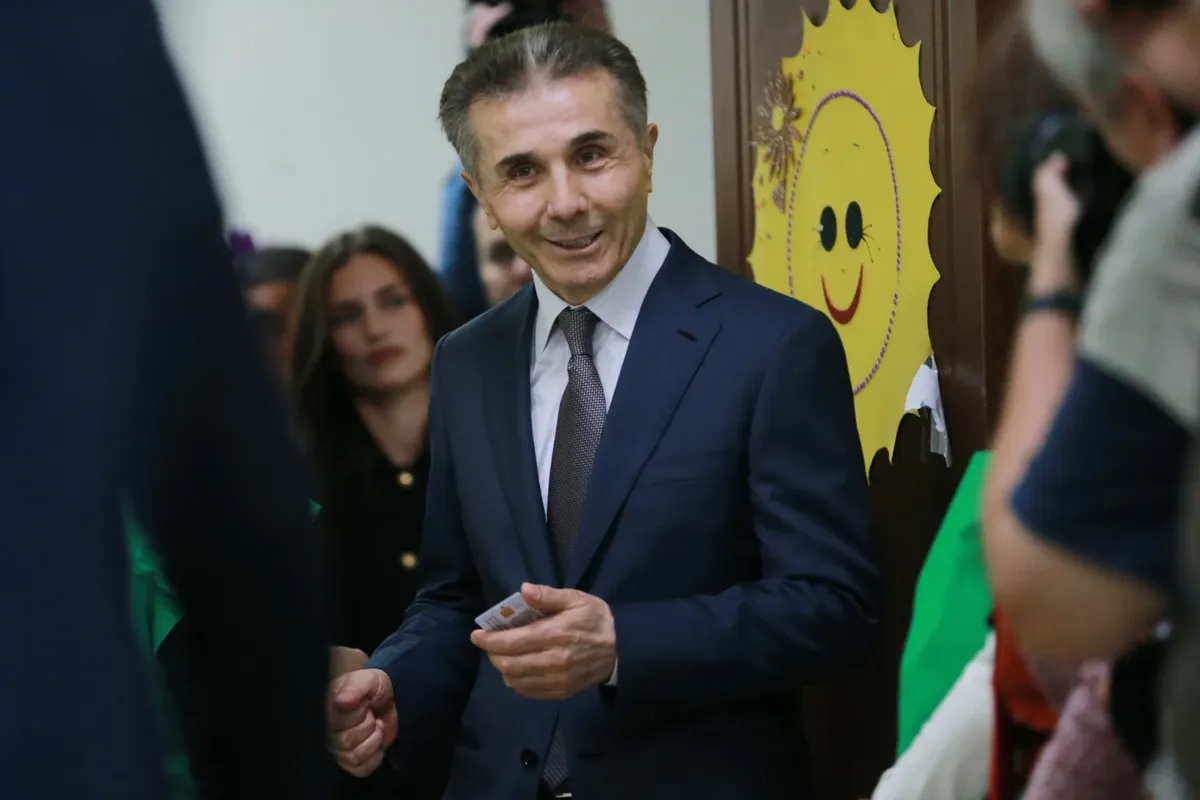
And the most important difference: Bidzina Ivanishvili of 2025 is far from Eduard Shevardnadze of 2003: the founder and former co-owner of the Russian Credit Bank, who went through the crucible of the “turbulent 90s,” tenaciously holds power in his hands, although he only holds the post of “honorary chairman of GM.”
Over the past 10 years, he has managed to form fairly effective and financially well-motivated security forces, whereas during Shevardnadze’s time a policeman received only $15 a month, and he had no motivation to protect the government, which was rotten from corruption.
"Act of will" without willpower
All these differences clearly emerged as soon as the organizers of the “revolutionary rally” on Freedom Square began to implement the “Velvet Revolution” scenario.
Apparently, they carefully studied foreign experience and realized that a revolution, no matter how “velvet” it may be, wins only in the case of one or several “acts of will”, when, against the backdrop of hundreds of thousands of protesters, a group of passionaries commits an “act of will” and, with unarmed force, establishes control over certain objects, thereby demonstrating the collapse of sovereignty and the helplessness of the authorities.
This happened, for example, during the “bulldozer revolution” of 2000 in Serbia, where protesters bulldozed the fence of the central television and occupied the facility. The “Rose Revolution” of 2003 took place in Georgia in the same way, when thousands of demonstrators led by Saakashvili first broke into the building of the legislative body, then into the plenary hall itself, when President Shevardnadze was speaking there. So the presidential guard had no choice but to literally carry him in their arms from the political stage - into history. But
During the attempted revolutions in Belarus and Venezuela, where hundreds of thousands of oppositionists violently rallied, walked along the avenues for weeks, but did not dare to commit an “act of will,” the revolution was “blown away.”
That is why Paata Burchuladze and his like-minded people, including former Prosecutor General Murtaz Zodelava, having read out the resolution of the meeting about the immediate arrest of Bidzina Ivanishvili and the entire government, immediately moved on to an “act of will”: ex-prosecutor Zodelava called on the “masculine force gathered in the square” to move to Atoneli Street and storm the presidential building castle.
Thousands of people moved towards the residence of the head of state, surprisingly easily broke the palace fence, burst into a small courtyard... but then the special forces who had barricaded themselves there poured out of the building, acting extremely professionally, skillfully using tear gas.
The crowd retreated, the “passionaries” washed their eyes with a special solution, preparing for a new assault, but these few minutes were enough for the special forces units of the Ministry of Internal Affairs stationed nearby, including water-jet vehicles, to move to the epicenter of events.
Acting competently, they dispersed the demonstrators without any problems, extinguished the fires on the avenues and established control over the “government quarter.”
In the shadow of the Kremlin
The demonstrators retreated to Rustaveli Avenue, where a peaceful protest near the parliament building has been ongoing for more than 314 days.
Paata Burchuladze was taken to the hospital, where he was arrested. Other organizers of the rally were detained right on Rustaveli. Five people are being investigated for “attempting to organize a violent overthrow of the constitutional order.” This was announced, as always, by the imperturbable Prime Minister Irakli Kobakhidze, speaking on all national television channels. This article of the Georgian Criminal Code provides for up to 12 years in prison as a sanction.
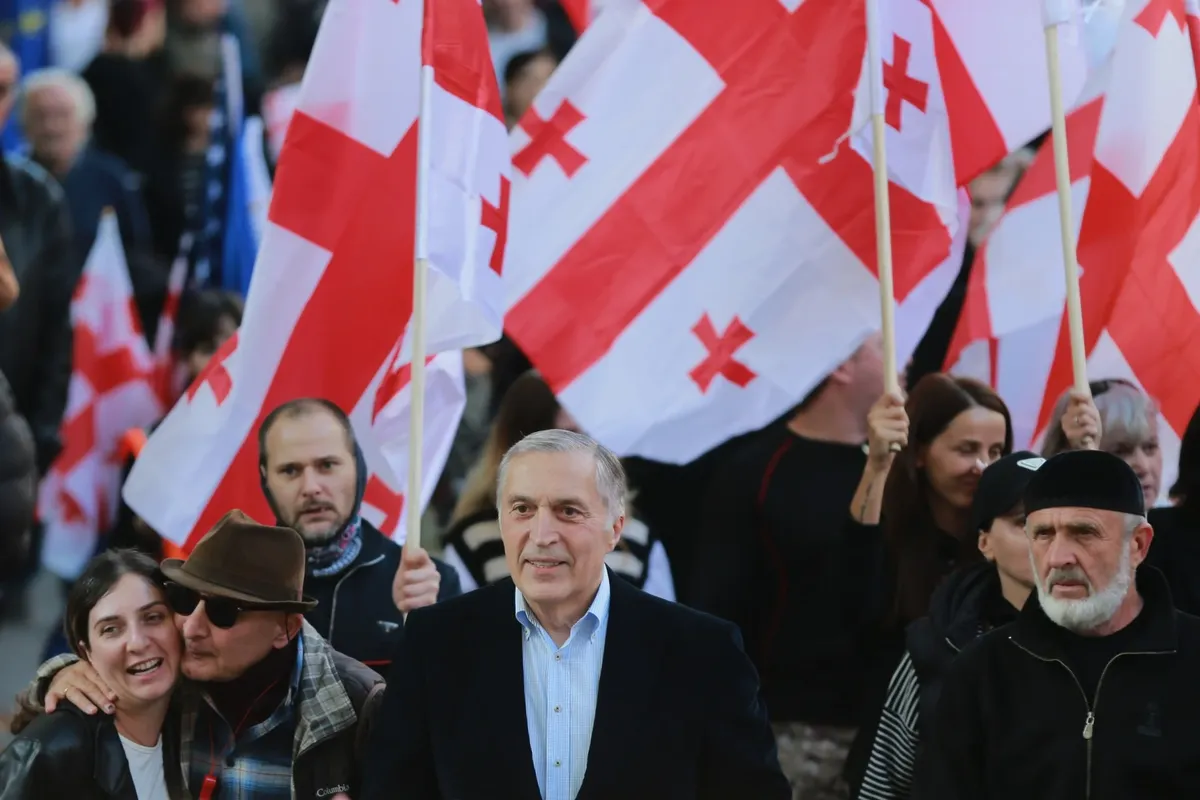
It is unlikely that Burchuladze, who sang with Pavarotti on the most prestigious stages in the world, will spend years in prison. The authorities are well aware that he will be more dangerous in prison than in freedom, after his revolutionary endeavor failed.
But we must admit that it was precisely as a result of the inexperience and excessive emotionality of the opera bass that the authorities managed to “break the revolution.”
But the examples of the same Venezuelan or Belarusian failed revolutions clearly prove: a defeated revolution is followed by a long reign of “winners”.
In the case of Georgia, at least until 2028, when the next election cycle begins in the Caucasian country.
At the same time, the fundamental contradictions that led to the most violent confrontation in Georgia since 2023 (the adoption of a law against “foreign agents”) have not gone away: the majority of the conscious Georgian public advocates rapprochement with the EU and the United States, for more active support for Ukraine, for a democratic change of power, while Ivanishvili and his party are trying to remove the country from the stage of turbulent world politics, only to maintain stability - even in the “shadow” of the Kremlin and its current owner.
Georgiy Pagava, Tbilisi