
Translated material
The authorities have cut costs for the production and repair of civil aircraft by one and a half times in 2026
Costs for production and repair of ships fell by more than half
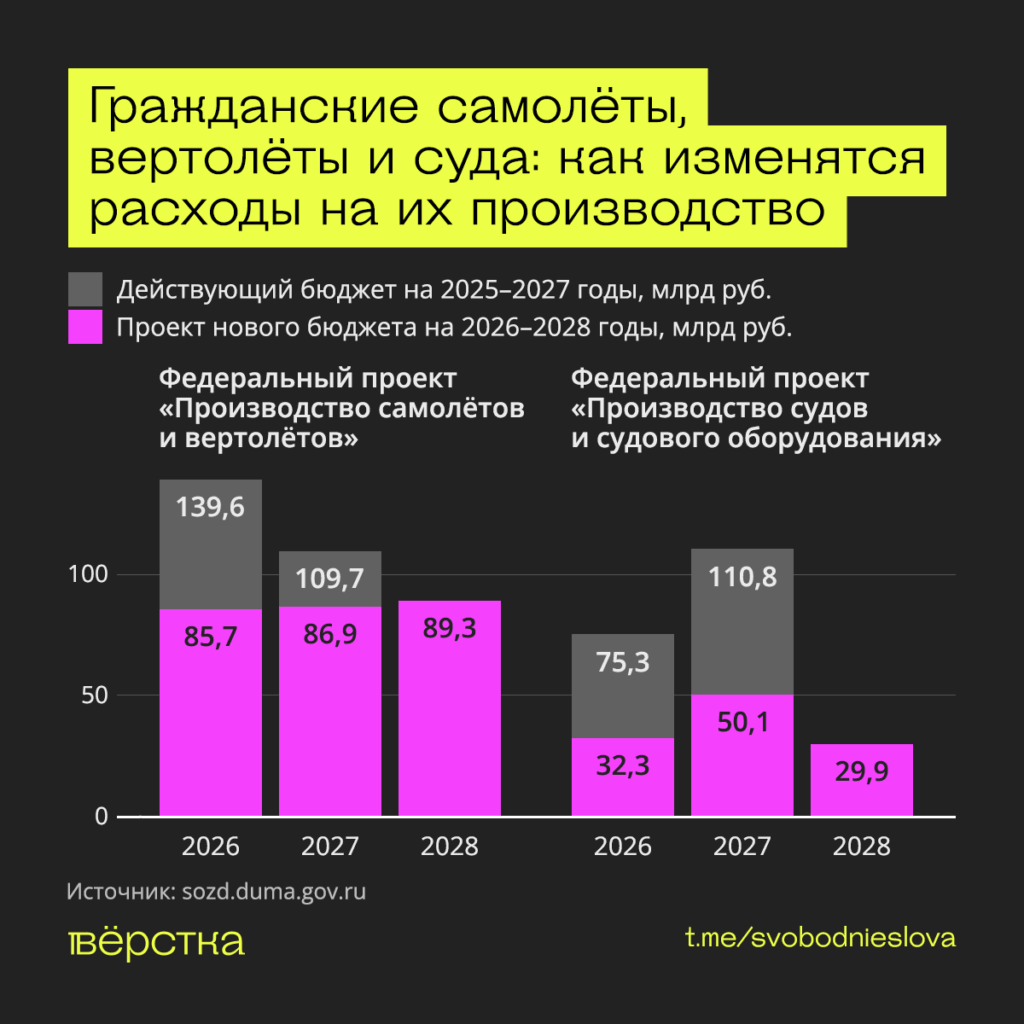
The authorities plan to reduce expenses on the federal project “Production of Airplanes and Helicopters” in 2026 from 139.6 billion planned in last year’s budget to 85.7 billion rubles, that is, by 1.6 times, Vorstka found out after reviewing the draft of the new budget of the Russian Federation for three years.
For 2027, expenses compared to previously planned will fall by 21% - from 109.7 billion to 86.9 billion rubles. By 2028, spending will not increase much - to 89.3 billion.
In order not to miss new texts from “Layout”, subscribe to our telegram channel
Support for fleet renewal for domestic flights will be reduced to zero in 2026
State support for Russian airlines included in these amounts for updating their aircraft fleets for domestic transportation will be reduced to zero in 2026. For 2025, 4.1 billion rubles were initially planned, but after adjustments they reduced it to 1.3 billion rubles, which is slightly more than half the price of an Embraer 170LR aircraft for 76 passengers, which costs 2.2 billion.
In 2027 and 2028, support for updating aircraft fleets is planned to be increased to 2.1 billion and 5.6 billion rubles, respectively. Subsidies to compensate companies for part of the costs of maintaining aircraft will be reduced from the initially planned 6.1 billion rubles in 2025 to 3.6 billion in 2026 and then will increase to 6.6 billion in 2027 and 2028.
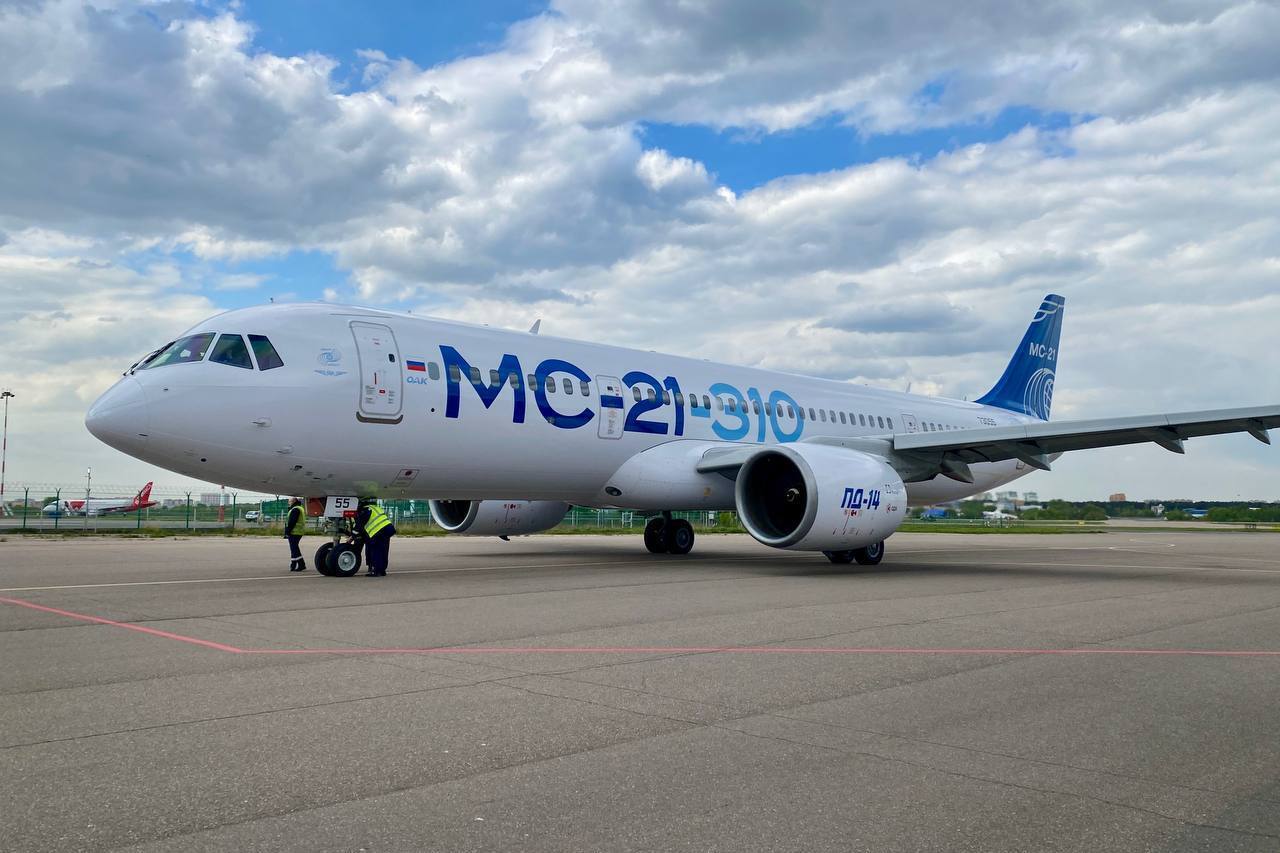
The only small exception from another federal project will be the medium-range Russian passenger aircraft MS-21, which Vladimir Putin called a competitor to Western airliners. Subsidies for repaying loans to manufacturers of such ships and parts for them will be raised by a quarter next year, from the planned 2 billion to 2.5 billion rubles, but in subsequent years they will still be lowered to the previous value.
At the same time, Russian airlines continue to experience problems with serviceable aircraft and spare parts for them. A week ago, Kommersant wrote that even Aeroflot needed eight Boeing freighters, which would be handed over for spare parts. At the end of September, Russia asked the International Civil Aviation Organization (ICAO) to ease sanctions on the supply of parts and flights due to security issues.
Support for manufacturers of ships and equipment for them was cut by more than half
In addition, in the 2026 budget, the federal project “Production of Ships and Marine Equipment” was reduced from 75.5 billion rubles planned a year ago by 2.3 times - to 32.3 billion, Vorstka noted. Previously, 111 billion were planned for 2027, but now it is also more than two times less, 50.1 billion rubles. By 2028, these expenses will drop sharply again - to 29.9 billion rubles.
Subsidies included in these amounts to Russian organizations for the construction of large-tonnage ships will fall from 5.4 billion rubles this year to 1.9 billion next year and to 0.7 billion in 2027. Only in 2028 these expenses should return to the level of the current year and amount to 4.8 billion.
Grants to manufacturers of pilot batches of critical ship equipment will amount to 200 million rubles this year, next year - 108 million (instead of the originally planned 2 billion), in 2027 - 123 million (again instead of 2 billion), in 2028 - 200 million rubles. At the same time, Vestka’s calculations do not include scientific vessels in the fishing industry, as well as nuclear vessels - mainly icebreakers. Tens of billions of rubles are allocated for the latter.
Russia has been repeatedly criticized for using old and damaged tankers in its “shadow fleet” to deliver oil, circumventing sanctions. One of the possible consequences of this practice is the sinking of two ships carrying fuel oil in the Kerch Strait on December 15, 2024. Then, during a storm, the ship Volgoneft-212 suffered a hull fracture, and the tanker Volgoneft-239 ran aground .
This led to a large-scale spill of 2.4 thousand to 3.7 thousand tons of fuel oil. One sailor died in the crash, 11 were hospitalized. A month later, 146 people who were cleaning the coast turned to doctors, and at least one person could have died from the consequences of such cleaning on the body. According to Greenpeace estimates, the spilled fuel covered an area of 400 square kilometers, which became one of the largest environmental disasters in modern Russia.
Photo: Long-range Russian airliner MS-21. United Aircraft Manufacturing Company
Infographic: El
Support “Vestka” - it’s important and safe →