
Translated material
Orthodox Internet - 404
Another attempt to launch a messenger for believers has failed. Why do modern media technologies not submit to the Russian Orthodox Church?
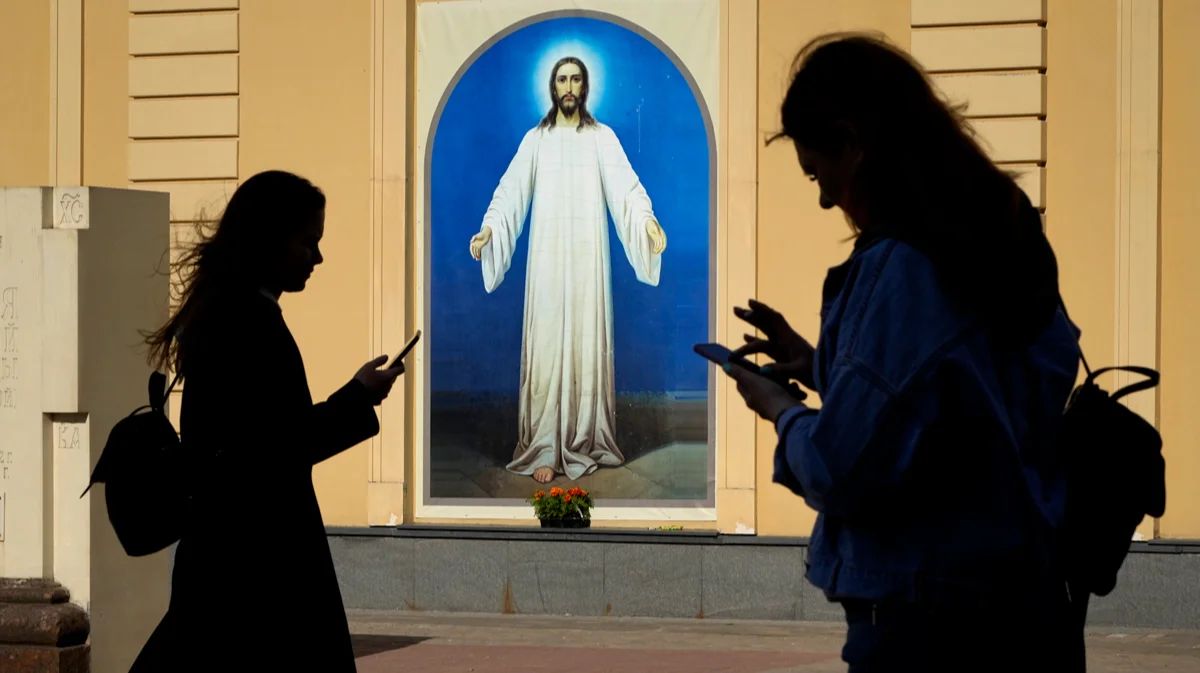
Passers-by look at their phones near an Orthodox church in St. Petersburg, May 30, 2022. Photo: Dmitry Lovetsky / AP Photo / Scanpix / LETA
“Start-up” turned out to be the finish line
At the end of September, Russian federal media announced the launch of the Orthodox messenger Zosima, which can be downloaded from the Google Play app store from September 24. The functionality of Zosima was compared with the “enemy” WhatsApp or with the “native” VKontakte, emphasizing that the new messenger will not burden the conscience of Orthodox Christians with any obscene advertising or insults to the feelings of believers; any erotica or obscenities will also not be able to pass through his spiritual filters. On October 30, the creators of the messenger - the Innotech XXI charitable foundation and individual entrepreneur Denis Andreevich Osipov - scheduled a large press conference and presentation of Zosima in Moscow. But the messenger is not working yet.
The main developer - the same individual entrepreneur Osipov Denis Andreevich - turned out to be an 18-year-old computer genius from Krasnodar, who created a more or less modern graphical shell and messenger functionality, but missed out on many technical details. According to IT experts, creating such a product on the Russian market now costs no more than 200 thousand rubles. The main costs in such projects are associated not with development, but with support of the social network: as the number of users grows, the load (and, accordingly, costs) on the servers and the entire architecture of the social network begin to grow exponentially. However, the Innotech XXI Foundation claims that about 30 programmers worked on Zosima, but so far journalists have not been able to find any of them.
When the number of registered users of the new messenger reached two thousand, it began to wildly “lag”, refusing registration to new users. Probably, the owners of Zosima have run out of capacity to support the project.
The president of the foundation, Alexey Agapov, announced that the work of Zosima was temporarily suspended and the team was leaving for another revision. By the way, the “beta version” of the messenger was launched in test mode a year ago - in September 2024, so it seemed that there was enough time for improvement.
In general, Alexey Agapov’s statements about his media project were not consistent: in some interviews, the president of the foundation said that it was a messenger for all Orthodox believers and parishes of the Russian Orthodox Church, and now he states that “initially the social network was created for the internal needs of the foundation.” It was also claimed that the development of Zosima received the blessing of the Moscow Patriarchate, but after a statement by the deputy chairman of the Synodal Department for Interaction with Society and Media, Vakhtang Kipshidze, that “this idea was not discussed with the relevant church institutions,” Innotech XXI had to admit that it did not have an official blessing.
A small fund with big ambitions
As the foundation said, the name for the new messenger was chosen in honor of St. Zosima, abbot of Solovetsky. The 15th-century saint had nothing to do with information technology, the name just seemed beautiful, and Innotech XXI, which was collecting donations for the restoration of churches, wanted to somehow join the gigantic federal program for the revival of the Solovetsky monastery and archipelago, which is under the patronage of Patriarch Kirill and Dmitry Medvedev. In addition, the fund wanted to join Putin’s “Internet sovereignization” program, the goal of which is to gradually get rid of foreign platforms by creating domestic analogues of the most popular services.
The initial task of Zosima was to collect donations for the restoration of churches and monasteries under the care of Innotech XXI, but gradually the fund realized that without creating an extensive social network, collecting donations would be problematic. For example, the foundation’s website contains a donation counter for the “Worship 360” project, the goal of which is to allow hospital patients to attend services through virtual reality glasses. The foundation plans to purchase only three sets of such glasses with a total cost of 90 thousand rubles. Despite the fact that the project is related to the “tasks of the SVO”, within a year we managed to collect 1,620 rubles for it. “Innotech XXI” also emphasizes its sympathy for the “SVO” in other ways - among the latest news on the site is the sending of certain “uniforms and equipment” to the military personnel of the 13th BARS detachment of the RF Armed Forces. The foundation’s partners, in addition to several bishops and clergy of the Russian Orthodox Church, include Senator Franz Klintsevich, head of the Russian Union of Afghanistan Veterans, and Vyacheslav Fatin, chairman of the Union of Restorers of Russia.
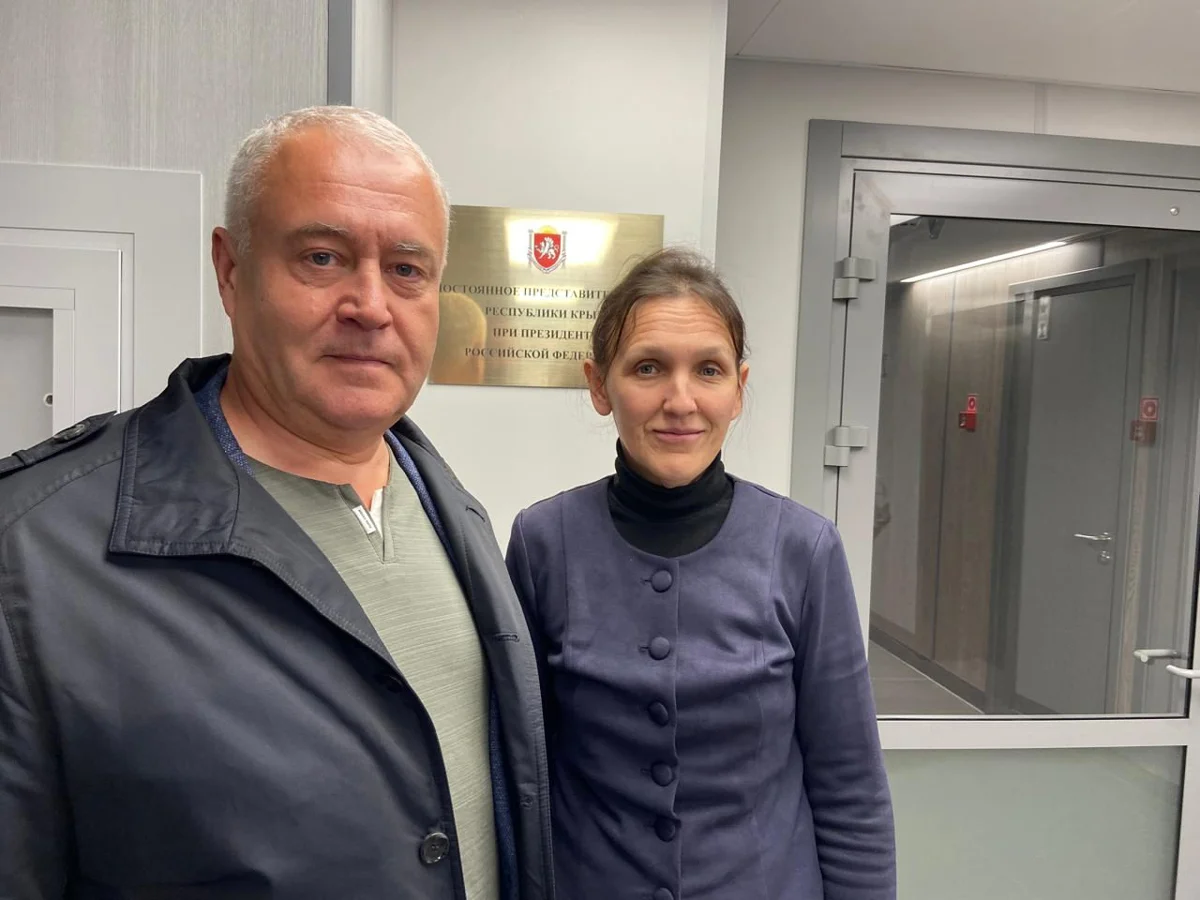
The foundation is registered at its legal address in the basement of a building next to the Church of the Hieromartyr Clement on Pyatnitskaya Street in Moscow, the rector of which for many years was the “chief art critic” of the Russian Orthodox Church, Archpriest Leonid Kalinin, who was responsible, in particular, for the artistic design of the Cathedral of Christ the Savior. And the actual office of Innotech XXI is located in a building on Merzlyakovsky Lane (house 20, building 1), which belonged to the bankrupt United Industrial Investment Bank, from where, in all likelihood, some employees came to the fund.
The former management of the bank is serving a criminal sentence under Part 4 of Art. 159 of the Criminal Code of the Russian Federation - “fraud on an especially large scale committed by an organized group.”
The foundation’s website lists a long list of projects related in one way or another to the Russian Orthodox Church, the main one of which is maintaining a register of religious objects of the Russian Orthodox Church. The patriarch’s blessing for this noble cause is not reported, but the foundation’s representations in a number of dioceses are listed and facts of “direct cooperation” (through the head of the patriarchate) with Metropolitans Ferapont of Kostroma, Ambrose of Tver, Bishops of Tikhvin Mstislav and Bishops of Sergiev Posad Kirill are given. That is, the foundation has some successful experience in fundraising and assistance in the restoration of churches. Alexey Agapov is actively promoting the “Save and Preserve” project, within which, according to him, residents of the Yaroslavl region are invited to send applications to the fund for the restoration of churches: “Based on the results of the competition, 5-7 churches will be selected,” for which the fund will allocate funds and volunteers. At the same time, the official report on the financial activities of the fund for 2022 indicates the total amount of its annual expenses - slightly less than 4 million 800 thousand rubles. This seems to be not enough for one manager’s salary...
"Elitsa" and other units
Zosima is not the first attempt to launch an Orthodox messenger or social network in Russia. Such attempts have been made for about 20 years, but none of them can be called successful. Of the surviving projects of this kind, the longest-running one is the social network Elitsa , created in 2014. The rather boring design of this network has not been updated since then. According to its own data, there are about 290 thousand registered users on the network, of which 1,173 are priests and 19,737 churches (but not all of them are “active”). It is not entirely clear at what level “Elitsa” received the blessing of the hierarchy (there is no blessing from the patriarch or the vulture of the synodal Department for interaction of the church with society and the media on the network pages), but
Among the official partners are the Pilgrimage Center of the Moscow Patriarchate and the Yaran Diocese of the Russian Orthodox Church. There are, however, quite marginal partners, such as the Moscow Suvorovites society or the Blagovest 2000 workshop.
The Orthodox messenger Pravlife Telegram looks more modern, which, despite the name, is not related to Pavel Durov’s project. Visitors to the platform are greeted with the cheerful slogan “Orthodox, unite!” and a wide range of functions: chats, general church and parish news feeds, charity, business projects, bulletin boards, etc. The design of the Pravzhizni messenger really resembles Telegram, and the statistics are the Elitsa network: more than 132 thousand users, including more than 15 thousand churches and monasteries. As for the official status and blessing of the Russian Orthodox Church, not everything is clear here either: for some reason, an article advertising “Pravzhizn” was removed from the official website of the Moscow Patriarchate. The network is financed by a charitable foundation of the same name, headed by Alexander Sudakov, whose office is located in Moscow, on Verkhnyaya Maslovka. Financial reports are not published on the foundation’s website, so it was not possible to find out the sources of its funding. Well, usually in church projects such questions are answered in a standard way: “Donations from believers.”
The portal “Prihod.Ru” operates in the same field, but its main functionality is not a social network or messenger, but a constructor for developing parish websites, and, incidentally, the sale of church utensils. On GooglePlay or the AppStore you can find several more narrow-profile applications for Orthodox Christians: “ Confession” (a list of sins with the ability to select “needed” ones and printouts to read out to the priest); “Treba” (ordering prayers, memorial services and sending notes with the names of the living and deceased); “The Sanctuary” (English-language application that allows you to virtually visit churches of different faiths and light candles). There are Orthodox “dating sites”, but they are marginal and rarely visited. There are also applications in Russia for Catholics, Muslims, Jews and believers of other faiths - they are completely niche.
Rating of Orthodox bloggers
Only Orthodox Internet projects have achieved relative success in Russia, located on those very “enemy” sites that interfere with the “sovereignization” of the Internet and were created, according to Putin, by Western intelligence services. These are, first of all, YouTube, Instagram, TikTok, WhatsApp and the “semi-enemy” telegram. Sometimes something specifically Orthodox begins to “go viral” there: this happened, for example, during the period of Covid self-isolation with the channels of Orthodox mothers (priests’ wives), who suddenly began to massively publish posts and reels about “elegant Orthodoxy” (fashion, recipes, psychology of family life). The blogs “Mother’s Everyday Life” by Anastasia Deines (half a million views) and “Sister in Christ” achieved particular success. But after February 2022, this trend practically disappeared - “Orthodoxy of the Northern Military District” clearly does not have a female face.
In March last year, the Russian Association of Bloggers and Agencies published the first and so far only rating of the most successful Orthodox bloggers. It was predictably headed by the most shocking cleric of the Russian Orthodox Church, who at one time fled from Kiev to Moscow, Archpriest Andrei Tkachev . In a deliberately rude manner, using slang and abundant misogyny, he delivers sermons in support of Putin and “SVO” and answers questions from the audience.
Oddly enough, such content does well: 1 million 720 thousand subscribers on YouTube (for comparison: the official channel of the Russian Orthodox Church has 107 thousand) and more than 121 thousand on Telegram. The annual increase was 18%.
In the second position is Emeritus Professor of the Moscow Theological Academy Alexey Osipov , an apologist and popularizer of Orthodoxy, but also an ardent supporter of the SVO. His YouTube channel has more than 830 thousand subscribers, on Telegram - more than 28 thousand, the annual audience growth is 16%. In third place is priest Pavel Ostrovsky , the brother of the Patriarchal Exarch of Africa, Metropolitan Constantine. He actively comments on the “current agenda” - politics, culture, sex, with elements of shocking, but, of course, “within the limits of what is permitted.” On YouTube channel Fr. Pavel has 188 thousand subscribers, but on his telegram he has achieved an outstanding figure for Orthodox Christians - more than 179 thousand. Next come the St. Petersburg priest Konstantin Parkhomenko , who talks interestingly about theological problems and worship (168 thousand subscribers on YouTube), priest Vladislav Beregovoy from the Kaluga region (a specialist in the Shorts format; 121 thousand subscribers on YouTube); and Moscow priest Georgy Maksimov , who attracts attention with his denunciations of all kinds of heresies and schisms (111 thousand subscribers on YouTube). Forbes experts associate digitalization in the Russian Orthodox Church with the coronavirus pandemic, when the patriarch himself and other church representatives explained that remote participation in church life is no worse than physically visiting churches. Many parishioners became addicted to this remote participation, not returning to churches much after the lifting of coronavirus restrictions.
What cannot be led must be banned
However, as subsequent events showed, the patriarchy’s calls for digitalization were situational in nature and were made only on orders from the authorities. Already in March 2022, in his speech before the Supreme Church Council of the Russian Orthodox Church, Patriarch Kirill returned to his previous criticism of the Internet, where “there is a lot of disinformation, outright lies, provocative statements that can arouse people’s negative feelings and hinder the speedy resolution of the conflict” in Ukraine. In September 2024, speaking before the same body, Kirill added the following dangers to those previously mentioned: “New technologies have become a tool in the hands of all sorts of dangerous people, such as occultists, neo-pagans, esotericists, and simply charlatans of all stripes who seek to exploit natural spiritual needs for their own purposes. And the threat of seducing people in these “agoras”, in these spaces, is now extremely high.”
The Deputy Patriarch at the World Russian People's Council, Alexander Shchipkov, sees the solution to the problem in increasing the severity of any prohibitions related to the Internet - that is, all in the same “sovereignization of the Internet”, which the Russian Federation (and even more so the Russian Orthodox Church!) is not willing to do purely technically. “The Russian segment is almost completely dependent on foreign IT giants,” Shchipkov is indignant. - There is a huge flow of lies on social networks - about our state, our history, our church. Global elites are establishing censorship on our territory. We are in an information occupation." The deputy patriarch makes a logical conclusion: “To hide behind arguments about freedom of speech in war conditions means to fight on the side of the enemy, to distribute German leaflets in occupied Smolensk or besieged Leningrad... It is necessary to quickly create a stable Runet, today this is the main foundation of Russia’s media sovereignty... If we do not formulate a current national ideology, that is, we do not define the meanings and goals Russia’s existence in the conditions of aggressive globalism, then we will lose first the information territory, then the political one, then everything else.”
The long-term history of unsuccessful attempts by the Russian Orthodox Church to integrate into the Internet space shows that so far Shchipkov’s forecast of “losing” is coming true.