
Translated material
Creed of the Russian conservative
Is it possible not to be a liberal and remain human in the modern world? Essay by Vladimir Pastukhov*

Illustration: Petr Sarukhanov / Novaya Gazeta
18+. THIS MATERIAL (INFORMATION) WAS PRODUCED, DISTRIBUTED AND (OR) SENT BY FOREIGN AGENT PASTUKHOV VLADIMIR BORISOVICH OR CONCERNES THE ACTIVITIES OF FOREIGN AGENT PASTUKHOV VLADIMIR BORISOVICH.
FROM THE EDITOR
We were forced to make certain, but very minor, corrections to this text and make several minor cuts in order to comply with the requirements of the current legislation of the Russian Federation.
Strange as it may seem, despite being less than thirty years old, I met perestroika without emotional overwhelm. No, I didn’t feel sorry for the “Soviet antiquity”, and I was happy about the changes that opened up new opportunities not only for the country, but also for me personally.
It’s funny to say, but I didn’t expect to ever go abroad, and the new changes promised freedom of movement. I could not even imagine that I could write about the state and law without resorting to the “Aesopian language” of the late Brezhnev era, and new changes promised freedom of speech and creativity never seen in this country.
But, unlike many others of my age, I somehow immediately felt acutely that for everything good in this life I would have to pay. This means that taking this “good”, especially from the wrong hands, must be done with great caution.
I was happy with the direction, but I wasn't sure about the pace. Fast does not mean good, or especially for a long time. And I wanted it for a long time, without zigzags and without returns.
This did not make me a reactionary, nor did it make me turn away from the benefits that freedom promised, but it did predetermine my commitment to conservatism, that is, a way of political thinking based on such simple paradigms as “hurry without haste” or “measure twice, cut once.”
To my regret, the history of our country then took a different path, and conservative thought was not held in high esteem. Those who wanted to win faster and more uncompromisingly won. At first it seemed that they would succeed, but in the end, history once again proved that it knows a lot about people, and put everything and everyone in their place. Actually, after 1993 I didn’t expect anything else.
All this would not be worth mentioning at all if, in an unexpected (or, conversely, completely expected) way, history had not gone into a second circle and brought Russia to the same point of uncompromisingness that it had already visited once in the late 80s and early 90s.
There is nothing average in Russia today, although it is ruled by a very mediocre elite. There are only “vatniks” and “revolutionaries”, reactionary ignoramuses and obsessive wise guys.
If you are not with us, then you are a “foreign agent,” they shout from one side. If you don’t want Russia to immediately fall into tartarar, then you are an imperial,” they shout from the other.
In emigration, all this becomes aggravated to a painful degree. Any person, be he three times against *** and against prison, will be ostracized if he does not join the extreme revolutionary party that demands a future for Russia according to the “Jeans” tariff - all at once. All this would be funny if the experience of the previous forty years did not clearly demonstrate how sad it can be.
This feeling of déjà vu, which has been difficult for me to get rid of over the past couple of years (especially when reading comments under my posts and programs), made me try to summarize previously scattered thoughts and clarify what it means to remain a Russian conservative in a situation where there seems to be no room for non-extreme positions.
I will not theorize, because I do not consider myself competent enough to go into the philosophical jungle of the debate between conservatives and liberals. I just want to very superficially outline in practical terms the contours of that position, which in relation to today's Russian realities could be called conservative.
The fate of a united Russia
As a conservative, I am of the view that, all other things being equal, the preservation of Russia as an independent and united state <...> is a more preferable scenario for exiting the current political (and dare I say, civilizational) crisis than the scenario of its collapse.

As a conservative, I admit anything <...>, but I consider it at least unnecessary, and at most irresponsible, to voluntarily strive for such disintegration, and even more so to push it towards it by violent means.
Subject of transformative action
Having myself become an emigrant, albeit not entirely by voluntary choice (although there is always a choice - you could have stayed and died in your homeland for your convictions), I do not share the emigrant point of view that the “free radicals” who have survived, mainly in exile, will and, moreover, should become not just the main, but almost the only subject of the future inevitable (I am not at all I doubt) transformations in Russia.
The salvation of the “drowning”, alas, can often really only be the work of the “drowning” themselves. Therefore, I believe that the main subject of action in Russia in the future will be the masses, led by that part of the elite and counter-elite, which today is either actively adapting to life in a totalitarian society, or has gone into deep internal emigration.
The main opponent of the regime will be the “disillusioned warrior”, who, having come to his senses, will inevitably ask the question: “What was that?”
In this situation, the foreign “free elements” who have preserved themselves, at best, will only be able to join and actively participate in this transformative movement, as at the beginning of the 20th century, and at worst, they will remain both on the sidelines of the process and at its end.
Optimal scenario for change
The optimal conservative scenario for transformations in Russia remains the “revolution from above” scenario, in which the country goes through the period of unrest that is almost inevitable when emerging from totalitarianism with minimal losses. Such a scenario, being, of course, a compromise and, moreover, extended over another couple of generations, is nevertheless much more gentle for the country and carries much less risk of entering the “third circle”, where Russia will be captured by an even more aggressive and more obscurantist ideology than it is now.
Therefore, choosing between the desire for “just retribution” for everyone who took part in the crimes of the regime (“all sisters in earrings”), and issuing indulgences to the compromisers, I will vote for indulgences for all those who, according to established expressions, have their hands directly “not stained with blood” and who were not the “first student.” “Organizational conclusions” regarding passive supporters of the regime and its fellow travelers will have to be sacrificed for the sake of preserving civil peace, without which it is impossible to get out of the compost pit in which Russia finds itself today.
Inadmissibility of civil war
No matter how high and worthy motives may be guided by the leaders who are pursuing the popular, especially in emigration, line of “uncompromising politics,” which involves setting practically unattainable (maximalist) goals for the movement and using the most radical means to achieve them, the road to a new political hell is paved with their good intentions.
Another round of civil war, even if we assume that in this war the “anti-Putinists” will be “at the top”, and the “za-Putinites” will turn out to be the most unloved caste in society, will not lead us out of the vicious circle of Russian history, where naked violence rules. Only an act of compromise between previously irreconcilable forces can become for Russia a starting point for a new time and a step towards true freedom and real democracy. The suppression of another group by one group, no matter how just and even necessary it may seem at first, will inevitably lead to the degradation of the suppressors and a new glorification of the suppressed.
The masses have a very short memory and quickly forgive old usurpers, switching to new ones.
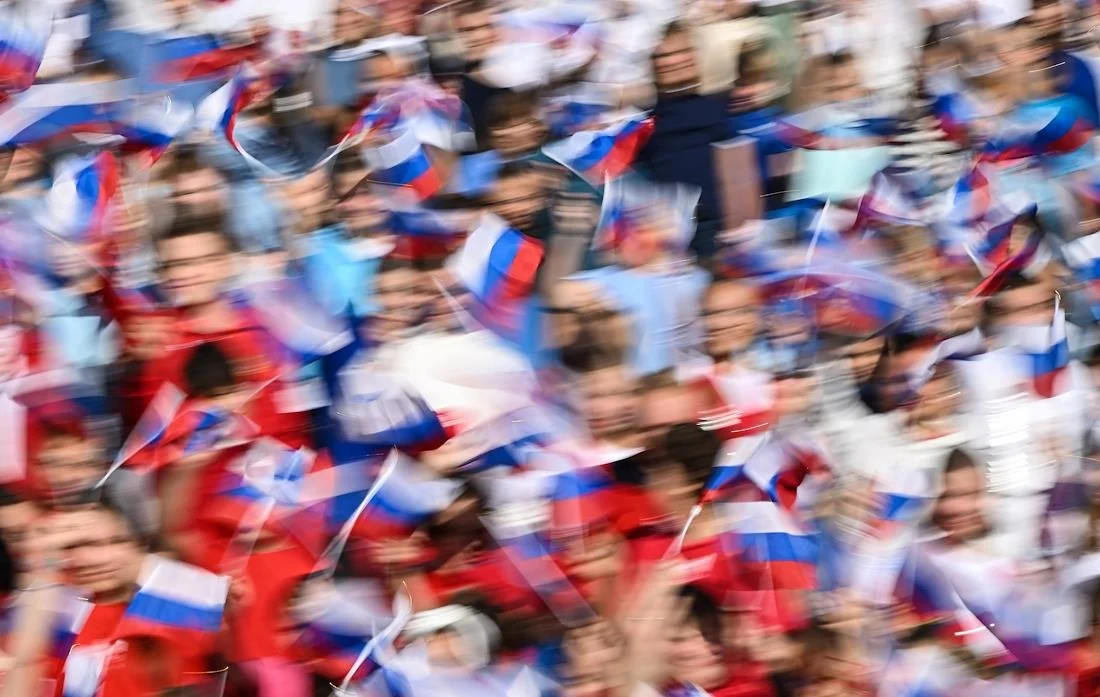
If we limit ourselves only to making “everyone” those who were just “nobody,” then changing the places of the terms will not change the sum - society will continue to fight in the same way as it is fighting now, but under updated slogans.
Alliance with traitors to your class
Despite the popularity of the slogan “He who is not with us is against us,” in the overwhelming majority of cases in history, the forces that in practice are guided by the slogan “He who is not against us is with us” win. Yes, there are exceptions, like the Bolshevik victory a hundred years ago. But we must understand that this happened under unique circumstances, when Russia suffered defeats in a positional war, and even in such conditions it happened only thanks to the support that the Bolsheviks received from the power elites and the “systemic intelligentsia” of the empire (a story that is still waiting to be told). However, we all know how it ended. Any compromise scenario would not necessarily be better (although I think it would be better), but it would certainly be shorter.
In this sense, I will welcome any movement of modern Russian elites towards a softer, less militant version of the regime, although I, of course, will be irritated by the half-heartedness of this movement and the opacity of its motives. Nevertheless, a compromise is more pleasant to me than the most honest and uncompromising Jacobinism.
Normal Russia of the future
I prefer to remain realistic in my expectations. Russia's historical past leaves no hope for a quick and painless healing of social and political ulcers. In my wildest expectations, I proceed from the fact that Russia cannot have a wonderful future in the next few generations, but we can try to provide them with a more or less normal one.
Sometimes it seems to me that securing at least some kind of future would already be a good result.
It's not that I get annoyed when someone catches people by making unrealistic promises. That's half the battle. The second half is that an attempt to achieve these goals, which are unrealizable in practice, presupposes the choice of certain methods of influencing society, which in essence will not differ in any way from the methods with which the current regime is trying to grow a new Homo putinus in Russia.
Not only does the end not justify the means, but the choice of means implies strong restrictions on the goals. We will not immediately become a democracy, we will not do without a difficult and sometimes brutal transition, we will have a lot of “conceptualism” and compromises. And it’s better to recognize all this right away and put it in the menu, rather than introduce it later on in person.
Repentance as a duty and as a right
I am aware that the North Military District is not Putin’s battle, but is the *** of the Russian people, who fell for the false patriotic rhetoric of the elites and for the most part accepted this *** and everything that is associated with it. It seems that I was one of the first to write about this in Novaya Gazeta, as soon as it all started.
Having said all this, I, imitating Trump, must, however, note that if it were not for Putin, then all this should not have happened - if there were no such “shepherds”, then the “flock” would not have become sick with “patriotism”. Not a single people on this planet, unfortunately, is immune from the fact that, at a turning point in their history, they will fall for the promises of those who promise the return of their lost dignity at the cost of humiliating someone else’s.
I am deeply convinced that repentance <...> is a necessary condition for the historical recovery of the Russian people themselves. It is needed not for others, but for oneself, as an entrance ticket to another future.
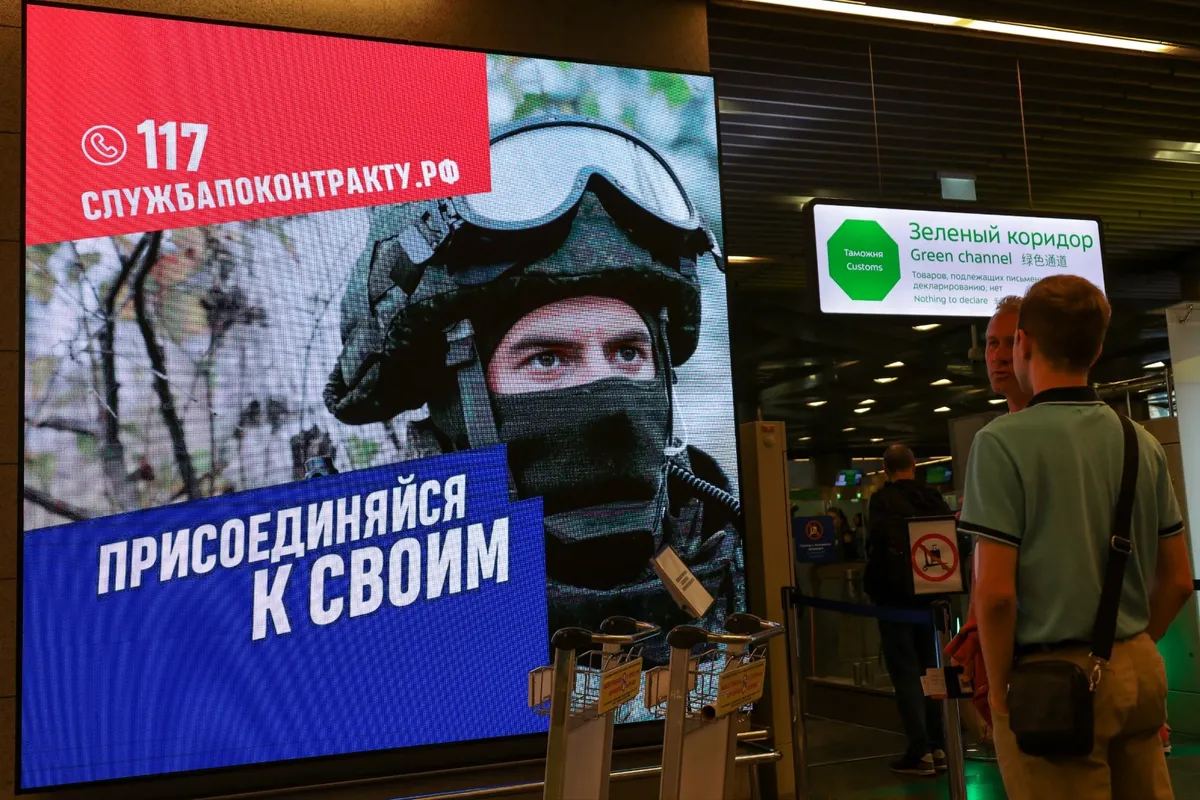
But at the same time it is not only a duty, but also a right. Nations, like people, make mistakes, sometimes terrible and cruel. But they, just like people, have the right to a chance, giving them the opportunity to correct their mistakes. Therefore, the rhetoric of Cancel Russia is alien to me, which can only give the exact opposite of the desired result.
National interests of Russia
Many years ago, I was practically ostracized by the liberal public for allowing myself to express the opinion that, regardless of who rules it, Russia can and should have national interests. If my memory serves me correctly, this was the first and only case of direct disagreement with Alexei Navalny, who then, unexpectedly for me, took the opposite position.
However, even today I have not changed my point of view, despite what is happening. Time will pass, and Russia will be faced with the question of finding its place in the world. This world will not be very friendly. Russia will have to not only admit mistakes, but also fight for its right to political existence. And we must be prepared for this, having learned to determine what exactly is the national interest of Russia, and what is the narrow selfish interest of the next clan striving for power.
This national interest will consist in obtaining the best conditions available at that time for its cultural and social development. Russia can set any “great goals” for itself, but it must abandon the habit of achieving these goals by means of “great upheavals” both for the whole world and for its own people.
Movement across the trend
Unfortunately, conservative thought is corralled not only in Russia, but throughout the world.
We see how the process of global radicalization is developing. After it took possession of America, its spread across the planet accelerated many times over, and there is little doubt that Europe will be the next “great victim” of the schism.
Everywhere, left-wing radicalism is opposed to rabid right-wing reaction, and this is not very reminiscent of the 20s and 30s of the last century. A retrospective look at recent history shows that Russia was only the instigator of this global process.
If 20 years ago Putin was the “black sheep”, scaring away the “peaceful doves” in the world garden, then after his Valdai speech and Trump’s speech in the newly created “Ministry of War”, you want to play the game “Find 10 differences”.
The problem with Russia is that, having started moving in this direction first, it was the first to hit the wall. For her, further radicalization means a complete civilizational dead end.
Under these conditions, a moderate conservative “revolution from above” could become not only an “exit strategy” for Russia, but also outline a saving new trend for everyone else who needs a return to moderate centrism no less than Russia, but simply has not yet “hit the wall” the way she has.