
Translated material
Diamonds, schools and local elections
The authorities of Yakutia want to rewrite the regional Constitution. Local residents oppose curtailment of rights to self-government and education
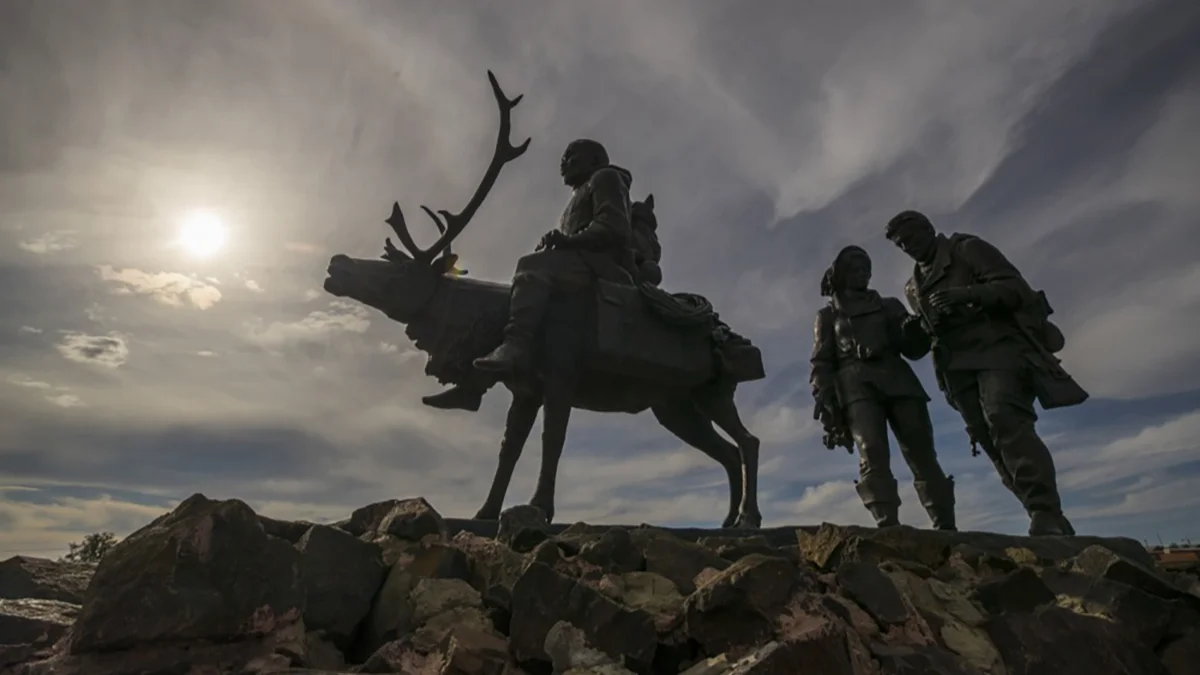
Monument to pioneer geologists and local residents of the city of Mirny, Republic of Sakha (Yakutia), Russia, June 19, 2019. Photo: Sergey Ilnitsky / EPA
In connection with the reduction of powers and the reduction of the system of local self-government, Russian regions are bringing their legislation into line with federal legislation. As in a number of other regions, the Republic of Sakha (Yakutia) became a place where this process encountered discontent among residents. So far, the authorities of Yakutia have not used repression against the dissatisfied: on the morning of October 10, public hearings were held in Yakutsk.
What is being changed in the Constitution of Yakutia
Yakutia is the largest region of Russia and the largest administrative unit in the world. The area of Yakutia is 3 million square kilometers. For comparison, the area of the European Union is 4.2 million. At the same time, only a million people live in Yakutia.
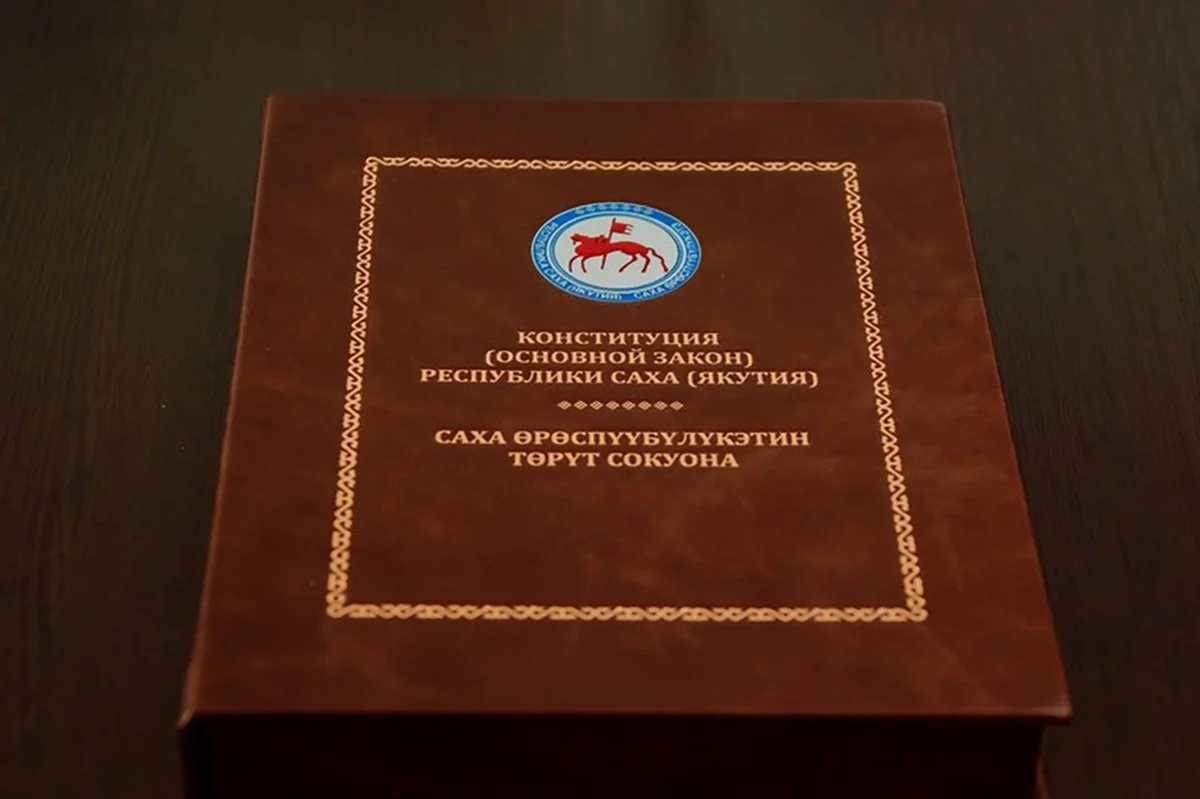
To bring the Yakut Constitution into conformity with federal legislation, the head of the region, Aisen Nikolaev , formed a Constitutional Commission, which included the head of the region himself, the prosecutor of Yakutia, chairmen of the regional supreme and constitutional courts, representatives of the regional parliament (Il Tumen) and others. At the end of September they presented a draft amendment to the Constitution.
Unlike many regions of Russia, Yakutia will maintain a two-tier system of local self-government, that is, it will not close village councils and administrations.
Because in Yakutia, the distances between villages can easily be measured in hundreds of kilometers, and some kind of authorities are needed even where there are very few inhabitants.
At the same time, many in the region considered the new draft Constitution to be undemocratic. All-Russian opposition media drew attention to the Yakut Constitution after publications in the telegram channel of a local journalist and social activist, ex-candidate for mayor of Yakutsk Vitaly Obedin. Obedin is not in the best standing with the Yakut authorities: last year eight protocols were drawn up against him for “cooperation with an undesirable organization” for reposting Meduza.
In a series of recent posts, Obedin noted that the new draft of the basic law of the region involves a reduction in the right to education: the Constitution of Yakutia will no longer guarantee the right to receive free secondary specialized education on a competitive basis, as well as the obligation of parents to ensure that their child receives a complete secondary school education: that is, completing 11, not 9, grades.
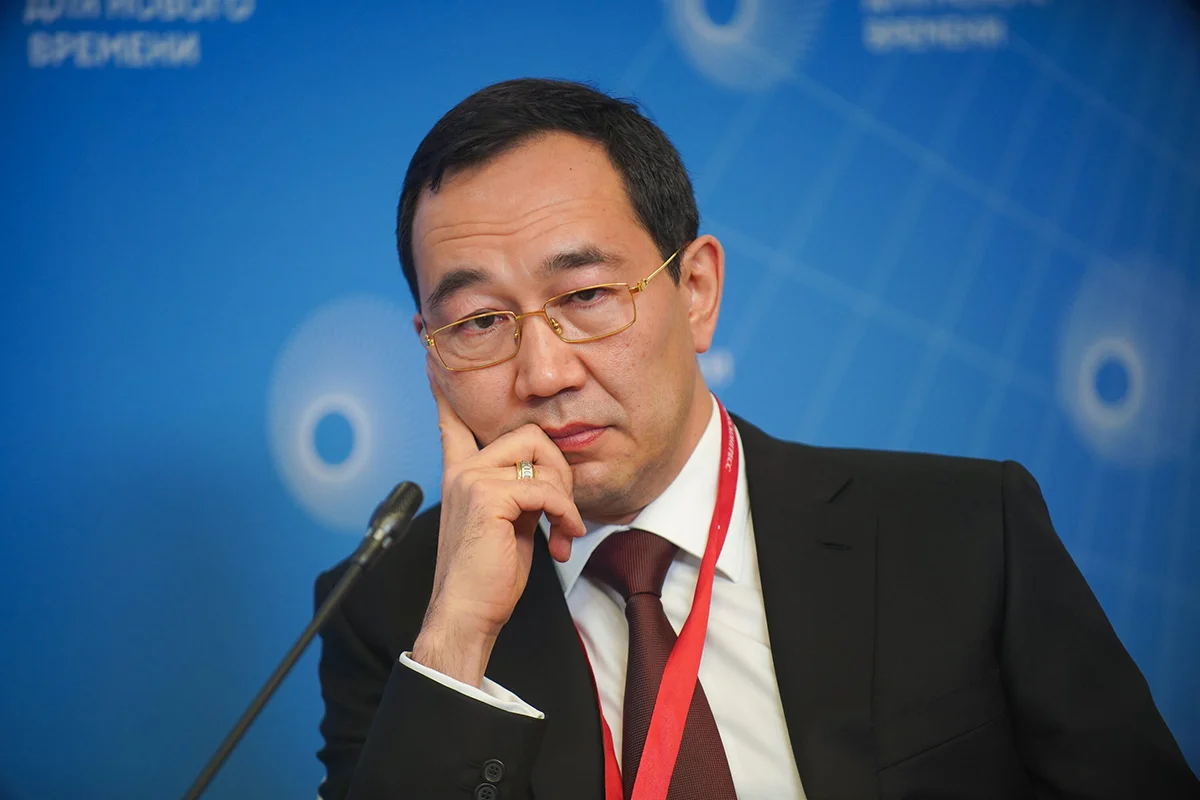
In the new version of the Constitution, the head of the republic is no longer obliged to interact with public associations. The head of the region will not only ensure the safety of precious metals and stones located in the State Repository of Yakutia, but can also make decisions on their sale. The powers of local self-government are being reduced and the mention of the fact that heads of local self-government bodies are elected and not appointed persons disappears.
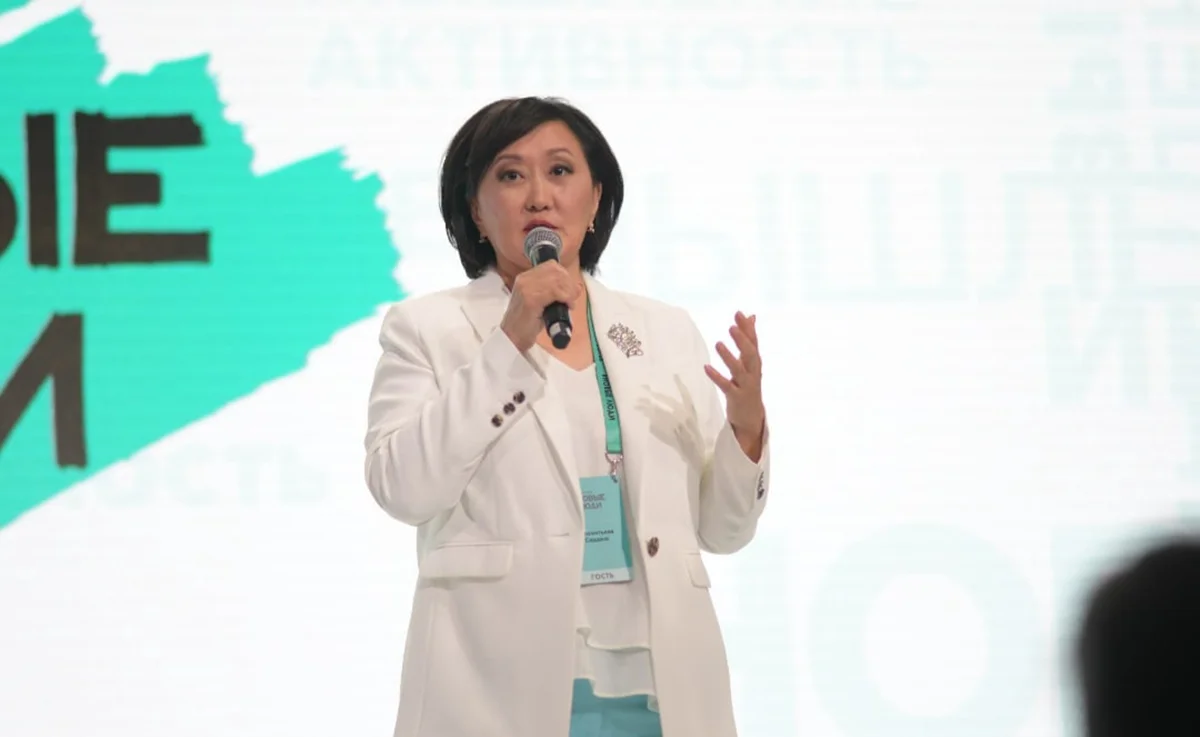
“The upcoming amendments to the Constitution of Yakutia are not just “technical harmonization”, as the authors are trying to present it to us. This is a quiet constitutional revolution, the purpose of which is to eliminate any possibility of direct elections of heads and mayors. The very essence of local self-government is systematically being washed away from the law. Detailed articles that prescribed its powers and guarantees are being removed. Instead, they are replaced by faceless, vague norms,” Sardana Avksentieva wrote on her Telegram channel.
A popular politician and ex-mayor of Yakutsk, Avksentyeva, is now in the State Duma and is a member of the leadership of the New People party.
— Throughout Russia, regions are bringing their laws regulating the activities of local self-government in accordance with the new Federal Law on public authority. It’s just that in some, governors quietly resolve personal issues - get rid of elections, increase powers,” one of the regional politicians of Yakutia told Novaya Gazeta Europe.
How Yakutia is being deprived of independence
Yakut social activists, who were forced to leave Russia due to persecution, also oppose changes to the regional Constitution.
— In recent years, the Kremlin has been consistently removing any signs of real regional autonomy. In the Republic of Sakha, this coincided with a drop in Aisen Nikolaev’s rating. Amid growing discontent within the elites and the population, rumors about his imminent replacement are actively circulating. Amendments to the Constitution are, in essence, preparations for a change of power. Nikolaev, most likely, is going to leave for Moscow, gain a foothold there and demonstrate loyalty, showing that under him the republic is completely “integrated” into the federal vertical and does not pose political risks. Nikolaev already spends more time there than in the republic, for which he is nicknamed a “tourist,” says activist Vilyuya Choynova .
According to her, Yakutia has retained strong local communities - uluses, where elements of traditional self-government and citizen participation in decision-making remain.
— Now these powers are being curtailed: budgets are centralized, heads of uluses actually become appointed rather than elected. This will lead to even greater dependence of regional elites on the administration of the head and, ultimately, on Moscow, -
predicts Choinova.
She notes that the decrease in the level of independence of Yakutia is also expressed in the elimination of provisions on “sovereign disposal of subsoil” and “opens the way to an even more uncontrolled transfer of deposits to federal structures and private corporations close to Moscow.” We are talking not only about diamonds, but also about gold, uranium, and rare earth metals.
— Since the 1990s, the Constitution has had provisions that established the sovereign right of the Republic of Sakha (Yakutia) to natural resources. This was one of the strongest norms among all regions of Russia. [...This] gave the republic a legal basis to participate in the distribution of income from the extraction of mineral resources, approve republican laws on the protection of subsoil, and also enter into agreements with federal structures and private companies on the terms of “joint ownership.” Since the 2000s, more and more powers for subsoil use have been transferred to the federal level. Amendments to the Constitution of the Republic of Sakha are aimed at removing any language implying that the republic or its people have the right of ownership of subsoil. Instead, neutral phrases are introduced like “natural resources are used in the interests of the residents of the Republic of Sakha (Yakutia) and the Russian Federation in accordance with federal legislation,” notes Choynova.
Changes in wording regarding secondary education will, among other things, affect a further reduction in the study of the languages of the indigenous peoples of Yakutia in schools, according to relocant activists.
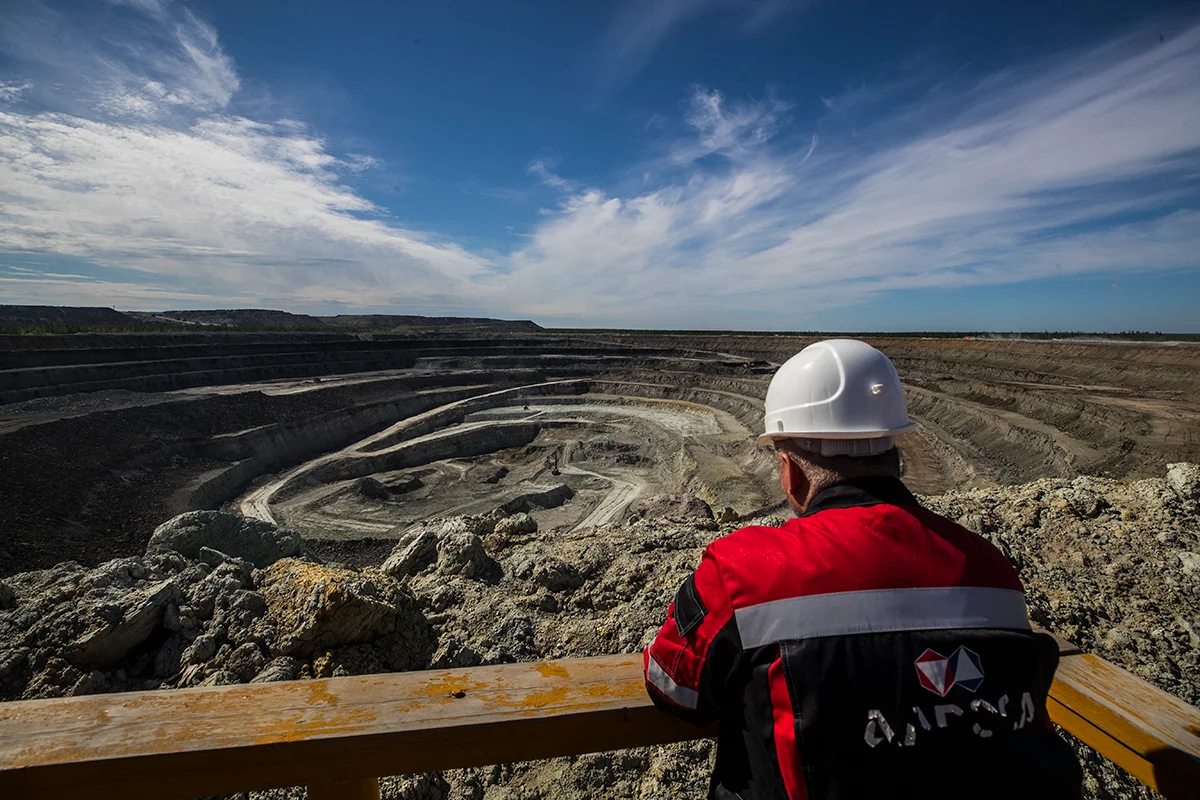
— The Republic of Sakha has a unique status: it is the largest region of Russia by territory, possessing colossal natural resources and at the same time with a strong sense of national identity and civic consciousness.
For the head of the republic, Aisen Nikolaev, this is also a matter of political loyalty - demonstrating to the Kremlin the readiness to finally remove any traces of the region’s sovereignty,” Sargylana Kondakova, co-founder of the Free Yakutia Foundation, told Novaya Gazeta Europe.
An interlocutor of Novaya Gazeta Europe, a political strategist working in Siberia , believes that Moscow is wary of Avksentyeva’s electoral successes and popularity.
— Moscow is afraid of Yakutia, it is huge in territory and has a lot of resources. At the same time, in Yakutsk they have not been able to build a bridge across the Lena River for 100 years. The Yakuts are offended. And there are bright politicians there, like Sardana Avksentieva. Now Sardana is forced to quiet down so as not to be imprisoned. She was very bright, the leader of Siberia. But, probably, according to the internal Yakut agenda, she is still allowed to speak out, he believes.
According to the political strategist, continuing the career of the head of Yakutia Aisen Nikolaev in Moscow is quite possible.
— It would be reasonable and useful from an international point of view. Yakutia, Tyva, and Buryatia have established good ties with South Korea, Japan and a number of other Buddhist countries. The conditional Shoigu is friends with North Korea and Tibet, and Nikolaev is friends with South Korea and Japan,” he notes.
No visible barriers to acceptance
Amendments to the Constitution of Yakutia (for the 13th time since the adoption of this document) must be approved by the regional parliament (Il Tumen). On the morning of October 10, public hearings on the amendments were held in Yakutsk in Il Tumen. There were just under a hundred people in the hall, both supporters and opponents of the amendments.
The hearings were accompanied by a video broadcast of good quality and even accessible from abroad without a VPN. The head of the region did not come to the hearing, but there were many representatives of the government of Yakutia and deputies of Il Tumen.
“On Il Tumen’s part, everything is organized intelligently. There are police, but not many, they don’t interfere with anyone, they keep order. There are many elderly Sakha men. There are almost no Slavs,” Obedin wrote in his Telegram channel.
Some speakers spoke not in Russian, but in their native languages. Employees of Il Tumen’s office tried to organize simultaneous translation, but they were not very successful: they translated slowly and obviously not everything.
Obedin was not allowed to speak: the hearing lasted three hours; a number of those wishing to attend were turned away, citing the large number of people who signed up. The microphone more often went to supporters rather than opponents of changing the Constitution of the Republic.
Supporters noted that the constitution of the Republic of Sakha (Yakutia), although it was adjusted many times, was generally adopted in 1992, while the all-Russian one was adopted in 1993. And now it contains many provisions that contradict the federal one, both on local self-government and on secondary education.
Indeed, at the all-Russian level, 9 grades of school education are considered compulsory: then the child and his parents have the choice of completing all 11 grades, going to college, or leaving school altogether. At the hearings, it was proposed to appeal to Moscow with a proposal to make 11 grades mandatory throughout Russia, and not to reduce the Yakut requirements.
Of all the supporters of the amendments, only one speaker spoke about the hardships of the Northern Military District, the threats of the insidious West and the dangers posed by the unpredictability of municipal elections.
Representatives of the “A Just Russia” and “New People” factions in Il Tumen also spoke out against the constitutional amendments, but their position is unlikely to have much impact. In the current convocation of the Yakut parliament there are 55 deputies from United Russia, 6 from New People, 4 from the Communist Party of the Russian Federation, 3 from A Just Russia and 1 non-factional.