
Translated material
War
One thousand three hundred and twenty-seventh day. Since the summer, the United States has been helping Ukraine strike energy facilities deep inside Russia
Since February 24, 2022, Meduza has been broadcasting live about the Russian-Ukrainian war. We publish your letters in our daily materials because we are sure that we need to continue talking about the war. How do you feel about the ongoing war? How is it affecting you personally right now? How has your attitude to what is happening, to Russia, to Ukraine, to the world changed over these three years of war? Find the feedback form at the end of this article. You can read the previous day's review here .
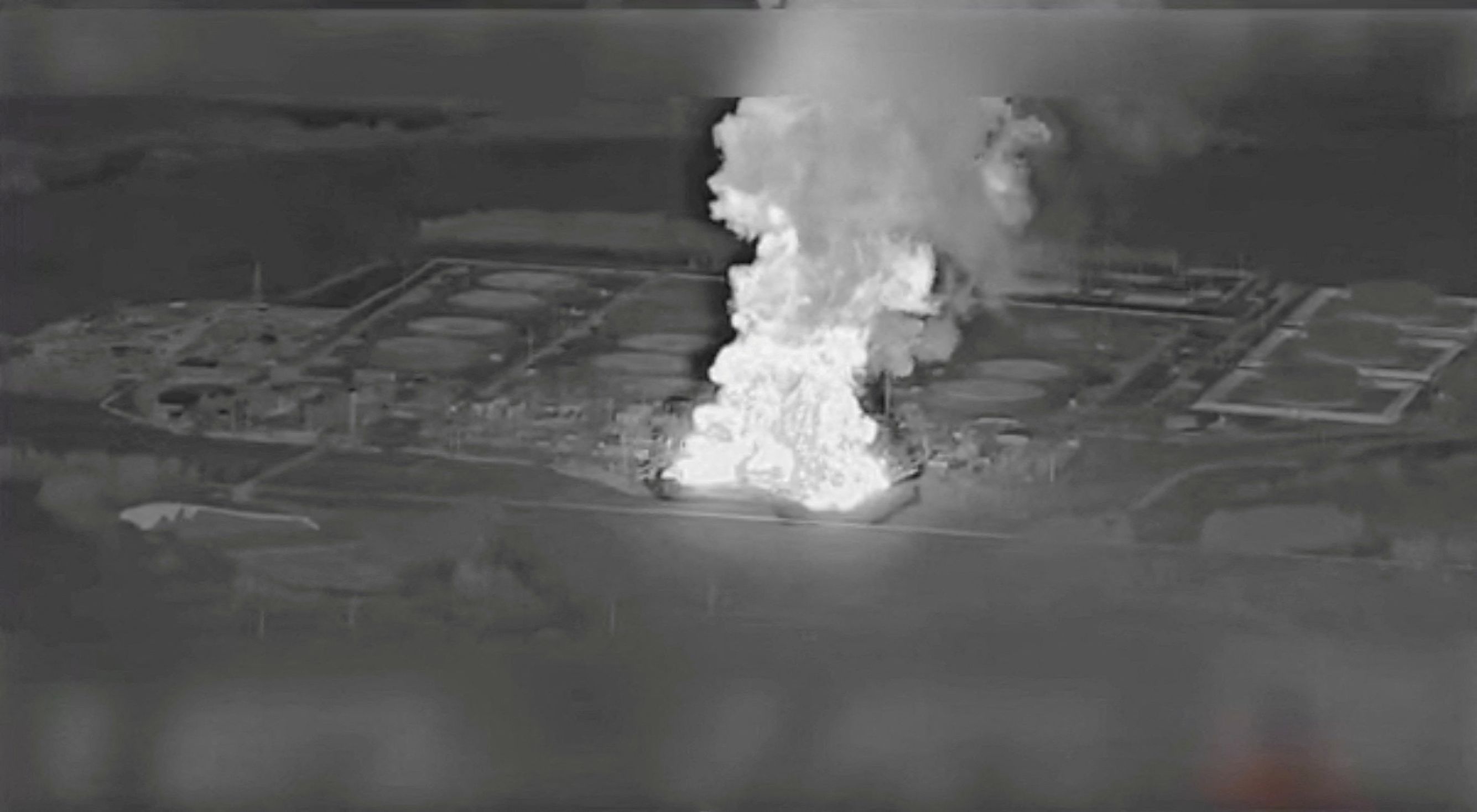
Since mid-summer 2025, the US authorities have been providing Ukraine with the intelligence data necessary to enable the Ukrainian Armed Forces to launch attacks on energy facilities in Russia, the Financial Times reported on October 12. Sources of the publication in Ukraine and the United States said that American intelligence shared information with Kiev that made it possible to attack, among other things, oil refineries located far behind the front line. FT interlocutors called it a coordinated attempt by the United States to weaken the Russian economy and force Vladimir Putin to the negotiating table.
According to the newspaper's sources, American intelligence is helping Kyiv shape the routes, altitude, timing and flight tactics of Ukrainian Armed Forces' attack drones, which allows the drones to evade Russian air defense.
Three of the publication’s interlocutors noted that Washington is closely involved in all stages of planning. One American official said that Ukraine itself selects targets for long-range strikes, and Washington provides intelligence on what vulnerabilities exist at these sites. При этом другие источники утверждают, что США также определяют цели для ВСУ.
As the newspaper points out, the United States began sharing intelligence information with Ukraine after the presidents of the two countries, Donald Trump and Vladimir Zelensky, had a telephone conversation in early July. The Financial Times wrote in July that Trump, during a conversation, asked Zelensky whether the Ukrainian Armed Forces would be able to carry out strikes on Moscow or St. Petersburg. The President of Ukraine replied that this is possible if the United States provides long-range weapons.
The White House, commenting on the FT's publication at the time, said that the newspaper was "taking words out of context to get clicks." White House press secretary Caroline Levitt stressed that Trump was "simply asking a question, not encouraging further murder." Trump himself has publicly stated that Zelensky should not attack Moscow.
Soon after the July phone call, Kyiv began receiving information with a new level of detail from US intelligence, four people familiar with Ukraine's long-range drone operations told the FT. This information allowed Kyiv to create a more accurate map of Russian air defense forces and outline strike routes.
The pace of Ukrainian attacks on Russian oil and gas facilities and pipelines increased in August and September. Ukraine has hit at least 16 of Russia's 38 oil refineries, some more than once, disrupting oil refining operations, according to research group Energy Aspects cited by the FT. Due to the damage suffered, Russia has reduced diesel exports and increased dependence on imports.
Washington has long shared intelligence with Kiev to help Ukraine strike Russian military targets in occupied areas and provides advance warning of Russian strikes. At the same time, the US authorities do not officially admit that they are directly involved in Ukrainian attacks on Russian energy facilities.
Vladimir Zelensky said on October 8 that Ukraine “works with US intelligence, first of all, for its protection,” that is, to protect itself from Russian attacks. A White House spokesman told the FT that the Russia-Ukraine war "would never have happened" under President Trump and that he "tried to stop it." The Office of the Director of National Intelligence and the Department of Defense declined to comment.
Russian presidential spokesman Dmitry Peskov said earlier in October that it is “obvious” that the United States and NATO “on a regular basis” provide intelligence to Ukraine, including for attacks on Russian energy facilities.
The Wall Street Journal reported on October 1 that, according to sources, Donald Trump has authorized the provision of intelligence to Ukraine so that it can attack Russia's energy infrastructure using long-range missiles (and not just drones, which the FT writes about).
War through the eyes of Meduza readers
How we choose letters
Meduza's readers live in different countries and have different attitudes towards the war. We publish your letters to see this event through your eyes. Our editors try to present all points of view, even if they do not coincide with the editorial position. However, in accordance with the Meduza code, we do not publish messages that contain “hate speech,” justify the murder of civilians, or express direct support for an aggressive war.
Anonymous reader. My life has changed dramatically and continues to change, although to some extent I feel addicted. Despite the restrictions and gathering clouds, I continue to live my life, look for something good and travel. As I travel around the country, I try to genuinely understand what others think. It pains me terribly when I read about “cattle”, “Mordor” and “orcs” and other similar rhetoric, because this is some kind of half-truth, a shortcut, a superficial conclusion from scraps of information.
I come from Siberia, and I probably most of all wanted to understand what my fellow countrymen thought [about the war]. Surprisingly, starting a conversation about an exciting topic is quite easy: Siberians are generally sociable, and the rhetoric of war is everywhere in their regions. I had to talk to different people: some of them support what is happening, some do not see any other way out due to low salaries, some are horrified, but are afraid to say anything against it. The latter constantly told me: “Well, all hope lies with you, you are there in the center, you can protest. And they’ll take us to the taiga, and remember what their name was!” I was embarrassed to say that somehow we can’t cope here either, and often expect help from the “regions.” People smile sadly, throw up their hands: “Well, that means this is fate.”
After these contradictory conversations, opinions, resigned consent to death (“How should I feed my family in our village?”) it’s difficult for me to call these people cattle or orcs. Нет, они как раз очень живые и понятные мне. I also feel a little indebted: very fragile, but protected by public resonance; the opportunity to disappear into a huge crowd; a salary that is enough for something other than food and basic needs, and so on down the list. And they only have hope for “a center where they can” and an endless taiga with thousands of nameless graves.