
Translated material
War
One thousand three hundred and twenty-eighth day. Poland has been preparing for a Russian invasion since 2014. It is now the EU's largest military power
Since February 24, 2022, Meduza has been broadcasting live about the Russian-Ukrainian war. We publish your letters in our daily materials because we are sure that we need to continue talking about the war. How do you feel about the ongoing war? How is it affecting you personally right now? How has your attitude to what is happening, to Russia, to Ukraine, to the world changed over these three years of war? Find the feedback form at the end of this article. You can read the previous day's review here .
World
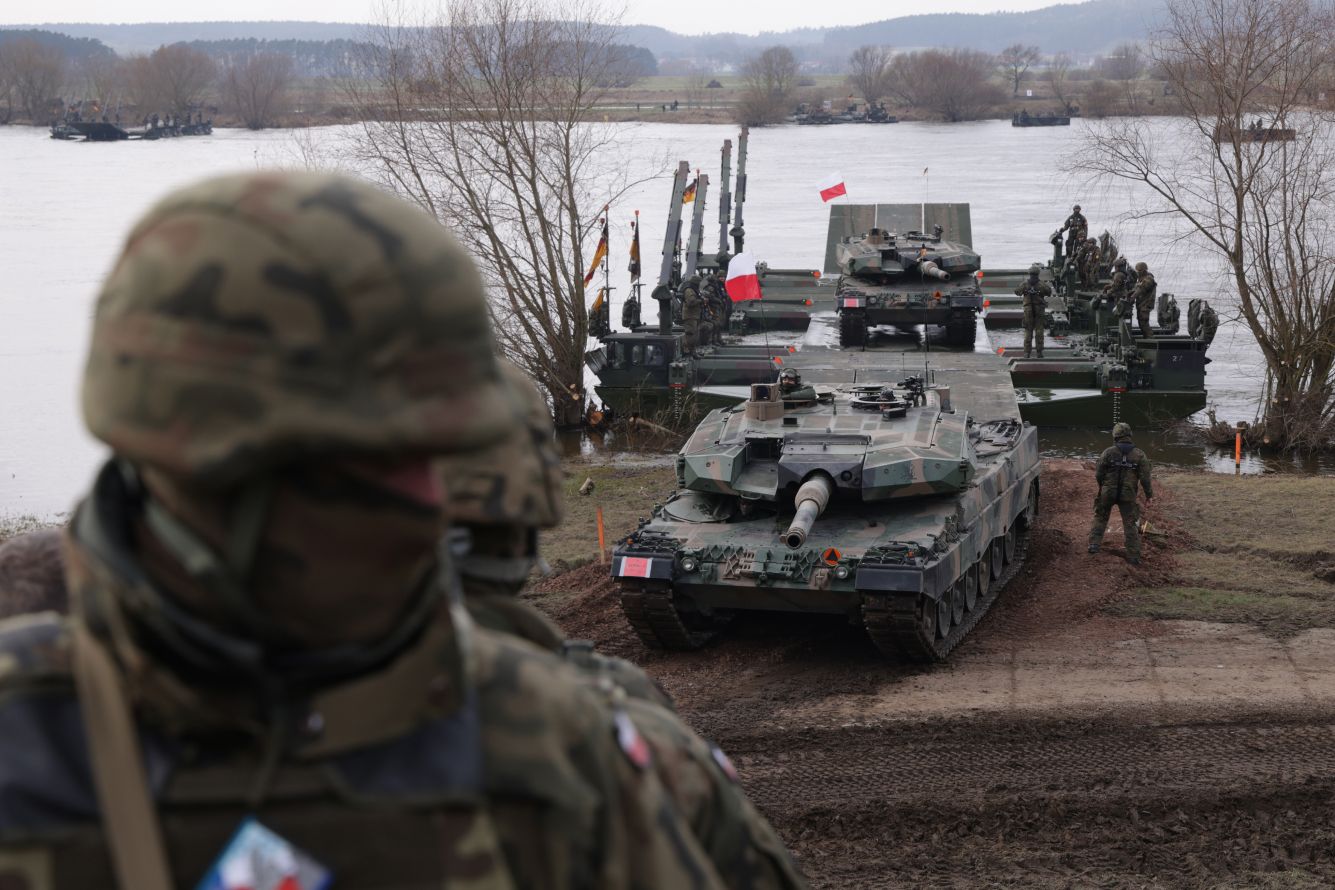
Poland, against the backdrop of Russia’s growing aggression in Europe, has significantly strengthened its defense in recent years - in 2024, its armed forces became the largest among European NATO countries. Now they have more than 210 thousand military personnel. This is more than in Germany, France or the UK. Among NATO countries, Poland is second only to the United States and Turkey in the number of military personnel, writes The Wall Street Journal in a large article about the defense of Poland.
Since 2014, Warsaw has doubled the size of its armed forces and increased military spending to almost 5% of gross domestic product: 4.7% of GDP was allocated to this in 2025, 4.8% is planned for 2026. This is the highest figure among all 32 countries of the North Atlantic Alliance.
Poland in 2023-2024 became the largest buyer of American weapons, purchasing weapons worth about $50 billion. Poland's military spending has endeared it to US President Donald Trump. At a meeting with new Polish President Karol Nawrocki, Trump expressed support for Poland that he rarely gives to other European countries. “We fully support Poland and will help them defend themselves,” Trump said. US Defense Secretary Pete Hegseth said during a visit to Warsaw in early 2025 that Poland was a “model ally.”
Polish authorities believe that Russia, under the leadership of Vladimir Putin, is seeking to restore its traditional sphere of influence in Eastern Europe. Russia's actions against Ukraine, and now against Europe, as the WSJ writes, make Polish politicians nervous that their country is again in the line of fire. But this time, the publication points out, Poland wants to be ready.
“This is our war,” Polish Prime Minister Donald Tusk said at the Warsaw Security Forum in September, referring to the Russian-Ukrainian war. He noted that Poland had decided to carry out a large-scale modernization of its armed forces and called on other European countries to do the same. Tusk emphasized that this is necessary not so much to support Kyiv, but for the future and security of the NATO member countries themselves.
Warsaw began preparing for a possible war with Moscow after Russia annexed Crimea in 2014 and started a war in the Donbass. Polish military strategists spent a year analyzing worst-case scenarios and then began reforming the armed forces, rapidly increasing troop numbers and ramping up arms purchases.
Other countries in Europe were "waiting for someone else to make the first move," Tomasz Szatkowski, a former Polish deputy defense minister who oversaw the strategic defense review carried out before the 2018 reforms, told the WSJ. “In the end, we were ahead not only of the rest of the eastern flank countries, but also of most of the European NATO countries,” Szatkowski said.
The first unit created after the 2018 reforms was the 18th Mechanized Division, which is in a state of high combat readiness. Poland is forming two more such units. In addition, the country has created its own territorial defense forces, which number tens of thousands of military personnel.
The priority task for Poland is training. In September, 30,000 troops, including from the 18th Division, as well as the US and Dutch militaries, participated in Exercise Iron Defender, during which Polish soldiers trained to use American Abrams tanks, multiple launch rocket systems from South Korea, and a Polish modification of the HIMARS missile system (Ukraine uses these in the war against Russia).
Poland is considered a central element in NATO's defense in the event of a conflict with Russia and an important partner for the Baltic countries - Estonia, Latvia and Lithuania, writes The Wall Street Journal.
Poland borders both the Russian exclave of Kaliningrad and Belarus, a close ally of Moscow. “In the event of a crisis, the defense of the Baltic countries will depend on how much the Polish armed forces, reinforced by the United States, can resist [Russian troops] in Kaliningrad and Belarus,” says former Polish Deputy Defense Minister Tomasz Szatkowski.
Poland has also improved its logistics capabilities to be able to accommodate the large number of NATO troops likely to be deployed in the event of conflict. Poland is going to modernize some civilian aircraft so that they can accommodate military personnel.
But it costs Poland a lot to strengthen its armed forces, the WSJ notes. Although the country's GDP growth is expected to be 3% in the coming years, which is higher than other European countries, the cost of maintaining modern weapons systems could exceed Poland's defense budget.
Poland is currently discussing with Germany an option under which Berlin will cover part of the costs of Polish defense as compensation for damage caused during World War II. The German side hopes that this will put an end to Poland's demands for reparations and put both countries on an equal footing in the field of defense. “For the Germans, reparations are a toxic issue,” Janusz Reiter, a former Polish ambassador to Germany and the United States, told the WSJ, “as opposed to the responsibility for securing the eastern flank through Poland.”
War through the eyes of Meduza readers
How we choose letters
Meduza's readers live in different countries and have different attitudes towards the war. We publish your letters to see this event through your eyes. Our editors try to present all points of view, even if they do not coincide with the editorial position. However, in accordance with the Meduza code, we do not publish messages that contain “hate speech,” justify the murder of civilians, or express direct support for an aggressive war.
Sergey (Kyiv). If at the beginning of a full-scale invasion I tried to communicate with relatives and friends in the Russian Federation, tell them what was happening here, explain that what they were shown on TV was a mistake, now I don’t do that. Those who wanted to have already left; with those who remained, we have nothing to communicate about. I never thought that all this would end quickly - I immediately said that it would last for three to five years at best. Then they told me that I was crazy, that it couldn’t be this way, that when trains with “200 loads” went to Russia, there would be protests and people simply wouldn’t go to fight. Well, or that Ukraine simply cannot stand it, and our economy will collapse. None of this happened.
How do I feel now? I am very tired of the fact that every day ordinary people die in cities from Russian shelling. I don’t feel hatred, but I am following the dynamics and increasingly thinking that perhaps it was necessary to go to war “and just kill a lot of Russians” from the very beginning. Funny, right?
I still speak Russian, I think Russian. But I can’t hear Russian music, it just causes a painful disgust. Russian speech on the streets is also slowly happening. It’s a disgusting feeling that my native language, in my native country, has become the language of the enemy, the language of hatred, the language of lies.
Do I hope for a “quick end to the war”? Yes. But I don't believe in him. Hope, as they say, dies last. How has my attitude towards the world changed? No way, probably. Where there is no war, it is good. It’s good in the “peaceful” regions of Ukraine, it’s good in Europe, it’s nice to fly on airplanes and not think about air defense, it’s nice to see crowds of tourists, we haven’t had that here for three years now. I love Ukraine, this is my home, having the opportunity to “get out”, I stay, I’m here.
How has my attitude towards Russia changed? I once loved Russia and didn’t really differentiate between Russians, Ukrainians, and Belarusians. This was before 2013. Since then, this has become impossible - Russia has clearly shown that it is an aggressor, the Russians for the most part have clearly shown themselves to be great-power chauvinists. Probably the best thing that can happen to this country is if it falls apart, breaks up into 24 or 89 national states, some of which will then join their historical roots, and some will remain to live and build some other normal future of their own. But the empire must die anyway. Without this there will be no future.