
Translated material
Seven transfers and eight years
How small donations become a big article. We show the example of the Perm region, where activists Irina Fayzulina and Elena Guseva are being tried

Illustration: “New newspaper Europe”
In Russia, trials continue in so-called “transfer cases”, when ordinary people are tried for small donations to the structures of Alexei Navalny. To date, open sources mention about eighty criminal cases initiated for FBK donations, but only a fraction have reached verdicts: about fifty court decisions are known. Most of them end in fines (from 100,000 to 600,000 rubles), some end in suspended sentences (usually 2–4 years), and in at least eleven cases real prison sentences are imposed, including sentences in absentia for 3–5 years.
After February 24, 2022, the pressure from the authorities on society became total, including in the Perm region. There are at least seven criminal cases recorded here, which human rights activists and the media classify as politically motivated. Among them are at least three cases of high treason, two cases of “fakes” and “discrediting the army” and one case of “calls for activities against the security of the state” (in relation to the former coordinator of Navalny’s headquarters, Sergei Ukhov). Also in March 2023, searches were carried out at Perm memorial residents; one volunteer spent two days in a temporary detention facility and was fined. The former head of Memorial, Robert Latypov, was put on the wanted list and arrested in absentia in the case of “attempted smuggling of cultural property,” and his colleague Alexander Chernyshov received a three-year suspended sentence in April 2024. In addition, the regional prosecutor’s office records an increase in the number of “extremist” trials: in 2024 alone, 38 such cases were initiated, and all of them ended in convictions. In August 2025, Irina Fayzulina and Elena Guseva were arrested in the “donation case” in Berezniki. "New Europe" tells their story.
UPDATE OCTOBER 14
Today in the Leninsky District Court of Perm a meeting was held to extend the arrest of activists Elena Guseva and Irina Fayzulina. As we learned, the investigator asked to change the preventive measure for both women.At the meeting on October 14, Fayzulina and Guseva were indeed released from the pre-trial detention center. They will remain under house arrest until December 14.
The court prohibited Fayzulina and Guseva from using communications, the Internet and communicating with anyone other than close relatives living together, the telegram channel “Perm 36.6” and “OVD-Info” noted. Thus, Irina will not be allowed to communicate with her husband and human rights activist Artem Fayzulin, who is a witness in her case.
First wave. Characters
This was not the first meeting of both women and their families with the police: on March 14, 2024, security forces already came with searches to lawyer and human rights activist Artem Fayzulin, Irina’s husband, as well as to activists Elena Guseva and Irina Lyashchenko.
According to Faizulin, security forces confiscated all his equipment. The search of Guseva lasted about three hours: officers seized her phone and checked her daughter’s computers and tablet.
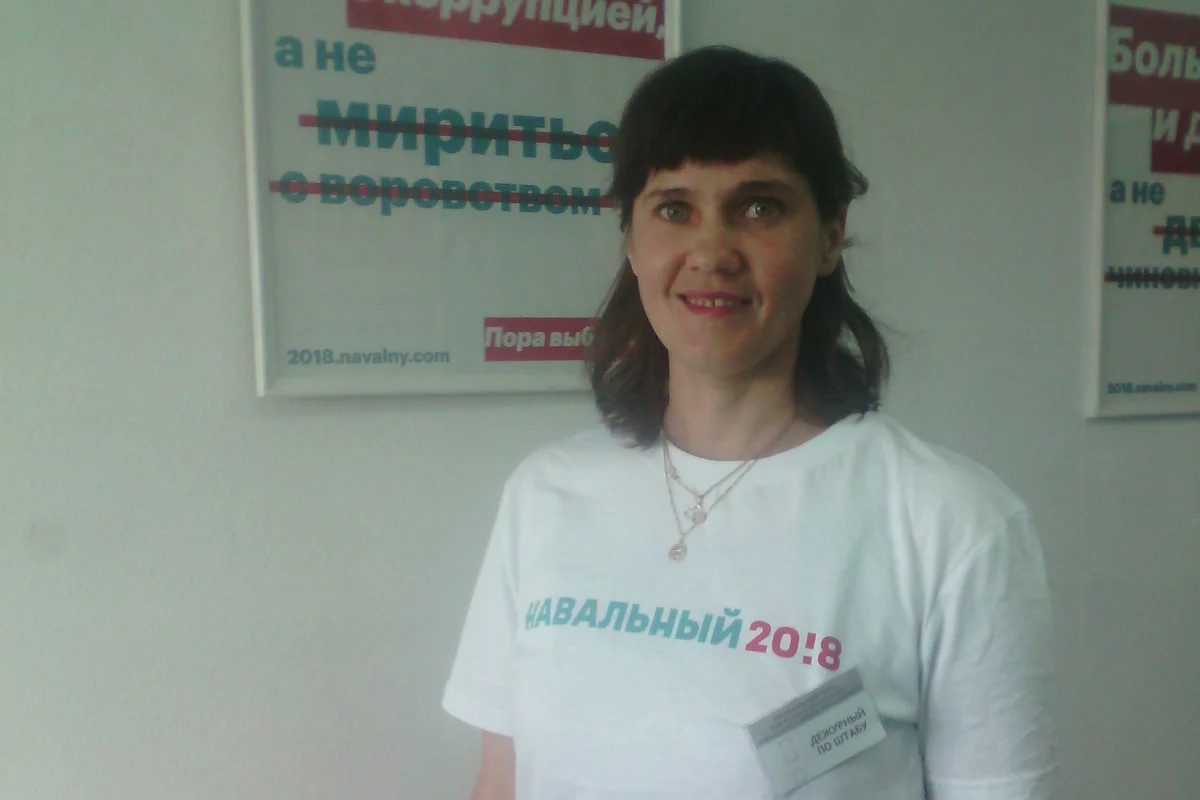
The reason was officially stated to be an investigation into the case against Sergei Ukhov, the former coordinator of Navalny’s headquarters in Perm, the creator of the telegram channel “Perm 36.6,” included in the register of “foreign agents.” Despite the pressure, no specific charges were brought against any of the three, and all were sent home. Ukhov himself was fined twice under the “foreign agent” article of the Code of Administrative Offenses, and his criminal case under Article 280.4 of the Criminal Code of the Russian Federation formally remains open to this day, there is no verdict on it.
Elena Guseva is a resident of Berezniki, her name first became famous in sports: in 2013, she became a participant in a unique relay race across the Bering Strait, when a team of swimmers swam from Chukotka to Alaska in water with a temperature of about zero degrees, and that swim was included in the Guinness Book of Records. Later, Guseva found herself at the center of the public life of her city: she participated in environmental protests, went to peaceful protests against the war, and laid flowers in memory of Alexei Navalny. Elena has three children, one of them is a minor.
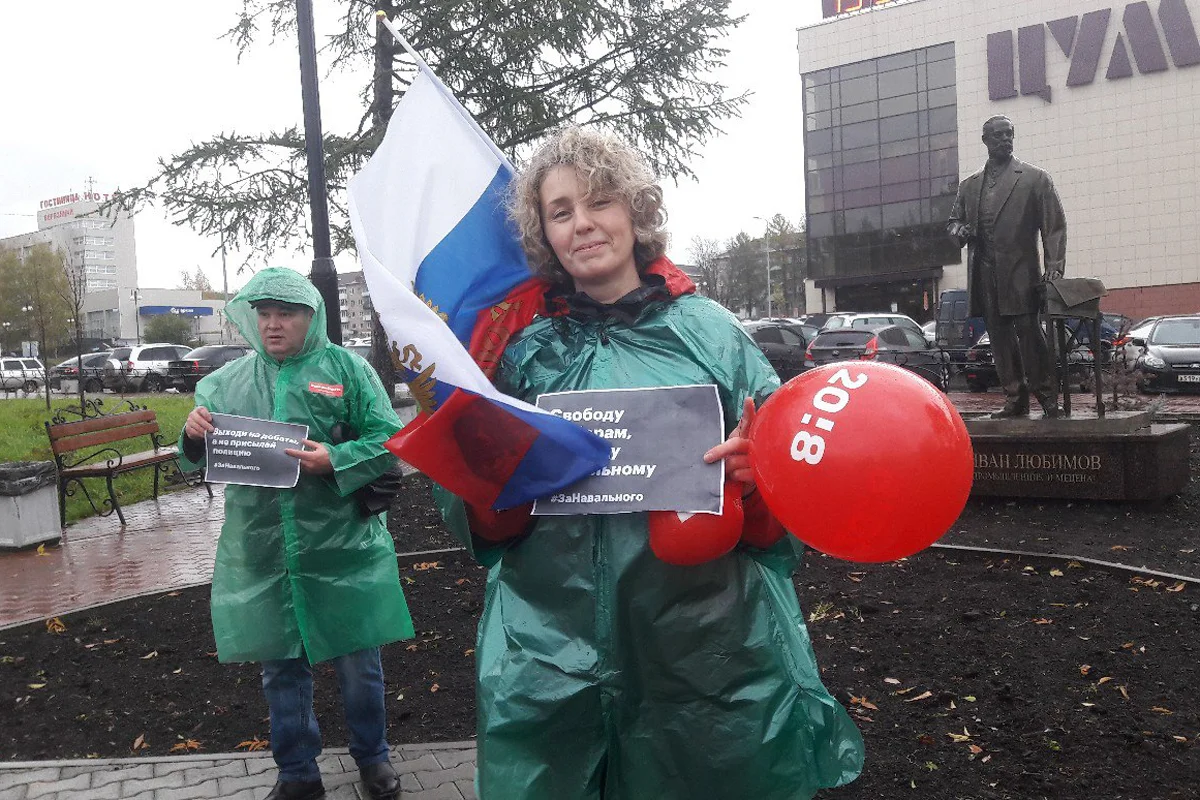
Irina Fayzulina is a resident of Berezniki, an environmental engineer by education and profession. She worked as a leading specialist in the permitting department in the environmental protection department of PJSC Uralkali - her activities are directly related to environmental issues and industrial safety. In addition to work, Irina participated in volunteer and environmental initiatives: she helped in city cleanup days, garbage collection events, participated in nature protection movements and took care of animals.
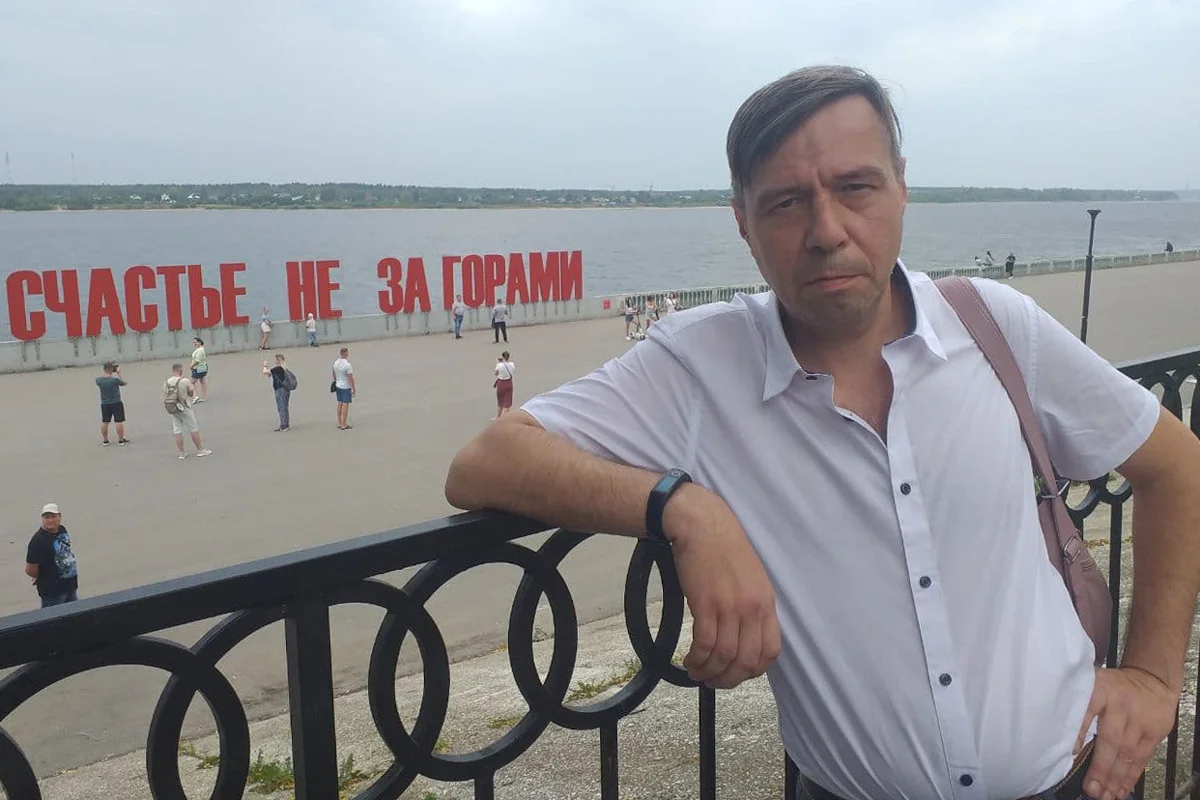
Irina’s husband, Artem Fayzulin , is a lawyer from Berezniki, a former police captain and forensic expert, who was fired in 2013 “for misconduct discrediting the honor of a police officer” after publishing a family photo on Facebook with slogans in support of Alexei Navalny.
As a result, Fayzulin lost not only his job, but also his long-service pension, which was only a month away, and he became a privately practicing lawyer. In 2021, Artem Fayzulin was twice subjected to administrative arrests for “organizing unauthorized public events” (in fact, for publishing on social networks) in support of Alexei Navalny:
5 days per promotion on January 23, 13 days per promotion on April 21. And already in 2022 he was fined 40,000 rubles under Part 1 of Art. 20.3.3 Code of Administrative Offenses of the Russian Federation for “discrediting the army.”
"Four in vests"
The Fayzulins’ friend Ivan (name changed at his request) told Novaya-Europe how Irina and Artem met.
“They are both from Berezniki and have known each other since they were thirteen years old.” Back then we had these city camps—they were called playgrounds. And then one day their teams went to a tourist rally together. Artem and Irina met there by the fire. He immediately “fell” on her, he later admitted. I even remembered the date we met for the rest of my life: August 14, 1989. He already began to court her then. And Artem and Irina got married only in 2001, that is, twelve years have passed since that fire. They had two children.

Another mutual acquaintance, a former Perm journalist, and now a political emigrant and foreign agent, Yuri Bobrov, told Novaya-Europa that he met Artem on the day he was fired for a photo on social networks in support of Navalny:
— I was working at Echo then. The first thing I was shocked by was how cultured and intelligent a policeman Artem is. The second shock was when I met their entire family and friends in Berezniki. They are somehow amazing, as if they were perfect. Lena Guseva and Roman Korotaev were always with them. Roman was their think tank until he died of Covid. Then Artem had to take everything upon himself.
Yuri compares Irina and Elena to Nekrasov’s heroines. He says, however, that galloping horses and burning huts are nothing compared to Elena’s swim from Chukotka to Alaska through the Bering Strait in cold water. And Irina, according to him, is ready to help everyone and always - around the clock and seven days a week.
“And so they managed to survive there and carry out important civic initiatives.” There were four of them, damn it, but they were wearing vests. And it’s still amazing to me that they retained such spiritual qualities in that atmosphere; in fact, they survived the acid. I mean, in a political “acid”, I mean, although Berezniki is such a very special city, it was previously called the “chemical capital of the USSR.”
"Permyak - salty ears"
“This is such a special city, it was created in Soviet times on mineral deposits,” continues Bobrov. — A lot of things are mined and processed there. And some tens of percent of the world’s potassium salt reserves are located and mined in Berezniki. They also mine titanium-magnesium sponge there, or the usual box of baking soda that every housewife has was most likely mined in Berezniki.
The famous old nickname “Permyak - salty ears” initially described saltworks workers, but then stuck to all residents of this region.
— The city is also famous for its sinkholes that appear on the site of exhausted salt mines. It's all built over mines. Therefore, in Berezniki there have always been a bunch of environmental and human rights initiatives - compensation, resettlement, emergency situations, and so on,” says Yuri Bobrov.
Ivan, in turn, recalls that in Berezniki at one time, even before 2017, there was a public organization “Civil Oversight” (abbreviated as “Granad”) - with a public reception, where people came with their problems: ecology, housing, illegal administrative cases. Granada was led by Roman Korotaev.
He liked to repeat: “We are not fighting the state, we are fighting the abuses of the state.”
“In 2017, when a wave [of creating] Navalny’s headquarters spread across the country,” says Yuri Bobrov, “official structures were opened in large cities, and in the regions, out of enthusiasm, “people’s headquarters” began to appear. Roman, now deceased, was at the origins, and Artem then also became an important part of this process. Irina was always by his side, like a real wife of a Decembrist.
New Europe tried to contact Artem Fayzulin, but he refused to comment due to security reasons.
August 27, 2025. Search and arrest
Ivan told Novaya-Europa everything that he himself learned about the arrest of Irina Fayzulina. According to him, on the morning of August 27, Irina, as usual, came to work at the management of the UralKaliy company. But her pass to the enterprise where she worked for 30 years was suddenly blocked at the checkpoint. Irina was asked to go to the information security office, where FSB officers were already waiting for her. The security forces immediately took her back home for a search. They didn’t let me call my husband. The woman opened the door to the apartment with her key and immediately warned: “I’m not alone.” Artyom, according to Ivan, already understood from his voice that something very serious was happening.
Unlike the search last year, when the security forces turned over the apartment, this time everything went relatively correctly. Phones were confiscated from family members and great attention was paid to bank cards. Irina was immediately handed a decision to bring her as an accused. The resolution included transactions addressed to structures that the investigation linked to FBK.
After the search, both spouses were taken to the FSB department and interrogated separately. According to Ivan, after the decision to recognize FBK as an extremist organization came into force, Artem, as a lawyer, told all his household and like-minded people many times the same thing: “Guys, that’s it. The scope is so narrowed that nothing is allowed at all: no donations, donations, even no reposts.”
“I have no doubt that this conversation took place in the family,” says Ivan. — When they came for Irina, Artem immediately said that “consciously and intentionally” she had not been able to make any translations for FBK for a long time. She is not a stupid person and not a partisan who rushes into an embrasure with a saber. Irina understood perfectly well that there was no risk. Artem said that he was racking his brain: how could this even happen? Maybe a technical error or a forgotten auto payment, or maybe a pure provocation or even outright falsification? What if the security forces, “in memory” of the family’s previous oppositional activity, added some other transfers to the “FBK donations” - for the environment, for helping animals?
And he was one hundred percent sure of only one thing: after August 2021, neither he nor Irina deliberately made any transfers to FBK,” shares Ivan.
On August 28, 2025, Marina Yakutova, judge of the Leninsky District Court of the city of Perm, sent both women to a pre-trial detention center: Irina - until October 15, Elena - until October 20, 2025. At the request of the FSB, both meetings were held behind closed doors. On the same day, the project “Support for Political Prisoners. Memorial reported that it considers them political prisoners. On September 3, 2025, the Perm Regional Court considered appeals regarding the preventive measure and upheld the detention, despite the presence of minor children for both women.
Small amounts - long terms
Irina Fayzulina is charged with making seven donations of 300 rubles each (2,100 rubles in total), made after FBK was recognized as an extremist organization, and Elena Guseva is charged with a transfer of 3,500 rubles, while the number of her transactions is not specified in open sources. Both women are charged under Part 1 of Art. 282.3 of the Criminal Code of the Russian Federation (“financing extremist activities”) for transfers to the structures of FBK, which is recognized as extremist and banned in Russia in 2021. Both face heavy fines, forced labor or imprisonment for up to eight years.
Artem Fayzulin, in conversations with the media, repeatedly noted that transfers after August 2021 could be solely the result of an auto payment, which his wife forgot to turn off. The resolution to initiate a case against Fayzulina indicated that we are talking about seven transfers made in favor of FBK structures from August 2021 to March 2022, when the transfers stopped due to sanctions.
These same seven episodes appear in the materials against some other defendants in Russia: in Udmurtia, for example, and in the Nizhny Novgorod region. Obviously, this is a typical situation: people forgot to uncheck the extra box, and then the money is written off technically, without a second expression of will. From a legal point of view, automatic translation should not be recognized as equal to a conscious act, because in criminal law it is intent that is of key importance. And if there was no intent, and the transfers were carried out by inertia, there is no corpus delicti. In practice, the courts neglect this.
In addition to this circumstance, there is another nuance: the volume of donations is minimal and does not have any proportionate significance for the “financing” of a large structure. In fact, we are talking about symbolic amounts that could not really affect the activities of the organization. In a normal situation, such cases should have been dismissed as insignificant. But this doesn’t happen either.
Meanwhile, donations to public organizations are not only a transfer of money, but also a form of expression of civic position. A donation to FBK was a way for a Russian citizen to show support for the activities of a political association and solidarity with its ideas.
To punish for symbolic donations is actually to punish for participation in political life and for belonging to civil society.
The way back: from the leading region of civic activity to the “hotbed”
In the Urals today there are quite a lot of cases of persecution for political reasons. If we count separately published messages from Memorial and other open human rights sources, it turns out that in the Ural regions (Bashkortostan, Perm Territory, Sverdlovsk, Chelyabinsk, Kurgan and Orenburg regions, Udmurtia), at least eighty people are being persecuted for politically motivated reasons. This figure includes both officially recognized political prisoners and those classified as “other victims of political repression.” The largest group is those involved in the “Baymak case” in Bashkortostan (48 people), but there are also more local stories. Those persecuted include lawyers, social activists, religious communities, students and ordinary residents, whose cases illustrate the breadth and variety of politically motivated repression in the Urals.
Perm has long been a special place on the map of Russian civil life.
Initiatives arose here that later became a model for the whole country: from the Perm-36 museum and the Sawmill forum to the first practices of public control and strong human rights organizations.
The experience of the Perm region is indicative: it gave the country unique examples of working with memory, mechanisms of public control and a school of human rights activism, but in the end it turned out to be one of the regions where these same practices were purposefully destroyed by the state.
Perm has become one of the key laboratories of Russian civil society since the 1990s. Structures were formed here that set the tone for the whole country: the Perm Regional Human Rights Center, the Perm Civil Chamber of Igor Averkiev, Memorial and Youth Memorial. The symbol of open discussion was the Perm-36 museum and the Sawmill forum - a platform where, over the course of eight years, a variety of people met, from regional civil activists unknown to the general public to Boris Nemtsov or Vasya Oblomov. At the forum they discussed Soviet repressions, human rights, and at the same time talked about modern politics.
Ideas for institutionalizing civic participation also came from Perm: it was here that a regional law on public control was first developed and adopted, which became a model for federal law No. 76-FZ on public monitoring commissions (2008). The Perm Civil Chamber prepared methodological materials that were later used throughout Russia, and Youth Memorial developed educational projects, connecting historical memory and civic education. All this has made Perm a noticeable center not only of the regional, but also of the federal human rights agenda.
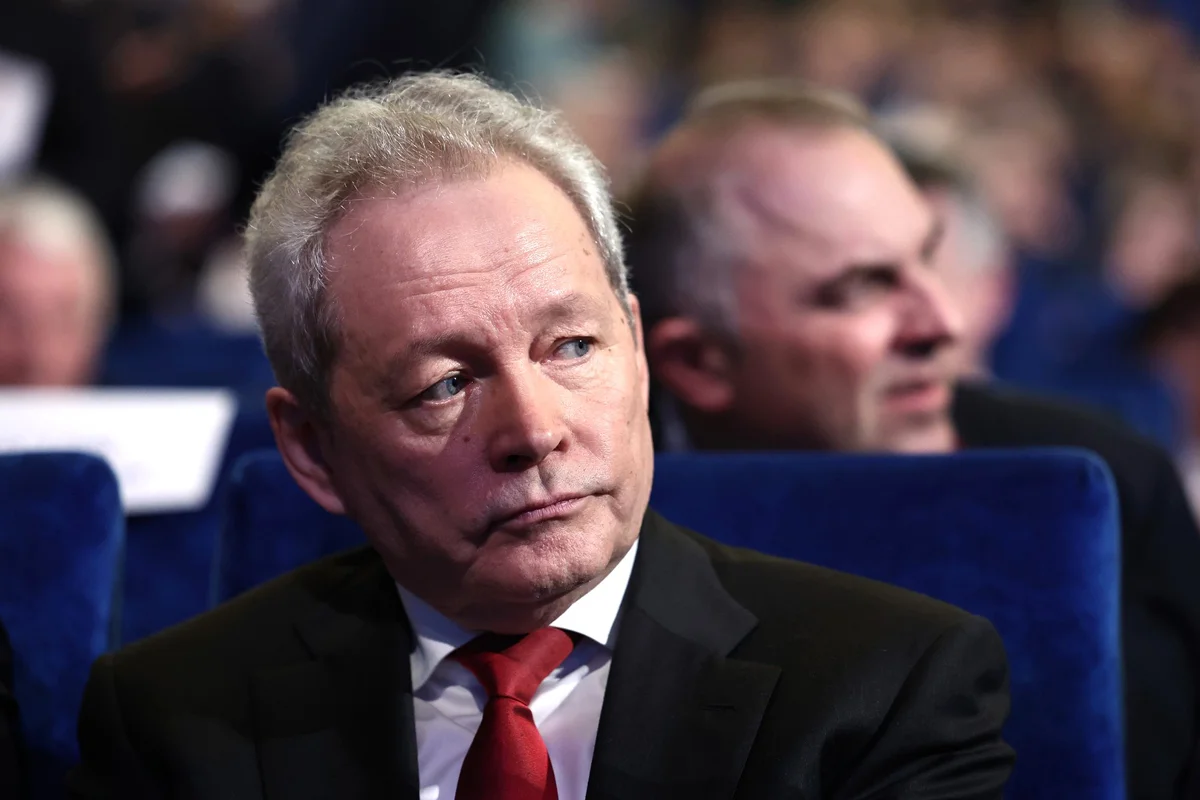
In 2012, the governor of the Perm region, Oleg Chirkunov, was replaced by Viktor Basargin, and the rhetoric of the regional authorities changed dramatically. If under Chirkunov Perm was positioned as a region of open discussions, then under Basargin projects like the Sawmill forum and the Perm-36 museum began to be perceived as a source of “politicization” and a “negative image.” In 2013, funding for the forum was stopped, and the Sawmill was no longer held. Journalists and the participants themselves wrote directly at the time: the new governor was concerned that Perm was perceived as a stronghold of human rights activists and critics of the government - this was the reason for the curtailment of the project. The Sawmill forum was closed, and a conflict broke out around the Perm-36 museum, which resulted in a complete change of leadership. Perm “Memorial” was excluded from the register of legal entities in 2022, and the “Center of Historical Memory” created on its basis was subsequently liquidated by a court decision, which effectively stopped the organization’s work in the region.
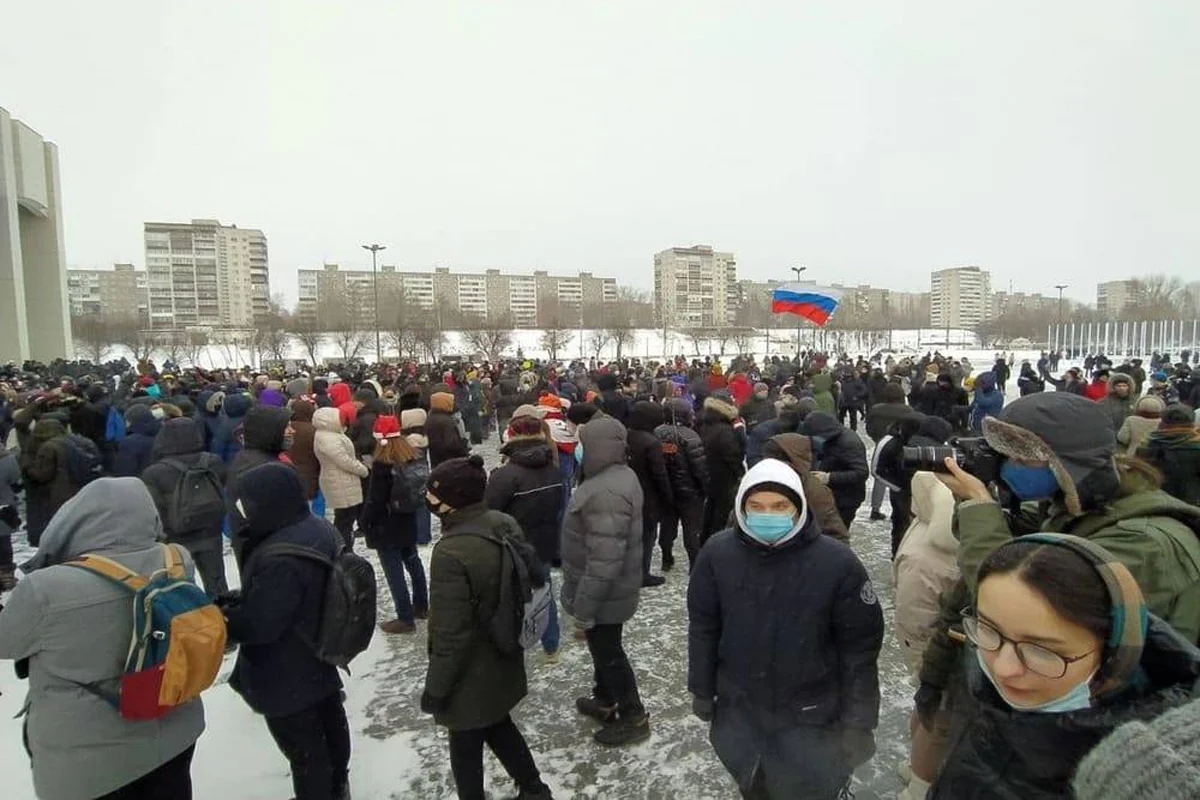
However, in 2017–2021, Navalny’s headquarters operated in Perm, and a “people’s headquarters” appeared in Berezniki. According to the regional ombudsman, more than 2,000 people came out to a rally in support of Navalny in Perm on January 23, 2021, while the headquarters coordinator put the figure at up to 8,000; on that day, the police detained Artem Fayzulin and Sergei Ukhov. A week later, on January 31, official sources spoke of approximately 600 participants , while headquarters estimated the number of participants to be about 5,000; by evening , at least 83 people had been detained. And on February 24, 2022, the day the war began, a mass anti-war meeting took place in the center of Perm; local media wrote about 150 participants, then between 17 and 28 people were detained.
Even according to the most cautious data, these events confirmed that Perm remained one of the cities where civic energy was preserved and manifested outside the capitals.
"Survive Acid"
Yuri Bobrov said that Irina and Lena managed to “survive acid.” But today the environment itself has become much more caustic. The atmosphere in Perm and Berezniki is not much different from the all-Russian one - it is determined by anxiety, wariness and fear. Even people who are not involved in civic activism feel that repression can affect everyone: for words, for correspondence, for random statements. Self-censorship becomes an everyday skill, and the feeling of vulnerability becomes a common background.
In this atmosphere, it is especially difficult to survive for those who find themselves not just in acid, but in its concentrate - in a pre-trial detention center, prison or colony. For Irina and Elena, the test has already begun, and they will have to maintain strength, hope and human dignity in conditions where everything is designed to break them.