
Translated material
Interview with political prisoner Vasily Neustroev
“It’s not boring to sit in a pre-trial detention center.” Political prisoner Vasily Neustroev has been behind bars for more than two years, but even there he continues to be involved in politics
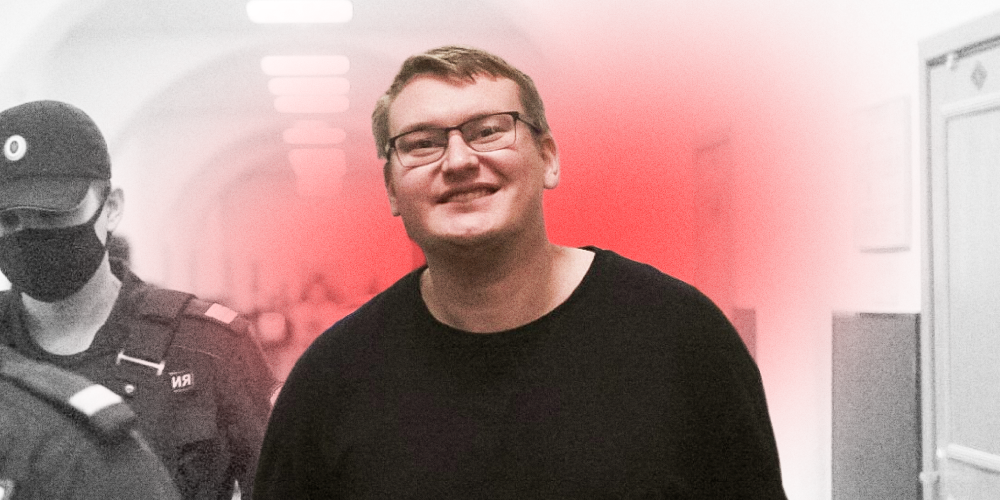
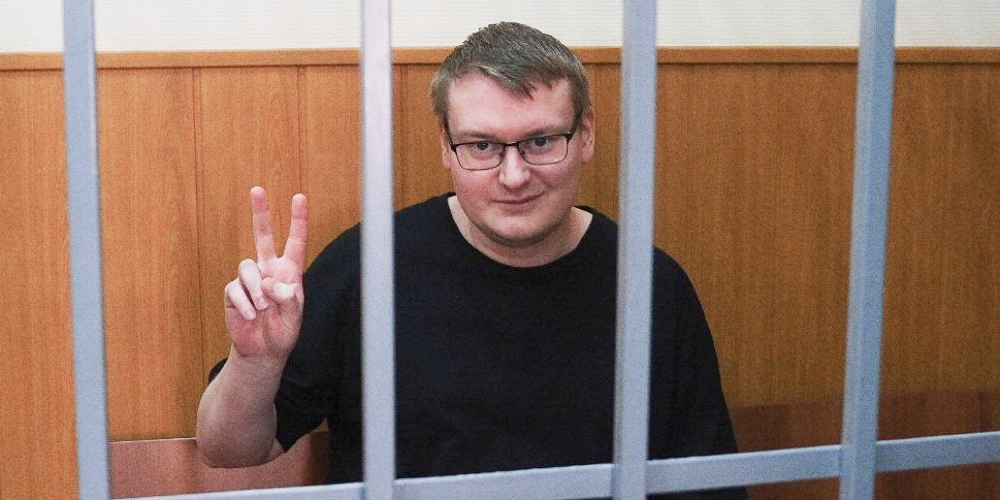
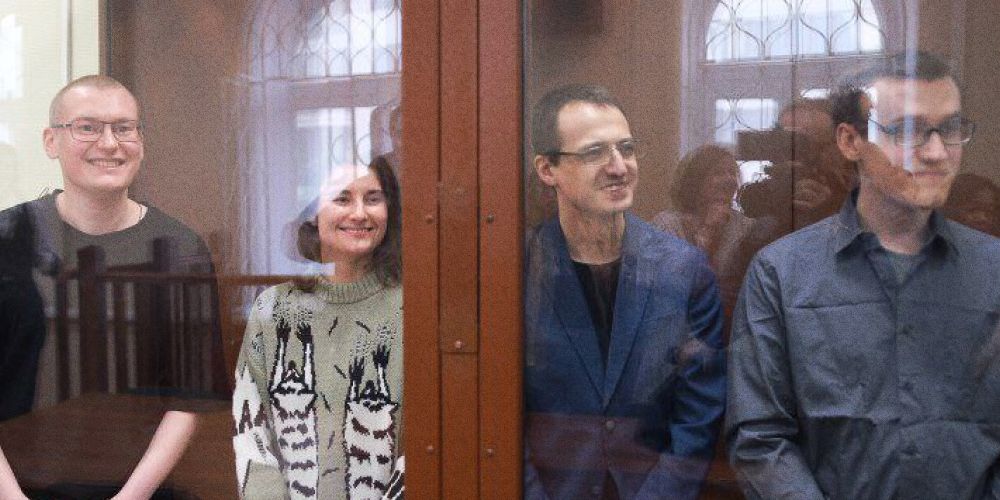
The young politician Vasily Neustroev has been imprisoned since June 6, 2023. He is a defendant in the so-called “New Vesna Case.” Neustroev is accused under six articles of the Criminal Code of the Russian Federation, including “organizing an extremist community” and “fakes about the army.” Now he is in a pre-trial detention center, but does not lose heart: he is engaged in self-education, planning future political activities. “First Department” publishes a political interview with Vasily Neustoev, which we took using the “FSIN-letter” service.
You can write to Neustroev online or send a regular letter to the address: 196655, St. Petersburg, st. Kolpinskaya, 9, building 1, FKU SIZO-1 GUFSIN of Russia for the city of St. Petersburg and the Leningrad region, Vasily Petrovich Neustroev, born in 1995.
— Will you be involved in politics in the future?
- Certainly. The whole situation with the criminal case only strengthened me further in these intentions. I don’t know when I will have the option of direct participation in political life, but I can definitely say that I am ready to immerse myself in it at the first opportunity. This is what interests me. Moreover, this is what I find useful.
— What do you think is most important in political work—work at the municipal level or “big politics”?
— By and large, the difference between local politics, that is, the municipal level, and regional/federal politics is only in scale, because politics is politics everywhere. But scale also influences the course of issues raised at a particular political level. Thus, it may seem strange if a presidential candidate or president is dealing with the issue of installing benches in courtyards, and municipal deputies, instead of local issues, discuss foreign policy.
Everyone still has to mind their own business. Working in a municipality implies knowledge of local problems and deep immersion in them. Municipal government is the closest to the people, and at the same time it is a kind of school for future regional and federal politicians. This is like a personnel reserve, and a significant one due to the large number of local deputies, mayors, and so on.
At the same time, many of the issues that concern citizens the most, for example, improvement, pre-school and secondary education, primary care, - logically, should be resolved at the local level by local authorities, taking into account local specifics. And if we take the situation with modern Russia, then, of course, it is at odds with the global trend towards decentralization and the transfer of significant powers to the local level.
In Russia, on the contrary, under the pretext of improving controllability, independent local government is actually being dismantled. Here we can mention Russia’s withdrawal from the European Charter of Local Self-Government and the long-suffering law on local self-government, which was nevertheless adopted by the Duma in 2025, as they say, “in development of the norms of the 2020 Constitution.” If we return to the topic of local and big politics, then there is no dichotomy here: everything is interconnected, although the scale and tasks are different, but by and large the goal is the same - the well-being and well-being of people.
— Which part of political work attracts you most?
— What attracted me most in political activity, which is very diverse and varied, was the electoral process. It is the elections that are most interesting to me. Moreover, I had the opportunity to work both as part of the election commissions that organize and conduct elections, and in the election headquarters of parties and candidates. And I can’t say which is more interesting to me: both have their own appeal.
Of course, there are other aspects of politics that interest me. This is, first of all, party work and party building, as well as activity in legislative/representative bodies and its support, that is, to put it simply, parliamentary work and interaction with elected deputies/fraction. But I am less familiar with these aspects of political activity than the electoral process, and if I was able to participate in any of this, it was only indirectly.
— What do you consider your greatest success in politics?
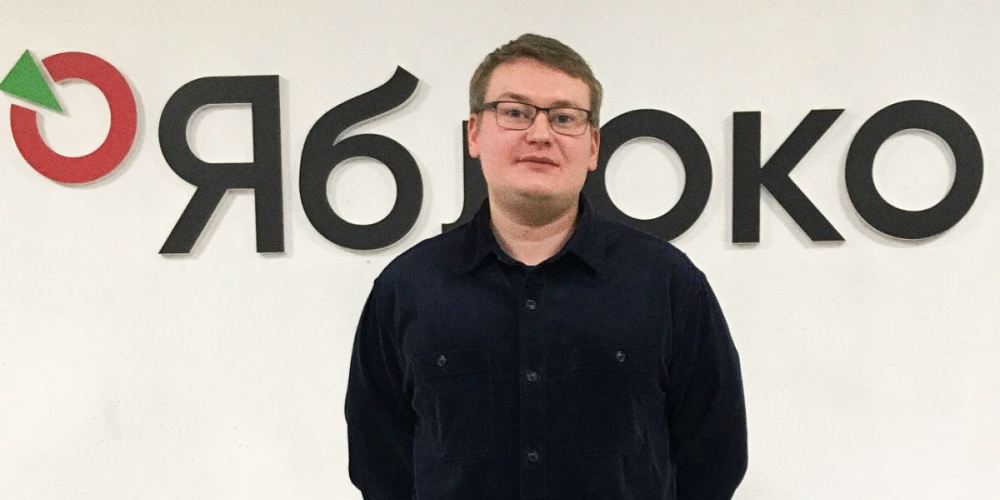
— Of what can be called a success, I would highlight the campaign of the Yabloko party in 2022 in the Pskov region. I didn’t join it from the very beginning and was, as they say, on hand on issues of interaction with election commissions already at the campaigning stage. But the election results turned out to be quite successful for Yabloko, especially in Pskov, and I am glad if I was able to contribute at least a little to this success.
Another important topic for me is the training of observers and members of precinct election commissions before elections. I gave quite a lot of lectures on the electoral process, the peculiarities of the work of commission members and the interaction of observers with them during elections. There were especially many lectures before the federal elections of 2018 and 2021. In our native Frunzensky district of St. Petersburg, local election observation activists and I tried to create a mechanism for independent control over the integrity of elections by training members of precinct election commissions and training observers. I was directly involved in this work in 2021 and 2023.
And even if there are practically no elections left in Russia now, then tens and hundreds of people who have an understanding of the electoral process, the procedure for counting votes, and so on, after our training and work in the election commission on voting day, still have every chance to contribute to the holding of free elections, which are still waiting for us all sooner or later. The fact that I myself was once able to understand the electoral legislation and then, as accessible as possible, tell a certain number of people about it, I also generally consider it at least useful.
— Do you consider what your colleagues in the trial were doing as politics?
— Grigory Yavlinsky has an article “Activism and Politics”, where he draws a line between these two concepts. What Vesna did was, first and foremost, activism. Still, politics and institutionalized participation in it are closer to me. In no way do I want to diminish the importance of activism and activist movements and initiatives. This is, of course, a very important component of any healthy civil society. But, again, institutional politics is closer to me.
Among my colleagues, I can highlight Jan Ksenzhepolsky, with whom we were not previously acquainted, but, as it turned out, had many similar interests: he was actively involved in observing elections in his native Tver region, and in addition to this, he was an assistant to a deputy of the regional parliament, working with citizens’ appeals.
— What is your biggest regret in life, failure?
One of the things I really deeply regret in my life is that I still do not have a higher education diploma. But this is only my fault, because I could not take advantage of the opportunities that I had. Now all that remains is regret. It’s also a shame that the detention interrupted my quite successful studies, which now, in 2025, would be approaching its final phase. But, nevertheless, I plan to someday get a formal higher education and close this source of worries.
— What is your greatest achievement in life?
— I won’t undertake to name any special achievements of mine. I think it’s not for me to determine. And it's still too early.
— Is it boring to sit in a pre-trial detention center, what is your time spent on?
— Sitting in a pre-trial detention center is not boring. The secret is simple - you need to find something to do. I remember when I first got to the pre-trial detention center in June 2023, I began to think that it would be very difficult to occupy so much time with something. But it turned out that while reading books and answering letters, time flies monstrously quickly. Moreover, there is often not enough time to do everything planned for the day. In addition to reading books and writing letters, I try to exercise whenever possible. And then there are everyday things, like eating or washing clothes, that also take time.
— What are the main inconveniences of imprisonment?
— If we talk about the inconveniences of imprisonment, then first of all it must be said that a person gets used to everything. So, after two years in a pre-trial detention center, it is difficult for me to immediately answer this question. In addition to the obvious everyday restrictions, the main inconvenience is, perhaps, limited access to information. I was used to being aware of events in the country and the world, constantly monitoring what was happening. And for the first few months in the Moscow pre-trial detention center, the only source of news was a radio station with a single radio station, Mayak. To this we can also add newspapers that arrived noticeably late. I had a TV in other cells, but to be honest, I was glad when I ended up in a cell without one in October 2024. There's nothing to see there anyway, it's just distracting and annoying.
At the moment I have a radio and this is, in my opinion, the best option. But, of course, without modern sources of information it is often inconvenient. Nevertheless, even under the conditions of such restrictions, it seems quite possible to learn something new. You can often get lost in the huge flow of information on the Internet. The radio news reports and newspaper releases that reach me are “digested” much easier. And, of course, in a pre-trial detention center there is time to read books. This is what I'm most happy about. I try to use this opportunity and meaningfully read more literature, including much that I previously did not have time for or put off. If we look for some positive aspects in the current situation, then first of all this is the opportunity to read. I am very happy about this opportunity.
— How is your health?
— As for health, in general everything is fine with him. In the pre-trial detention center, I managed to lose weight, which was long overdue. In addition, to the best of my ability and ability, I try to play sports and maintain physical activity. In the pre-trial detention center, there are daily hour-long walks - I try not to miss them. In the Moscow pre-trial detention center, the cells were cramped and overcrowded, so I studied during walks. In the St. Petersburg Crosses, the cells are quite spacious and well ventilated, so you can study in them too. Unfortunately, there is no gym in Kresty, although this is a new pre-trial detention center built according to European standards, and in theory it should provide such additional services. Many Moscow pre-trial detention centers have gyms.
Of course, health issues raise some concerns, which for now lie in the potential plane. Prison medicine doesn’t inspire much trust and I wouldn’t really want to deal with it. I repeat, at the moment everything seems to be in order with my health. God willing, it will continue like this.