
Translated material
Where to look for the origins of Russophobia
The civil schism can be looked at through the prism of the philosophical problem “I am Another” and associated with the national mentality

Illustration: Petr Sarukhanov / Novaya Gazeta
The beginning of the Northern Military District brought an acute civil split into Russian public life. This is one of those phenomena that gives reason to compare the current period in Russian history with the post-revolutionary years of the last century. Relocants versus the Remainers. Pacifists against pro-government patriots. “Good Russians” versus “bad Russians.” Both are confident: “Mother is relying on us!” - meaning Russia.
On the one hand, these opposition groups (we will not talk about political, but about social forces uniting around certain political ideas) did not arise on February 24, 2022. On the other hand, it is obvious that the end of hostilities in Ukraine for Russia means, among other things, the question of whether a polarized society will be able to interact to improve life? And is there such a thing as the “common good” for the modern Russian en masse? It is pointless to draw any, even intermediate, conclusions in conditions when world politics increasingly resembles a show of self-affirming narcissists. At the same time, there is not much analytics in the public space from the position of “being above the fray” in the information war. A look at the confrontation between those who manifest their belonging to progressive liberalism and democracy and those whom they call “vatniks” through the prism of the philosophical problem “I am the Other” can at least expand the channel of perception of this social conflict.
"I am Another"
Let's start with the fact that the semantic structure of “I - Other” is universal for understanding ethical problems; it is actively used by modern philosophical anthropology and ethics. Moreover, this problem specifically in this formulation is a product of non-classical philosophy and reflects a relatively modern understanding of man and his interactions with the outside world.
If rationalist philosophy before Hegel was characterized by thinking in the subject-object paradigm of cognition with a strict opposition of the subject to the object, then after Kierkegaard introduced into philosophy the understanding of human existence as a process (later this idea was clarified by Heidegger: human existence as a project), that is, dynamically, static semantic structures of the 17th–18th centuries become insufficient, and the problem of the “Other” is firmly established in philosophy both in the West and in Russia.
This was also facilitated by the “emancipation” of the humanities, the formation of a methodology specific to them based on an understanding of the process of cognition as subject-subject interaction (interaction between the author of the text and its recipient).
Subject-to-subject communication involves communication and requires intuition, empathy and understanding.
By understanding the “Other”, a person understands himself more deeply. By defining its relationship to the “Other,” “I” simultaneously defines itself. This interpretation is successful in that it removes the “I” from determination solely by social connections, as Marx interpreted the subject, and at the same time, a dialectical approach is applicable to this pair of concepts.
In essence, the dualism “I and his Other” is a stage of development of the “I”, which must move to the level of understanding oneself as “I am the Other.” “Other” for a person is a challenge, it is an opportunity. This is an invitation, this is a call to become something more than you are now. Another person comes into the conscious “We” in the same way as he stands out from it - becoming different.
But who is “I” and who is this “Other” of mine? It can be a specific person, a team, or an entire nation. And if we correlate with this dyad, or dialectical pair, “I” and a specific society, and we are talking about modern Russia, then it is quite natural to turn to history.
Russian mentality - origins
A commonplace of Russian cultural studies is the assertion that the Russian mentality was formed at the junction of the West and the East, Europe and Asia, at the border of their collision, becoming a kind of “buffer zone”. The correct approach, however, sees three main cultural sources of the Russian mentality and Russian national culture - these are Slavism, Hellenism and Western European culture. There is also an approach according to which Russian culture belongs to the type that is formed by absorbing what is culturally foreign to it and at the same time maintaining its originality.
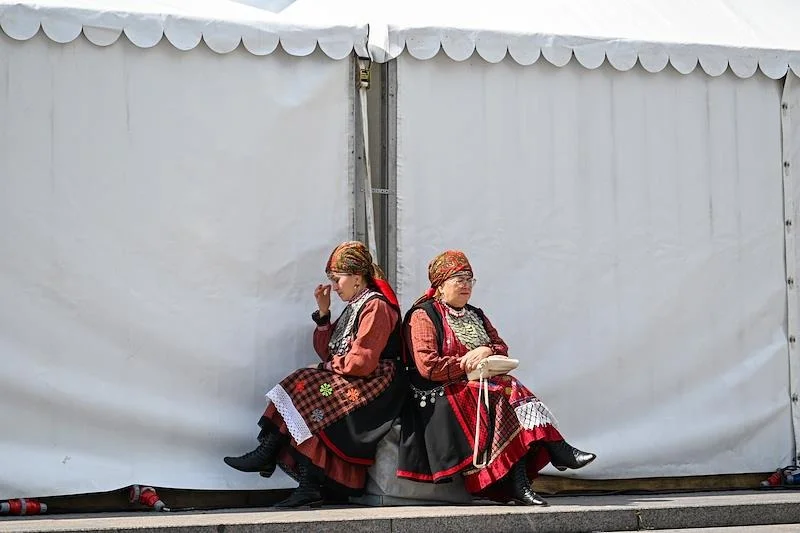
Thus, although national mentality is usually viewed as something holistic and universal, its universality in the case of Russia raises questions. Suffice it to recall the fact that during one of the periods of greatest historical development of the national character, in the 19th century, during the time of Pushkin, which allowed him to write the “encyclopedia of Russian life” (the novel in verse “Eugene Onegin”), the Russian elites did not speak Russian.
Yes, we can say that it was not the everyday communication of the aristocracy that shaped the cultural image of Russia in the 19th century, but science and artistic culture created in the Russian language. In any case, this does not simplify the task of understanding, since, on the one hand, “mentality” is not a strictly scientific concept; on the other hand, the complex of phenomena that is understood by it is more fundamental than culture (peoples can live in a state of civilization without having a culture, but retain their “national character”).
In short, there is reason to state: the Russian mentality is, in principle, fragmented .
And this already makes it possible to explain many contradictions that really accompany the cultural process in Russia, taken in the broadest possible sense. This can be observed in recent centuries and in recent decades.
For example, the all-round responsiveness of the Russian person is strikingly combined in him with a clear distortion, a defect in his perception of the ethical principles of interaction “I - Other” in relations with his fellow tribesmen. The essence of this ethical problem is precisely Russophobia, in this context understood as the hostile attitude of Russians towards Russians. No European nation has such contempt for its own fellow citizens. And this is most clearly manifested at the level of relations “state power - society” .
Where to look for Russophobia
This idea, however, has been expressed more than once - that Russophobia should be sought, first of all, within Russia.
This feature of Russian society is associated with contempt for the individual, stemming from the lack of emphasis on the individual principle and the tendency towards collectivism, characteristic of Asian despotism and imprinted in the unconscious of the people standing at the origins of modern Russia, during the period of the Mongol-Tatar yoke. This, at least, is the truism used to explain the relationship between power, law and the Russian person as a “folk type”: disrespect for the personality of another is a consequence of an unrepressed slave and unformed subjectivity. On the same basis, the Russian person is attributed to servility before the ruling “Other”, “Other-in-power”.
But is this true?
The will to dominate
The “woman’s” desire to collapse under the weight of an impudent “ruler” still has other psychological prerequisites, because in such judgments the figure of the master or entire groups that behave towards another (others) as “master” are lost sight of, and this is not eradicated historically. This means that in such an attitude, it is not the irrational desire to submit (“lick the master’s boot”) that is manifested, but the will to dominate, the desire to rise at the expense of another, from which comes the admiration for brute force and “firm power.” “I” sees in the “Other” as valuable that which it does not possess and which it would like to appropriate for itself. That’s why we see how often, having seized power, our “man of the people” becomes an authoritarian leader and a covetous person pursuing only personal interests.
This is, firstly.
Secondly, we should not forget, according to the observations of historians, a social crisis that requires survival under the yoke of despotic power breaks the national character and forces it to degenerate . This was the case with the Slavs who inhabited Kievan Rus. This was the case with the Germans after Bismarck’s military rule: from romantics, the latter degenerated into “moderate and careful” clerks. This is the explanation why the Germans easily followed Hitler: they followed the revival of the romantic idea, without noticing that it had degenerated into fascism.
There have been plenty of mental catastrophes in Russia; one only has to remember the events of the last half century.
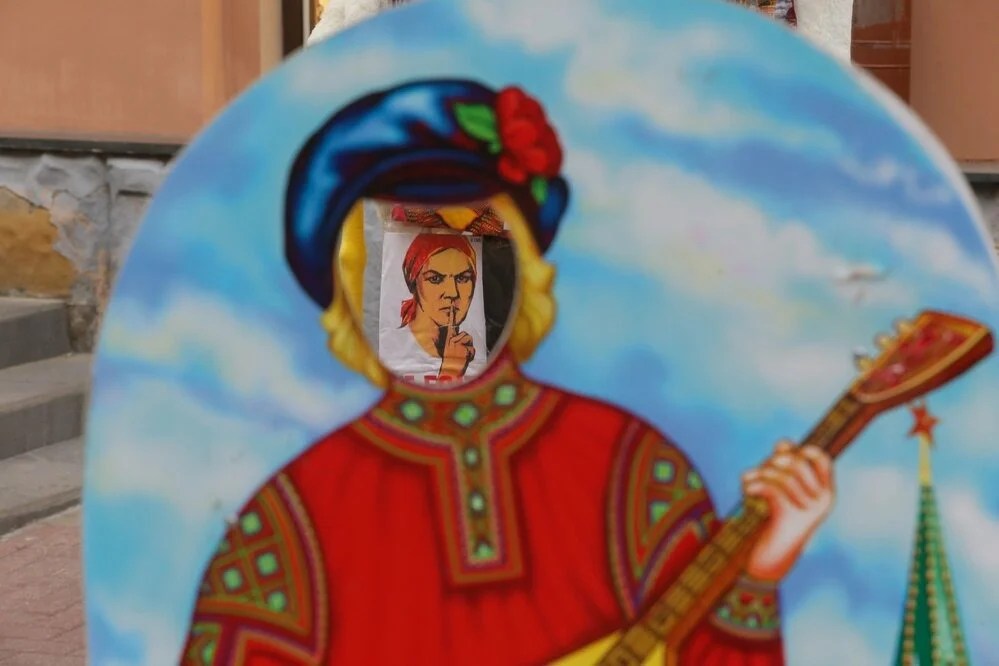
At the same time, any history, be it a literary story, be it the history of a people, can be analyzed for different purposes. Accordingly, events may come into focus, regardless of their actual historical significance. Without losing sight of this, let us touch upon some important events from the recent Russian past in this particular context.
To the extent that Russia remains part of the global capitalist world, the growth of consumption, or, more simply, redneckness has remained our “national idea” in the last 30 years. However, it is obviously wrong to say that this idea is specifically Russian. Yes, it was clearly defined during the formation of the Russian oligarchy, but historically it is not specific to the Russian mentality.
Our “national idea,” the formation of which dates back, as has already been said, to the times of Batu, is domination and exploitation.
That is why in our society, despite the period of “building communism,” the features of the class-class order are alive. All these divisions into “ours - not ours”, “our circle - not ours”, the intelligentsia - “vatniks”. “Whose will you be?”
Such a social state is a regurgitation of feudalism, which lasted in Russia the longest among European countries. At the level of the collective unconscious, it is common for Russians to build rigid hierarchies within communities of different levels. The Gulag, this monstrous creation of the Soviet state, is, in fact, also a manifestation of feudalism, rooted in the Russian social matrix. Bitten by domination and the complex of the arbiter of destinies, these are the same today’s “Orthodox activists” who do not disdain denunciations of petty hooliganism on TikTok.
In one of his works, the German philosopher Nietzsche writes that the love of life reflected in ancient art should not be understood as a trait actually inherent in the ancient Greeks. The joy of life reflected in art is a mirage that shielded the Hellene from the horror of life. The same can be said about communism. It is because the ideology was so deeply accepted in Russia that our historical landscape did not contribute in any way to the achievement of the “common good.” To achieve it, communism acts as a tool: building a society that rejects the exploitation of man by man. Critics of communist ideology point out that its psychological origin lies in the desire for collective irresponsibility. This, they say, equally determines the Russian national mentality - collective irresponsibility and at the same time despotism. Paradoxically, “neo-feudalism” is, in fact, associated with this trait .
Our way out of despotism is either into anarchy, as a complete negation of the state, or into feudalism. Thus, the latter, like anarchy, expresses the desire for freedom, but with some clarification - from social responsibility, from social initiative, free competition and, accordingly, social mobility.
Man to man - simulacrum or feudal psychology
The duality of “feudal psychology” is logical. If a nation exists for a long time as an irresponsible rabble, the saving dream of a “strong state”, “firm power” inevitably arises. If a nation is enslaved by internal political forces, if one part of it secures its right to a better life at the expense of the exploitation of another part, the dream of a society of communism arises. In both cases, we are dealing with psychological overcompensation at the collective level.
Thus,
the subcutaneous injections of social predation given to Russians in the 90s with the transition to capitalism entered the already poisoned blood.
Then the seeds of postmodern philosophy fell on the soil of Russian liberalism of the early 2000s. There are no value hierarchies, no truths, only interpretations exist. Our man cleared this thing. "Live as you want." “Nobody owes anyone anything.” This “freedom” is good because, among other things, it implies freedom from gratitude. Ingratitude is a kind of betrayal. We were given freedom-to-betray the “common cause.” Both the res publica (“common cause”) of the ancient Romans and the Christian ideal and the concept of human rights have this priority at their core: the common good.
However, for most, the “common good” today is a fiction.
Russians living in Moscow within the ring metro line are not required to feel connected to the rest of the country. What is the connection, really, between some shiny, bursting at the seams “hereditary” philologist and Fyodor, Stepan, Ivan, standing knee-deep in mud, extracting oil, from the sale of which Moscow primarily gets rich? With Fedor, Ivan, Stepan, on duty at night, managing a nuclear reactor somewhere in a little-known nuclear town, so that the capital's professors, in the light of a brightly burning light bulb, could shine in their departments?
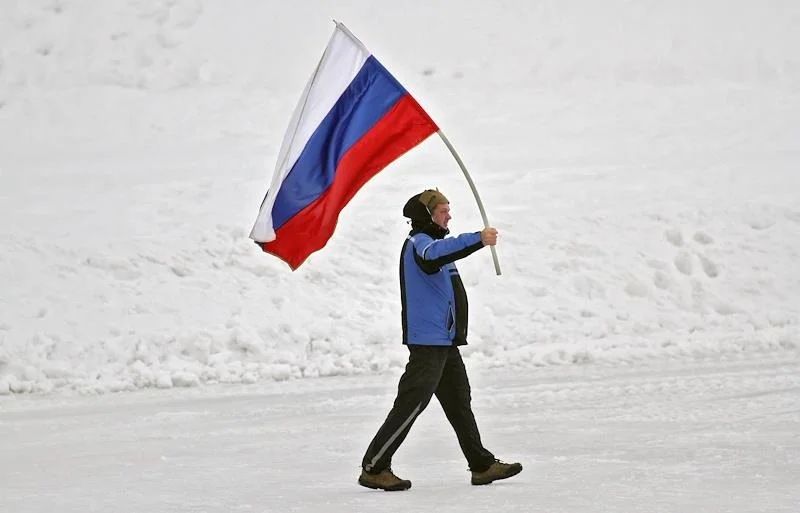
At the same time, irresponsible individualism in our country coexists perfectly with servility towards the leaders of our “pack”. It gets ridiculous sometimes. Whatever some well-known thought leader in narrow circles formulates on social media, be it liberal or “patriotic”, all evokes unanimous agreement. In the minds, a merger occurs with an authoritative figure and, apparently, elevates the “follower” in his own eyes, thanks to such a mental merger-absorption, which forms public discourses of social significance in the information field completely spontaneously, meaninglessly and mercilessly. Meanwhile, intelligence and independence of judgment come together.
The pushing back of personal activity from the social and political spheres to the private, well organized at the ideological level in the 90s, turned into total narrow-family egoism for Russia. This is where corruption and clanism stems, growing wildly on every, even the smallest, pile of public resources.
Snatching more, devouring something sweeter and “delighting your loved one” is the main “national idea” of an apolitical tradesman with a wide range of educational status. The desire to live well at any cost “for one’s own” and what happened in Russia after the first wave of partial mobilization, therefore for me they are links in the same chain.
I'll expand on this idea.
A person obsessed with the goal of dancing a ballet role, which he has been pursuing for many years, starting from the junior classes of ballet school, will, of course, evoke respect. As everyone with a noble goal calls. Such aspirations in a society focused on the value of service and the self-sacrifice associated with it are assessed as clearly good. And then one day, having combined the value of service (to art... science... psychotherapy - one might say, to other people) and the value of his own life, this type chooses them, service and his own life, and not the need to risk it for the sake of an idea alien to him or for the sake of another person who does not share his values.
It turns out that these are completely different things: to serve others when you want it, when it coincides with your internal attitude, and to serve when external circumstances force you to do so. It’s not hard to imagine: all people have their own goals, values, good intentions or what they understand by them.
For all their differences - goals, values, intentions - they have something in common. Only the living can realize them. Dead - no.
The situation of struggle for one's offspring clearly demonstrates this irreducible social conflict, and its absolute ethical meaning becomes obvious. Who will survive? Who will remain? At least in posterity. Offspring is the only type of immortality available to every living organism. And, no matter how unpleasant it may be to admit, in situations requiring such a choice, the choice in favor of one’s child in the moral sense is always animally selfish: it is always a choice in favor of oneself, one’s genome, one’s possible continuation “in children.”

The essence of this moral conflict was clearly expressed by Daniil Kharms in a prose miniature, telling how one child-loving woman, seeing the approach of an aggressive dog, snatched a baby from the sandbox, and noticing that it was not her child, a stranger, threw it back into the sandbox.
That is why, according to the thoughts of the German philosopher Kant, the actions that we perform “out of inclination,” that is, essentially for their own sake, have no moral meaning. It is present only in actions according to duty: when the human Ego submits to the universal moral law standing above it.
At first glance, modern society in its most advanced part (active Internet users) has reached a level of development at which the “I - Others” relationship has outgrown the possibility of acute moral conflicts. Or, at least, if it has not ceased to be relevant, it has been significantly smoothed out.
“Man is a simulacrum to man” is a very convenient approach to social connections. It is reinforced by the simulation ethic: live as you want as long as you do not pose a threat to my personal capsule reality.
The SVO suddenly showed that there is, it turns out, a different reality, a non-capsule one. Not a simulacrum. Tragedy is the only thing that seems to be able to destroy this view of the world: that everything is possible and nothing will happen to you for it. That there is only me, on my own. That the light bulb has always been there and the current in the wires arises for my benefit on its own, simply because I exist.
It is absurd to expect that everyone would do the same as one of my virtual acquaintances. Having sent his wife and daughter abroad, he himself remained in Moscow, commenting on his action on his page on social networks in the following spirit: if the disaster reaches Russia (which actually happened in the border regions), who will protect the lonely women and old people left here if everyone leaves?
This act, I emphasize once again, is exceptional. But this is a real example of one of the possible ways of relating “I” to “Other”.
It is fundamentally different from that which is manifested in the widespread public statements of relocants, “good Russians”, who want the worst that should happen to all of Russia - which no one old or small can avoid.
The desire to assert one’s superiority, to divide people first into “good” and “bad”, and then into “higher” and “lower” and to use the latter as a resource should be understood as a universal manifestation of evil in human nature. This desire, as may be noted, is inherent in the animal nature of man. It manifests itself in situations of cultural regression, civilizational backwardness and has no national characteristic.
As for Russian society, it seems as if it is going in circles. From feudalism to the Gulag and further to the division of a multimillion-strong, multinational, diverse, long-suffering people into “good” and “bad” Russians. Moreover, this happens in such political conditions within the country when the accuracy and objectivity of such identification is hardly possible.
In the public space, the concept of “white coats” did not arise out of nowhere. This category of “dissenters” declares itself primarily by emphasizing its impeccable moral position. But elevating oneself, even at the expense of one’s impeccable moral position and wishing evil indiscriminately, is the same manifestation of the will to dominate. “Lower and use” - in this case, using the “Other” to elevate oneself - this is the same “GULAG logic”.
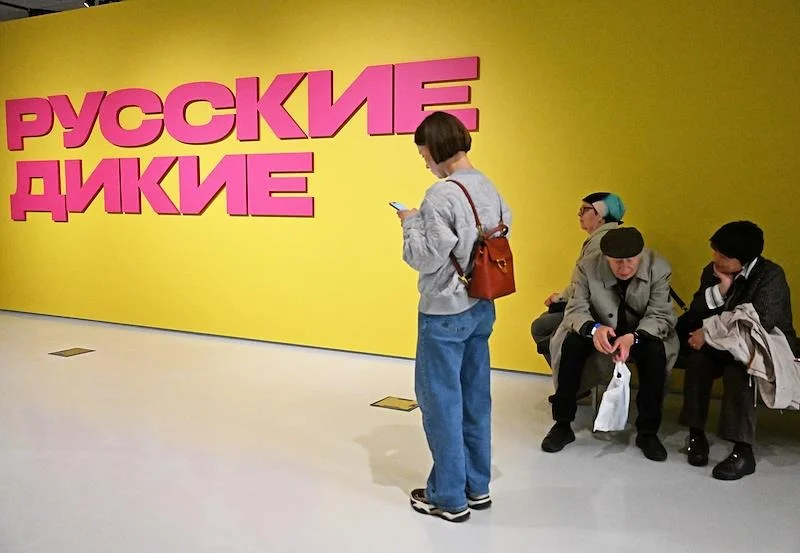
It is impossible not to notice any significant interest in the future fate of the country, this type of “good Russian” does not show, but often produces a lot of “white noise” in the information space, because it can also be profitably converted into social capital.
One of its clearest expressions of a completely different moral position belongs to the Russian philosopher Nikolai Berdyaev; in his work “The Justification of Good,” which paraphrased the biblical text as follows: “Where is your brother Cain, Abel?”
The moral position, which is revealed in Berdyaev’s statement, implies the highest implementation of the Christian commandment “Love your neighbor as yourself.”
What does this mean?
If we care about our moral purity, then an individualistic approach to this concern itself devalues it. In Christianity, everyone is personally responsible for their moral choices.
At the same time, it clearly shows the idea that a Christian is not a Christian if he strives to enter the Kingdom of God alone.
When applied to modern realities, this should be understood this way. People have different backgrounds, social and psychological. Some conditions contribute to positive personal development, others do not. Therefore, when assessing the “Other,” we should not forget about our responsibility for the “common cause,” for the formation of the existing social conditions that give rise to this “Other.” To whom more is given, more is asked. And ranking people according to the criterion of social well-being and intellectual culture does not require much intelligence when from birth you have access to the benefits that hypersocialization provides.
There is no common sense or justice in this.
And at the same time, there is nothing more difficult than treating the Other, at least without dehumanizing him, when he is clearly far from humanistic ideals. Today in the world political arena we are seeing examples where civilizational fault lines pose a threat to all of humanity.
The essence of Christian ethics is love and forgiveness, in this it overcomes the archaic law of Talion: an eye for an eye, a tooth for a tooth. It is very significant that it is in the bosom of Russian thought that a text is born that is essentially a sermon, rolled up into one succinct phrase: it is not enough to be righteous and leave the world to remain in its moral imperfection. It is a pity that in the modern individualistic world this reference point obviously falls out of sight of the “best people”. That is why we see in the “Other” only a means - at least for our own moral elevation.
Avoiding conversations about such things does not lead to anything good. After all, the problem is obvious. Avoiding everything politically inconvenient means leaving the situation at the mercy of loud idiots, opportunists, pseudo-liberals and pseudo-patriots.
And everyone chooses for themselves to emigrate or stay with their country. This is not a very important choice in this semantic context. The main thing is not to end up like swarms of locusts, first eating one nourishing place, then another.
The earth, whatever one may say, is round.