I live in the border city of Belgorod, where, as in Ukraine, almost every week someone dies from shelling and drone attacks. Since February 24, 2022, many tragedies have occurred in this city, which I and other journalists tried to record to show what war looks like and what it leads to. Now I want to talk about how these three and a half years have narrowed my emotional range to two options - fear and indifference.
In the “ Diaries ” section we publish author’s columns in which journalists share their own experiences. These are personal stories in which the nerve of time is felt. The time in which we all live now.
Recently I mistook the famous "hao-hao-hao" from Twilight for the sound of an air raid raid. In general, I have had cognitive distortions associated with sounds for a long time: in the summer I hate motorcycles, in the winter I hate snowplows, because their roar is reminiscent of drones flying by. I can't stand the garbage trucks picking up waste from bins - the sound of empty bottles falling sounds like an explosion in the distance. Now people I don’t know well can notice how I freeze in the heat of conversation, listening: is it a drone buzzing or a janitor mowing the lawn in the yard? Life hack: if the sound remains in place, it’s not a drone.
The tune is from the song "Eyes on Fire" (by the Blue Foundation), which was featured on the Twilight soundtrack.
In the fall of 2025, Belgorod again became a hot spot. In the spring and summer it was still calm - then I drank beer at summer camps, and in the media there were hints of negotiations and “agreements” - whatever that means. The locals didn’t really believe in him, but they greeted the news from the summits with phrases like “just do something already.” But no one did anything, and ping-pong began again at the border: something was bombed in Kharkov, then something landed in Belgorod. I stopped counting serves a long time ago.
This is what they call a series of alternating retaliatory attacks by Russia and Ukraine in the border regions: the parties seem to be throwing a ball over a net, only instead of a net there is a border, and instead of a ball there are missiles.
Actually, I'm already used to this shit. On February 24, 2022, Russian planes were flying over my head, and a couple of minutes later a distant “boo-boo” could be heard from the Ukrainian side of the border - and so the war began.
In April of the same year, Belgorod was covered in black smoke: an oil depot on the outskirts caught fire after an attack by Ukrainian helicopters - the first response. And on July 3, the Ukrainian Tochka-U , either shot down or not, fell on a small and very green private sector in the city center - then five people from one family were killed. After dinner, their neighbors, in awe, went out to the benches under their crumpled balconies to drink beer from one and a half cups.
Tochka is a Soviet tactical missile system. After modernization of the complex in the 1980s, it received the name “Tochka-U”.
On December 30, 2023, the air raid siren was turned on for the first time in Belgorod - it is unclear why: it howled when I was already walking on shards of glass past burning cars and screaming people in the city center. I saw a dead woman on one pedestrian crossing, an overturned baby stroller with a bloody handle on another, and a broken-down skating rink on the central square. Then 25 people died.
Then there were more shellings: explosions, shaking windows with crosses made of tape, fire, cars damaged by shrapnel, a collapsed entrance, alarm sirens, fire trucks and ambulances, screams, crying, videos of arrivals, smoke, dust, injuries and deaths. Judge whether it’s PTSD or not: I practically don’t remember the year 2024. What I remember for sure is that I only gave a damn about every tenth air raid alarm. Then the siren was turned on often throughout the entire region, and it did not always mean that the missiles would fly specifically to Belgorod.
We are used to how Kursk and Belgorod students and teachers study and work under fire
Now I feel the war more clearly: it is creeping closer to me, and now I am afraid of it. Recently I was walking through the park to the sound of machine gun fire - it was the terrorist defense system that was shooting down drones over the city. I followed the sound and the sky: shots came from the left, then from the right, but in the blue, partly cloudy sky there was, for the life of me, nothing. And then there was an explosion. A black cloud, as if made of dust, appeared in the sky. Someone gasped and ran to the nearest corner. I swore and ran too. I counted down a few seconds and thought that the debris and bullets should have already fallen to the ground.
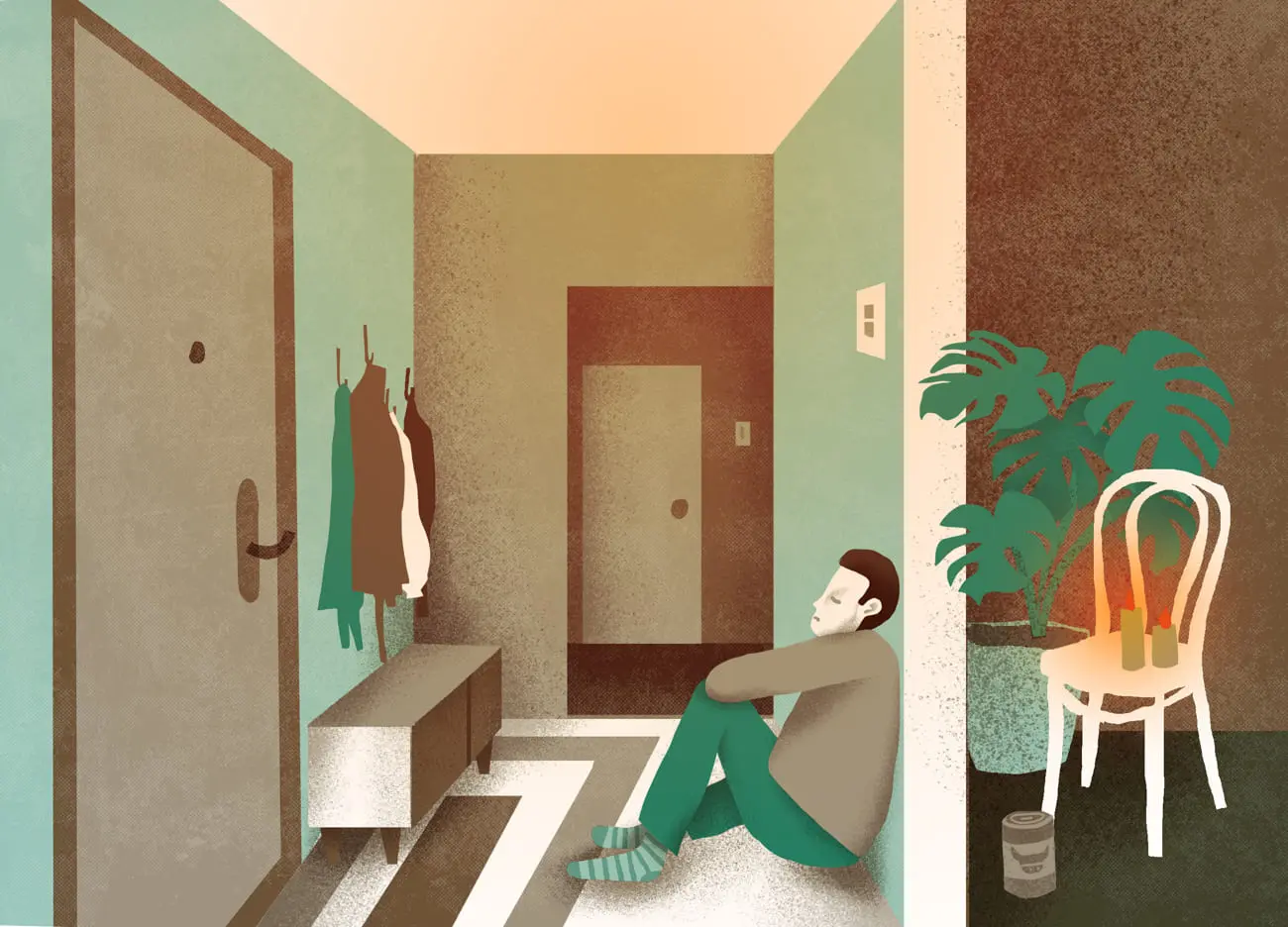
I have started counting to myself more often in recent months. I do this while squatting in the corridor, counting the explosions. One, two, three, eight, thirteen. I have never been able to count normally and completely - I am constantly distracted by the shaking door to the kitchen. Previously, I also tried to carry out such calculations, but it was more important to open the news and find out where it had arrived. Now I almost don’t care anymore.
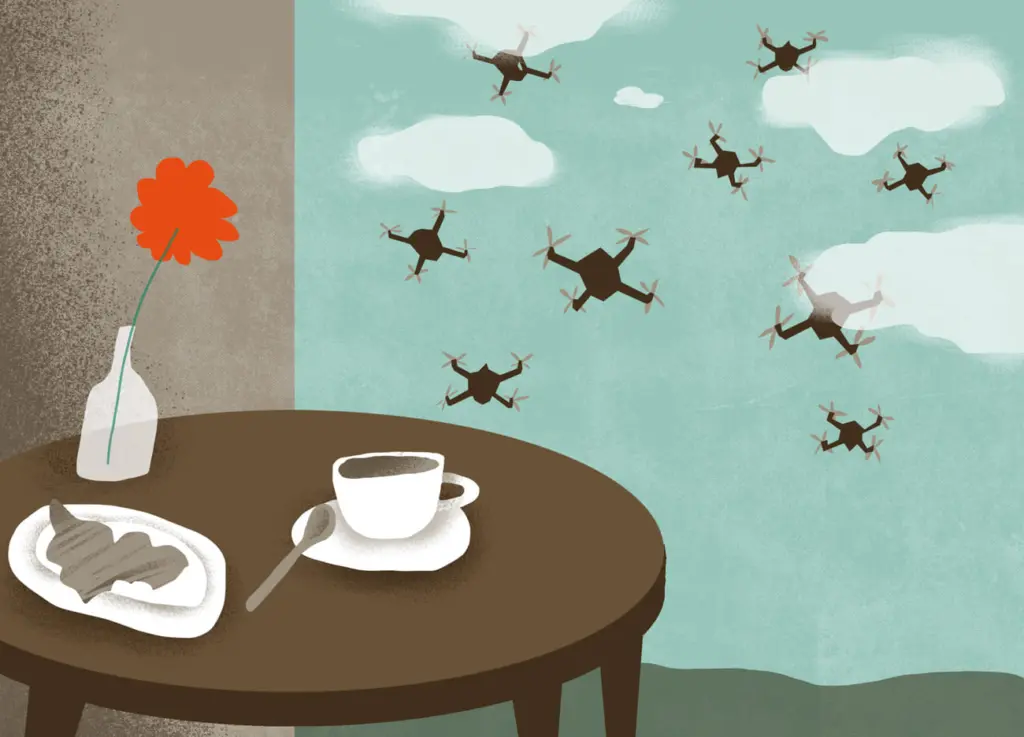
However, if you come to Belgorod now, you will not notice almost any manifestations of the imminent war: children play on the playgrounds, citizens ride on buses, coffee is brewed in coffee shops, trees in parks, as expected, turn yellow. There are only white concrete shelters everywhere, but for me they have already become part of the landscape, I don’t even remember the last time I took refuge in them: for some reason they are always too far from me. In a word, the war is not visible in the city, but it is precisely this visual deception that frightens. It’s like you’re looking at an empty white sheet that someone is about to tear into large disproportionate pieces.
The time when the Armed Forces of Ukraine fired a couple of dozen MLRS missiles at Belgorod at a time seems to have passed. Such shells fell indiscriminately on roads, squares, parks, and shopping centers. Chaotic and destructive - as if as a sign of revenge for the same shelling from Russia.
Now, closer to winter, the ping-pong tasks have changed: both Russia and Ukraine are attacking energy facilities on opposite sides of the border. I recently saw a photograph of Kharkov at night from space: due to power outages, the city from orbit looks like a black spot. The shelling of Belgorod became more targeted: several times Ukrainian shells hit Belgorod thermal power plants, leaving different parts of the city without electricity, water, communications and the Internet. After these attacks, the authorities began to temporarily turn off street lighting, so now at night Belgorod from space probably resembles a black blob.
Leisure according to the shelling schedule How residents of Belgorod try to relax, although the war reminds itself almost daily
The other day I myself sat for several hours by candlelight: it turns out that in the dark without electricity there is absolutely nothing to do. Now I’m at least ready for this: I keep the power bank charged, placed candles on the windowsills, took a can of stew from my parents. All I have to do is buy a good flashlight - I’m debating between a headlamp and a handheld one. I'd rather take both.
Another time, sitting in the corridor with the lights flickering due to arrivals, I thought about what I was more afraid of: missiles or drones. I have seen how destructive and deadly rocket attacks can be. But from missiles (it’s naive to think so), at least it’s clear how to hide: if at home, go to the bathroom, if on the street, run to a concrete shelter and hope that it doesn’t fly straight at you. Drones, while less lethal, are more unpredictable.
Not once have I taken cover during an unmanned emergency - you could sit in a concrete box all day. I think drones scare me more: I remember how my heartbeat quickened with fear when I heard the drone’s propeller approaching my house, and then for a very long time I watched the sound go away. If a drone had flown into a window, the two-wall rule would have barely saved me.
A rule of behavior during shelling, which requires you to be in a room separated from the street by at least two walls - for example, in a bathroom.
On February 24, 2022, my friends and I drank vodka out of grief, horror and despair and discussed at what point we would leave Belgorod. There were different options: when attacks on the city would begin, when it would fly into my area, when it would hit my house. Many of my friends actually left after their red lines: some because Belgorod actually began to be bombed, others because their own home was destroyed.
I also drew these red lines, but each time I moved them, getting used to the surrounding fucked-up. During the three and a half years of the war, its manifestations became as if indifferent to my conscious mind (my unconscious mind did not). I try to distract myself from what is happening outside the window by cooking, TV series, caring for house flowers and other simple household items. But I still involuntarily get used to listening, peering and counting to myself. I hope one day I will enjoy unlearning this.
Support the authors of New Tab You need high-quality and interesting stories from Russia, told by our authors. And most of all we need your attention, your reactions, your support - and, yes, including financial support. Support