
Translated material
What's happening on the front line right now?
Together with experts, we are analyzing the situation in Pokrovsk and Kupyansk, as well as the situation in other hot areas
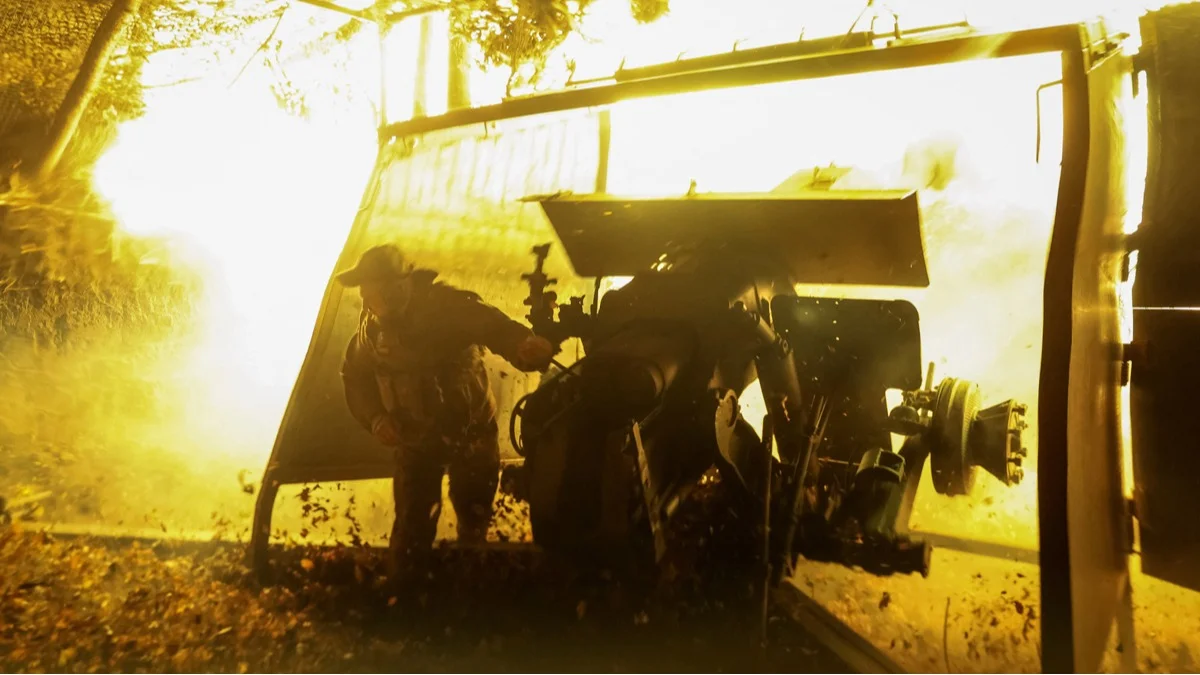
An artilleryman of the National Guard of Ukraine fires from a howitzer at Russian troops near Kupyansk, Kharkov region, Ukraine, October 17, 2025. Photo: Anatolii Stepanov / Reuters / Scanpix / LETA
The Russian Army is gathering reserves along the line of combat contact. In several areas the situation for the Ukrainian Armed Forces is becoming critical. “New Europe” discussed with experts the prospects for the defense of Pokrovsk, Konstantinovka and Kupyansk, as well as the situation in other hot sectors of the front.
Pokrovsk in semi-surrounding
There were reports in the media that the Russian command brought large reserves into the battle near Pokrovsk. The offensive resumed to the west and east of the city, as well as in its residential areas. Russian attack aircraft approach the last two roads into the city. The Meduza publication writes that several brigades of Russian marines, previously operating in the Kursk and Sumy regions, began an offensive at the base of the so-called “Dobropolsky breakthrough”. This wedge between Pokrovsk and Konstantinovka, 15 kilometers deep and 5–7 kilometers wide, was previously created by the 51st Combined Arms Army.
According to Meduza, near Pokrovsk, Russian troops continue to use small assault groups for attacks. Thus, attack aircraft of the same 51st Army entered the southern part of the city of Rodinskoye, through which the Russian Armed Forces have been unsuccessfully trying since August to break through to the northern exit from Pokrovsk, which would mean the encirclement of the city. In Pokrovsk itself, attack aircraft were spotted at the western exit on the highway to the Dnieper. To the west of the city, assault groups reached a fortified Ukrainian Armed Forces base on the territory of the Pokrovskaya mine, which covers the western approaches to the city.
The DeepState project map shows that Russian armed forces have come close to Pokrovsk and have taken the city into a semi-circle.
“There are street battles in Pokrovsk,” Sergei L., an officer of the Ukrainian Armed Forces fighting in the Donetsk region, tells Novaya-Europa. “Control of logistics in the city is complicated. The suburbs are chaotic in places. The defense of the western part is sagging. Too much enemy pressure. The Russians do not take losses into account. They are pressing from the north through Rodinskoye and from the south from Kotlino, bending the Ukrainian defense. Infiltration of DRGs into Pokrovsk also happens all the time. Moreover, these are not even classic saboteurs and scouts, but ordinary infantry. They are constantly being cleaned. The Russian Army is transferring reserves. With their help, they first tried to break through the cauldrons near Dobropolye, and now they simply launched an attack on Mirnograd.
The situation is getting worse
“This is the second year of attempts by the Russian armed forces to take Pokrovsk by storm,” military expert, reserve colonel of the Armed Forces of Ukraine Roman Svitan tells Novaya-Europe. “However, for several weeks now the situation has become increasingly difficult for Ukrainian defenders. The Russians entered the village of Rodinskoye and took control of the highway to Dobropolye. Now they are trying to cut off the Pavlograd highway and are constantly attacking vehicles with FPV drones. The Ukrainian Armed Forces hold about 10 kilometers of the throat, preventing the Russian Army from closing the boiler. The supply of the Pokrovsk garrison is also carried out in the fields. Autumn is dry, and the soil in these places is dense, and caravans with food, fuel and ammunition enter the city along it. Stockpiles of everything necessary have been created at the location of the defending units. But this territory is under continuous drone attacks and artillery shelling from the Russian side. Therefore, it is extremely difficult to maintain defense in this area.
According to Roman Svitan, Russian sabotage, reconnaissance and infantry groups quite often infiltrate the urban areas of Pokrovsk. Three to five people, under the cover of twilight and darkness, sneak into residential areas of the city and hide in buildings and basements. Sometimes they manage to accumulate and gather in small groups. The Ukrainian Armed Forces identify and destroy these formations, but they appear again more and more often.
“I can call the situation of the Armed Forces of Ukraine near Pokrovsk extremely difficult,” military analyst and former SBU employee Ivan Stupak tells New Europe. — The neck connecting the city with Ukrainian territory is inexorably shrinking and now, according to the most optimistic estimates, reaches 10 kilometers. If this trend continues, the situation will become critical. The possibility of encircling the Pokrovsk garrison is becoming an increasingly real problem. In addition, Ukraine suffers heavy losses during the delivery of ammunition and food to Pokrovsk and when leaving it. I can assume that depending on what forces the Russians use, the city will be able to hold out for one to two months. It is known that the Russian army is adding reserves, taking them from the Sumy and Kherson regions. Some of these units are sent to the “Dobropolsky ledge” to develop the offensive there and support the forces already located in this area. At the same time, the Russians are clearly preparing a new, deeper and larger-scale breakthrough.
“Today the situation in Pokrovsk is becoming more and more threatening for the Armed Forces of Ukraine,” military observer David Sharp explains to Novaya-Europe. — Maintaining logistics with a besieged garrison results in very serious losses for the Ukrainian side. In order to deliver the necessary ammunition, provisions and fuel, as well as transport the wounded to the rear, a very large number of transport and personnel have to be sacrificed. This is a really serious problem. It is possible that the Russian command in this situation is in no hurry to speed up the assault on the city, but is engaged in the systematic destruction of its defenders and those involved in supplies. This contradicts Ukraine’s concept of effective defense, in which the attacking side loses much more resources than the defending side. This could lead to the occupation of the entire Pokrovsko-Mirnograd agglomeration. In order to avoid this, Ukraine urgently needs to find serious reserves. However, according to my estimates, a stage will soon come when the Ukrainian Armed Forces will have to leave these cities.
David Sharp notes that in the Russian-Ukrainian war there were quite a few cases of large-scale encirclements and cauldrons closed around cities. The Russian army cannot quickly advance with large forces, which are required for a sudden maneuver. As a rule, the offensive is carried out in small groups, which are not enough for large-scale breakthroughs, and the Ukrainians manage to leave the dangerous area.
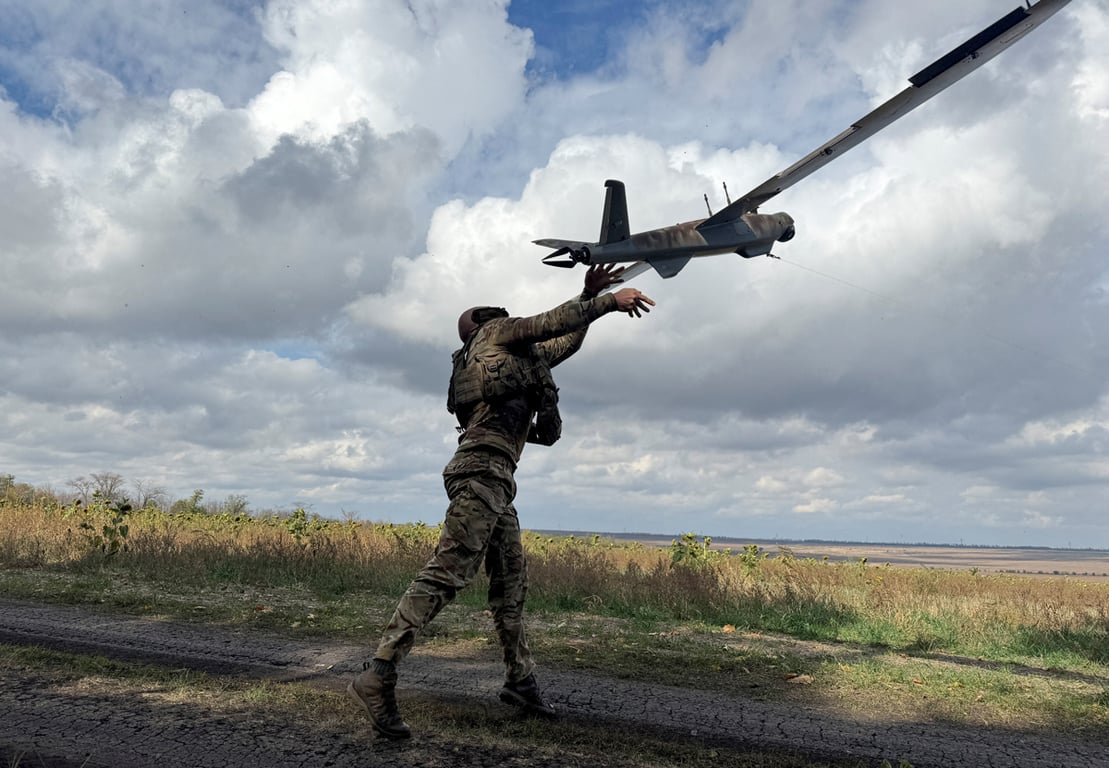
Are the Russians in a cauldron?
“Pokrovsk has been semi-encircled for quite some time, and for the last few months the Russian Armed Forces have been trying to close it off: to cut off the routes to Dobropolye and Pavlograd,” a Conflict Intelligence Team (CIT) analyst tells Novaya-Europe on condition of anonymity. — The situation in the city is close to critical, individual Russian attack aircraft are detected in a number of districts of the city, entering it from the southern outskirts and moving towards the center. But it is too early to talk about the control of the Russian Armed Forces in some areas of the city; rather, this is a large gray area. At the same time, attempts to completely cut off the city of the Ukrainian Armed Forces have so far been repulsed. Thus, the Russian Armed Forces are unable to take the mine complex north of Udachny, which will open the way for them to further blockade the city from the west. Plus, it will be possible to place UAV operators there, which will significantly complicate logistics on roads that have not yet been cut. Also, the Dobropolsky breakthrough does not expand to the west, which allows the use of the road to Dobropolye and further to Kramatorsk.
At the same time, according to a CIT analyst, stubborn fighting continues in all areas of the Dobropolsky breakthrough. The Russian Armed Forces are trying to expand the mouth of the wedge, attacking the Pankovka - Vladimirovka - Shakhovo area with mechanized columns and trying to enter Sofievka. According to the analysis of CIT experts, at the moment the Russian army has not achieved much success.
Roman Svitan says that when stopping the so-called operational breakthrough in Dobropolye, northeast of Mirnograd, up to two battalions of Russian soldiers were surrounded. About one thousand people are now supplied using drones. The Armed Forces of Ukraine, with small losses, do not allow the enemy to break through and expand the borders of the area occupied by the Russians.
“The Russians are trying to strengthen the breakthrough northeast of Mirnograd,” continues Roman Svitan. — They are bringing new forces into battle and trying to expand the captured territories. However, the Ukrainian Armed Forces also brought up reserves and established an effective defense, preventing the Russian army from breaking through to its encircled comrades and unblocking the units captured in the cauldron.
“The Ukrainians tried to cut off the Dobropolsky breakthrough at its base,” says David Sharp. - However, this did not work out. The Russian command still has the opportunity to bring fresh forces into the battle and consolidate, and possibly expand, its positions in this area. The potential for further development of the offensive for the Russian Army remains here.
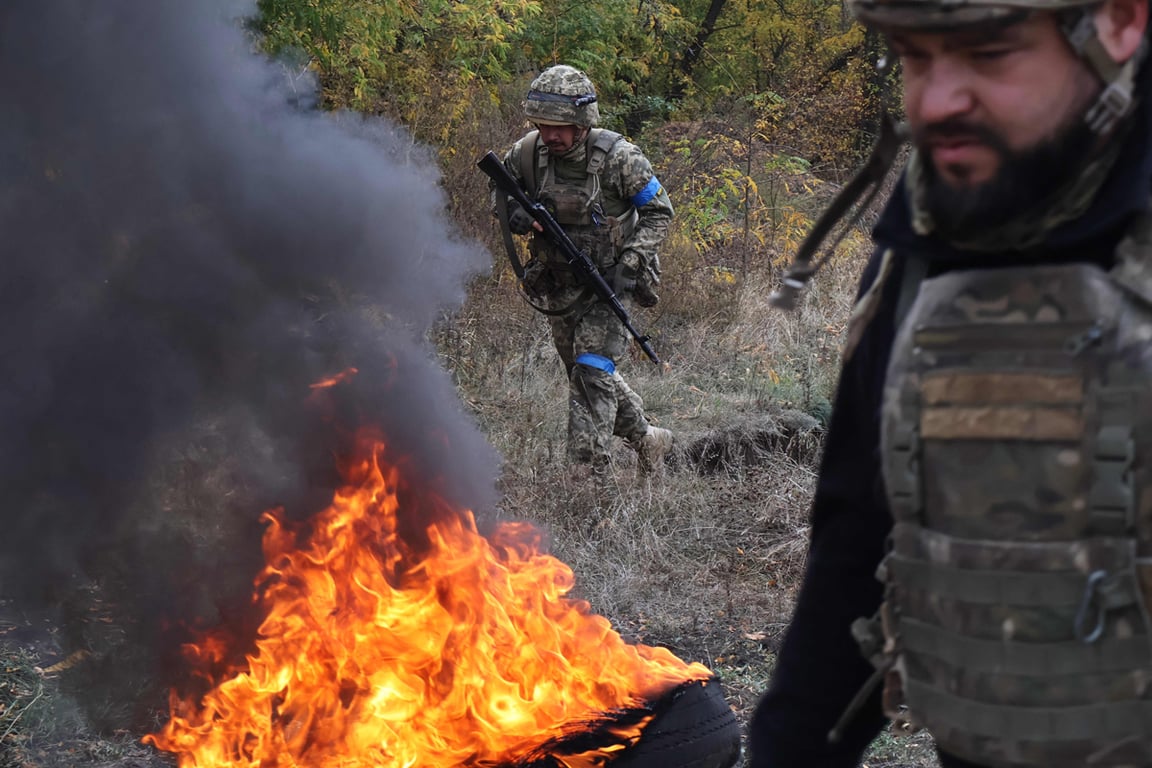
Nature vs drones
The main danger for the Ukrainian Armed Forces at the moment, according to Roman Svitan, is a large-scale combined arms operation of the Russians. It threatens the complete encirclement of Pokrovsk and Mirnograd. Already today, the Russian Army is carrying out preparatory actions and is transferring a second wave of additional reserves. Including motorized riflemen, marines and airborne forces. It is the paratroopers who are now seizing territory and settlements in the gray zone, entering them with attacks and forced marches. Then they hold the occupied bridgehead until the moment when other units deploy their flanks. The first wave made it possible to carry out the so-called “Dobropolsky breakthrough”. Every day, 30–50 attacks are recorded near Pokrovsk. However, at the moment, Russian commanders are afraid of too high losses and expect cloudy weather. High clouds, fog and precipitation will make the work of drone operators as difficult as possible, and the Russians will be able to actively use large infantry groups and equipment in assaults without fear of FPV drones. That is why we can say that the large-scale offensive of the autumn-summer campaign of 2025 is just beginning.
“The situation with reinforcements is twofold,” adds the CIT analyst. - On the one hand, indeed, several marine brigades were transferred from the Kursk region and the Kherson direction to the Novaya Poltavka - Popov Yar area, which are now taking part in the attacks. At the same time, the 90th Tank Division and motorized rifle brigades of the 41st Army were removed from the area south-southwest of Pokrovsk and sent even further south. Thus, this direction was noticeably weakened by the Russian command.
Assault on Konstantinovka and Kupyansk
“The Russians are also storming another city in the Donetsk region, Konstantinovka,” adds Roman Svitan. — In this direction, the same tactics are used as in Pokrovsk. Small groups of Russian soldiers are infiltrating residential areas. In fact, they are being slaughtered by Ukrainian FPV drones. Those who are not reached by drones are destroyed by Ukrainian Armed Forces soldiers. At the same time, the position of Konstantinovka is much easier than that of Pokrovsk. The Russians approached the city only from the south-eastern side, and supplies were provided much more efficiently.
In the direction of Konstantinovka, according to a CIT analyst, the Russian Armed Forces were spotted for several weeks in the dacha village of Yagodka, adjacent to Konstantinovka from the southeast. However, there are reports that they have been driven out of there in the last few days. The situation there still requires clarification. In any case, Russian troops are approaching the outskirts of the city, but are not currently visible within its administrative boundaries.
In Konstantinovka, according to Ivan Stupak, the danger of Russian drone attacks is very high. The drones fly over the entire city, conduct reconnaissance and overtake the Ukrainian military. Also, Russian DRGs often enter the city limits.
Bloody clashes continue in the Kharkov region. Roman Svitan calls the situation in Kupyansk difficult. There, battles are taking place almost in the center of the city. Moreover, it is not the DRGs that take part in the battles, but the linear units. The Russians entered there from the northern side. Also, for the second year now, the city of Volchansk has been divided between the parties.
“In Kupyansk, the Russians have reached the city center,” says Ivan Stupak. — Intense fighting is going on there. It is unknown whether the Russian army is able to gain a foothold in the city, but it is clear that the situation there is extremely difficult.
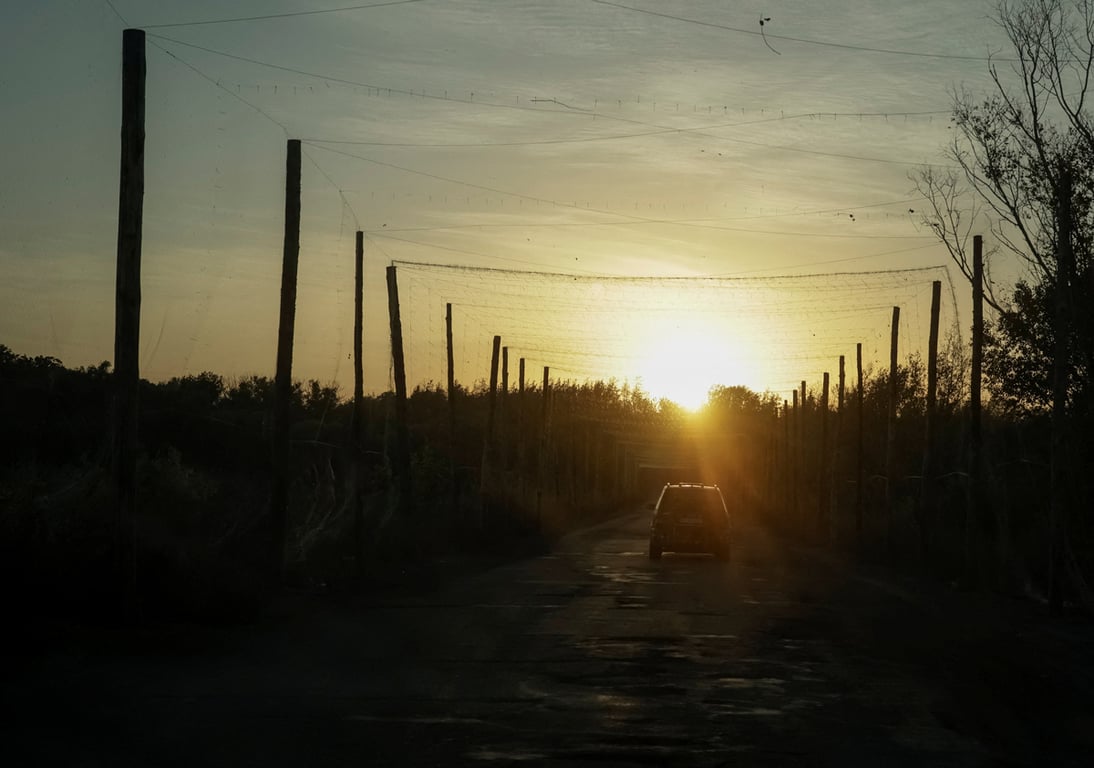
New dangerous direction
Roman Svitan talks about the emergence of a new dangerous area of military operations for the Ukrainian Armed Forces. On the border of the Dnepropetrovsk and Zaporozhye regions, the Russians began active attacks in the direction of the village of Pokrovskoye, north of the city of Gulyaypole - in the hope of reaching the Donetsk-Zaporozhye highway and cutting it off. At the same time, the Russian army has deployed fresh reserves and is trying to bypass and encircle Gulyai-Polye. So far, the Ukrainian Armed Forces are building defense in this area using long-range weapons: FPV drones, aviation and artillery.
“It is in the direction of the village of Pokrovskoye, in my opinion, that the situation is now most threatening for the Ukrainian side,” sums up Roman Svitan. “At this point, the Russians, having a strategic initiative, can try to go on the offensive, gain operational space and build on their success.
The Russian army, according to Ivan Stupak, is actively moving towards Pokrovskoye in the Dnepropetrovsk region. The breakthrough in this section is already at least 12 kilometers long and tends to increase. It is possible that the Russians will move west towards Zaporozhye or turn sharply north and try to advance from there towards Pokrovsk.
“Apparently, we are talking about the village of Pokrovskoye, which is located in the Dnepropetrovsk region,” the CIT analyst clarifies. — There is no direct threat to this settlement yet, although the Russian Armed Forces are hitting the bridges across the Volchya River located in the village in order to complicate the logistics of the Ukrainian Armed Forces in the area between the Volchya and Yanchura Rivers. However, the situation there is really difficult. In this direction, the pace of advance of the Russian Armed Forces is one of the highest on the entire front. The shortage of personnel in the Armed Forces of Ukraine is taking its toll. At least one mechanized brigade was deployed there, but so far it has not been possible to significantly slow down the advance of Russian troops. It is important to look at whether the Russian Armed Forces will be able to cross the Volchya River in the section from Novoselovka to Pokrovsky. If successful, this will threaten a serious crisis in the defense of the Ukrainian Armed Forces. Similarly along the Yanchur River, only here the movement is not to the north, as in the case of Volchaya, but to the south.
And the second point, according to the CIT analyst, is the Pokrovskoye - Gulyaypole road. Cutting it will also significantly complicate the situation for the Ukrainian Armed Forces. If the Ukrainian side manages to stop the advance of the Russian Armed Forces at the Novoaleksandrovka-Vishnevoe line and prevent the crossing of water barriers, then this section of the front can stabilize.