
Translated material
Schrödinger Summit
Why negotiations between Trump and Putin in Budapest are being postponed and what is needed to bring the truce closer in Ukraine
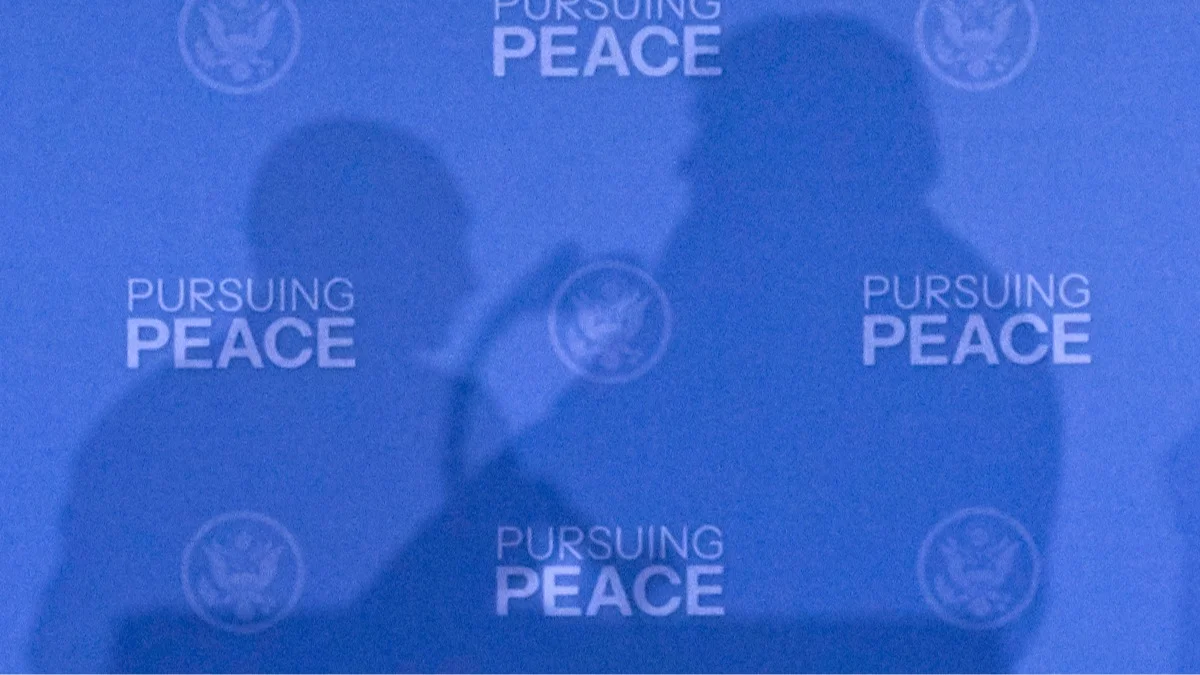
Shadows of Vladimir Putin (left) and Donald Trump (right) during a meeting in Anchorage, Alaska, USA, August 15, 2025. Photo: Sergey Bobylev / Sputnik / Kremlin / EPA
The idea of holding a summit between Vladimir Putin and Donald Trump in Budapest as soon as possible, before the end of October, ran into serious difficulties as quickly as it arose. On October 21, several media sources in the White House assured that such a meeting would not take place “in the near future.” The news came hours after Russian Foreign Minister Sergei Lavrov essentially criticized Trump's idea to "just stop" the fighting. However, then the head of the White House himself made it clear that there was no final decision yet: it would be made within the next two days. The Hungarian authorities called reports about the possible postponement of the summit fake. Kirill Dmitriev, a key negotiator with the United States on the Russian side, assured that “preparations are continuing.” Novaya Gazeta Europe tells why the summit in Budapest - if it does take place - could become at least a useless event from the point of view of a peaceful settlement and what must change for real progress.
How far is it to Budapest?
“I don’t want to have a wasted meeting. “I don’t want to waste time, so we’ll see what happens,” said Donald Trump, commenting on the prospects of a meeting with Vladimir Putin. And, maintaining the intrigue, he added: “We will notify you of our actions in the next two days.” There's a lot going on." Trump did not specify what exactly is happening and what factors may ultimately influence Washington’s final decision.
Even before this, the key negotiator with the United States on the Russian side, the head of the Russian Direct Investment Fund (RDIF), Kirill Dmitriev, assured on his X page: “Preparation [for the summit] continues.” At the same time, he accused the media of trying to undermine “the success of the upcoming summit.” And immediately after Trump’s speech, Dmitriev wrote : “CONFIRMED: President Trump said that the peace summit with President Putin IS NOT CANCELED.”
The head of the Ministry of Foreign Affairs of Hungary, the country where the summit is to take place, Peter Szijjártó, also criticized the media and the “military political elite.” “The same story repeats itself before almost every meeting of the European Council - before decisions on sanctions or on the European Peace Fund. Nothing new under the sun. And this time it will be the same. Until the summit actually takes place, we can expect a wave of leaks, fake news and allegations that it will not take place,” the minister wrote on the social network.
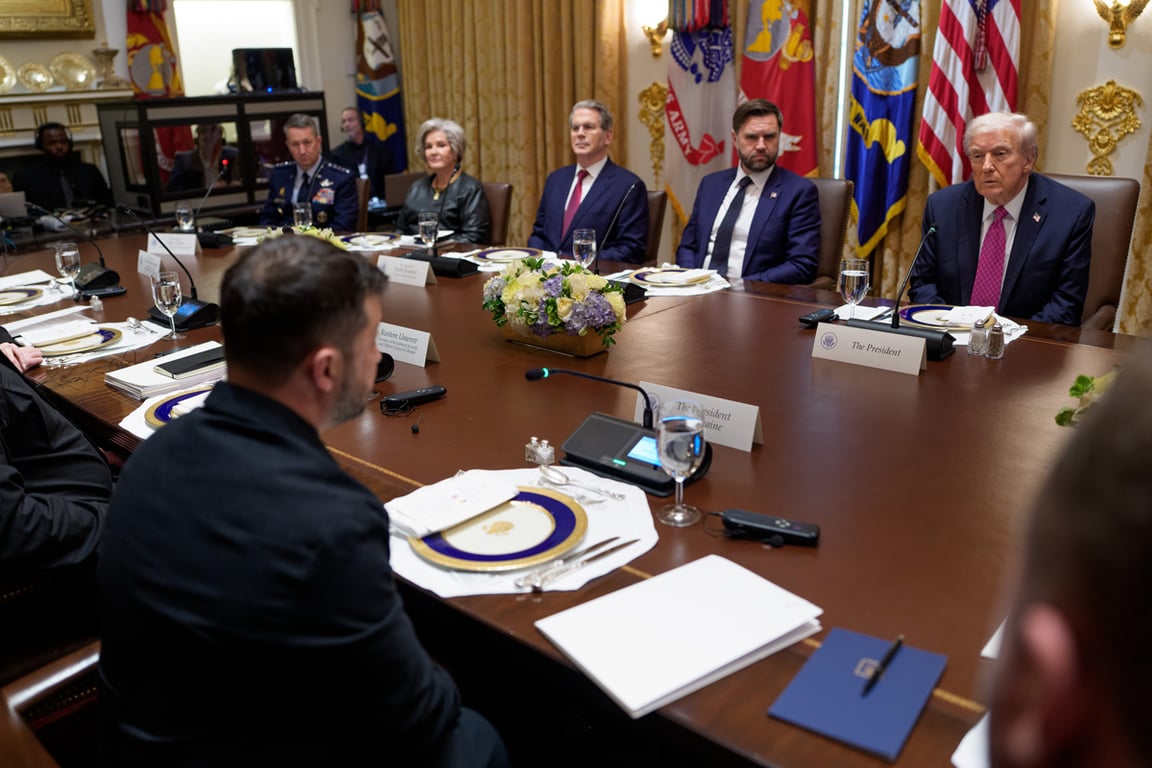
A series of these statements came after a number of Western media reported on October 21 that Trump does not plan to meet with Putin “in the near future.” In particular, this was reported with reference to an unnamed senior White House official by Reuters andAFP , as well as Axios . Sources added that US Secretary of State Marco Rubio and Russian Foreign Minister Sergei Lavrov are also not yet planning to meet in person.
NBC correspondent Garrett Haake, citing his source in the White House, confirmed that preparations for the summit have been “paused.” According to him, Trump believes that both sides are not ready enough for negotiations to “move forward.”
Thus, the implementation of the ideas that arose during the telephone conversation between Putin and Trump on October 16 faced serious difficulties in record time. Let us remind you that during a conversation that lasted more than two hours, the leaders of the two countries agreed that this week (October 20–26) there would be a personal meeting of “high-ranking advisers” (a little later it became clear that we were talking about Rubio and Lavrov), and after that, around the end of October, the leaders would also meet.
But already at the first stage - during the telephone conversation between Rubio and Lavrov on October 20 - difficulties arose. Although the Russian Foreign Ministry reported on “a constructive discussion of possible concrete steps in the interests of implementing the understandings that were reached” by Putin and Trump, an informed CNN source stated that Rubio and Lavrov have completely “different expectations regarding the possible end” of the war. The channel’s material was titled: “Trump’s hopes for a quick second summit with Putin have dissipated.”
Alaska 2.0
After a meeting with Ukrainian President Vladimir Zelensky on October 17, Donald Trump made it clear that the main thing now for the two sides in the conflict is to simply “stop where they are,” and then let history judge who won. Moscow was not satisfied with this proposal: on October 21, Lavrov said that “simply stopping means forgetting about the root causes of the conflict.” Further, the minister recalled these very reasons - from Moscow’s point of view: “attempts to drag Ukraine into NATO”, “actual genocide of the Russian and Russian-speaking population” and so on.
According to The Telegraph newspaper, in fact, the telephone conversation between Lavrov and Rubio was tense: the Russian minister said that Russia would not agree to a freeze on the front line. And the Reuters agency complemented the picture by saying: last weekend, in a confidential note sent to Washington, the Russian authorities again outlined their demands, including, as before, the establishment of control over the entire territory of Donbass.
“I think the Russians wanted too much, and it became obvious to the Americans that Trump would not reach any agreement in Budapest,” one person familiar with the matter told Reuters. Trump clearly would not want a repeat of the Alaska summit, when the words about an “extremely productive meeting” hid a lack of real progress and rapprochement of positions.
The analytical publication Visegrad Insight of the research center Res Publica Foundation (Poland) in this regard wrote that the prospect of negotiations in Budapest evoked “an ominous echo of the salami tactics of the Soviet era, which were mastered to perfection by Moscow agents who established control over Hungary after 1956.” This term, which is believed to have been coined by the Hungarian communist Mátyás Rákosi, refers to a political strategy in which one side extracts concessions from the other and gives up positions gradually, “slice by slice.”
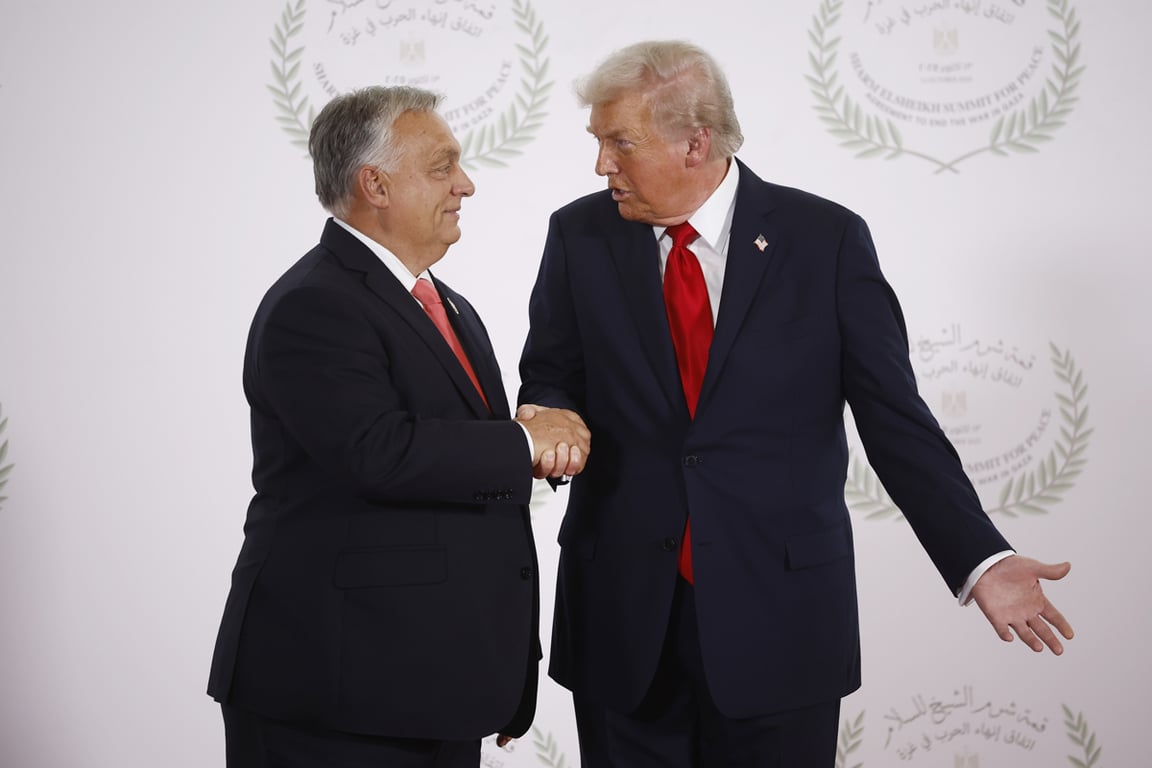
“In Budapest, Putin can score diplomatic points, and [Hungarian Prime Minister] Viktor Orban can bask in the glory. Trump risks undermining the influence of the United States with every empty promise coming from his main opponent, Mr. Putin,” explained Visegrad Insight before a wave of reports began about postponing the summit indefinitely.
European call
Probably, after the news appeared about the uncertain fate of the summit, all key European leaders, with the exception of Orban, breathed a sigh of relief. Firstly, as the head of EU diplomacy Kaia Kallas admitted , the arrival of Putin, a man against whom a warrant from the International Criminal Court was issued, to the territory of the European Union would be an “unpleasant” event. Secondly, since the conversation between Putin and Trump, European leaders have never tired of reminding that the solution to the conflict cannot be a bilateral deal between the United States and Russia - without taking into account all the interests of Kyiv. Some leaders, according to Politico, have even begun to seek a seat at the table in Budapest for themselves and for President Zelensky.
On October 21, the leaders of Ukraine, the EU, Germany, France, Italy, Poland, Norway, Finland and Denmark issued a joint statement on “the need for an immediate cessation of hostilities and that the current line of contact should be the starting point for negotiations.” At the same time, a plan to end hostilities, a draft version of which was prepared by the EU and Ukraine, was on the agenda.
As Bloomberg reported, citing its sources, the initiative implies that Russia will first have to follow Ukraine in agreeing to a ceasefire.
Both sides undertake to stop territorial advances. All prisoners will be exchanged, and children taken from Ukraine will return to their homeland.
According to the plan, Ukraine will receive security guarantees, funds for reconstruction and an accelerated path to the European Union. Russia should be pleased with the gradual lifting of sanctions. At the same time, about $300 billion of frozen Central Bank reserves will be returned to Moscow only after it agrees to contribute to the post-war reconstruction of Ukraine. The restrictions will be automatically restored if Russia attacks a neighboring state again.
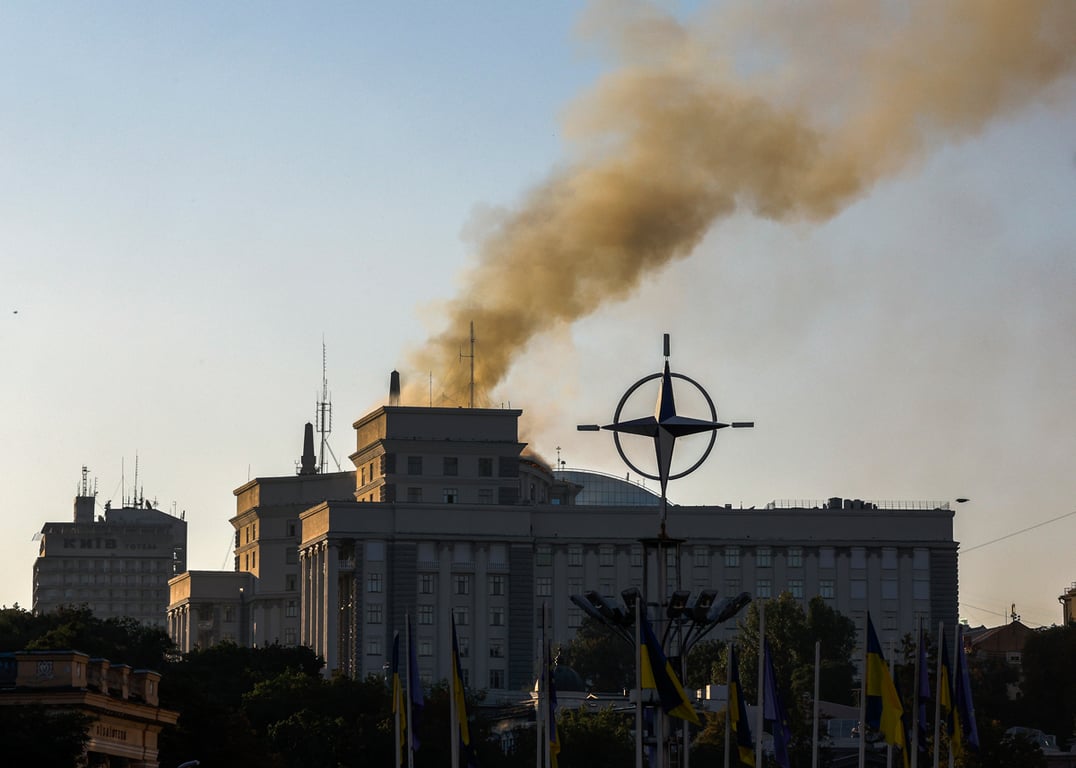
Neither Europe nor Ukraine, according to the plan, will legally recognize the occupied territories as Russian, but the mechanisms for their actual management will be the subject of discussion in negotiations. The implementation of the plan will be overseen by a special council chaired by President Trump.
However, as it became clear this week, a multi-stage plan can be considered unnecessary for now: how exactly to get Moscow to fulfill the very first point - a ceasefire - has not yet been figured out either in the EU or in Washington. Russian pro-government experts immediately made it clear that the plan was unrealizable. “The main thing is to reassure Trump that Europe (and Ukraine) is for peace. “What is described in the [Bloomberg] article has nothing to do with the real settlement,” noted , for example, Fyodor Lukyanov, chairman of the presidium of the Council on Foreign and Defense Policy of Russia, in his Telegram channel.
One of four
So far, everything indicates that processes will continue to follow the established trajectory. Donald Trump will continue to call for peace and assure all listeners that the moment he ends his next, ninth war is “already on the way.” The EU will be preparing more and more new sanctions against the Russian Federation (the 19th package, which will affect energy, banks and cryptocurrencies, can be approved at the summit on October 23) and argue about options for using frozen Russian assets. Meanwhile, the Russian army will continue to gather reserves along the line of combat contact.
“Russia hopes that in 2026 its forces will begin to have a significant advantage over the weakened forces of Ukraine, which will accelerate the exhaustion of Ukraine and lead to either the collapse of the front or diplomatic capitulation of Kiev,” analysts from the Center for Strategic and International Studies (CSIS; USA) wrote in a report released on September 30. They consider such a catastrophic scenario for Kyiv “unlikely, but not impossible.”
Experts called the second option “particularly plausible” and “the second most profitable for Moscow”: “eternal war.” This refers to a conflict of low but sustained intensity: sporadic fighting, irregular drone and missile strikes, artillery shelling on the front line and Ukrainian cities. While reducing the intensity of the war would bring some relief to Ukraine, such an outcome, according to CSIS, would leave it “in a kind of purgatory”: “Unable to fully join the European Union due to the ongoing conflict, Ukraine may face difficulties in recovering its economy.” Putin, meanwhile, will hope that "growing public discontent will lead to the emergence of a more submissive Ukrainian leader."
CSIS experts consider Russia’s voluntary decision to cease fire unlikely, since the Kremlin is confident that any pause will be beneficial to Ukraine.
This scenario, as analysts note, “is based on the assumption of the fragility of Russian morale - a vague and elusive concept.” And it will become possible only if Kyiv’s allies and Kiev himself are ready for “escalation for the sake of de-escalation”: either a sharp increase in economic and military pressure on Russia, or a much larger scale than now, “the transfer of military operations to Russian territory.”
Finally, the fourth scenario—“Russia and Ukraine achieve a stable peace that allows them to go their separate ways”—seems least likely to experts. The necessary condition is “a serious crisis in Russia, combining economic turmoil with large-scale Ukrainian military strikes.”
Thus, CSIS summarizes, the likelihood that the Kremlin will seek any diplomatic agreements is extremely low. And the West should proceed precisely from this premise.