
Translated material
Who is their favorite?
The elections in Argentina ended with the victory of the party of the libertarian president. Now he will be able to speed up the experiment to radically restructure the republic
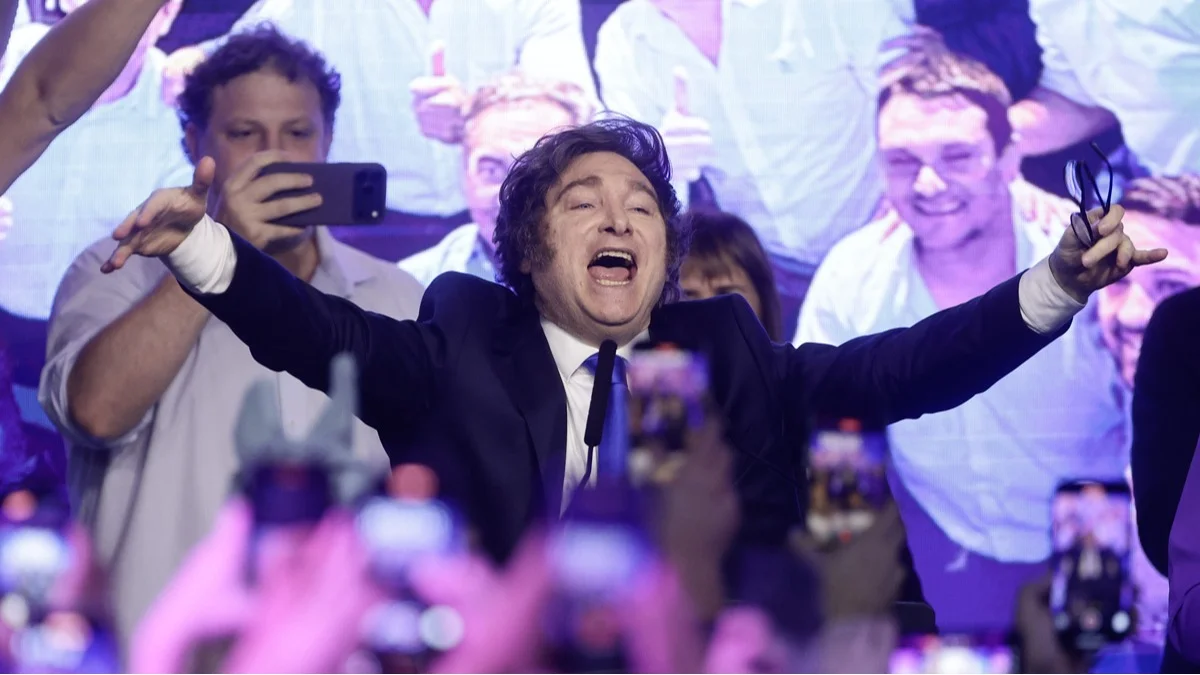
Argentine President Javier Miley celebrates victory after the results of parliamentary elections are announced, Buenos Aires, Argentina, October 26, 2025. Photo: Juan Ignacio Roncoroni/EPA
Argentine President Javier Miley - a libertarian, an eccentric, and a supporter of the policies and style of Donald Trump - has been tested in the form of parliamentary elections. Formally, on October 26, only half of the Chamber of Deputies and a third of the Senate were at stake, but de facto it was about the political future of President Miley and his large-scale project for the socio-economic reconstruction of Argentina.
It turned out that, despite all the difficulties as a result of the “Miley shock therapy,” many Argentines are still ready to support the libertarian experiment that began at the end of 2023. The head of state’s associates from the La Libertad Avanza (“Freedom Comes”) coalition won more than 40% of the votes in the elections to the Chamber of Deputies and will eventually receive more than a third of the mandates there. This is a critical threshold that will prevent the opposition from overriding presidential vetoes and unconditionally imposing its policies.
It's just a song
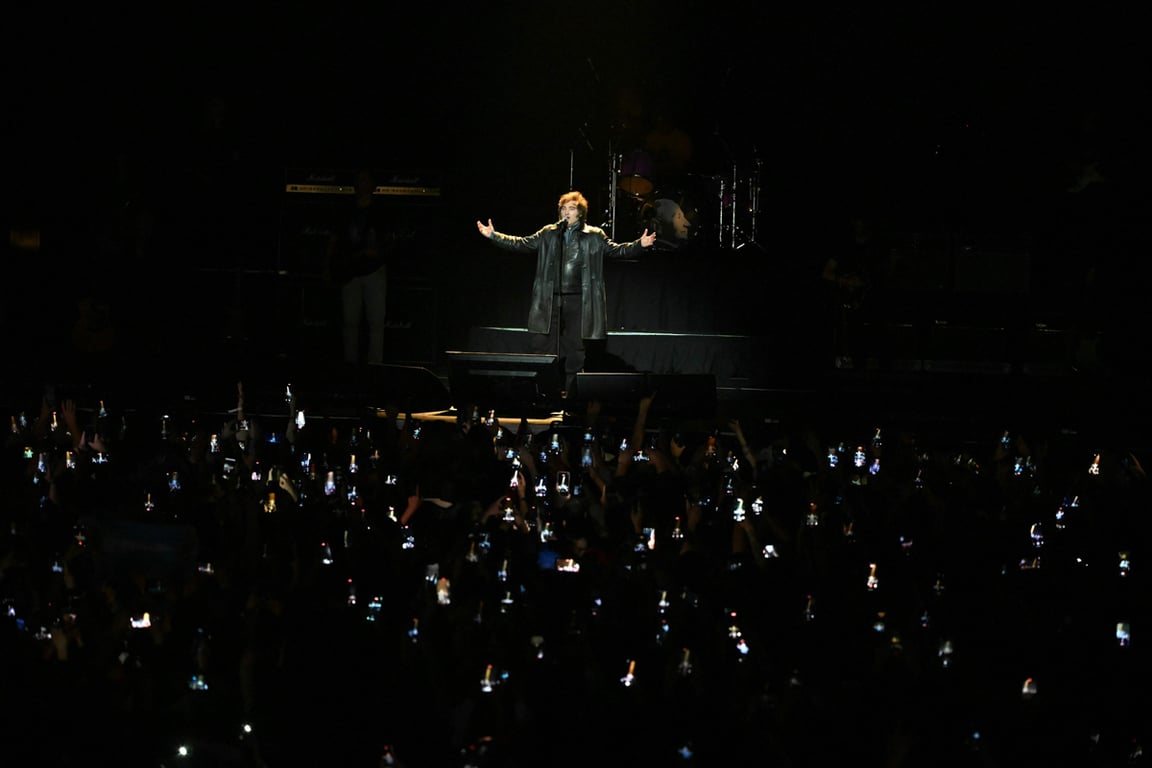
A stadium filled to capacity with fans in Buenos Aires, pyrotechnics, stage special effects, guitarists, a drummer and a vocalist in a leather jacket singing “Give me fire, give me the fire of your love” - this is not a scene from a concert of a local rock star, but Javier Miley’s benefit concert held on October 6. Actually, it was he who was the vocalist - a man who in his youth performed covers of The Rolling Stones songs in the band Everest, then became an economist, professor, TV star and, finally, head of state.
In front of 15 thousand spectators, Miley sang several songs by Argentine and Spanish performers: for example, the group Ratones paranoicos (“Paranoid Mice”), as well as the Jewish “Hava Nagila”. But formally it was not a concert, but a presentation of Miley’s book “Constructing a Miracle” (La construcción del milagro), dedicated to libertarianism and criticism of leftist views.
In fact, this was a pre-election event - a key one for the head of state before the parliamentary elections on October 26. It is no coincidence that the program also included a screening on huge screens of a video made with the help of AI, in which Miley appeared in the image of the Jedi Luke Skywalker from Star Wars, who entered into battle with the “dark forces”: the ex-president of Argentina (2007–15) Cristina Fernandez de Kirchner and the governor of the province of Buenos Aires, Axel Kisilof.
Actually, in the elections, the main struggle unfolded between these two opposing camps: the right-libertarian coalition La Libertad Avanza (“Freedom Comes”) of Miley and the center-left Fuerza Patria association of Kirchner, Kissilof and ex-Minister of Economy Sergio Massa.
Fuerza Patria unites different forces, but at its core is Peronism - a special ideology that is a combination of economic nationalism and paternalism, a unique Argentine alternative to neoliberalism.
Peronism is a flexible ideology, it can be both right and left. Peronists of the second type focus on social protection, income redistribution, subsidies, strengthening the role of the state in the economy - in general, on everything that is unacceptable for the libertarian Miley. Left-wing Peronism in Argentina is referred to as “Kirchnerism,” named after Cristina Fernandez de Kirchner and her deceased husband, ex-president (2003–07) Néstor Kirchner.
Not all mandates were at stake: according to Argentine law, this time the fight was for half of the seats in the lower house and for a third in the upper house, the Senate. The minimum task for Miley's associates was to obtain a third of the seats in the Chamber of Deputies of the new convocation. Such a result would prevent the president’s opponents from overriding his veto, and would allow the head of state himself to protect himself from the threat of impeachment.
Preliminary results showed that in the lower house elections, Milea's coalition won 40.7% of the vote, while Fuerza Patria and its affiliated forces received 31.7%. As a result, according to calculations by Clarin,
Fuerza Patria and its allies will have 96 seats out of 257 in the Chamber of Deputies (-2 compared to the previous parliament), while La Libertad Avanza, together with its allies, will receive 93 seats (+56).
In the Senate elections, the Peronists received 28.4% and La Libertad Avanza 42%. As a result, Fuerza Patria will have 26 seats out of 72 (-8), and Miley's associates will have 19 (+13).
“Today is without a doubt a historic day for Argentina. The people have decided to leave behind a hundred years of decline and choose the path of freedom, progress and growth, said Javier Miley, speaking to supporters after the announcement of the election results. “Today we have passed the turning point; Today begins the construction of a great Argentina." After this, the head of state promised to focus on “the reforms necessary for growth and the final economic takeoff to make Argentina great again.”
Minefield
“The audience that determined the outcome of the choice was the “swamp” - people who are not ardent supporters of either side. There are many of them, and there are still many people in the country who are far from politics,” Russian Viktor, who has lived in Argentina for several years, tells Novaya-Europe. This, according to him, is evidenced, for example, by the fact that in the last week before the vote there were a lot of queries on search engines like “What are they voting for on October 26?”
In general, Victor notes, before the elections there was a noticeable “rather strong polarization of society, although not as much as, for example, in the United States”: “Here people can have radically opposing views and argue about politics until they are hoarse, and then hang out together, drink mate and relax.”
Voters were most influenced by the economic situation. That is, the same factor that in November 2023 brought Javier Miley to Casa Rosada (“Pink House”), the residence of the President of Argentina. History following the results of that campaign included Miley’s appearance at a rally with a chainsaw - a symbol of impending large-scale cuts in government spending.
After the 2023 victory, the newly elected president called on his fellow citizens to prepare for temporary difficulties, but assured: “This is the last bitter pill that we have to swallow.” Argentina was then experiencing an acute crisis after two decades of left-populist rule, interrupted only by four years of the presidency of center-right Mauricio Macri. About 42% of the population lived below the poverty line, inflation reached 211% per annum (the highest level in the world), and the overall budget deficit was 4.6% of GDP. And in terms of GDP per capita, Argentina - a country that at the beginning of the 20th century was one of the ten richest countries in the world - could be compared with, say, Libya and Iran.
“We inherited the worst starting conditions in history: a money supply surplus twice as high as before the 1975 crisis; the Central Bank's balance sheet is worse than before the hyperinflation of 1989; and social indicators are lower than in 2001. It was a minefield,” recalled Javier Miley on October 26 in his victory speech. As follows from the election results, “sapper” Miley is so far progressing in this field very successfully.
Libertarianism in Action
Miley's reforms are based on a presidential decree of emergency (Decreto de necesidad y urgencia, DNU), which came into force on December 29, 2023. It allowed the introduction of more than 300 economic measures and changes to hundreds of laws. Equally significant is the so-called omnibus law, in force since July 2024, a document consisting of 238 articles that allowed Miley to issue decrees on administrative, economic, financial and energy issues. At the same time, initially the omnibus law had 664 articles (plus annexes), but in this form it did not gain votes in parliament, so Miley had to take up the scissors.
Either way, the changes are still monumental. Miley began the process of privatizing state-owned enterprises, abolished nine of 18 ministries (for example, the ministries of culture, transport, tourism) and reduced the number of secretariats (from 106 to 54), fired at least 50 thousand civil servants, and reduced subsidies for electricity, transport and social programs. Spending cuts even affected sectors such as science, education and medicine. Everything is under the slogan “No hay plata” (“No money”).

True, money was still found for some needs: while, for example, the capabilities of the Secretariat for Human Rights were reduced, the budget of the State Secretariat of Intelligence (SIDE) from January 2025 increased by 68% by the summer. As the media found out , among other things, this intelligence service began to actively spy on trade unions, opposition leaders, and even associations of pensioners dissatisfied with the social changes taking place in the country.
As a true libertarian (that is, a supporter of minimal government intervention in people's affairs),
Miley has a particular focus on deregulation. According to the libertarian Cato Institute (USA), by August 2025 it had adopted 1,246 deregulatory measures - about two per day.
The reforms affected completely different sectors: from energy and agriculture to real estate and healthcare. Some of these measures simplified the complex system of foreign trade controls, others reduced the volume of bureaucratic procedures and paperwork.
In addition, the President has repealed, reduced or allowed to expire approximately 22 federal taxes. He mentioned the Cato Institute's attempts to improve the business climate: the adoption of the RIGI investment incentive package, which includes tax breaks for 30 years and simplified foreign trade for large investors (over $200 million) in selected sectors, including energy, raw materials, infrastructure and technology.
External support
Much attention was paid to monetary policy, which was aimed at achieving one key goal - reducing inflation. For this reason, in particular, the emission of money was stopped. In addition, one of Miley’s main steps at the very beginning of his reign, in December 2023, was the devaluation of the official exchange rate from 400 to 800 pesos per dollar, which helped reduce the gap with the unofficial rate (the so-called dólar blue). This made exports cheaper but raised the cost of imports, including food and fuel. Now the dollar is officially worth about 1,500 pesos.
The peso fell particularly sharply in July after Miley eased strict foreign exchange controls and changed some monetary rules. To support the national currency, the Central Bank responded by raising rates. As a result, annual loan rates for small and medium-sized businesses exceeded 60%. The consequence is obvious: a freeze in economic activity.
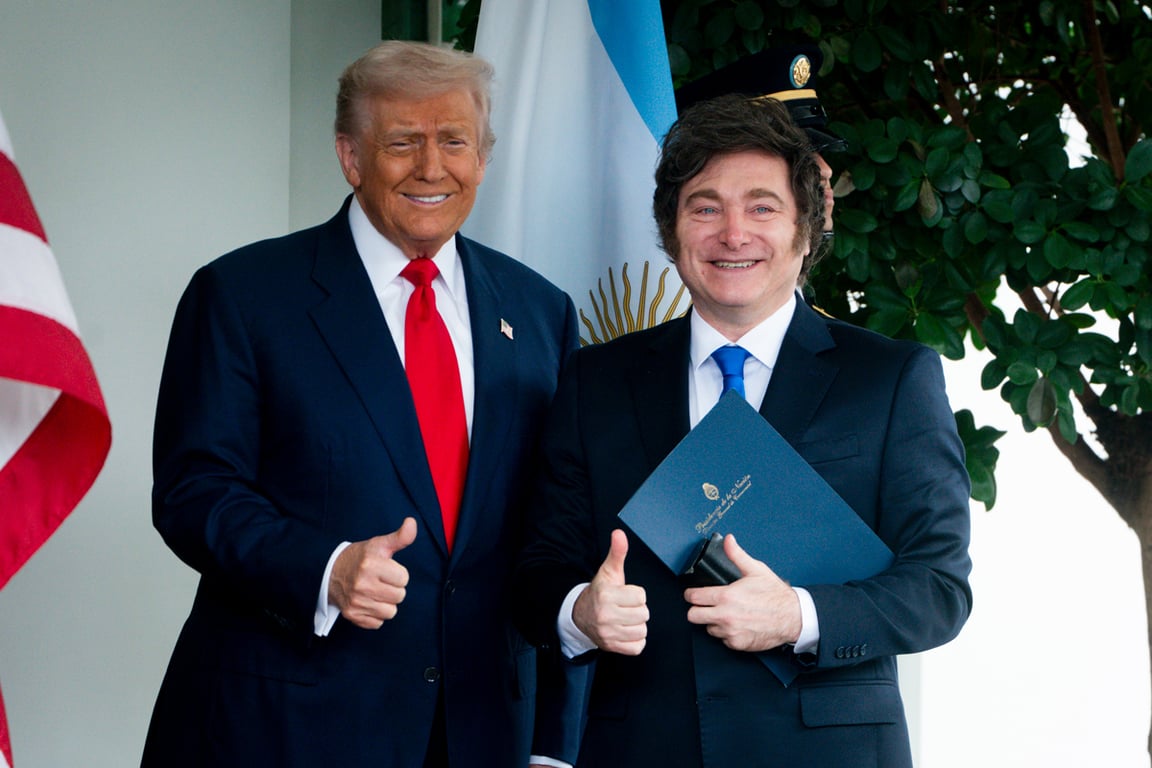
In the fall, against the backdrop of a rising dollar, the Argentine government turned to the United States for support. The Argentine Central Bank and the US Treasury signed an agreement on a currency swap line worth $20 billion. The goals are to increase the liquidity of Argentina's international reserves, as well as maintain price stability and economic growth. True, at a meeting with the Argentine president, his political idol Donald Trump made it clear that the money is being allocated not to Argentina as such, but to Miley’s Argentina: if leftist forces come to power in the Latin American republic, such support will cease.
After the election results were announced, Trump immediately congratulated Miley. “He does a wonderful job! Our trust in him was justified by the people of Argentina,” the head of the White House wrote on the Truth Social social network.
Macro vs micro
Reporting on progress this fall, Miley said: “Today Argentina has a sustainable fiscal surplus for the first time in 123 years without being in default.” According to the Argentine Center for Political Economy (CEPA), in September 2025 real budget expenditures were 25.2% lower than in September 2023, with revenues declining by 11.0%.
The authorities never tire of pointing out that in December 2023, when Miley came to power, inflation in monthly terms was 25.5%, and in September 2025 - only 2.1% . The IMF predicts inflation at 35.9% for this year.
“Prices in stores rose radically in the first two months of Miley’s reign. First - on expectations of devaluation, then - as a result of the devaluation of the official exchange rate itself, then - apparently, on expectations of a new devaluation,” Russian Viktor, who lives in Argentina, tells Novaya-Europe. — Utilities have increased several times, food is not so critical, but still clearly noticeable. A loaf of bread then cost at least 400 rubles, if translated, and it was the most tasteless bread you can imagine.” But after these two months, according to Victor, “Miley managed to get inflation under control: the current level for Argentina is just nonsense.”
Among economists, the official methodology for measuring inflation in Argentina is
The representativeness of the consumer basket used is controversial, but the fact remains: inflation has slowed significantly.
According to Vladimir Ruvinsky, a professor at ICESI University (Colombia), this is Miley’s main success in the economic sphere, which “gave the Argentines a certain sense of macroeconomic stabilization, although very fragile.”
Fragility is the right word. For example, it’s telling how country risk—the premium Argentina pays on its bonds compared to the benchmark, U.S. bonds—jumps. Initially, it fell from 2,500 points in 2023 to about 500 points in January 2025, and this was a significant success. That is, Argentina was able to borrow funds at much lower rates than before. But on September 19, the country risk rose to 1,500 points. And by the end of the month it dropped to 839.
As CEPA noted , “after a V-shaped economic recovery in 2024, the first half of 2025 is characterized by clear stagnation, and since February there has been a downward trend that could develop into a recession.” As a result, CEPA predicted that Argentina's economy could grow by only 4% by the end of 2025 compared to 2024, which is lower than the IMF forecast of 5.5%.
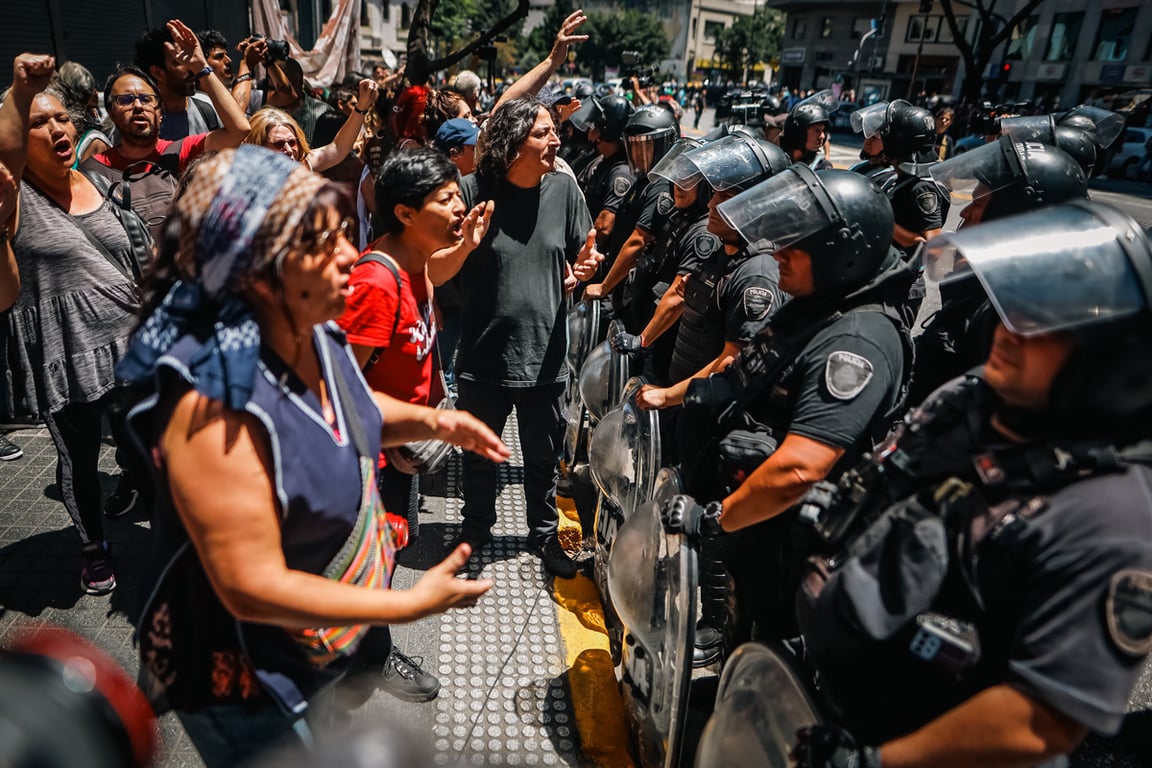
Meanwhile, ordinary Argentines have already fully felt all the costs of the “shock therapy” named after Miley. According to CEPA data as of July 2025, since Miley came to power, the number of employers in the country has decreased from 512.4 thousand to 494.3 thousand. This means a decrease of more than 18 thousand companies - almost 30 businesses per day. 253,728 people lost their seats (a fall of 2.57%). The unemployment rate rose from 5.7% at the end of 2023 to 7.6% in the second quarter of 2025. Falling real wages, cuts in pension payments and social benefits, a significant increase in the cost of living (the country is now in second place in the world “Big Mac Index”, second only to Switzerland) - everything plays a role. According to New-Europe’s interlocutor Victor, “in dollars, the cost of living has doubled or tripled.” One of the many alarm bells is the increase in delinquencies on credit cards (from 1.9% in June of this year to 4.4% in July) and on personal loans (from 4.1% to 6.4%).
Argentina has also become more expensive for foreigners - tourists and remote workers, including from Russia. Quite a few of the latter moved to the Latin American republic in 2022–23, primarily because of the liberal migration regime, the ease of obtaining a residence permit and the short road to citizenship (for example, through the birth of a child). According to Victor, in the Russian-speaking community, “the mood is not the best: prices have risen greatly and have become unaffordable for many, migration authorities have been considering applications for residence permits for years, there are not enough goods, services, and services, it is difficult to do business, cases of some kind of illegal Russian agents constantly arise.” After 2023, notes the interlocutor of New Europe, the Russian-speaking community “is not growing, although a strong reduction is not visible.”
Revenge for a lost battle
Miley calls on the population to be patient in order to survive the current period, and promises light at the end of the tunnel as soon as the most important problem, in his opinion, is finally resolved - inflation. Back in September, it seemed that at least some Argentines had little patience left, and the opposition was actively gaining points on this.
For example, on September 4, Congress overcame a presidential veto for the first time in 22 years : Miley had previously imposed it on initiatives to increase payments to pensioners and people with disabilities, as well as on health care funding. Miley's comrades in Congress could not prevent this - they had too few votes. Miley himself, however, also began to understand that it was impossible to do without social support measures: shortly before the elections, his government announced a new discount program for pensioners in supermarkets. The costs must be borne by the business itself.
But it's not just about the economy.
During his time in power, President Miley found himself at the center of a number of scandals. For example, with the Libra cryptocurrency: he actively advertised the coin among his fellow citizens, but in the end the token depreciated to zero within a few hours of entering the exchanges.
At the center of the second scandal is Mileya’s sister Karina, Secretary General of the Presidential Chancellery. She is suspected of corruption in the procurement of medicines under government contracts. Argentine authorities said that the scandal that began after the leak of the audio recording was staged as part of an attempt by certain “people associated with Russian intelligence” to destabilize the situation in the republic.
Two surveys conducted in October by Management & Fit and Rubikon showed that 37% of Argentines now have a positive view of Miley, while 47-48% have a negative view of Miley (and this is his worst result since taking office).
The first wake-up call for Miley was the results of the September 7 elections in the province of Buenos Aires, where almost 40% of the country's total voters live. La Libertad Avanza received about 34% of the vote, while the center-left Fuerza Patria received 47%.
The defeat turned out to be all the more painful because Miley himself gave the not-so-significant elections the image of a decisive battle between “good and evil.” “We are driving the final nail into their coffin,” the president initially repeated before the elections, referring to Fuerza Patria. Later he began to talk about a “technical draw.” On the eve of the elections, as the Spanish El Pais noted , signals came from Casa Rosada about an impending “worthy defeat” with a difference of less than five points. But the final result was much more painful. After the voting results were summed up, shares of Argentine companies on Wall Street fell by 16%, and the Buenos Aires Merval stock exchange index fell by 13%.
Now Miley’s associates, albeit minimally, are ahead of the Peronists in this key province: 17 seats won in the Chamber of Deputies against 16.
Looking to 2027
The winner of the previous September elections in Buenos Aires was the governor of this province, Axel Kisilof. Moreover, it was a double victory: not only over Miley’s associates, but also over a rival faction within Fuerza Patria - ex-president Cristina Kirchner, who retains a lot of influence, although she herself cannot hold public office (in June of this year, the Supreme Court of Argentina confirmed her conviction in a corruption case). Now Kisilof will have to try to prove that he is capable of being not just a governor, but a figure uniting all of Peronism.
According to Vladimir Ruvinsky, Kisilof’s main electoral base today is predominantly low-income residents of the “big” Buenos Aires, and this, most likely, will not be enough to win the 2027 presidential elections. On the other hand, the expert continues, “in Argentina today it is difficult to predict what will happen even in a month.”

Ruvinsky sees Kisilof's challenge as "going beyond the traditional Peronist core and winning the support of the urban middle class, youth and moderate voters." As for Miley, he, according to the interlocutor of “New-Europe”, should “become less aggressive - both in relation to opponents and in communicating with allies, learn to build alliances, negotiate political decisions.”
Immediately after the elections, Javier Miley called for “putting aside party interests and thinking like a nation.” “We believe that we can work together with all the forces with which we have common principles,” the president said.
True, there is one slippery point here: as Vladimir Ruvinsky notes, a significant part of Miley’s electorate initially voted for an anti-system candidate who promised not to yield to anyone and to “blow up the system.” So, by seeking compromise with other forces, the eccentric libertarian may risk undermining the very basis of his popularity.