
Translated material
Between the clouds and the sea there is a nuclear threat
Putin spoke about the test of the Burevestnik missile. What kind of weapon is this and why did it become known about it now?

Illustration: Rystic
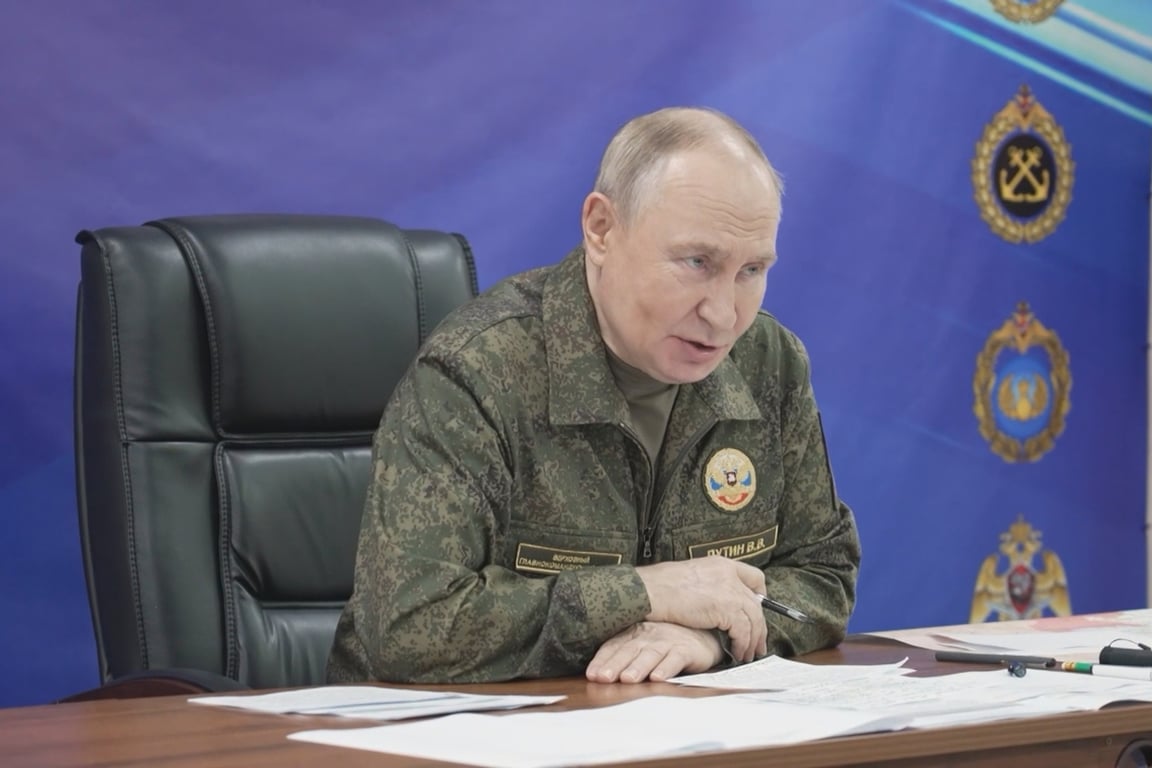
On October 26, a message appeared on the Kremlin website that Vladimir Putin visited one of the control centers of the Joint Group of Forces, where he held a meeting with Chief of the General Staff Valery Gerasimov. Among other things, the head of Russia spoke about the recent test of the newest Burevestnik missile. We discussed with experts what this means.
Unrealistic goal
“I remember very well when we announced that we were developing such a weapon, then even specialists of a very high level and class told me that yes, this goal is good, worthy, but in the historical short term unrealizable,” Putin recalled. - This was the opinion of specialists, I repeat, of a high class. And now the decisive tests have been completed.” Putin further said that in order to put these weapons on combat duty, a lot of work still needs to be done.
Valery Gerasimov reported that the exercises took place on October 21. And unlike previous tests, this time the rocket flew for many hours, during which it covered a distance of 14 thousand kilometers on a nuclear power plant and was in the air for about 15 hours.
“The technical characteristics of the Burevestnik generally allow it to be used with guaranteed accuracy against highly protected objects at any distance,
— said Valery Gerasimov. “In addition, during the missile’s flight, all specified vertical and horizontal maneuvers were completed, thereby demonstrating its high capabilities to bypass anti-missile and air defense systems. And this is not the limit."
Back on October 10, the Russian leader announced that “... we will have the opportunity to announce in the near future about the new weapons that we once announced. It appears and is tested by us. They are going well."
The general public first learned about the work on the Burevestnik intercontinental cruise missile project in 2018 from Putin’s message to the Federal Assembly. The American think tank Nuclear Threat Initiative wrote, citing American intelligence data, that from 2017 to 2019, Russia conducted at least 13 Burevestnik tests, but only two of them were “partially successful.”
The media reported that in August 2019, an explosion occurred at a test site near Severodvinsk in the Arkhangelsk region, during which seven employees of Rosatom and the Ministry of Defense were killed. This tragedy was associated with the Burevestnik project. Authorities later admitted that the explosion occurred at a facility that could have been a source of radiation.
Rocket myth
The "Petrel" has long been considered by many experts to be a mythical weapon. Despite the statements of the head of Russia, some experts still call it a Putin hoax.
“This is a theatrical production. I thought so in 2018 and continue to think so,” Pavel Luzin, senior non-resident researcher at the Center for European Policy Analysis, told New Europe. — The main argument here is the physics textbook for grade 11. It is impossible to create a nuclear reactor small enough and powerful enough to propel a cruise missile. And Putin is engaged in “active measures.” He loves this business and gladly participates in disinformation of the enemy.”
“The Burevestnik missile is such a phantom, it seems to be there, but it doesn’t seem to be,” Maxim Starchak, a researcher at the Center for International and Defense Policy at Queens University (Canada), an expert on Russian nuclear policy and the nuclear industry, tells Novaya-Europe. — “Burevestnik” is still a mythical rocket, which is talked about a lot, but which no one has seen. There is almost no objective data, just guesswork. There is a general understanding that the Burevestnik is a subsonic cruise missile with a nuclear power plant and a global range. “No one really has a rocket of this design.”
Global range
“The Burevestnik was created as a global-range cruise missile, that is, with the ability to hit any point on the globe,” military expert David Gendelman tells Novaya-Europe. — This is where the declared test flight range of 14 thousand km comes from, with the addition that this is not the limit. For completely global capabilities you need 20 thousand kilometers, then from any launch point you can fly anywhere in the world.
To increase the capabilities of both range and maneuvering, the Burevestnik uses a nuclear power plant, which theoretically makes the flight time unlimited, like the sailing of a nuclear submarine.
It allows for scenarios of “duty” or “patrol” in the air and launching surprise attacks from different directions.”
David Gendelman says that little is known about the tactical and technical characteristics of the Burevestnik, except that it is subsonic. At such speeds, it is easier to intercept missiles, but the Burevestnik’s ability to perform anti-missile maneuvers is unknown, except for the resource of the power plant.
“For Russia, Burevestnik can provide new opportunities for a retaliatory strike,” says Maxim Starchak. — Its declared technical capabilities allow the missile to strike from various unexpected directions. Since the missile remains in the atmosphere during flight, some types of American missile defense in the middle part of the trajectory cannot detect and hit it. For the Burevestnik to hit its target itself, it must constantly evade detection by early warning systems. If the missile is detected by radar, the enemy will easily hit a low-flying and slow object.”
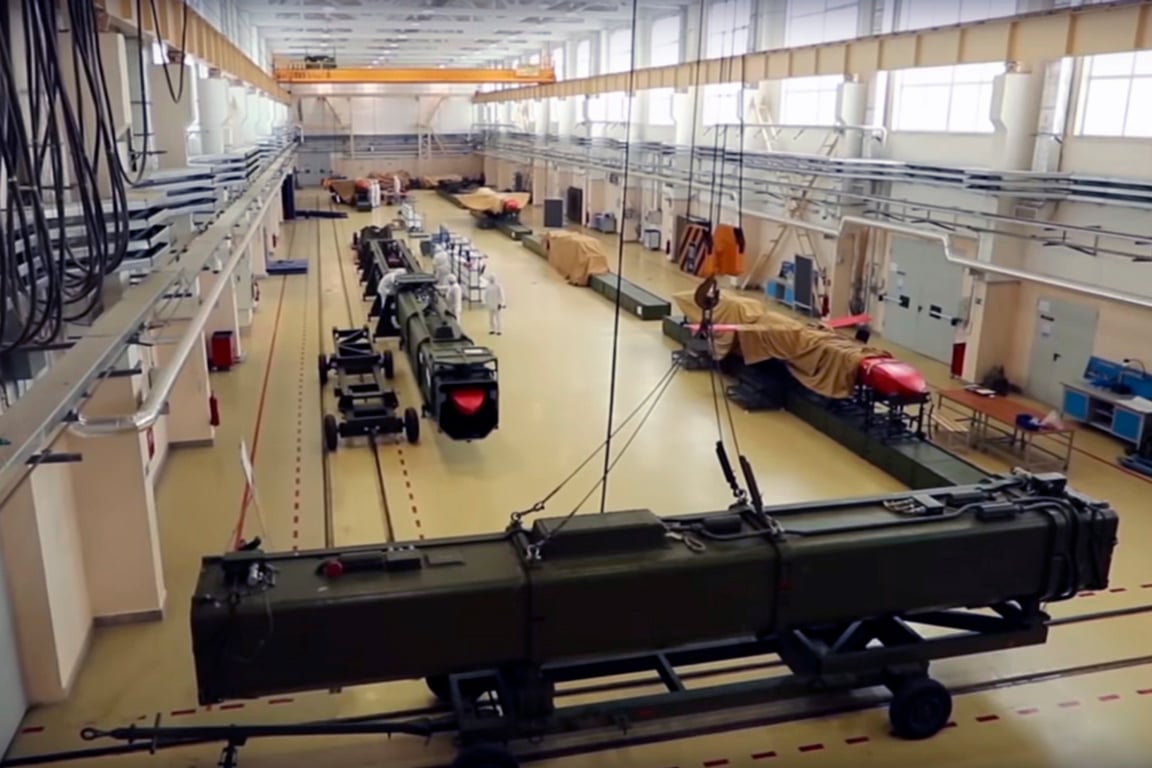
“Trying to talk about the degree of readiness of this project at the moment is difficult,” notes Pavel Aksenov, a military observer for the BBC News Russian Service, in a conversation with Novaya-Europa. - It's too secretive. Even the very principle of the design of the Burevestnik engine has not been published in open sources: how the energy received from a nuclear power plant is converted into energy that pushes the rocket forward. But it is impossible to assess the degree of readiness of a product only by official statements. Based on the practice of implementing such strategic projects, they need to undergo several successful tests using a propulsion engine. There is no information about such launches in open sources. Modern technologies make it possible to carry out tests on a computer and calculate all parameters. But such virtual tests still cannot replace real ones.”
Pavel Aksenov lists the potential advantages of the Burevestnik. This is a cruise missile that can bypass enemy ground-based air defense areas due to its flight range. There is no data yet on the visibility of this missile. A military observer claims that
Modern reconnaissance equipment available to the Americans makes it possible to detect missile launches at a very early stage, especially if you know the locations of the proposed launches.
“As planned, this missile should pose a challenge to air defense, since it can bypass areas where anti-aircraft missile systems are located. - says Pavel Aksenov. “In addition, if the declared range of the Burevestnik corresponds to its true parameters, then it will be able to patrol in the air while the operators choose the optimal path to the target. For example, circling somewhere over the Atlantic.”
Useless idea
According to Pavel Aksenov, the technology of a nuclear power plant for cruise missiles was actively developed in the United States back in the 1950s, but then this research was abandoned. After all, effective ballistic missiles have emerged as a means of delivering nuclear weapons. The Soviet Union had a program to develop long-range cruise missiles with a nuclear warhead. It was also closed due to its uselessness. The question of the need to introduce Burevestnik remains open.
“The Burevestnik is a new and unusual weapon that is arousing keen interest in the world,” Pavel Podvig, head of the Russian Nuclear Weapons project, tells Novaya-Europe. — Its creation was publicly announced by Putin back in 2018. The Russian leadership presents Burevestnik as a unique project. And no one else really has such a rocket. Nobody did this, since from a combat point of view it is a rather useless idea. As an engineering development, the Burevestnik, if it is actually created, is of serious design interest. But not a military man. Putin has set the task of creating a weapon that the American missile defense system cannot intercept. According to Russian developers, the US missile defense system, designed to operate in near-space, will be powerless. In reality it is a slow subsonic missile. According to Gerasimov, she flew 14 thousand kilometers for about 15 hours. It turns out that the speed of the Burevestnik is below 1 thousand kilometers per hour. And cruise missiles are being intercepted at such a speed today. We see this in what is happening in Ukraine and Israel.”
Ends in the water
“It is not clear where exactly the Burevestnik could fly 14 thousand kilometers,” emphasizes Pavel Aksenov. — The rocket was probably launched from a test site on Novaya Zemlya. Valery Gerasimov claimed that the Burevestnik performed horizontal and vertical maneuvers during its flight. It can be assumed that he was circling somewhere over the northern seas. But we don’t have accurate information.”
Pavel Podvig claims that he does not have exact data on the number of tests carried out on the Burevestnik. According to the expert, during one of the exercises in 2019, an incident related to this project occurred in which people died. According to available information, the emergency occurred when the rocket was taken out of the water where it fell after the flight. There are waves of activity at the Pankovo test site on Novaya Zemlya. This was the case last summer, when everyone started talking about the probable tests of the Burevestnik. It is possible that the launches or other elements of launching a nuclear-powered cruise missile were then being practiced. It was obvious to Pavel Podvig that the work was underway.

From an environmental perspective, testing a nuclear-powered rocket poses a danger in the event of an accident, says David Gendelman. But, after all, these weapons are being prepared for nuclear war, meaning that compared to actual use, this environmental risk is considered unimportant.
According to Maxim Starchak, such a rocket faces a number of technical issues. The design of the rocket must be safe for the reactor, which is subject to the high-speed and maneuverable effects of the rocket. The reactor must withstand weather changes, especially the impact of water along the missile's path. The reactor materials must withstand the negatively high temperature of the rocket. In addition, the reactor control systems must be autonomous and withstand radiation. These are complex tasks, and how Russia coped with them is unknown. Physicists suggest that
even under optimal operating conditions for the rocket, there will be a release of radioactive substances, and if the reactor fails and the rocket falls, this will lead to widespread contamination of the territories, which will be very dangerous and difficult to eliminate.
“There is a theory that radiation will inevitably be present in the rocket exhaust. “I couldn’t rule it out,” continues Pavel Podvig. “Although the missile could be tracked using its radioactive trace.” Whether this happened is unknown to us. In addition, upon completion of flight testing, the rocket must be landed somewhere. It can be assumed that Russian engineers have created a mechanism for such a return to earth of a portable nuclear reactor. Apparently, they splash him down and then take him out of the water. It’s hard to say how safe it is.”
"Burevestnik" versus "Tomahawks"
“Conducting tests right now is apparently a response to the discussion of the possible transfer of Tomahawks to Ukraine,” suggests David Gendelman. “The Russian leadership traditionally uses training launches and tests of nuclear weapons carriers as a signal to the West in such cases, and the testing of such a new global carrier is intended to strengthen this signal. A few days ago we conducted exercises on the use of Yars, Sineva and air-launched cruise missiles, and ended with testing the Burevestnik.”
Pavel Podvig believes that the Russian Federation will create only a few copies of the Burevestnik. There are eight launchers for such missiles in the deployment area under construction. The expert calls the new missile a “political weapon.” Putin needs it to threaten the West and force opponents to dialogue.
“So far, no means of objective control have confirmed that the tests actually took place,” notes Maxim Starchak. — These are still political statements. During negotiations on the supply of Tomahawk missiles to Ukraine, Putin already mentioned that in the event of a long-range missile strike, Russia’s response would be stunning. Now he announces tests of the Burevestnik missile, the development and production of which is not limited by any agreements. This is an obvious signal from the United States that without resolving the Ukrainian issue there will be no talk about this missile. But similar attempts to influence the American administration have already occurred. It was not possible to frighten and force Donald Trump to follow Putin’s desires.”