
Translated material
"Nobody Man"
The film by teacher Pavel Talankin was included in the Oscar nomination

Still from the film “Nobody Man”
(18+) THIS MATERIAL (INFORMATION) IS PRODUCED, DISTRIBUTED AND (OR) SENT BY FOREIGN AGENT ANDREY SERGEEVICH KALITIN OR CONCERNES THE ACTIVITIES OF FOREIGN AGENT ANDREY SERGEEVICH KALITIN.
He had 427 books, one dog and a parrot at home. “I was always alone,” says Pasha Talankin. “My father drowned in the lake when I was nine.” As if afraid that they won’t believe him, Pasha shows a photo from his dad’s funeral. Now the hero and co-author of the documentary “Mr. Nobody vs. Putin” is 34 years old. He belongs to a generation that can be considered the same age as the Russian Federation.
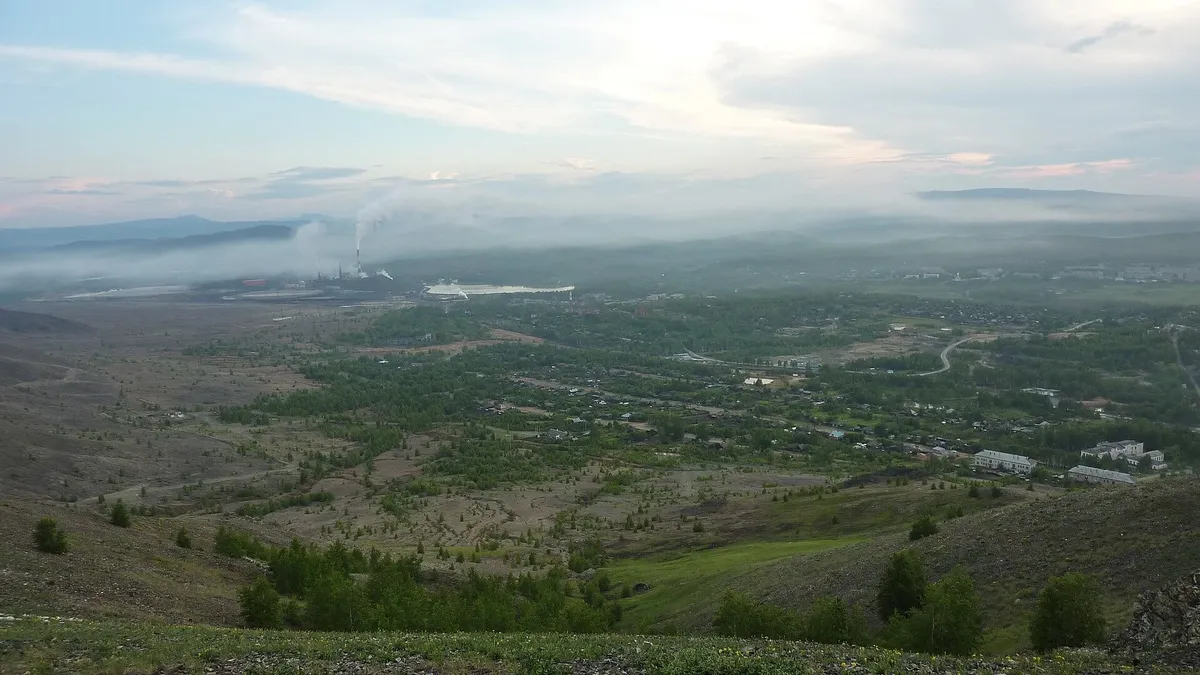
The small Ural town of Karabash was founded in the Urals by breeder Grigory Zotov in 1822. It seems to be hidden from the rest of the world - Karabash lies between the rivers and under the mountain. From the Turkic language the name is translated as “black head”: kara - “black”, bash - “head, top”. The village made a living by panning gold from placers in the Sak-Elga floodplain. But in the 19th century, copper ore deposits were discovered in the river valley, and in 1837 the first copper smelter was built there. Karabash still lives on production. The city has about 10 thousand inhabitants, the population is slowly but surely decreasing. During the production of copper from ore, vapors of lead, sulfur, arsenic, and copper are formed. In 2014, the government included Karabash on the list of “single-industry municipalities with the most difficult socio-economic situation.” In general, in appearance this is an ordinary Russian province - a small industrial center where life passes between watch and sleep.
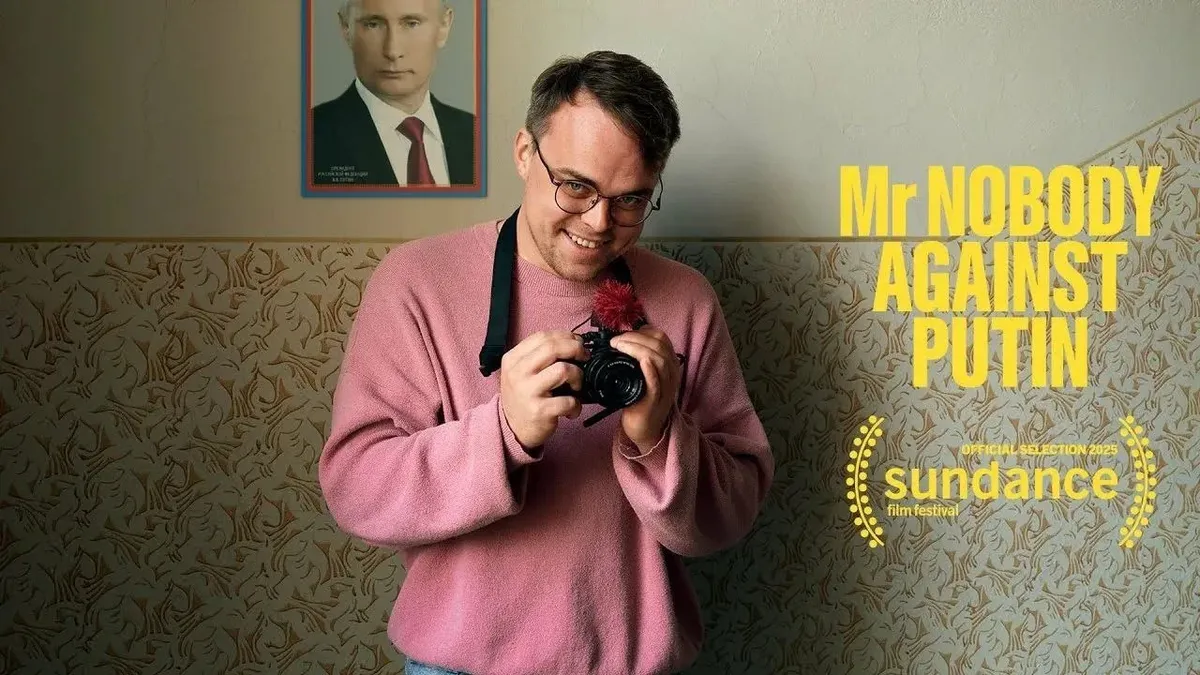
Pavel Talankin loves his native Karabash. And he also loves making movies. Journalist of the “Switzerland for All” project Marina Okhrimovskaya, having watched Pavel’s film at the Zurich Film Festival (ZFF), drew attention to the fact that
During 90 minutes of screen time there is a lot of snow and little summer. “When the frost is 40–45 degrees, the face quickly becomes red, and a white mustache forms under the nose,” says Pavel Talankin, at the same time a cameraman, director and co-author of the film, from the screen .
The absence of sun and summer is easily explained, writes Marina. Pavel Talankin was filming his film about school everyday life, and in the summer Russian schools are closed for vacation.
Pavel was a geography teacher at city school No. 1. At the same time, on behalf of the school itself, he also became a videographer - his duties included filming all formal school events: lines, open lessons, amateur concerts, graduations and competitions. His film seems to be just the story of his native school. In fact, this is a chronicle of what happened to us. “If you live in a country without loving it, you are a parasite - leave!” — the history teacher says tiredly but confidently to the high school students. This subject is now the most important in school.
History does not know the subjunctive mood; everything in it must be accurate and correct. Like in math, only louder. Therefore, veterans are gradually starting to come to the school - not just from the Great Patriotic War, but those with the “PMC Wagner” badge. Sitting in the assembly hall, they teach children not to fasten their helmets - it’s easier to survive in battle.
There is a TV in the background. “Wars are won not by generals, but by school teachers,” Russian President Putin tells children and adults from there. In order to film a humanitarian catastrophe, Pasha just needs to keep his camera on. “I can show you the abyss into which we are all sliding,” says Talankin’s voice-over. In another episode, a woman’s voice is heard: “What, do you want to go to prison?” Sound plays as important a role in this film as the picture. Especially when children walk along the school corridor in formation.
In the trailer for the film there is a frame where only one word is written - “hero”. Talankin himself never considered himself a hero, as he said in an interview: “I was just doing my job, I was filming these lessons. It is impossible to walk into the office and say: “Okay, comrades, now I will film your lesson.” No, they forced me to film this lesson so that I could report back later.
I sent the material from one camera to the Ministry of Education, and stored the material from the second on the hard drive.”
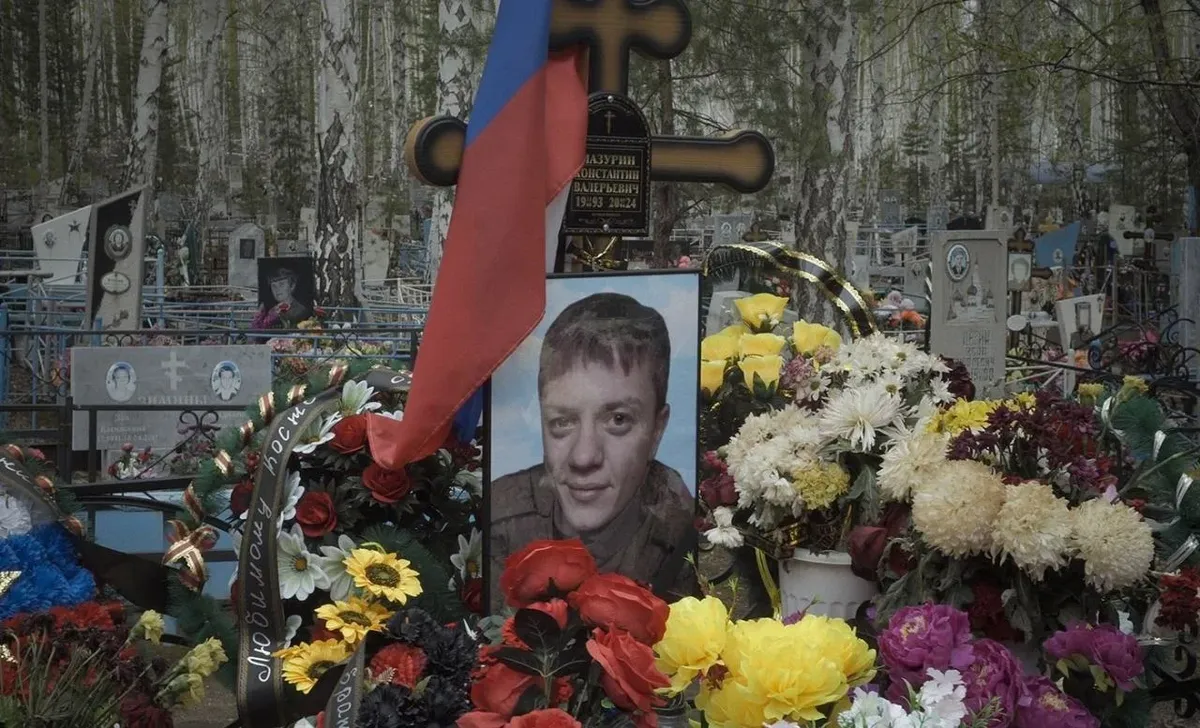
Here in the frame is a girl in whose eyes until recently there was a dream. She wanted to become a doctor. By the end of the film, the girl changes, there is sadness and grief in her eyes. But the boys, yesterday's schoolchildren, march in formation to the recruiting station. They are eighteen, the last call was last year. But the soldier’s grave; he will never return to Karabash. In the next shot there are still children. Today the elementary school students have a shooting lesson, they look at the world through a gun sight.
“Wars are not won by generals, wars are won by school teachers and parish priests” - this is a phrase from the article “Foreign”, written at the end of the 19th century by geography professor Oskar Peschel from Leipzig, Germany. This quote is uttered by the Russian President in Talankin's film. Pavel is a teacher himself. “I don’t want to be a pawn of the regime,” he says in the voiceover of his film.
He immediately understood what this lesson was about and what would happen next (from another interview with Mediazona*): “We have come to terms with absolutely everything. And we don’t even ask any questions within ourselves. It is necessary, it is not necessary, it is possible, it is not possible... They told you - you are doing it. Yes, it was a pity to leave the city, my family, and my colleagues. I really really love this place and the city and everyone in the world.” In the summer of 2024, he exported video materials from Russia on seven hard drives, filmed over two and a half years.
His work was noticed. Together with director and film producer from Copenhagen David Borenstein, Pavel Talankin made his first and perhaps most important documentary film. Pasha in this autograph film is not a hero, he does not perform feats. He simply captures the world around him. His film is a history lesson at a school whose name is the Russian Federation.
The world premiere of the project “Mr. Nobody Against Putin” took place at the American Sundance Film Festival in early 2025. The film received a special jury prize, opening the film to cinemas around the world.
Russian media managed to call the film “anti-Russian,” saying that “Karabash residents are in shock.” True, this film cannot be seen in Russia, so it is not very clear how the Karabash people managed to react so quickly. “The competent authorities are assessing the actions of the teacher and the situation as a whole,” the Ministry of Education of the Chelyabinsk Region reported , noting that Talankin shot the film “secretly.” The ethical nature of the teacher’s act, who used a school assignment to prepare a documentary film, will be the subject of discussion by film experts in the United States and Europe. Is it true in the footage? So we can show it.
“Whose words make me a traitor to the Motherland? According to Vladimir Putin? For myself, I am not a traitor to the Motherland. I love my country, I love the people, I love my city. I hope I'll be back there sooner or later."
- says Pasha Talankin, a geography teacher and his own director. Yes, we remember, there were 427 books left at home, a dog and a parrot.
Mr. Nobody vs. Putin has been selected as Denmark's entry for the Best Foreign Feature Film Oscar at the 98th Academy Awards, which will be held in Los Angeles next March.