
Translated material
Dancing on the brink of war
Sirat, a thriller about the search for a missing girl in the desert, was released in Russia. This is a meaningful statement about abducted and disappeared civilians
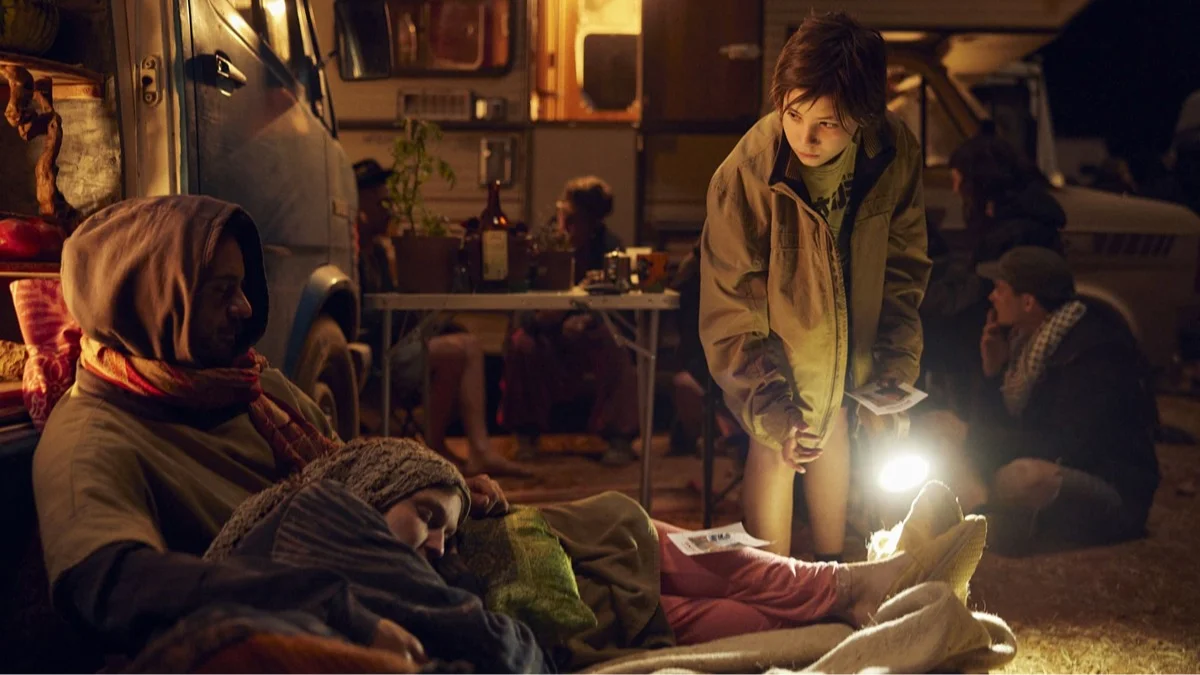
Photo: Inoekino
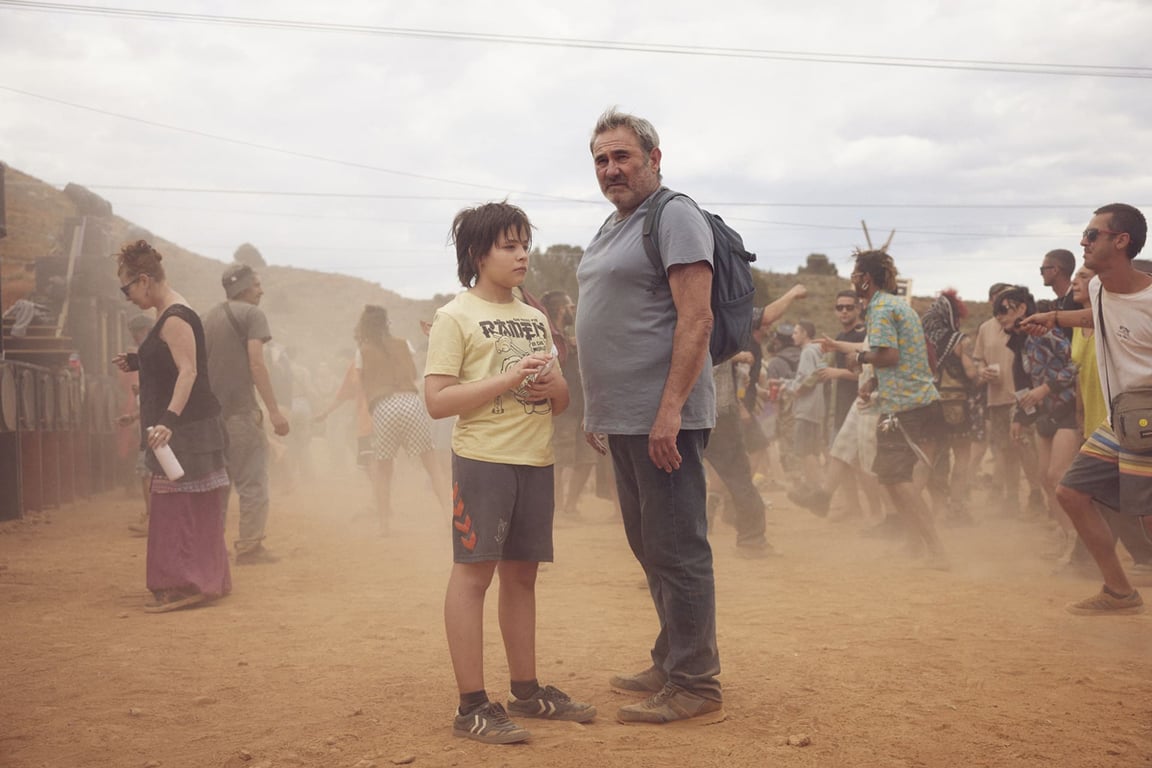
Spaniard Luis and his young son Esteban come to North Africa in search of his missing daughter, where he meets a community of ravers who are cutting through the arid desert, like the characters from Mad Max. Winner of the Jury Prize at Cannes and nominated by Spain for the Oscar for Best Foreign Film, the slow burner Sirat is divided into two equal parts in mood and genre: a slow exposition with dances in the desert and a bloody thriller. But this is not a niche experiment, but a conversation with a large audience in the language of radical and sensual cinema. Film critic Katya Stepnaya talks about Lashe's non-genre film in the context of modern wars, disappearances and kidnappings.
The Moroccan desert here is a space for talking about two things that rarely coexist within the same film: bodily freedom (dancing, ecstasy and music) and the politics of disappearances (disappearances, kidnappings, hostages). The plot is parable: a depressed father (Sergi Lopez) and his young son (Bruno Nunez Arjona) are looking for their daughter and sister Mar, who has disappeared somewhere among the nomadic ravers. The reasons for the disappearance are not clear, the search does not bring results, and the desperate father and son follow the trail of the commune in the hope that Mar is having a blast at some party in the desert. At the beginning, the plot is based on the search for a girl, but then moves on to the experience of collective survival. The nomadic commune will be met by military detachments, thirst, explosions, injuries, extreme exhaustion in a land without clear maps and communication with the outside world.
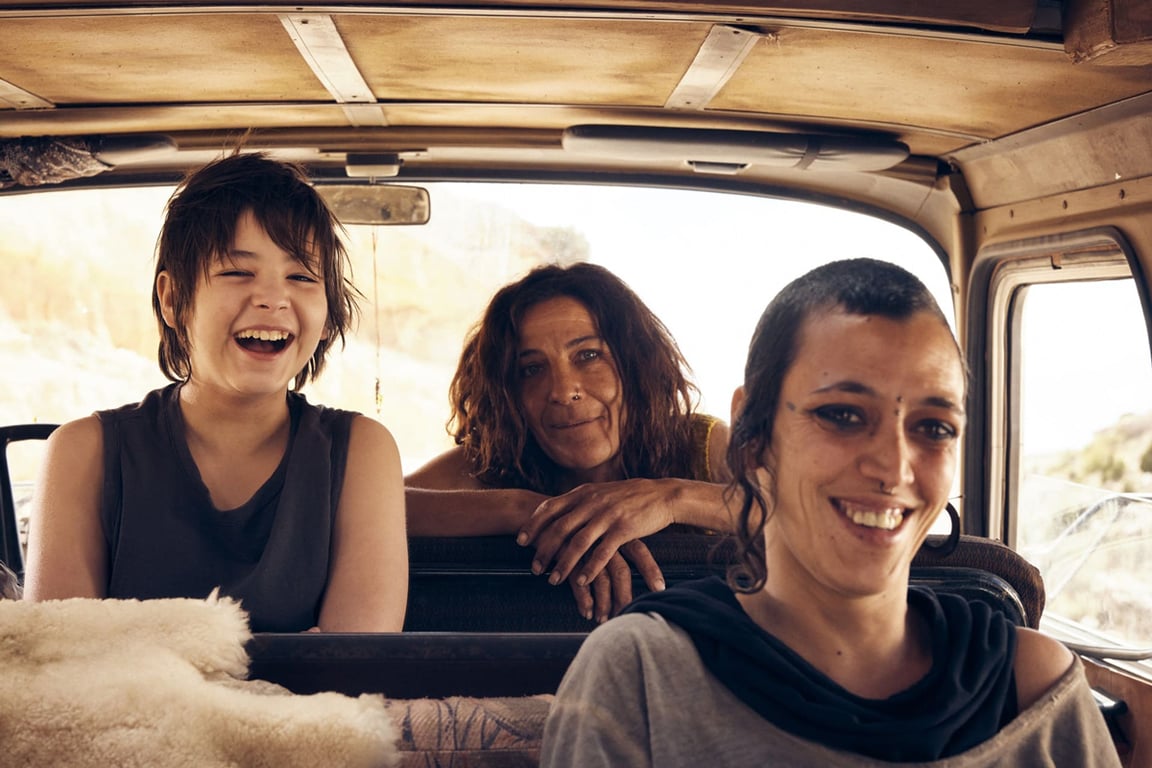
Without spoilers, the dramatic axis of the film is the collision of two microcommunities: the family (father, son, absent daughter) and the raver (a group of nomads played by non-professional actors). The road movie is gradually becoming a study about ethics: about mutual support in conditions where boundaries are blurred, laws do not exist, and institutions do not work. Sergi Lopez plays the experience with his doughy body and sad silence, and Bruno Arjona fusses like an ordinary child living in the moment. A cast of real ravers adds authenticity: this is not speculation on a subculture, but an attempt to convey living life.
Here, saving yourself and others is not a feat, but a concern distributed among all participants, and your political position is expressed in how long you withstand the weaknesses of another.
"Sirat" in Islamic tradition means a narrow bridge leading through hell to heaven. Walking through it, everyone is faced with the truth about themselves. The director in an interview calls the film the most political and at the same time the most poetic in his career: it is a desert odyssey where the characters go through a collective trance to the realization of their own insignificance and mortality.
As a document of time, Sirat speaks of memory and loss against the backdrop of war, without directly naming fronts and factions. The kidnapping of Jewish hostages from a rave on October 7, 2023, thousands of missing people in Gaza, Syria and Iran, lawlessness and war crimes in the war zones of Ukraine and Russia - the frame within which, regardless of the director’s intentions, “Sirat” will be analyzed.
The visual language is based on the use of Super 16 technology, a modern variation of the classic film format: grain makes the sand heavy, the air visible, the wounds of the characters warm. The feeling of restlessness here wanders along with the camera behind the characters. Another character in the film is sound. The composer constructs the bass line as a natural landscape from somewhere deep in the Atlas Mountains, and the sound engineer collects emotional messages from the hum of the desert.
Cinematography, music and sound engineering work together as a tactile experiment of complete immersion: vision and hearing do not inform, but draw inside, making the audience complicit in searches, chases, and dance rituals.
In “Sirata” one can also see careful references to traditional and modern film classics: “The Searchers”, “Zabriskie Point”, “Fury Road” - other authors worked with themes of risk and topography of danger just as poetically and with measured suspense.
Although the film does not articulate big politics head-on, it does not hide it behind a genre. The disappearance of the girl is built into the picture of the world, where the disappearance of a person is not an exception, but an everyday occurrence. Killed, kidnapped, mutilated, illegal immigrants, enslaved, taken hostage are just elements of statistics. Disappearances have their own procedure and bureaucracy: hundreds of thousands of cases are investigated for years, stretched across departments and borders.
Waiting has become a new form of torture for families and sympathizers. Bring Them Home Now and the Gaza Missing Persons Initiative, now two of the most prominent movements for the return of civilians, have failed to produce results despite their enormous outreach. “Sirat” does not name these cases, but refers to them: the rave as the last zone of freedom and the desert as a space where a person can easily be erased. This film is political not in words and slogans, but in rhythm and duration: in how long the camera holds close-ups, how unbearably long the path is, how the victims never end, how monotonously sparse the landscapes of the enchanted land are.
The word “disappeared” appears in the news every day – in the contexts of war, migration, disasters, prisons and torture. Against this background, “Sirat” as a statement takes two fundamental steps. The first one does not fetishize trauma, but turns it into an experience that must be lived together: go, wait, search, listen to instincts. The second does not simplify politics: it does not provide a clear villain and does not depict a “correct rebellion.”
Instead, he shows how solidarity is born and endurance is manifested in the gray zone, without sober calculation of a happy outcome.
“Sirat” is a movie about the fact that the political begins with an attempt to hear, adapt and maintain the pace of another person. And this is a very accurate skill for a time when the news teaches us the opposite: to separate, forget and ignore.