
Translated material
Putin awarded the developers of Poseidon and Burevestnik
Military experts are skeptical about new Russian developments
Russian President Vladimir Putin awarded the developers of the Poseidon unmanned underwater vehicle and the Burevestnik cruise missile at a ceremony in the Kremlin. The President noted that Russia, like other nuclear powers, continues to develop its potential, while “not threatening anyone.” According to him, the creation of these systems has “historical significance for the entire 21st century.”
Putin emphasized that the compact nuclear installations used in Burevestnik and Poseidon can also be used for peaceful purposes - for example, in mining in remote areas or on the Arctic shelf.
In order not to miss new texts from “Layout”, subscribe to our telegram channel
Putin spoke about the unprecedented capabilities of the new weapon
According to Putin, both systems are entirely made from domestic materials. He emphasized that “in terms of flight range, the Burevestnik has surpassed all missile systems known in the world,” and the speed of the Poseidon is “manifold the speed of all modern surface ships.” The device is capable of diving to a depth of up to a kilometer.
The President also noted that launching the Burevestnik reactors takes only a few minutes, and the technologies used in these projects will be in demand in the civilian sphere - from communication systems to the creation of powerful computers and even a promising station on the Moon.
“The operating principles of Poseidon will serve to develop new unmanned systems,” he added.
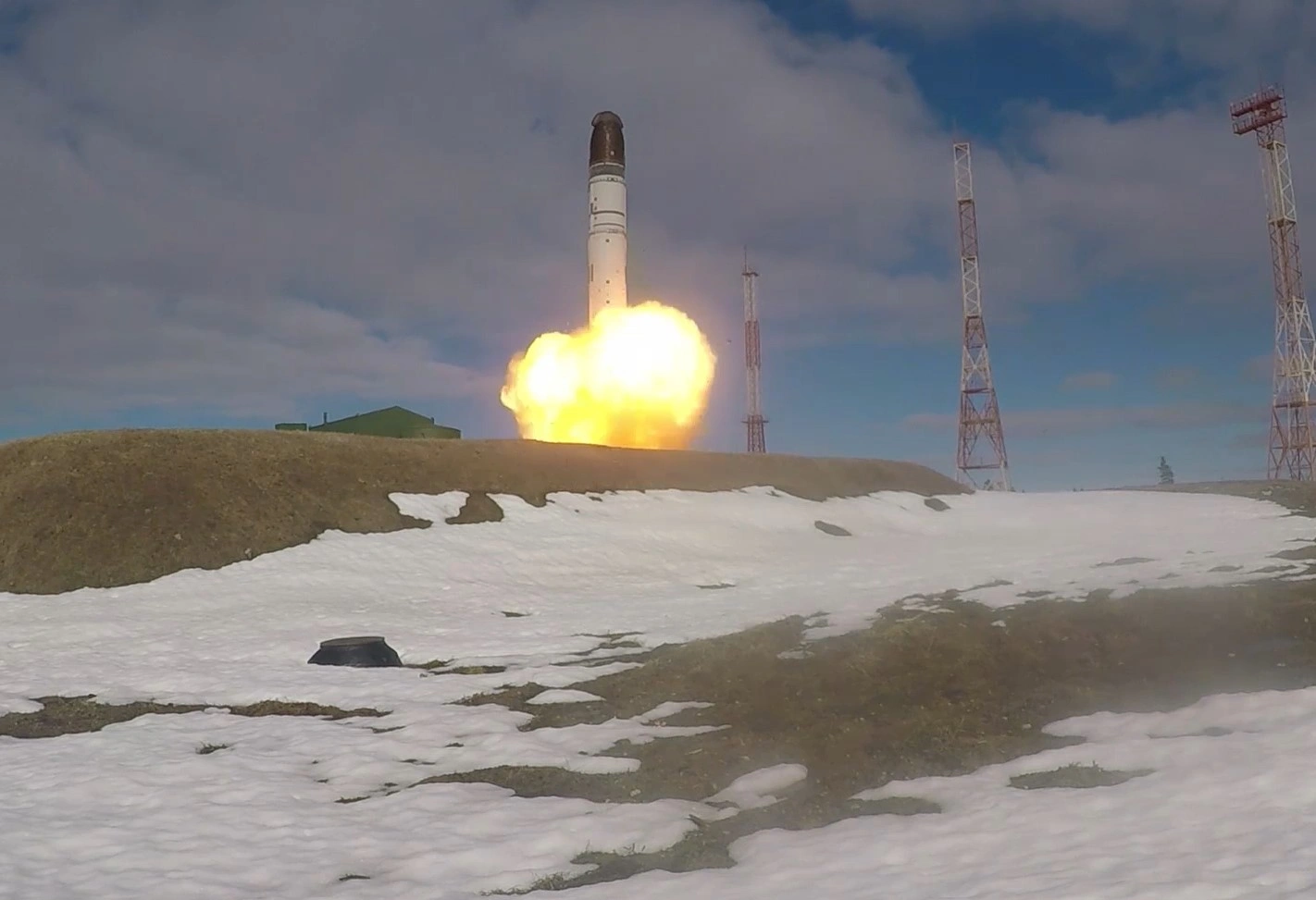
Putin said that this year Russia will put the Sarmat heavy intercontinental missile on experimental combat duty, and next year - on full-fledged combat duty.
Sarmat (RS-28) is a Russian intercontinental ballistic missile with a range of up to 18 thousand kilometers. It is equipped with ten individually targetable warheads, each of which can carry a nuclear charge with a yield of up to 750 kilotons.
The head of state also said that Russia has begun serial production of the new Oreshnik missile system and has begun developing the next generation of nuclear-powered cruise missiles - hypersonic, capable of reaching speeds three times higher than sound.
What military experts say about modern Russian weapons
Experts acknowledge that the Burevestnik nuclear-powered rocket is technically unique, but the project itself is subject to significant skepticism. The main questions concern the safety of the reactor. Despite claims of “solving radioactivity problems”, there is no reliable technical data, and international observers have recorded no signs of testing, raising doubts about the transparency of the program.
Analysts view this project more as a political tool and an element of “nuclear PR” than a truly combat-ready system.
The Poseidon underwater drone is called a “doomsday weapon” - an autonomous carrier capable of striking coastal infrastructure. In the West, Poseidon is called a “Franken weapon” - a hybrid of a torpedo and an unmanned vehicle. Experts point out that the real effectiveness of this system in combat conditions is questionable. There is almost no data on testing, and its purpose boils down to intimidation and demonstration of capabilities rather than practical use.
The RS-28 Sarmat intercontinental ballistic missile (NATO classification - Satan II) was supposed to become the basis of Russia's updated nuclear triad, but tests of the complex were accompanied by a series of failures. The latest launches, according to satellite images, ended with rocket explosions right in the silo.
In the case of the Oreshnik, Experts point to the missile’s lack of accuracy and consider the use of conventional explosives in medium- and intercontinental-range missiles ineffective and expensive, while the Oreshnik was originally created to deliver a nuclear warhead, where such shortcomings are less critical.
Previously, Vorstka looked into the effectiveness of Russian hypersonic missiles Kinzhal, Avangard and Zircon.
Photo: Tests of the Sarmat intercontinental ballistic missile in 2022. Ministry of Defense via Reuters
Support “Vestka” - it’s important and safe →