
Translated material
War
One thousand three hundred fifty-first day. North Korea sends five thousand more troops to Russia
Since February 24, 2022, Meduza has been broadcasting live about the Russian-Ukrainian war. We publish your letters in our daily materials because we are sure that we need to continue talking about the war. Share with us the thoughts you have about the war. What feelings are you experiencing? How does war affect you, your life, the lives of your loved ones and your attitude towards the world? Find the feedback form at the end of this article. A review of the previous day can be read here .
Russia
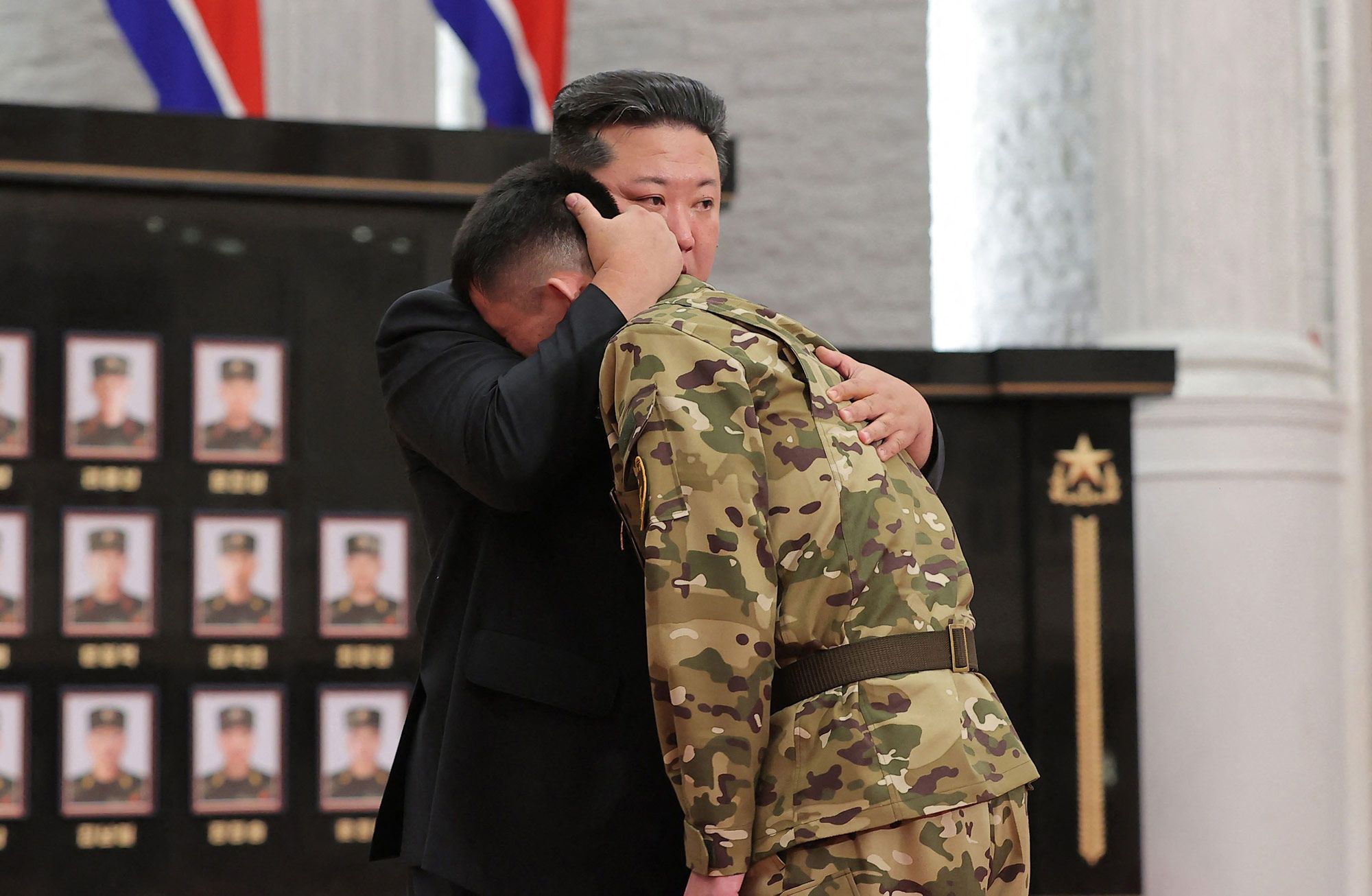
Since the beginning of autumn 2025, the DPRK has sent about five thousand military personnel to Russia. This was reported by the South Korean Yonhap agency with reference to South Korean intelligence data presented to the country's parliament.
The soldiers sent to Russia will likely be engaged in “infrastructure restoration.” About a thousand of them are sappers specializing in mine clearance.
Member of the South Korean Parliament Lee Song Gwon said that Korean intelligence discovered in the DPRK more and more “signs of training and selection of personnel for further sending of troops” to Russia.
In total, according to South Korean intelligence, there are now about 10 thousand North Korean troops near the Russian-Ukrainian border.
Since the fall of 2024, military personnel from the DPRK have taken part in hostilities in the Kursk region, part of which at that time was occupied by the Ukrainian Armed Forces. Initially, this was reported by Ukrainian and South Korean intelligence; Moscow did not confirm this, but did not refute it either. In January, the Ukrainian Armed Forces captured two North Korean soldiers. According to the prisoners, they thought they were fighting “South Korean soldiers helping Ukraine.”
For the first time, Russia admitted that soldiers from the DPRK were fighting on its side only in April 2025. Then the head of the General Staff of the Russian Armed Forces, Valery Gerasimov, reported to President Vladimir Putin about the complete liberation of the territory of the Kursk region and specifically thanked the North Korean military for their help.
In August, North Korean leader Kim Jong-un personally awarded the commanders who fought in the Kursk region. Analysts assumed that the return of commanders to their homeland meant that the North Koreans would no longer take part directly in hostilities. This was due to the fact that the fighting on the internationally recognized territory of Russia had ended, and Moscow and Pyongyang could not explain the participation of the DPRK military in the battles on the territory of Ukraine by the mutual defense pact concluded in the summer of 2024.
According to South Korean and Western intelligence, up to 15 thousand North Korean troops could take part in the fighting in the Kursk region. According to various estimates, from 500 to one and a half thousand North Koreans died.
War through the eyes of Meduza readers
How we choose letters
Meduza's readers live in different countries and have different attitudes towards the war. We publish your letters to see this event through your eyes. Our editors try to present all points of view, even if they do not coincide with the editorial position. However, in accordance with the Meduza code, we do not publish messages that contain “hate speech,” justify the murder of civilians, or express direct support for an aggressive war.
Evgeniy (Dnepr) . To be honest, nothing tests a person’s strength more than life in wartime. From sincere hope and faith in a bright future to a state of complete hopelessness and the feeling that this will last for an eternity.
I remember a letter from a guy from Russia who wrote that stress involuntarily accumulates in everyone around from the endless stream of disturbing events and news, even in those who are not involved in it. I can say that in Ukraine this is visible to the naked eye: literally every person has lost something to varying degrees, in everyone a small part has “died” that makes people human. Someone’s house was destroyed, someone died from shelling, someone was sent to war due to harsh mobilization, someone lost a loved one in the same war.
War has seeped into every corner. Plans can only be made based on the realities of today. We are all “riding on a seesaw” - from hatred of the Russian army and Putin to a complete lack of trust in our state. The office of the president and the government are usurping power, taking advantage of the wartime situation, and men of military age are sent to the front in batches, deprived of all rights. You can’t help but think that everyone around you is an enemy and wants to kill you.
Talking about war is routine, a topic that you don’t want to raise. The sound of an air raid alarm had become familiar, as had the almost daily explosions. It’s scary to imagine how depleted the psyche is of people who live in front-line zones. All this has become part of our lives, and everyone has a strong feeling as if it has always been this way. But we still remember a completely different life. And we will remember.
We have learned to overcome fear and see the meaning in it, and we will never lose hope. Common sense must prevail and all this will stop. Love and mutual assistance between people will become stronger, and we will be able to survive this disaster.
Share your thoughts about the war
"Jellyfish"