
Translated material
Ukraine dealt a record number of blows to the Russian power industry this fall
On Thursday night, the Ukrainian Armed Forces attacked the Kostroma State District Power Plant, one of the largest thermal power plants in Russia. This is at least the 27th attack on Russian electric power facilities since the beginning of autumn, according to the Agency’s analysis. A year earlier, the same number of strikes occurred in 12 months. In November, the intensity of the strikes, judging by the first days, continued to grow. Military experts consider the intensification of attacks on Russian energy an attempt by the Ukrainian authorities to create a request among the Russians to end the war.
Details. According to photos and videos from the site of the attack on the Kostroma State District Power Plant, published by ASTRA, a gas distribution site allegedly caught fire during the attack. According to the city administration, the attack was repelled and the power supply was not disrupted.
- ️ Kostroma State District Power Plant is the third largest thermal power plant in Russia (3720 MW). It produces about 1.5% of the total volume of electricity produced in Russia, the GRES group says on VKontakte.
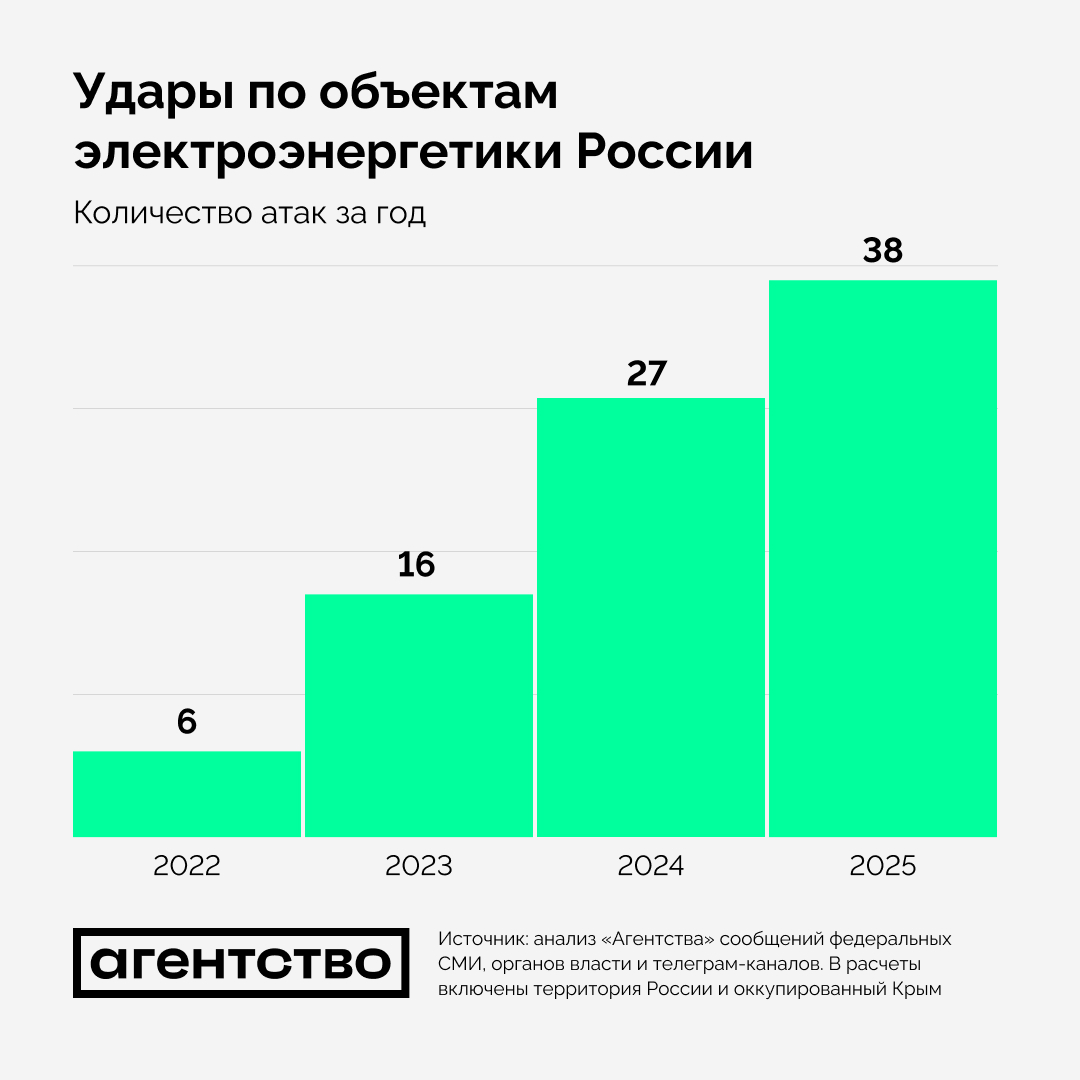
- ️ Since the beginning of November, this is at least the eighth attack by the Armed Forces of Ukraine on Russian power industry facilities, according to the Agency’s analysis. In total, since the beginning of the year, Ukraine has carried out at least 38 attacks on electrical installations in the Russian rear (we counted attacks on Russian territory and Crimea).
- ️ The intensity of the impacts began to increase in September. If from January to August the federal media, telegram channels and authorities reported only 11 attacks, then in September six attacks were already recorded, and in October - 14 .
- ️ In September, objects were attacked in the Belgorod, Bryansk, Kursk and Smolensk regions, as well as in the Krasnodar Territory. In October, facilities were attacked twice in the Bryansk, Rostov and Ulyanovsk regions, once each in the Vladimir, Volgograd, Voronezh, Kursk, Nizhny Novgorod and Oryol regions and in Crimea. In less than a week of November, attacks were recorded in the Vladimir, Kostroma, Lipetsk and Oryol regions, and two more strikes were carried out in the Volgograd and Kursk regions.
- ️ In 2022-2024, the Ukrainian Armed Forces attacked Russian energy facilities less frequently. In all of 2024 , 27 attacks were reported. The most attacks occurred in July ( 6 attacks ), April ( 4 ) and September ( 4 ). In 2023, 16 attacks are known, and in 2022 - six .
- ️ “As far as we understand, the electric power industry is a civilian infrastructure under international law, and until the end of September Ukraine rarely hit it,” a CIT analyst confirmed to the Agency. According to him, attacks on small distribution substations near the border had been carried out before, but around the beginning of November a campaign began against large substations and power plants.
- ️ Strikes on the electric power industry, like strikes on refineries, do not directly affect military operations, but there may be an indirect effect through the economy, CIT noted.
- ️ Such strikes can be delivered in the logic of a war of attrition in order to cause direct economic damage and provoke a request from the Russians to end the war, military analyst Kirill Mikhailov told the Agency. According to the same logic, the Ukrainian Armed Forces also attack Russian oil refining facilities, the expert noted.
- ️ CIT suggests that the intensification of the campaign against Russian energy is connected with the political decision of Kiev. Mikhailov also suggested that the Ukrainian Armed Forces have begun to fulfill Zelensky’s promise to give a mirror response to Russian attacks on Ukrainian energy facilities. The Ukrainian president said at the end of September that Donald Trump approved Ukraine's attacks on Russian energy infrastructure.
Context. Since the end of July, Ukraine has intensified attacks on Russian oil and gas infrastructure. According to the Agency’s calculations, by the end of October at least 43 strikes had been carried out on 22 Russian refineries. Ukrainian attacks led to a crisis in the domestic market and a decrease in the export of petroleum products. Exports fell to 2.4 million barrels per day in September, the lowest level in a decade other than April 2020, when exports fell significantly due to the coronavirus pandemic.