
Translated material
The assets of hundreds of thousands of Russians are blocked in Europe. They are not officials or billionaires. They are just private investors
They are discriminated against only because they have a Russian passport. Zhanna Nemtsova is trying to change this
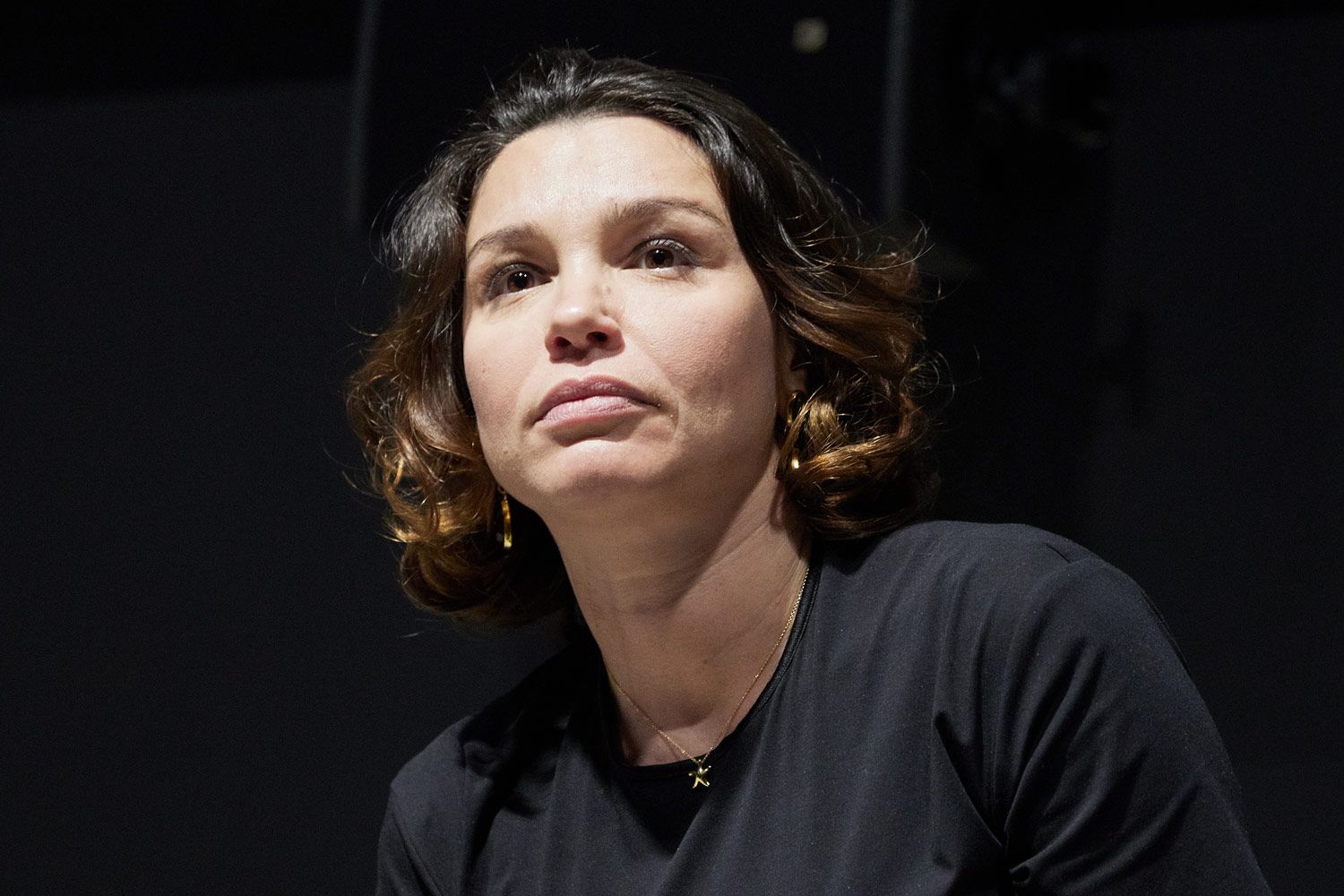
As a result of the sanctions imposed against Russia after the start of the large invasion, assets worth many billions of dollars were frozen abroad: up to 330 billion of Central Bank reserves, about 58 billion of private assets of sanctioned persons (Russian officials, politicians and businessmen close to power). According to a report by the Nemtsov Foundation's Ideas for Russia project, another $70 billion is blocked due to infrastructure restrictions - that is, not because their owners were subject to sanctions, but because Western companies, including banks, are prohibited from interacting with financial services from the Russian Federation. Of this 70 billion, about 14 billion belong to individuals - mainly so-called retail investors, who invested relatively small amounts in Western securities until 2022. These are hundreds of thousands of people. Many of them left Russia after February 24th. They are deprived of access to their savings. The head of the Nemtsov Foundation, Zhanna Nemtsova, told in an interview with Novaya Gazeta Europe why the European authorities should return these assets to them and how this can be done. We retell its main points - with quotes from the interview.
Until 2022, many retail investors have appeared in Russia
Officials in Europe do not understand where so many investors come from in Russia. They don’t know that at the end of the 1990s, Russian fintech was developing rapidly and any bank client could buy shares of Tesla, Apple, and so on with two clicks in the application. Europe does not have such a widely available retail financial infrastructure and does not have a widespread habit of investing.
After the full-scale Russian invasion of Ukraine and the imposition of sanctions, Russian investors lost access to their assets
It is important to understand that we are not talking about sanctioned oligarchs or billionaires <…>. Private assets have been frozen as a result of sanctions against elements of the Russian financial infrastructure: the National Settlement Depository, the St. Petersburg Exchange, brokers and banks. Through them, Russian citizens bought foreign securities. Within this group, there is likely to be a portion owned by sanctioned individuals, possibly through companies. And there is another part owned by non-sanctioned entities - and this is most likely the overwhelming majority of individuals who are the ultimate beneficiaries of the frozen assets. <…>
In addition to individuals whose assets are frozen, there are legal entities not under sanctions whose investments are frozen. There are collective investments of those people who gave their savings to trust management. The blockage mainly affected small and medium amounts of personal savings of ordinary people with not very large incomes. These are pension savings, funds for education, money for treatment and more.
<…> This is a huge blow to the Russian middle class. And a serious blow to the anti-war community, since our online survey of victims showed: among them, about 40% do not live in Russia, mainly in the EU, and the majority left at the beginning of the war.
<…> In addition to its widespread nature, this freeze struck me as senseless: blocking the assets of non-sanctioned people does not solve a single problem. This does not help Ukraine in its war against Putin and does not undermine the foundations of Putin's regime. And besides, such a blocking completely contradicts the principle of the inviolability of private property, which cannot be seized without a good reason and without a court decision.
The existing mechanism for unlocking assets is complex and expensive. The Nemtsov Foundation offers a new
To submit an application [to EU authorities to unfreeze assets], you need to have a guarantor who will charge you at least 10 thousand euros for checking the sanctions lists and confirming that you are not there. And this is a very strange requirement, because after the guarantor you will still be checked by the ministries of finance of those countries where assets are blocked. You have to be a very wealthy person to afford it <…>. After [receiving] a license [to unlock assets], you have to go through long negotiations with the depository, often you need to file a pre-trial claim - and this is an endless process.
<…> To solve the problem, first of all, you need to take an inventory of assets. <…> I would request [from Russian banks and brokers] the most detailed information on all final beneficiaries.
At the same time, I would create a very simple electronic system for declaring that you are a private investor, not under sanctions and your assets are frozen. With the provision of a certain package of supporting documents. All this is not difficult to do, you just need the European financial authorities and regulators to have such a desire. <…>
If European financial authorities conduct an inventory and identify Russians not under sanctions, then their assets can be unblocked within the framework of existing EU legislation.
<…> And here’s what’s important: I would suggest taking a commission for reviewing the application and checking documents. For example, up to 10%.
Why exactly this? Because this is approximately the amount that wealthy people who hire lawyers are now forced to pay for unlocking assets.
But then the European Union could use the collected money for any purposes that seem necessary and important to it. Including support for Ukraine.
<…> For [people who remain in Russia], unfortunately, it is simply technically impossible to unblock while sanctions against Russian financial infrastructure are in effect. And we can only act within the framework of the sanctions regime, and now all ties between European and Russian financial institutions have been interrupted due to sanctions. Therefore, my proposal for this part of the blocked investments is to create a specialized management company. This is a good intermediate option, people will not lose their money in the end. The assets will generate income, but the owners cannot use it while sanctions are in effect. Or they will have to leave Russia to be able to unblock investments.
Unlocking assets could help anti-war efforts
The changes in Russia that we all talk about all the time are happening at the expense of the minority. We always say that approximately 20% of people adhere to democratic views. Some of them left Russia. And they face various difficulties in Europe. But what's the point of punishing them? If various sanctions are imposed on them, then all that is clear is that these people will be disappointed in European values, in democratic values. And some of them are consolidated around Putin with his rhetoric about the “double standards” of the West, the “hypocrisy” of the West and everything else. Such people already exist. Is this good for the future of Russia? I'm sure not.
<…> It is important to have at least a chance for some positive changes. I don’t even say “democratic” - I’m just talking about at least a step away from what Russia is doing now. But all this becomes absolutely meaningless words if the problems of Russians who do not support the war are not solved. They are the audience and support base for free media, and they are the ones who support Russian NGOs in exile. We need to support them, because these Russians are the basis for possible positive changes in the future.
If we are talking about the future, about the need for a differentiated approach to Russian citizens, then there must be someone in the West who will loudly say: enough is enough, we need to stop discriminating against people based on a Russian passport. Stop, that's it. Everyone has already found out that this is pointless and this method does not help anyone.
European officials and politicians are not interested in helping Russians, including opponents of the regime
Now many foreign politicians I hear say: we distinguish between Putin and the Russians. But this is a purely rhetorical device, and in reality, judging by the sanctions, nothing like this is happening. They say: we support the opposition, we support the media in exile, we support the anti-war Russians. But all this is useless because the West has sanctioned its entire potential support base. Therefore, I see huge contradictions between individual statements and the logic of the actions of the EU authorities.
<…> Already all Russian special services hire non-Russian citizens for their purposes. They hire those who have been legalized for a long time and whose passports are difficult to question. Of course, you always need to meticulously carry out compliance, especially if you allow some people to carry out a government contract and so on. And the state is capable of conducting such checks and separating respectable people from those who are suspicious and may be dangerous. States with their numerous intelligence services have enough resources for this. But instead, it is easier for officials to ban and discriminate against everyone at once, without understanding. This is harmful and wrong, this is a dead end, and four years of war have shown this. This does not help stop the war in any way and does not help Ukraine in any way. You need to behave rationally and think about the future. And that the community of Russians who left should stop feeling like ballast, unnecessary, dissatisfied. They need to be for Europe, and not join the number of Putin’s supporters.