
Translated material
War
One thousand three hundred fifty-third day. For the first time, a Ukrainian court sentenced a Russian military man to life imprisonment for the murder of a prisoner
Since February 24, 2022, Meduza has been broadcasting live about the Russian-Ukrainian war. We publish your letters in our daily materials because we are sure that we need to continue talking about the war. Share with us the thoughts you have about the war. What feelings are you experiencing? How does war affect you, your life, the lives of your loved ones and your attitude towards the world? Find the feedback form at the end of this article. A review of the previous day can be read here .
Ukraine
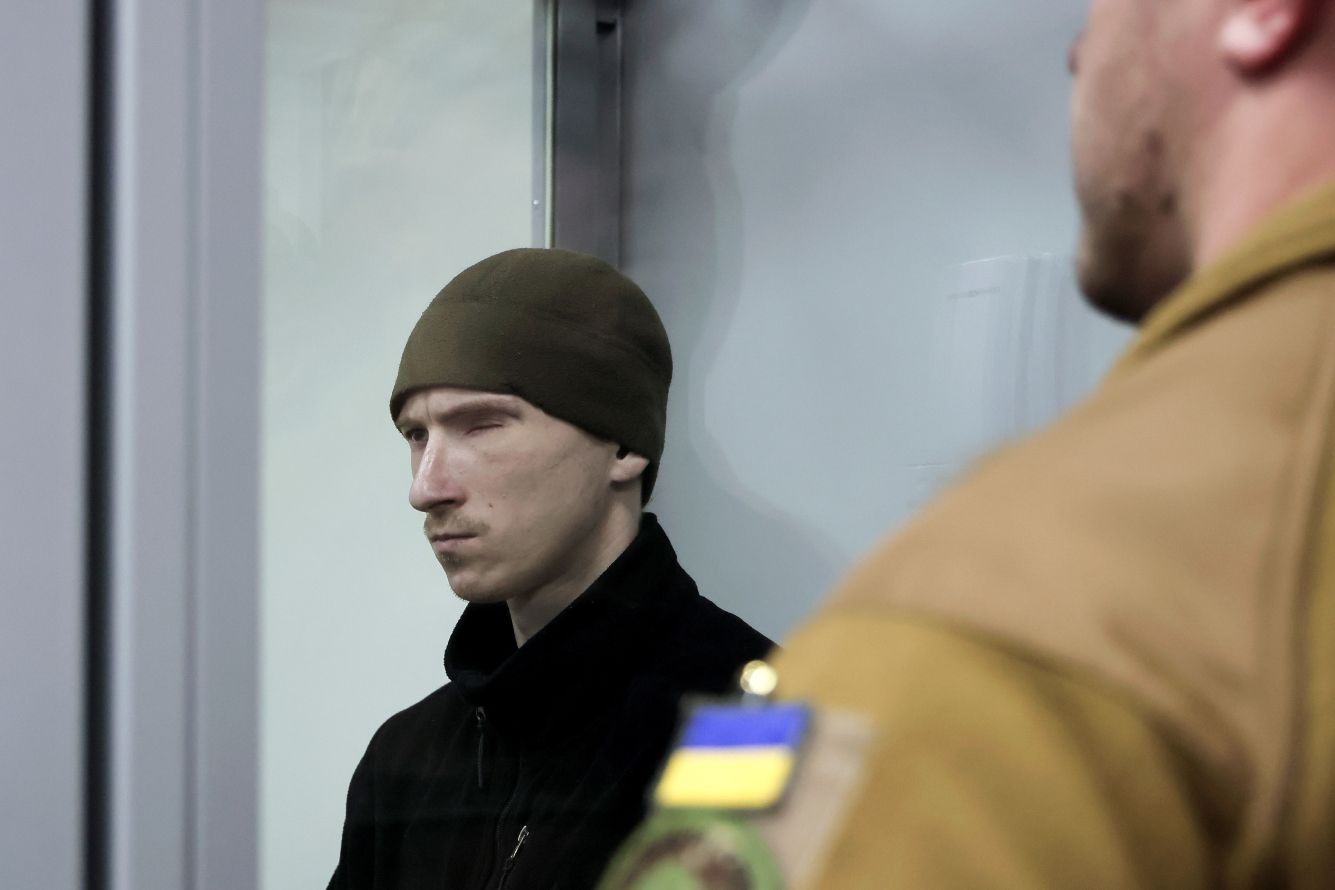
A court in the city of Zaporozhye sentenced Russian serviceman Dmitry Kurashov to life imprisonment for the murder of a prisoner of war. The verdict was handed down on November 6, Deutsche Welle reports .
In January 2024, a group of Russian soldiers from the Storm-V detachment, which included 26-year-old Kurashov, stormed Ukrainian positions near the village of Priyutnoye in the Zaporozhye region. According to the prosecution, after the Russians captured the position, one of the Ukrainian soldiers came out of the dugout and raised his hands. Kurashov demanded that he kneel down, the Ukrainian soldier complied, after which the Russian shot him at least three times. Soon, the Ukrainian military recaptured the position, as a result of which Kurashov and four of his colleagues were captured.
During the trial, Kurashov claimed that the Ukrainian prisoner was killed by a certain Russian doctor, who explained his actions by the impossibility of treating the wounded Ukrainian. This doctor himself allegedly died soon after. However, three of the Russian's colleagues said that it was Kurashov who shot at the unarmed soldier when he came out with his hands up.
Formally, Kurashov admitted guilt during the trial - he later told reporters that he did this to speed up the process in order to return to Russia in the future as part of a prisoner exchange.
Ukrainian Channel Five notes that this is the first time that a Russian serviceman received a life sentence for the murder of a prisoner of war.
Previously, Ukrainian courts handed down several life sentences to captured Russians for killing civilians. The first known sentence was handed down in May 2022 - Russian military officer Vadim Shishimarin received a life sentence for the murder of a 62-year-old resident of the Sumy region. Following an appeal, the punishment was reduced to 15 years in prison.
The most recent life sentence for killing civilians was handed down in August. According to the prosecution, in 2024, near Kupyansk, 21-year-old Artem Kulikov, mobilized from the Nizhny Novgorod colony, on the orders of the commander, shot two local residents after he could not get information from them about the locations of the Armed Forces of Ukraine.
War through the eyes of Meduza readers
How we choose letters
Meduza's readers live in different countries and have different attitudes towards the war. We publish your letters to see this event through your eyes. Our editors try to present all points of view, even if they do not coincide with the editorial position. However, in accordance with the Meduza code, we do not publish messages that contain “hate speech,” justify the murder of civilians, or express direct support for an aggressive war.
Konstantin (Kiev) . If we consider emotional sensitivity as a light-sensitive matrix, it seems to me that this matrix has burned out in all of us, as if from a supernova explosion. This happened in the first months of the war, when the whole world saw the horrors of Bucha, Irpen, and subsequently hundreds of other atrocities in the occupied territories. I will remember for the rest of my life the moment when Zelensky entered the torture basement in Bucha and came out ten years older, with empty eyes... Dehumanization is the main result of the fourth year of the war.
In ordinary life, this began to manifest itself in the dulling of all emotions indiscriminately: joy, grief, love and hatred - all in intensity became barely noticeable bursts, not much different from the daily routine. Nothing else can bring a feeling of joy, much less happiness. Eating has turned into taking energy soap, memory does not hold on to memories, hatred of the Russian military has transformed into dehumanization. There is no strength left to hate - now the Russian occupiers are perceived as units. The pixels on the screen are not people, not individuals, not even mammals. And this despite the fact that I live in Kyiv, which periodically, but not constantly, suffers from “high-precision” attacks on high-rise buildings and kindergartens. How then did the psyche of people living in the front-line areas or those who survived the occupation transform, how did the Ukrainians fighting on the front line change?
From time to time I hear a reproach from within Ukrainian society: “Kyiv lives its own life and has forgotten about the war.” But that's not true! When it “flies” into a neighboring house or destroys your car parked near the entrance with shrapnel, there is no resource for reflection - it has already happened, let’s move on. After all, the universal recipe for life during war has long been found: Keep calm and carry on. In the Ukrainian version, this meaning is enshrined in the name of the all-Ukrainian radio dictation - “The Requirement to Live!” Kyiv has not forgotten about the war, it has adapted, dimmed the lights and is living through the war in an “energy-saving” mode, because to live differently is to fall into hysteria and, ultimately, go crazy.
Share your thoughts about the war
"Jellyfish"