
Translated material
50 years ago, a Soviet officer rebelled in the Baltic Fleet: he tried to get to Leningrad on a warship to start a new revolution
Historian Alexey Uvarov - about the riot at Storozhevoy
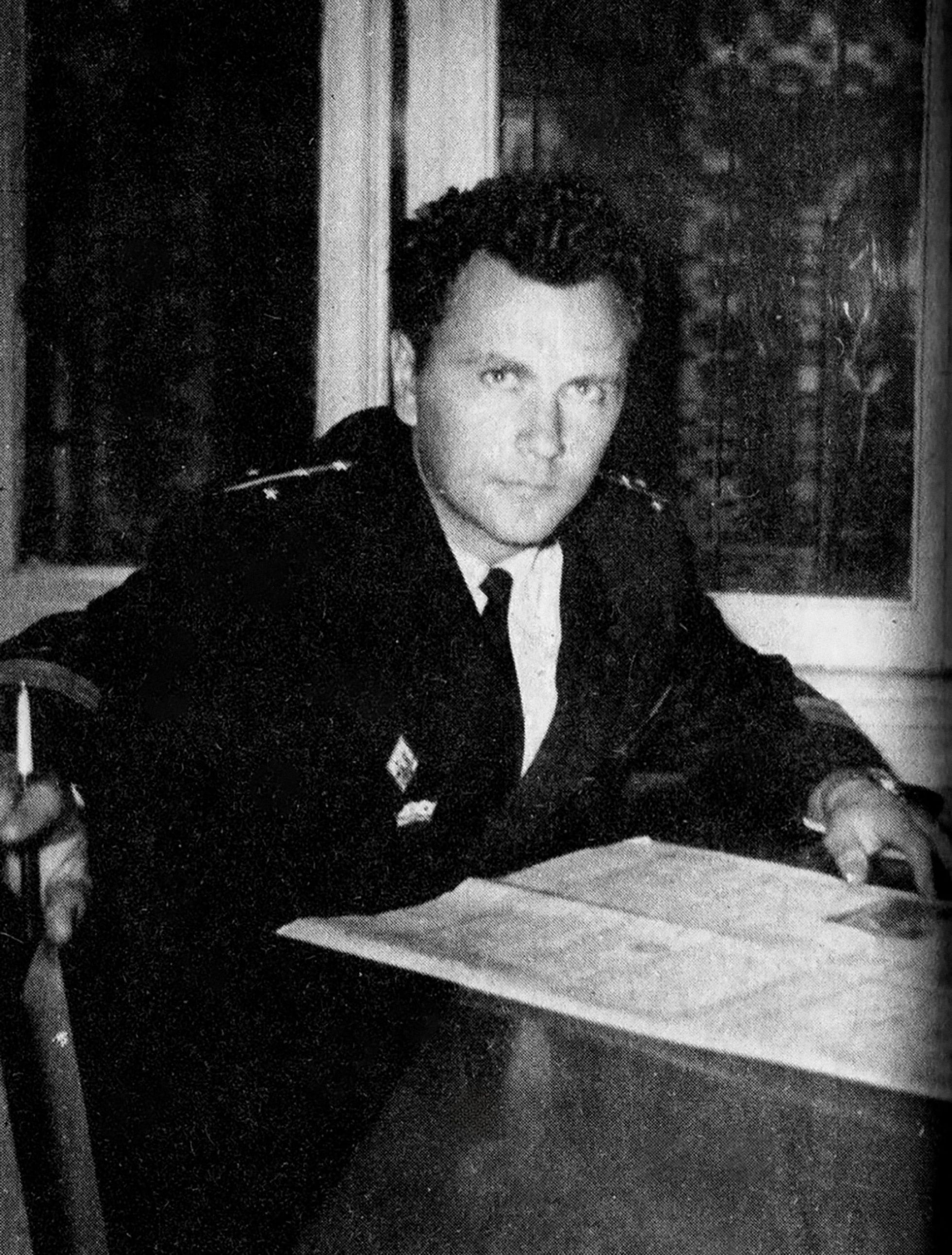
50 years ago, an armed uprising occurred on a Soviet warship of the Baltic Fleet. Political officer Valery Sablin, a convinced communist, decided to rebel in order to “revive socialism” in the stagnant USSR. He managed to take the ship out to the open sea and win over part of the crew to his side. The uprising was quickly suppressed by the forces of the navy and air force, and the history of the rebellion remained classified for many years. At the request of Meduza, historian Alexei Uvarov talks about the riot at Storozhevoy - and how one convinced Marxist-Leninist hoped to organize a new revolution in the country.
You can read this story in English here .
Despite the constant threat of reprisals, dissatisfaction with the authorities often manifested within the Soviet army
Under Stalin, the army and navy came under strict control of the party and state security agencies. In 1937–1938, massive purges took place there, and almost the entire senior command came under repression. Among hundreds and thousands of officers, Marshals Mikhail Tukhachevsky, Ieronim Uborevich, Ion Yakir and others were arrested and shot. During the Second World War, control did not weaken: on the contrary, special departments of the NKVD, detachments and tribunals regularly repressed both ordinary soldiers and key military leaders, including General Pavlov. After the victory in the war in 1946, the Soviet authorities launched the “aviators’ case,” which was followed by the “trophy case”—several dozen generals were arrested and accused of embezzling or illegally exporting “trophy property” from occupied Germany.
In fact, the entire Stalinist period of rule, the army was in an atmosphere of fear - and absolute subordination to the political leadership. The situation changed somewhat under Khrushchev and Brezhnev: the army and navy remained loyal to the regime, but outbreaks of disobedience and political protest arose among them.
In 1962, General Matvey Shaposhnikov, a hero of the Soviet Union and a participant in the war, refused to carry out the order - and did not use tanks against workers during the Novocherkassk uprising . He ordered the weapons to be unloaded and refused to fire at the demonstration. He was subsequently removed from his post and expelled from the party.
A year later, Major General Pyotr Grigorenko, a veteran of the Great Patriotic War and a teacher at the M.V. Frunze Military Academy, created the underground “Union of Struggle for the Revival of Leninism.” Together with their sons and officers, members of the association distributed leaflets criticizing the party leadership and called for democratization and free elections. In 1964, the authorities arrested, stripped of his rank and declared Grigorenko “insane”, sending him to a special psychiatric hospital.
In January 1969, junior lieutenant Viktor Ilyin stole weapons from his unit, went to Moscow - and opened fire on a government motorcade, hoping to kill Brezhnev. He was detained and declared insane. Ilyin himself explained the act as a protest against the policies of the Soviet leadership.
After the Great Patriotic War, attempts to escape abroad by military personnel became more frequent in the army. Just a few examples: in 1948, a cadet of the Grozny school landed a Yak-11 in Turkey - and stayed there; in the fall of the same year, pilots Pyotr Pirogov and Anatoly Barsov took a Tu-2 bomber to Austria, and mechanic Vladimir Barashkov flew a Li-2 to Japan - and received political asylum there. This practice continued under Khrushchev and Brezhnev: pilots fled to Turkey, Germany and other countries outside the Eastern Bloc.
The hijacking of ships to escape from the USSR happened less frequently - and most often in the Baltic Fleet. For example, in 1959, the commander of the destroyer Nikolai Artamonov managed to escape to Sweden on a ship's boat. There he asked for political asylum and later ended up in the United States, where he worked for American intelligence under the name Nicholas Shadrin. In the USSR he was sentenced to death in absentia. In 1975, the KGB lured Shadrin to Vienna for a “meeting with an agent,” where he was kidnapped and killed.
The organizer of the riot at Storozhevoy was an exemplary party worker who sincerely hoped for the reorganization of the USSR in accordance with the ideas of Lenin and Marx
Valery Sablin was born in 1939 into the family of a hereditary naval officer - and from childhood he followed the naval line. He graduated from the Higher Naval School. M. V. Frunze, while still a cadet, joined the CPSU - and took the ideology of Marxism-Leninism quite seriously, as a living program, and not ritual words. Over nine years in the Northern Fleet, he rose to the rank of assistant ship commander - and then entered the V.I. Lenin Military-Political Academy. In 1973, Sablin returned to the fleet as a political worker - he was appointed political officer of the large anti-submarine ship "Storozhevoy" of the Baltic Fleet.
Sablin cannot be called a fringe or an “anti-Soviet” - he was rather an exemplary party officer who sincerely believed in communist ideals. And that is why he decided to revolt.
The idea of uprising took shape during his studies, when Sablin seriously studied the works of Karl Marx, Friedrich Engels and Vladimir Lenin. He came to the conclusion that the contemporary party elite had betrayed socialist ideals - and the USSR could only be saved thanks to the “second revolution.” That is, a return to “genuine Leninism”, freedom of speech and democracy. Sablin even developed a specific plan for the “second revolution”: to seize the ship “Storozhevoy”, reach Leningrad, moor at the “Aurora”, and then appear on television with an appeal to the people with a call to cleanse the country of corrupt leadership and return to the ideals of socialism.
Sablin’s plan to capture the Storozhevoy practically worked - but the political officer underestimated the loyalty of the sailors to the Soviet regime
The Sentry was a large anti-submarine ship - it was intended to search for and destroy enemy submarines, as well as to guard other ships. The Storozhevoy was equipped with anti-submarine missiles, two anti-aircraft missile systems, two twin 76 mm cannons, torpedo tubes and rocket launchers. With a full displacement (about 3,200 tons), the ship could reach speeds of over 30 knots - and stay at sea for up to a month. The Sentry crew consisted of about 190 people, including about 20 officers.
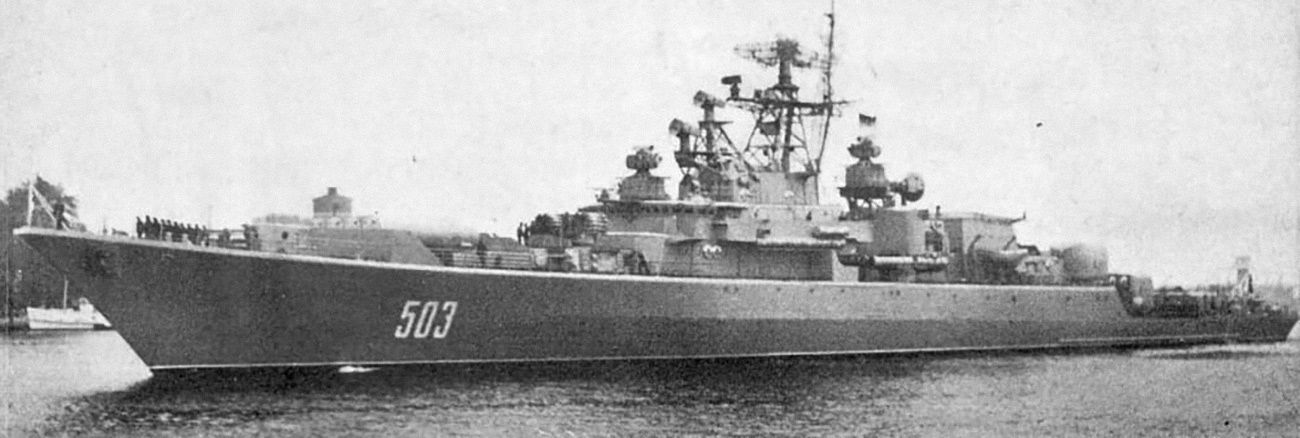
On November 8, 1975, the Sentry was in Riga, where, together with other ships of the Baltic Fleet, it took part in the celebration of the 58th anniversary of the October Revolution. After participating in the naval parade, the ship was supposed to leave Riga for Liepaja for scheduled repairs. Sablin decided to take advantage of this moment to take the ship out of the bay into the open sea at night, and then head to Leningrad.
As a political officer, Sablin organized a screening of the film “Battleship Potemkin” for the Storozhevoy team. While the crew was busy watching, he, along with several trusted sailors, locked the ship's commander, Anatoly Potulny, in the hydroacoustic service room on the lower deck.
At a large gathering of the entire crew, Sablin announced that he was taking the Storozhevoy under his command and leading it to Leningrad to appeal to the country there with a call for change. Sablin’s actions confused the sailors: the political officer assured them that the ship’s commander, who was under virtual arrest, completely agreed with the plan. Since the political officer himself spoke to them - a man who was considered a representative of the party and the ideological mentor of the crew - many decided to listen to him.
Later, Sablin spoke separately to the officers in the wardroom: several people took his side, the rest, who refused to follow his orders or remained silent, were isolated in the lower rooms of the ship. At the same time, the political officer of the Storozhevoy sent radiograms to Moscow, in which he stated the purpose of the campaign and invited the party leadership to the ship for negotiations.
Sablin did not foresee that one of the mechanical officers would be able to climb along the mooring cable to the submarine standing nearby and raise the alarm. True, by this time the Sentry had already weighed anchor, left the parade formation, descended the Daugava and headed across the Gulf of Riga to the Irbe Strait. That is, up to this point, Sablin’s plan had generally worked: the commander was neutralized, the crew was under control, and the ship was put to sea. Except for one moment - surprise.
The Baltic Fleet did not immediately believe that there was a mutiny on the Storozhevoy
The alarm about a mutiny on the Storozhevoy was not taken seriously at first. The officer who conveyed the message was not believed: according to the plan, the ship was really supposed to go to sea to undergo repairs. Only when the Watchdog stopped communicating with the fleet command and responding to their requests, it became clear that an emergency situation had occurred. Then the Baltic Fleet sounded the alarm and began an interception operation, and at the same time informed Moscow.
Patrol ships and missile boats departed from the base in Baltiysk, border ships departed from Liepaja, and anti-submarine aircraft were scrambled into the air to search for the mutinous ship.
Meanwhile, the Sentry was already sailing along the Gulf of Riga in the direction of the Irbensky Strait, leading to the open sea. The fleet command did not know where it was heading - to Leningrad or to the shores of Sweden - so the order was clear: prevent it from entering the Baltic Sea and, if the ship does not obey, use force.
At this time, Valery Sablin managed to speak to the sailors and briefly outline his political program. He argued that the government was mired in careerism, corruption and hypocrisy. Therefore, the state apparatus needs to be “cleansed and thrown into the dustbin of history,” and the electoral system needs to be replaced, since it has turned the people into a voiceless mass. Sablin said that only a new revolution and a return to genuine Leninist principles could restore justice and dignity to the country, and make the Soviet people the masters of their destiny again.
Sablin also prepared the text of the appeal , which was to be broadcast on Central Television throughout the USSR. In it, the political officer of “Storozhevoy” wanted to call on Soviet citizens for a nationwide discussion of the fate of the country. He emphasized that the Sentry crew are not traitors, but patriots who want to return freedom of speech and true communist ideals to society. Sablin accused the authorities of bureaucracy and irresponsibility, demanded to stop pressure from party bodies and give people the opportunity to decide for themselves how to live. He concluded his appeal with an appeal to Soviet citizens to support the Storozhevoy crew - not to go to work if the sailors are not allowed to speak on television.
The commander of the Sentry managed to regain control of the ship at a critical moment
An entire squadron of ships was sent to meet the Sentry. An order was received from Moscow to stop the rebels at any cost, even to bomb and sink the ship if necessary. Due to the confusion, the bombers twice attacked other ships - the cargo ship Volgobalt-38 and the warship Komsomolets Litvy. Luckily, no one was hurt.
On the morning of November 9, 1975, a bomb was targeted at the Storozhevoy, which landed under the stern of the ship, damaging the skin, propellers and steering. The sailors took advantage of this moment and freed the ship’s commander, Anatoly Potulny. He climbed onto the bridge, wounded Sablin in the leg with a pistol shot and announced that he was again taking command. Soon, troops from other ships landed on the deck of the Sentry, putting an end to the uprising.
The Sentry itself, although it rotated its artillery turrets towards other ships to intimidate, did not fire a single shot. In addition, at the time of the bombing of the ship, as far as can be judged by the direction of its movement, Sablin no longer planned to reach Leningrad, but wanted to go into Swedish territorial waters in order to break away from pursuit.
After the arrest, Sablin and his supporters were taken from the ship under guard and taken for the first interrogations. Most of the crew members were soon distributed to other parts of the fleet to prevent any contact between them. Sablin and his closest assistant, sailor Alexander Shein, were transported under escort to Moscow, where they were placed in the KGB pre-trial detention center on Lubyanka, and then in Lefortovo prison.
The investigation into the riot at Storozhevoy was conducted behind closed doors. Sablin was charged under paragraph “a” of Article 64 of the Criminal Code of the RSFSR - “Treason to the Motherland.” The actions of the political officer were qualified as “organizing and carrying out the unauthorized hijacking of a warship outside Soviet territorial waters for the purpose of political action against the existing system.”
During the investigation, Sablin admitted guilt, but claimed that he did not consider himself a traitor. He explained that he wanted to “transform society into a communist one” and acted out of a desire to get closer to communist ideals, and not at all from hostile motives. Later, already in the Lefortovo prison, he completely abandoned his previous views and several times expressed repentance in writing, declaring that he “wants to atone for his guilt and prove it with his entire subsequent life.”
On July 13, 1976, the Military Collegium of the Supreme Court of the USSR sentenced Valery Sablin to death - execution, with deprivation of the military rank of captain of the 3rd rank and state awards. His assistant, sailor Alexander Shein, was convicted as an accomplice. He received eight years in prison.
Cases were brought against six more officers and eleven midshipmen, but the court acquitted them; many, however, were dismissed from the navy or subjected to party sanctions. The Sentry crew was disbanded, and mention of the mutiny itself was strictly forbidden. In 1994, the Supreme Court of the Russian Federation reviewed the case, replacing “treason to the Motherland” with articles on military crimes, but at the same time denied Sablin and Shein full rehabilitation. The plot of the uprising later formed the basis of the plot of the novel “The Hunt for Red October” by the American writer Tom Clancy.
Alexey Uvarov