
Translated material
The US is one step away from war with Venezuela. Secretary of State Marco Rubio has been pushing for this for nine months, and he finally got it.
Highlights from The Atlantic
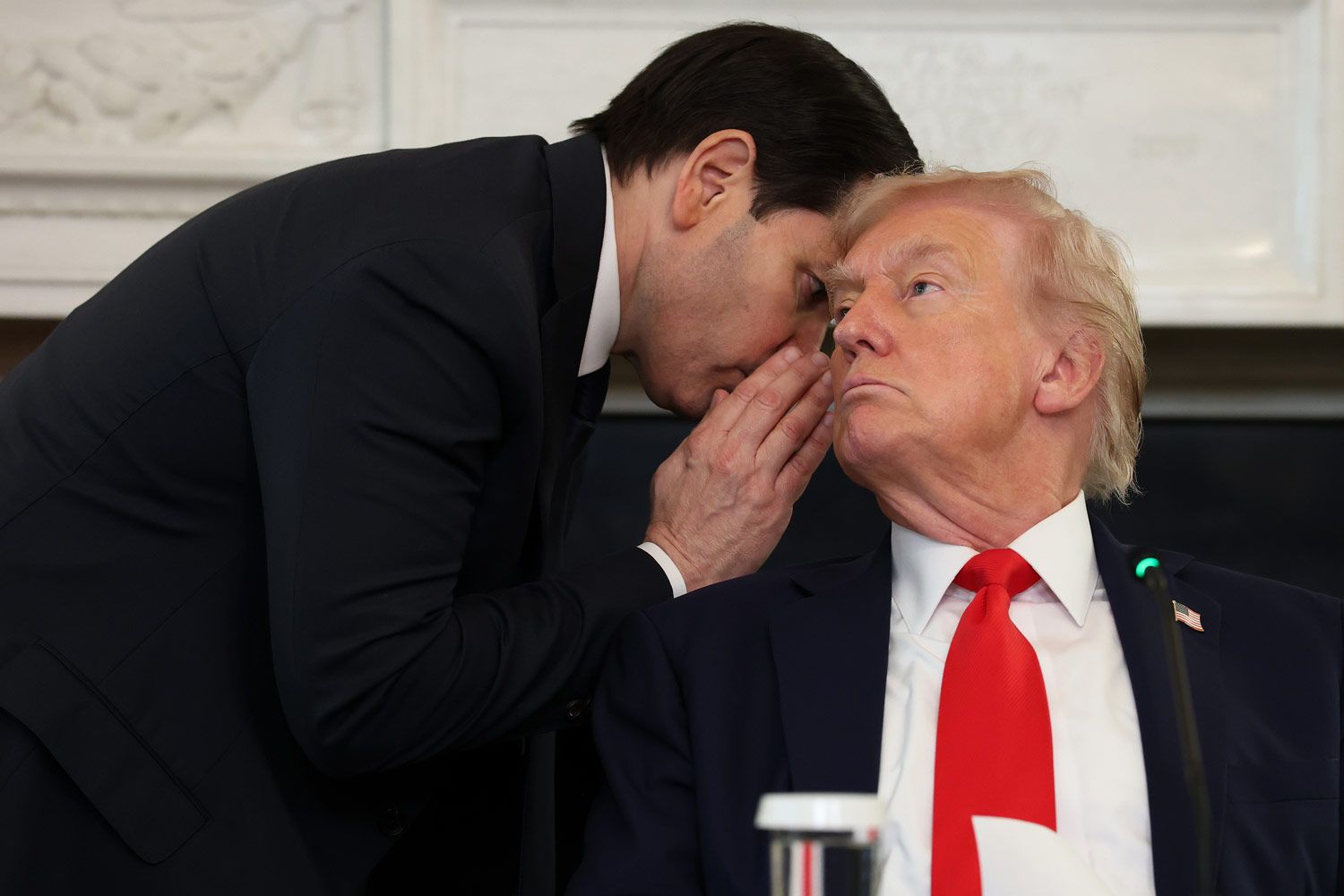
The Donald Trump administration is seriously focused on overthrowing Venezuelan President Nicolas Maduro. Several options for a military invasion plan have already been developed and a large group of ships has even been assembled in the Caribbean Sea. Trump initially hoped to solve the “Venezuelan problem” through a deal - but in the end, a hard line, defended by Secretary of State and National Security Advisor Marco Rubio, prevailed, The Atlantic writes .
Returning to the US presidency in January 2025, Donald Trump appointed diplomat Richard Grenell as his special envoy - and soon sent him to Venezuela. The United States has not officially had diplomatic relations with this country since 2019, when Trump recognized opposition leader Juan Guaido as interim president of Venezuela, and Venezuelan leader Nicolas Maduro responded by announcing a severance of relations.
Grenell was tasked with establishing informal contacts with Maduro. There were three main goals: to gain access for American companies to Venezuelan resources (primarily oil), to establish cooperation in the fight against drug trafficking, and to agree on the deportation of Venezuelans who do not have legal grounds for staying in the United States.
During Trump’s first term (2017–2021), Grenell also tried to negotiate a “controlled exit” from Maduro from power. But these negotiations failed.
US Secretary of State and Presidential National Security Adviser Marco Rubio believes that, in principle, there should be no negotiations with Maduro, but only putting forceful pressure on him and seeking regime change in Venezuela.
Immediately after Trump returned to the White House, his administration assigned the status of “foreign terrorist groups” to several Latin American organized crime groups, including the Venezuelan Tren de Aragua. Rubio insisted that it was effectively controlled by Maduro and his cronies. American intelligence did not find evidence of this - and because of this, in May they lost their positions. O. Head of the National Intelligence Council Michael Collins and his deputy Maria Langan-Riekhof.
According to The Atlantic, Rubio, in order to convince Trump that he should reconsider his approach to Venezuela, began to portray Maduro as a drug lord and the culprit of the migration crisis. Thus, in the eyes of Trump, the problem of Venezuela has turned from a foreign policy issue into a domestic one.
Venezuela is not a major drug producer, but it is an important transit point for drugs from Colombia and other South American countries to the United States.
The hard line against Maduro has the support of the large Latin American diaspora in the United States, concentrated mainly in southern Florida. This is part of a broader idea popular in this diaspora: the United States should actually turn all of Latin America into its protectorate, and to do this, achieve the removal of all anti-American regimes there, especially leftists, like Maduro.
Rubio himself comes from this diaspora (his parents are Cuban immigrants) and was a senator from Florida before being appointed secretary of state. Critics of the new policy within the Trump administration say the president, who ran on an "America First" slogan, is now operating on a "South Florida First" slogan.
Rubio's hard line appears to have prevailed in the end. In early September, Trump authorized airstrikes against small vessels off the coast of Venezuela and in the Pacific Ocean. At least 65 people were killed in 16 such attacks. The American administration claimed that these ships were transporting drugs, and the people on board belonged to drug cartels. In support, officials referred to “American intelligence” without providing any details.
In October, Trump ordered Grenell to stop direct contact with Maduro. The CIA received permission from the President to conduct covert operations in Venezuela, including “lethal ones.” The United States has begun to assemble the largest military force in the Caribbean since the Cuban Missile Crisis of 1962. It includes the aircraft carrier USS Gerald Ford, many warships, submarines, airplanes, drones and about 10 thousand military personnel. Many journalists and experts expect an American military operation to overthrow Maduro soon (examples: one , two , three , four ).
Even before his second inauguration as president, Trump made it clear that he intended to turn the Western Hemisphere into a sphere of exclusive US influence. Related to this were his statements - now half-forgotten - about the need to annex Canada, Greenland and Panama. Venezuela under Maduro is an ally of China and Russia. Moreover, unlike Cuba, another Latin American country that is “problematic” for the United States, it is rich in oil and other resources.
According to The Atlantic's sources, Trump is in no hurry yet. He still hopes that the threat alone will be enough for Maduro to leave on his own in exchange for an amnesty and the opportunity to quietly go into exile.