
Translated material
The first humanoid robot was presented in Russia. He walked on stage and fell
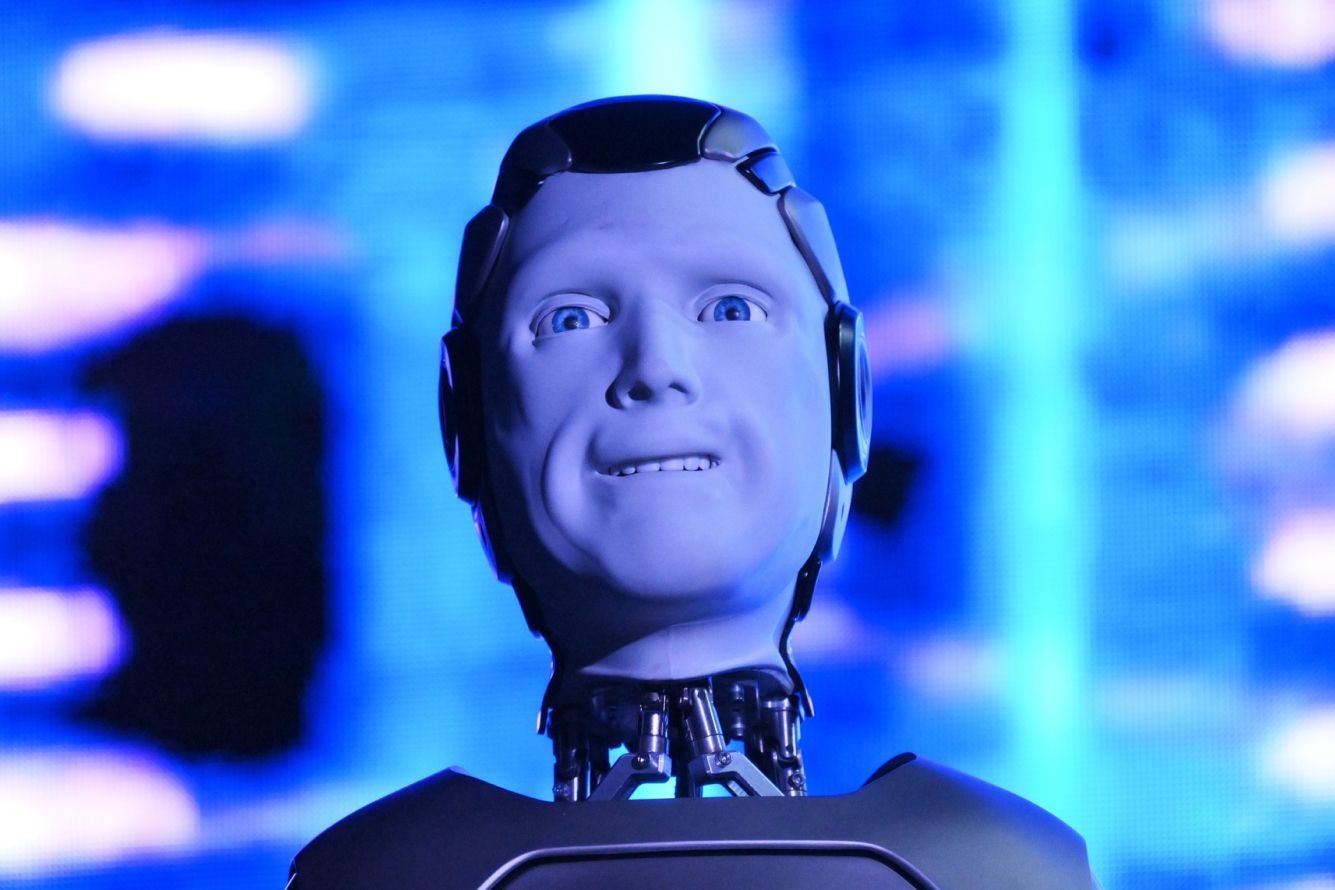
Russia's first humanoid robot with artificial intelligence was presented in Moscow, TASS reported on November 11, citing the New Technology Coalition .
The robot named Idol, as reported by the Moscow agency, fell during the presentation. Judging by the video of the incident, the robot slowly walked onto the stage, accompanied by two people, to the song “Gonna Fly Now” from the movie “Rocky.” The idol tried to wave his hand, but tilted and fell. The presentation was immediately interrupted and the robot was taken away.
As journalist Dmitry Filonov noted , earlier the leader of the National Technology Coalition, Alexey Yuzhakov, warned that the developers had invested little in the robot’s ability to walk. The founder of the Idol company, Vladimir Vitukhin, noted that the problem arose due to stereo cameras - they are sensitive to light, and the room was dark, the journalist added.
During the second appearance on stage, the robot Idol, not without assistance, was able to stay on its feet, the Moscow agency clarified. The director of the development company, Vladimir Vitukhin, noted that everything will be fine with the robot. “This is exactly the kind of learning in real time when a successful mistake turns into knowledge, and an unsuccessful mistake into experience. I hope this mistake will turn into experience,” said the head of the company.
The developers said that the robot “covers three key human functions: walking on legs, manipulating objects and communicating with people.” All systems work offline, battery life is designed for up to six hours. What kind of AI system the developers use is not specified.
According to the developers, lively facial expressions and expression of emotions are “the key differences between Idol and other world solutions.” The robot's "face" can express at least 12 basic emotions, as well as "hundreds" of microexpressions.
The developers believe that such a robot will be able to work in a factory, in logistics and in service - in a bank, airport or any public space, writes RIA Novosti.