
Translated material
According to the law of the mountains
Third scene
According to the law of the mountains
Portrait of Suleiman Kerimov, a former gangster who corrupted the entire Russian elite
November 11, 2025
Characters:
Suleiman Kerimov and his family, Ramzan Kadyrov and his family, Anton Vaino and his family, the families of Dmitry Peskov and Alexei Gromov, as well as Tina Kandelaki and Andrei Malakhov
Historically, power in national republics, especially in the Caucasus, is implicated in nepotism (or “tukhumstvo”, as this phenomenon is called in Dagestan) and “kunachestvo” (the Caucasian name for connections built on personal acquaintance). In Soviet times, the Kremlin tried to fight this sluggishly - for example, by mixing national personnel - and society made fun of it. “We have come to judge you according to the law of the mountains!” - says the hero of the popular Soviet film comedy “Prisoner of the Caucasus”, in which the head of the district communal farm, Comrade Saakhov, conspires with another respected person, the driver Dzhabrail, to kidnap a young girl who has attracted the official’s attention. The villain ultimately gets what he deserves - he is judged not only according to mountain laws, but also according to state laws. The film is full of funny situations and memorable jokes, but the problems described in it - nepotism and the subordinate position of women - are not at all from the realm of humor.
The Project’s research showed that out of 57 officials of Caucasian origin we studied (we are talking about political, not ethnic origin), 55 (96%) were included in our database - those who employed relatives in the civil service, in state-owned companies, or got involved in government contracts. The study also caught the problem of hidden polygamy.
"Ruling dynasties" from the Caucasus
10 civil servants from the Caucasus with the largest number of relatives employed in government or government-related business
Ramzan Kadyrov Head of Chechnya
96
Arsen Kanokov Member of the Federation Council
19
Suleiman Kerimov Member of the Federation Council
13
Akhmat Salpagarov Member of the Federation Council
12
Kaplan Panesh State Duma Deputy
10
Saygidpasha Umakhanov State Duma Deputy
Bekhan Barakhoev State Duma Deputy
Murad Gadzhiev State Duma Deputy
Jamaladin Gasanov State Duma Deputy
Rashid Temrezov Head of Karachay-Cherkessia
The three largest “ruling dynasties” from the Caucasus include the families of the head of Chechnya ~~Ramzan Kadyrov~~ (at least 96 participants) and senator ~~Suleiman Kerimov~~ (at least 13). In many cases, dynasties born in the Caucasus have long gone beyond the borders of these regions. For example, the relatives and kunaks of Kerimov and Kadyrov work in absolutely all government bodies we have studied - in the Kremlin, the government, both houses of parliament, in law enforcement agencies and at the regional level.
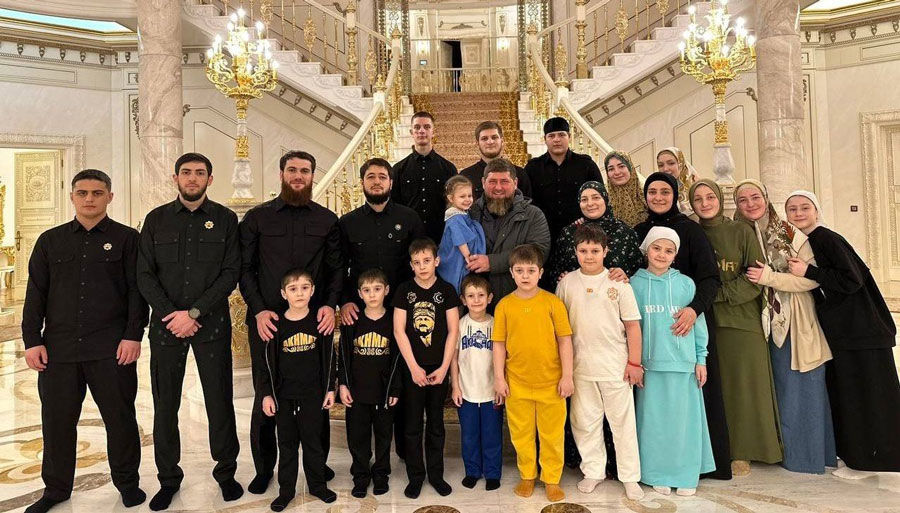
If we have already talked about Ramzan Kadyrov’s relatives and kunaks, whom he calls nothing less than “dear brothers” (“We call brothers those who in difficult times did not abandon, did not abandon, helped, risking the most dear,” he wrote in the Telegram channel), then the Kerimov family and the reason for its career success is a big secret even now, although the Dagestani billionaire himself has been in big politics for 26 years, exactly as long as he has been in power ~~Vladimir Putin~~ . This is Kerimov's story.

~~Suleiman Kerimov~~ , although he was born, studied and married in Derbent, Dagestan, he is not very closely connected with his native region. He left his homeland in the early 90s and subsequently encountered problems in Dagestan more than once. “He didn’t know anyone there and was afraid to come there until Gadzhiev, who was in authority in Dagestan, helped him,” Kerimov’s business partner recalled in a conversation with Project. We are talking about the now former State Duma deputy from the republic, Magomed Gadzhiev, who in the 90s and early 2000s held important positions in Dagestan - he oversaw fishing and tax collection. Gadzhiev and Kerimov became unofficial partners, but subsequently quarreled (see below).
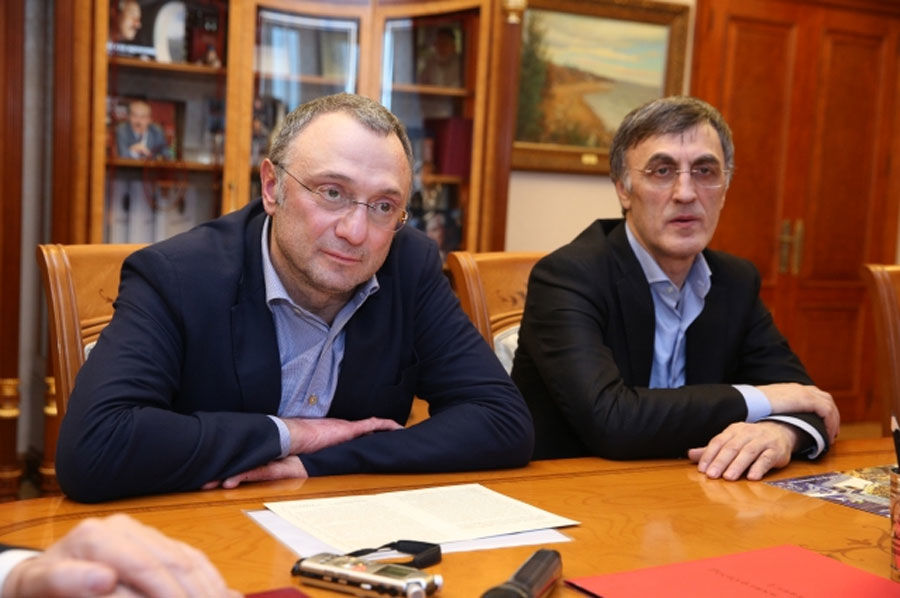
Kerimov’s father worked in the Soviet police, but this was not what brought the future oligarch his first start in life. In the 80s, he married fellow student Firuza Khanbalaeva, the daughter of a prominent party leader and head of trade unions in Dagestan. Both newlyweds are Lezgins, this is an important detail in Dagestan society, where since Soviet times there has been an unspoken rule about the division of responsible positions in proportion to the number of the main nationalities of the republic. Lezgins are the fourth ethnic group of the republic after the Avars, Dargins and Kumyks, therefore, these people were assigned positions no higher than police, prosecutor or trade union chiefs. His father-in-law helped Kerimov get into the management of the Makhachkala plant "Eltav" (also known as "Eldag") - it was created in the late Soviet Union for the manufacture of microcircuits. As a representative of the plant, Kerimov moved to Moscow. But in the capital, Kerimov worked not so much as an emissary of his native enterprise, but as an accountant in the structures of the then leaders of the Dagestan mafia - Dzhabrail Salautdinov (Dzhabrik) and Magomed Idrisov (Budulai).
Unique footage from 1993 shows the Jabrika wedding. Here - in the second minute - you can see a very young Suleiman Kerimov, he smokes, standing next to the groom. And here on video is captured a silver Lincoln limousine, in which Dagestani crime bosses moved around Moscow.
In March 1994, in a Moscow courtyard near Lefortovo, where the Research Institute of Physical Education was then located, and now the Ministry of Sports is located, the same limousine was found abandoned with three bullet-riddled bodies inside. Nearby, in the restaurant of the Dagmos company, which was controlled by Jabrik and Budulai, there are three more corpses. According to a source directly related to that story, Dagestani bandits gathered in a restaurant to discuss the fate of $9 million that had disappeared from their common fund. In addition to Salautdinov and Idrisov, Kerimov was supposed to be at the meeting, but, as he said later, he was late. During the time that he was gone, Dagestani businessmen were killed. All of them were shot with his own hands (probably from two pistols, which he always had with him) by the criminal leader Maxim Lazovsky, who worked for the Chechen mafia. The circumstances of the incident were told to the Project by Lazovsky’s closest accomplice ×
. The fate of 9 million is unknown.
Next, Kerimov began working with other authorities - he became “a kind of financial consultant” for Georgy Sofiev, another acquaintance of the billionaire recalled ×
. Sofiev, together with a cousin named Imran Ilyasov (both also Lezgins), founded the so-called Kingisepp group, which was engaged in racketeering and contract killings in Moscow and the Volga region.
“He was always a master of deals because he knew how to court people. He knows how to care for those he needs. Gifts, compliments, everything,” says Kerimov’s former business partner.
In the late 90s, Kerimov made his first big deal - he bought the Vnukovo Airlines company, which was in decline, which employees in everyday life called “Granddaughter” (based at Vnukovo airport). At that moment, Vnuchka was the country’s second air carrier after Aeroflot. Kerimov’s partner in this operation was Ibragim Suleymanov (a Rutul, a representative of a small people living side by side with the Lezgins in southern Dagestan), the son-in-law of the then influential businessman Platon Lebedev, one of the main shareholders of the MENATEP group. The third partner was Saratov businessman Tatevos Surinov. The condition for the transfer of the state block of shares was an investment program of $150 million, which was promised by Kerimov, Ibragimov and Surinov. The leader of the Vnukovo trade union, Gennady Borisov, sought money from the new owners - the airline’s employees did not receive salaries for a long time. In January 1999, Borisov was stabbed to death in the entrance of his house - 12 knife wounds were counted on his body. In 2001, the airline began to experience financial difficulties and eventually went bankrupt. All official biographies of Kerimov note that he left Vnukovo Airlines in 1998, even before Borisov’s murder. However, the corporate documents we studied show that the denominations of the Dagestan billionaire were listed as co-owners of the airline until bankruptcy in 2001. This was confirmed in a conversation with Proekt by a businessman with whom Kerimov negotiated in 2001 about the sale of one of the subsidiaries of Vnukovo Airlines ×
.
In 2004, Surinov and Suleymanov were detained on suspicion of fraud and money laundering (the case concerned the head structure of Vnuchka). In October 2025, Ibragim Suleymanov was again detained by investigators on suspicion of murder. According to telegram channels close to the security forces, we may be talking about an investigation into the murder of the Vnukovo Airlines trade union leader Gennady Borisov. Kommersant also links the case with the murder of the former head of the Federal Service for Financial Recovery and Bankruptcy Georgy Tal ×
. But the authorities had no questions for Kerimov himself. As before, there were no questions about cooperation with bandits. And there were reasons for this.
Vnukovo Airlines gave Kerimov one important acquaintance - with the Liberal Democratic Party of Russia and its long-time leader Vladimir Zhirinovsky.
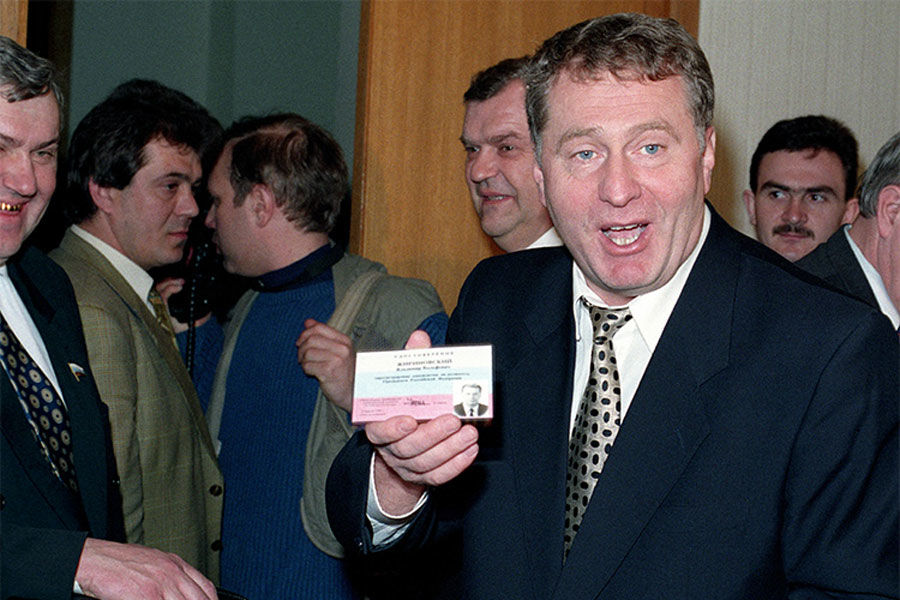
It was like this. Kerimov’s junior partner in the airline was previously convicted LDPR activist Sergei Isakov, a former sailor who made a living from crime in the Oryol region. In 1993 and 1994, Isakov was convicted of tax evasion and using a fake ID as an employee of the Foreign Intelligence Service ×
. It was Isakov who introduced the aspiring Dagestani businessman to Zhirinovsky, the head of the Liberal Democrats himself later admitted ×
. The LDPR always had enough crooks with criminal records who performed certain tasks for Zhirinovsky. Isakov, for example, tried to become governor of the Oryol region from the Liberal Democratic Party, and when it didn’t work out, he staged a high-profile trial. But this is not all the sailor’s merits.
At the end of 1997, he, along with Zhirinovsky and Kerimov, boarded a Vnukovo Airlines plane to travel to Baghdad, the capital of Iraq. It was not easy to do this then - Iraq, punished for the invasion of Kuwait, was subject to international sanctions, which, among other things, limited air traffic with Baghdad. The plane with Kerimov, waiting for permission to fly, first landed in Yerevan for a long time, then was able to fly to Iran, and from there the Russian guests had to get to Iraq by land. Zhirinovsky explained this difficult journey by saying that Saddam Hussein was his “friend” and did not deserve isolation. But in reality, Zhirinovsky and his companions had purely mercantile goals.
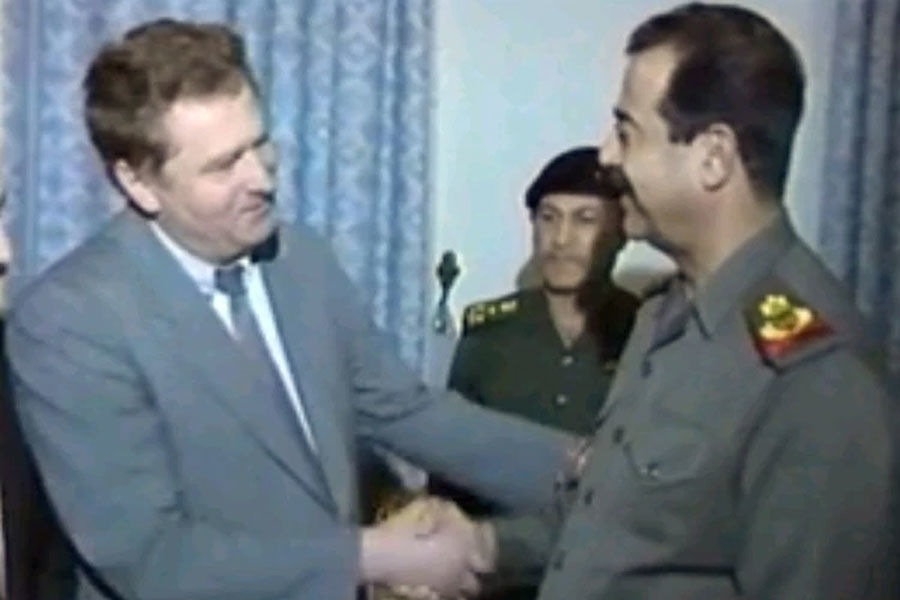
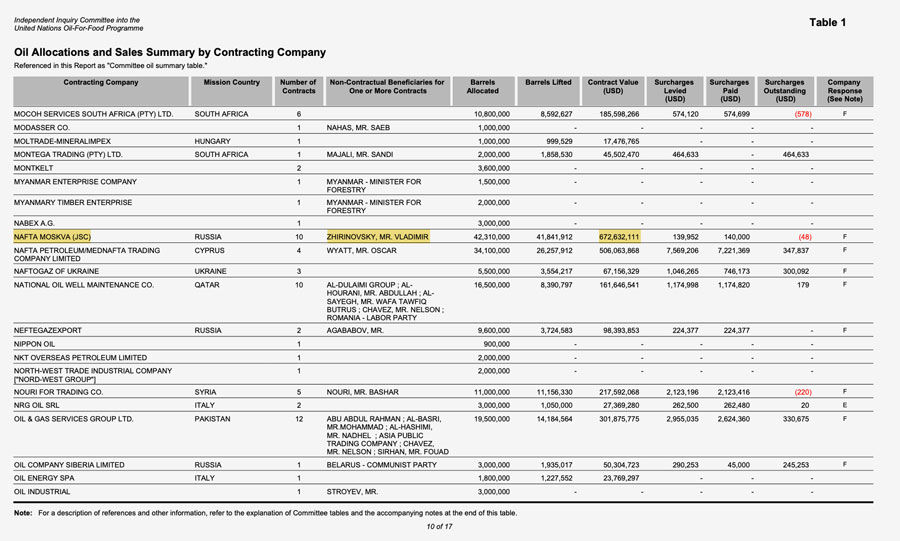
The whole point is that Zhirinovsky, Kerimov and Isakov wanted to make money on Iraqi oil. And they succeeded. In 1998, Kerimov bought the oil trader Nafta-Moscow. Oil itself became the business of the Dagestani entrepreneur for a very short period of time - in the late 90s, together with Zhirinovsky and Isakov, he participated in the Oil for Food program, which allowed the Iraqi government, which was under sanctions, to sell abroad part of the hydrocarbons produced in the country. In this program, as it later turned out, there were many violations, the main essence of which was that quotas for the sale of Iraqi oil were received by people and organizations that were in one way or another connected with Saddam’s regime - friendship and bribes.
The scheme worked as follows. Zhirinovsky, for an agreed percentage, which was then deposited into the bank account of his son Igor Lebedev, sought quotas for oil exports from his “friend” Saddam - for example, Nafta received at least 10 contracts worth $672 million, and the Russian Engineering Company, registered to Isakov, received 5 contracts worth $517 million.
This well-coordinated group also had other accomplices. For example, another fellow countryman of Kerimov, Magomedtagir Abdulbasirov 
Kerimov and Abdulbasirov met in the early 90s, working through the so-called Federal Food Corporation ×
, former CPSU functionary who worked in the Russian government in the 90s
. The international investigation stated that the recipient of quotas from Saddam was the governor of the Oryol region, Yegor Stroev, whose adviser at that moment was Abdulbasirov ×
. Another participant in the scheme is ~~Khizri Abakarov~~ , also a Dagestani who worked as Kerimov’s guarantor.
Vnukovo Airlines also played a role in the oil scam. Two months will pass from the moment the plane carrying Zhirinovsky and Kerimov failed to fly to Baghdad, and the next plane of the same company will still break through the air blockade. The planes were needed to take money out of Iraq - Saddam’s regime was limited in non-cash transactions and paid bills in bundles, suitcases and briquettes of banknotes, which could be exported to a friendly country without inspection, two former acquaintances of Kerimov recall ×
.
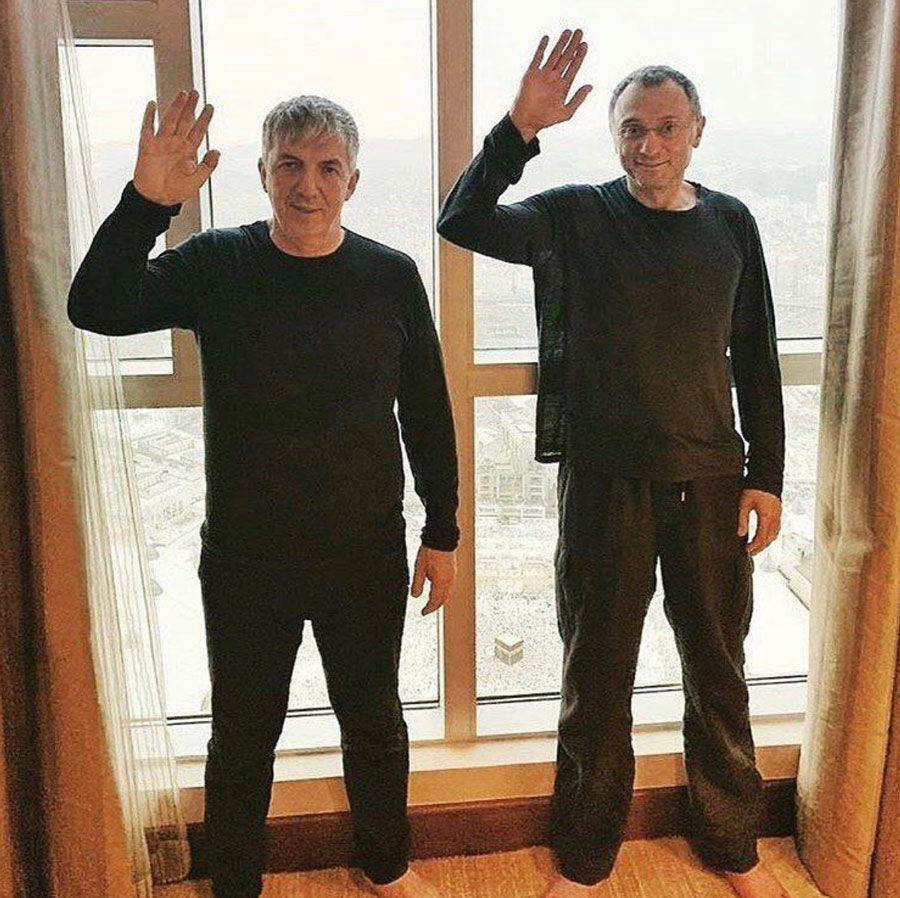
The history of this Kerimov business, like the previous ones, also ended in a criminal case - against Abakarov, Kerimov’s assistant. In April 1997, the Ministry of Internal Affairs of Bashkiria put him on the wanted list under the article “fraud.” However, he was not punished. Saddam Hussein helped with this again. Zhirinovsky and Kerimov agreed with the Iraqi authorities that Abakarov would sit in Baghdad during the investigation. And so they did. Kerimov’s henchman will return to Russia when his boss becomes a State Duma deputy. Since then, Abakarov has been a faithful debtor of Kerimov, who represented the owner in many business projects, for example, he headed the Makhachkala airport and registered the stadium of the Anzhi football club for his own daughter ×
. Now Abakarov is a State Duma deputy, one of many kunaks of the Dagestan billionaire in government.
According to our calculations, over the years of his public career, Kerimov had at least seven deputies related to him by family or business in the State Duma, one member of the Federation Council and at least four legislators in the Dagestan parliament. Ten of these twelve people still hold their positions today. The representation of Kerimov's people - relatives or close friends - in the executive branch is not much less. We counted nine officials of different scales and biographies associated with the oligarch: from four successive mayors of Kerimov’s native Derbent to the head of the Russian presidential administration.
Kunaki Suleiman Kerimov
Kerimov himself first came to power in December 1999, becoming a State Duma deputy - since then, for the 26th year, he has not parted with the legal immunity he received then. He sat in the State Duma for 8 years and in the Federation Council for 17, of which he is still a member.
Kerimov received his deputy mandate for a bribe - $5 million was paid to the same Zhirinovsky
, - this story is told by two close acquaintances of the oligarch, who also previously worked in government ×
. 5 million was the standard price for this service in the LDPR, “there are no free riders here,” as Zhirinovsky said, according to the recollections of his colleagues, meaning that one had to pay for the “trip” to the State Duma. At different times, in this way, for example, figures from the Tambov criminal group Mikhail Glushchenko, Mikhail Monastyrsky and Vyacheslav Shevchenko, as well as businessman Ashot Egiazaryan, a native of another St. Petersburg criminal organization Denis Volchek and Tuapse businessman ~~Yuri Napso~~ , recently expelled from parliament for absenteeism, got into the State Duma through the LDPR.
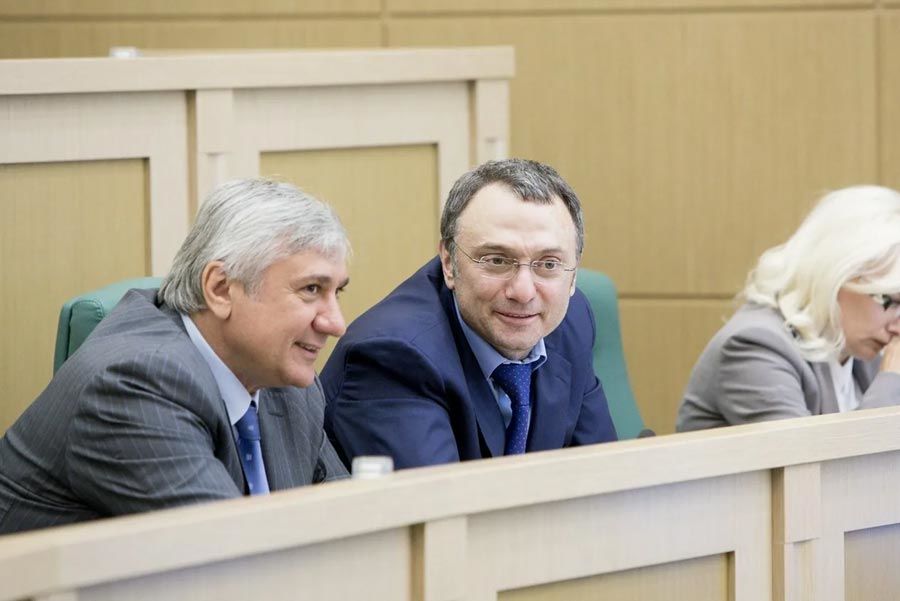
At the same time as the LDPR and at approximately the same price, the Communist Party also sold seats in its faction. For example, businessmen Leonid Mayevsky and Vitaly Yuzhilin became commercial deputies from the communists at different times. This does not mean that places on the lists were not sold in United Russia and other parties - it’s just that in order to get into parliament it was necessary to immediately negotiate with the presidential administration and pay part of the amount to the curators of domestic policy, say two former deputies, each of whom had concluded a similar deal in the past ×
.
The purpose of obtaining a mandate for Kerimov was legal immunity. When the businessman was a candidate for parliament, he, fearing detention (due to investigations surrounding oil and Vnukovo Airlines), even spent the night in the office for some time, waiting for the end of the election campaign, his acquaintance from that time remembers ×
.
Having spent 8 years in the State Duma, Kerimov, however, did not work very much as a deputy. According to the law, members of parliament do not have the right to conduct business while performing their duties; parliamentary work must be their main activity. But Kerimov is not the only one who ignored this norm, although he did it in a particularly provocative manner. In the State Duma of the third convocation, he was listed as a co-author of two bills (both did not pass), in the next convocation he was a co-author of 18 more projects. Having moved to the Federation Council, he did not show legislative initiative.
In fact, oligarch Kerimov, being both a deputy and a senator, and despite the legislative ban, continued to do business. The once purchased oil trader Nafta broke with fuel already at the beginning of the 2000s, essentially becoming an investment company - through it Kerimov bought shares and entire companies throughout his government career.
In 2005, Kerimov entered the business of Moscow Cable Networks - then it was the largest company in terms of the number of subscribers, which was nevertheless in decline, and therefore was relatively cheap. The idea of investing in this project was suggested to Kerimov by then presidential adviser Mikhail Lesin, a former minister of press and one of the curators of censorship in Russia. Lesin acted as Kerimov's unofficial partner in that deal
, Kerimov’s former partner knows, the specialized publication CNews reported about this in 2008 ×
. Another unofficial companion in this enterprise was ~~Alexey Gromov~~ , a friend and colleague of Lesin, who at that time worked as the press secretary of ~~Vladimir Putin~~ .
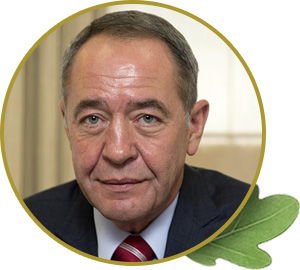
A year after purchasing the company, Kerimov collected similar assets into the National Telecommunications company. From the very beginning, this business was created for sale to a third player. Lesin and Gromov knew that a family closely connected with the Kremlin was at that time assembling its own media empire, and they hoped to sell National Telecommunications to these people. The surname of this large and wealthy family is Kovalchuk, and it is headed by Putin’s old friend and adviser ~~Yuri Kovalchuk~~ . As a result, the deal to sell Kerimov’s business to Kovalchuk’s National Media Group took place in 2008. Lesin, then working in the Kremlin, even publicly admitted
in an interview with Forbes ×
, that he advised Kovalchuk on purchases in the media sector.
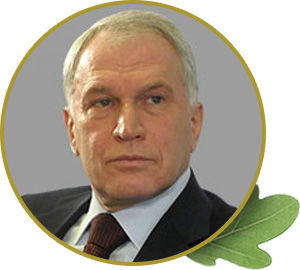
As a result of the transaction, Kovalchuk owed the seller 4 billion rubles and about 200 million dollars (in total, slightly less than $400 million). The fate of this money was decided at a personal meeting between Senator Kerimov and Prime Minister Putin (he temporarily moved to the chair of the head of government in the spring of 2008). During the audience, as the billionaire’s partner recalls, ×
the head of the cabinet “suggested to forget about the unpaid amount.”
Kerimov forgave the debt, considering it politically advantageous for himself. He ceded the right of claim to the offshore company Sandalwood Continental, whose name no one knew at that time. Almost another 10 years will pass, and journalists within the framework of the Panama Papers project will establish that the offshore company was registered in the name of Putin’s friend, cellist Sergei Roldugin. In other words, this offshore company most likely stored Putin’s personal money. Sandalwood will receive almost $400 million from the deal with cable networks from the state company Rostelecom (it later bought the networks from Kovalchuk). It turns out that Putin convinced Kerimov to give him the right to claim a huge debt, and eventually received this money, but not from his friend Kovalchuk, but from the Russian budget.
After such a service to the president, Kerimov could count on special treatment. A short time will pass, and Putin personally, as the head of the commission on strategic assets, will approve Kerimov’s application to purchase the Polyus gold mining company. This asset will become the basis of Kerimov’s wealth for years to come. And Lesin turned out to be the loser in the story with cable networks - he did not receive his unofficial share from the deal, a year later he was fired from the Kremlin for a conflict of interest, and later quarreled with the Kovalchuk family, left for the United States, where he died under mysterious circumstances.
However, having agreed with Putin’s financial demands, Kerimov, judging by the words of two of his acquaintances, harbored a grudge. It became even more intense due to serious personal troubles. In the fall of 2006, the senator was driving along the Promenade des Anglais in Nice in a Ferrari Enzo supercar. The famous TV presenter Tina Kandelaki was sitting in the passenger seat - the oligarch then smartly (although ultimately unsuccessfully) courted her. He offered to help the TV personality get to France, where she needed to do some business. Arriving on the Cote d'Azur, Kerimov decided to impress the woman, but it didn’t turn out as beautiful as he dreamed.
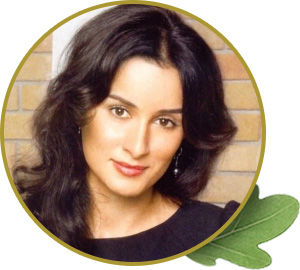
The car flew into the median at high speed, crashed into a tree and caught fire. Kerimov received burns, his companion was almost unharmed and, with the help of the oligarch’s friends, was quickly sent to Moscow (Kandelaki herself then deceived the press, saying that she “had mumps in Moscow” and hid the burn with a tattoo). Kerimov was taken to a burn clinic in Belgium.
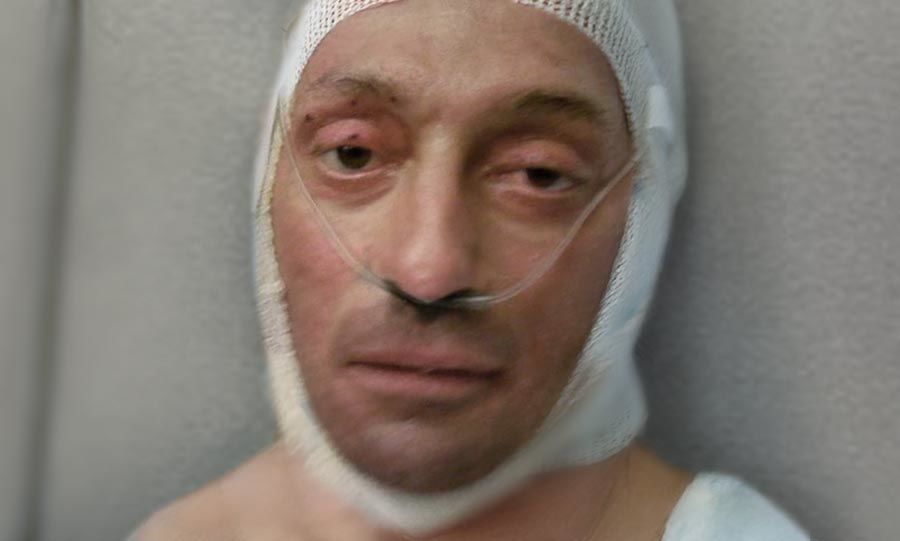
The injuries were not as serious as the psychological effect. The accident, as a friend of the senator recalls, ×
changed Kerimov’s attitude towards life and health. He began to obsessively hide the burn marks on his hands using gloves, and most importantly, and at the same time, to protect himself from infections. When the covid pandemic began years later, Kerimov would be one of the first Russian politicians to go into quarantine (the oligarch had at least one heart operation, so fear of the coronovirus could be based on this as well). In Kerimov’s office building in the Polyanka area, personal medical offices were equipped - a treatment room and a dental one.
So by 2008, when Putin deprived Kerimov of hundreds of millions of dollars, the Dagestani businessman was a different person psychologically. As two of his acquaintances recall, Kerimov then told his entourage that from now on “the money must be kept in the West so that it will not be taken away again.” In a practical sense, this meant this: a PG Trust was established in Liechtenstein, the legal details were handled by Kerimov’s closest adviser at the time, Allen Wine, and the structure was registered in the name of the senator’s mother. Another trust was registered in the US state of Delaware - it was called Heritage Trust. The trusts consisted of money received in the form of profits from Kerimov’s Russian and foreign investments - from open data and the words of the oligarch’s trustees, we know that at different times he had shares in the online service Snapchat, the company SpaceX, the manufacturer of sensors for unmanned vehicles Luminar Technologies, global brands like Volvo, BP, E. On and Boeing, as well as a number of banks, both the Russian Sberbank and Deutsche Bank, Credit Suisse and Morgan Stanley. The European and American trusts will subsequently become the cause of a big squabble in Kerimov’s circle.
In 2021, during a trial in a Delaware court, it became clear that the beneficiaries of the Heritage Trust were exclusively Kerimov’s relatives. For this reason, as an eyewitness of those events recalls, ×
A quarrel broke out between Kerimov and his closest partner, State Duma deputy Magomed Gadzhiev. The latter expected that his children would also be beneficiaries of the trust, and when he found out that this was not so, he “presented it to Suleiman.” As a result, Gadzhiev will be expelled from the deputies and declared a “foreign agent” and an “extremist” - since 2021 he has been living abroad. And the trust’s funds—about a billion dollars—were frozen by the American authorities as part of sanctions against Kerimov for supporting Russian aggression against Ukraine.
Who is more profitable to be in Putin's Russia - a State Duma deputy or a senator? We asked this question to two former deputies, one of whom also managed to be a member of the Federation Council. The answer is: if the only purpose of getting into parliament is legal immunity, then senatorialism is much more profitable. A member of the Federation Council has fewer work worries, and the guarantees of immunity and circle of acquaintances are the same. If a parliamentarian wants to earn extra money as a lobbyist for other people’s interests, then it is much more profitable for him to go to the State Duma, where most bills are polished. Be that as it may, in 2007, Kerimov was forced to leave the State Duma for the Federation Council. He was not even allowed into the lower house for money - the Kremlin was then preparing a new parliament for interim president ~~Dmitry Medvedev~~ . The selection of personnel was in charge of the curator of internal policy, deputy head of the Presidential Administration Vladislav Surkov. It was he who suggested that Kerimov leave his seat as a deputy, but did not oppose his transition to the Federation Council.
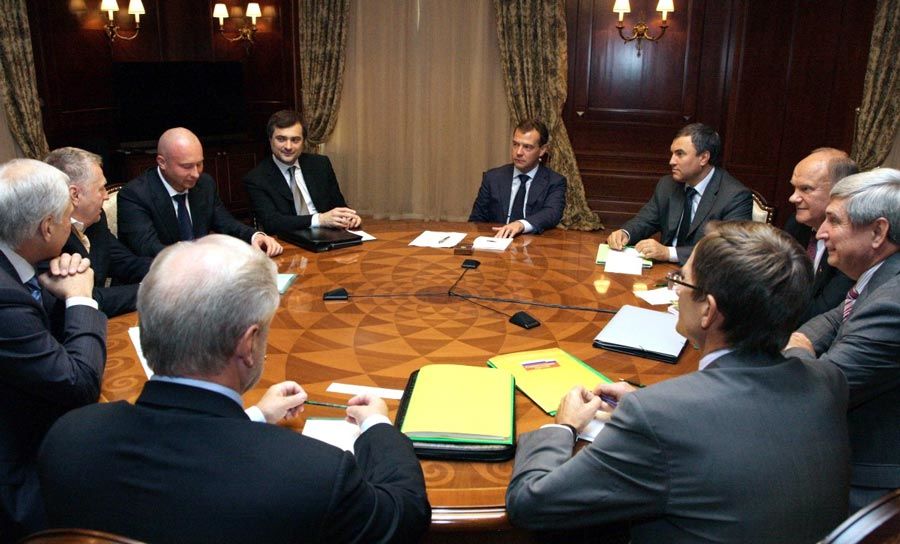
But not everything turned out to be so simple. The then head of Dagestan, Avar Mukhu Aliyev, had the authority to select senators from the region. Three people who knew him describe Aliyev as a tyrant with Soviet habits who also liked to drink, which often influenced his political decisions. He refused Kerimov, the quarrel was so serious that the billionaire had to solve his problem at double the price. Part of the fee went to the then senator from Dagestan Atay Aliyev - Kerimov’s envoys, for the standard amount of five million dollars, convinced his fellow countryman to resign as a member of the Federation Council. Another payment - always in the form of cash - has since regularly gone to the Speaker of the Federation Council, first ~~Sergei Mironov~~ ~~,~~ and after and until now ~~Valentina Matvienko~~ . Kerimov called these payments “kopecks”
, testifies a person involved in the billionaire’s financial matters ×
.
The most revealing part of the story was connected with Mironov - in 2006, with the permission and with the help of the Kremlin, he created the A Just Russia party. The party called itself opposition, but always supported Vladimir Putin. This political structure had to be financed, and one of the ways was extortion from those who want to become a senator. Speaker of the Federation Council Mironov came up with a scheme in which shadow contributions to the party were passed through Senator Oganes Oganyan, who was close to him (then he would follow his boss into the State Duma, occupy the chair next to him in the conference room and continue to serve as the secret purse of A Just Russia). In other words, the Kremlin financed one part of parliament by extorting money from another.
What did Kerimov pay for? Literally for the opportunity not to go to work. The senator has not appeared in office for years. According to the voting records, Kerimov voted in person for the last time in March 2021, when the head of Dagestan ~~Sergei Melikov~~ made a presentation at a meeting of the Federation Council. The senator has applied for an absentee ballot 5 times in 2022. On all other days of the meetings, Kerimov did not vote, which most likely means that he was not at work at all.
Everyone turned a blind eye to this, even though the parliament has been fighting truants for many years. This campaign began back in 2009 after Mironov was unable to assemble a senatorial quorum at two meetings in a row. Truants were branded in the Kremlin and even amendments were adopted to the law on the status of senators, according to which a member of the Federation Council is obliged to take personal part in chamber meetings. For some, they left the opportunity not to attend for a good reason and in agreement with the speaker. Over the years, many “truants” were either expelled from the Senate or taught at least some kind of discipline. But not Kerimov. For a long time, the Dagestan billionaire presented as a valid reason the need for treatment from the consequences of a love rendezvous in Nice.
What or who allows Kerimov to avoid problems with the law over and over again? Why can he easily get his people into the authorities and authorize repression against his enemies? The fact is that Kerimov has a kunak in the Kremlin.
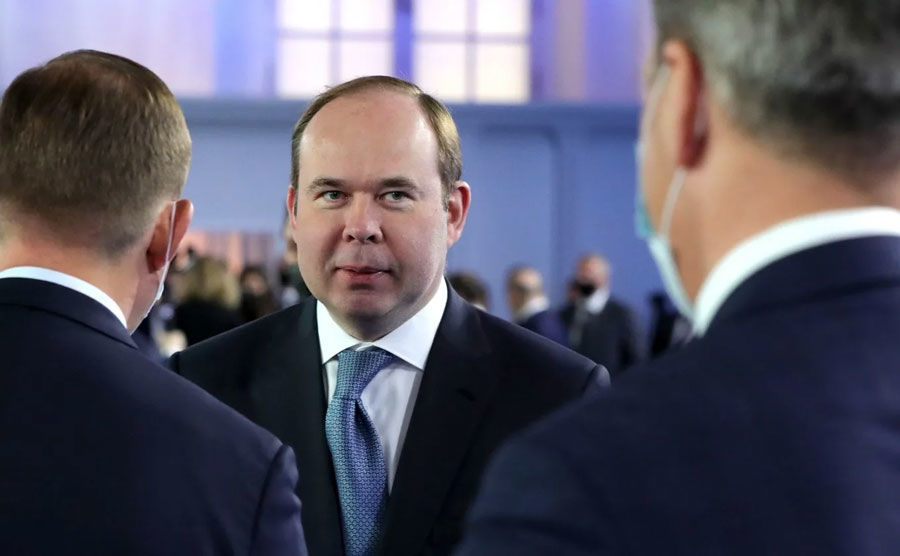
The close friendship of Suleiman Kerimov and ~~Anton Vaino~~ , the current head of the presidential administration, began in the mid-2000s, when Vaino was involved in the protocol of ~~Vladimir Putin~~ - that is, he ensured the work schedule, trips and meetings of the head of state. Friendship was again based on money and kinship.
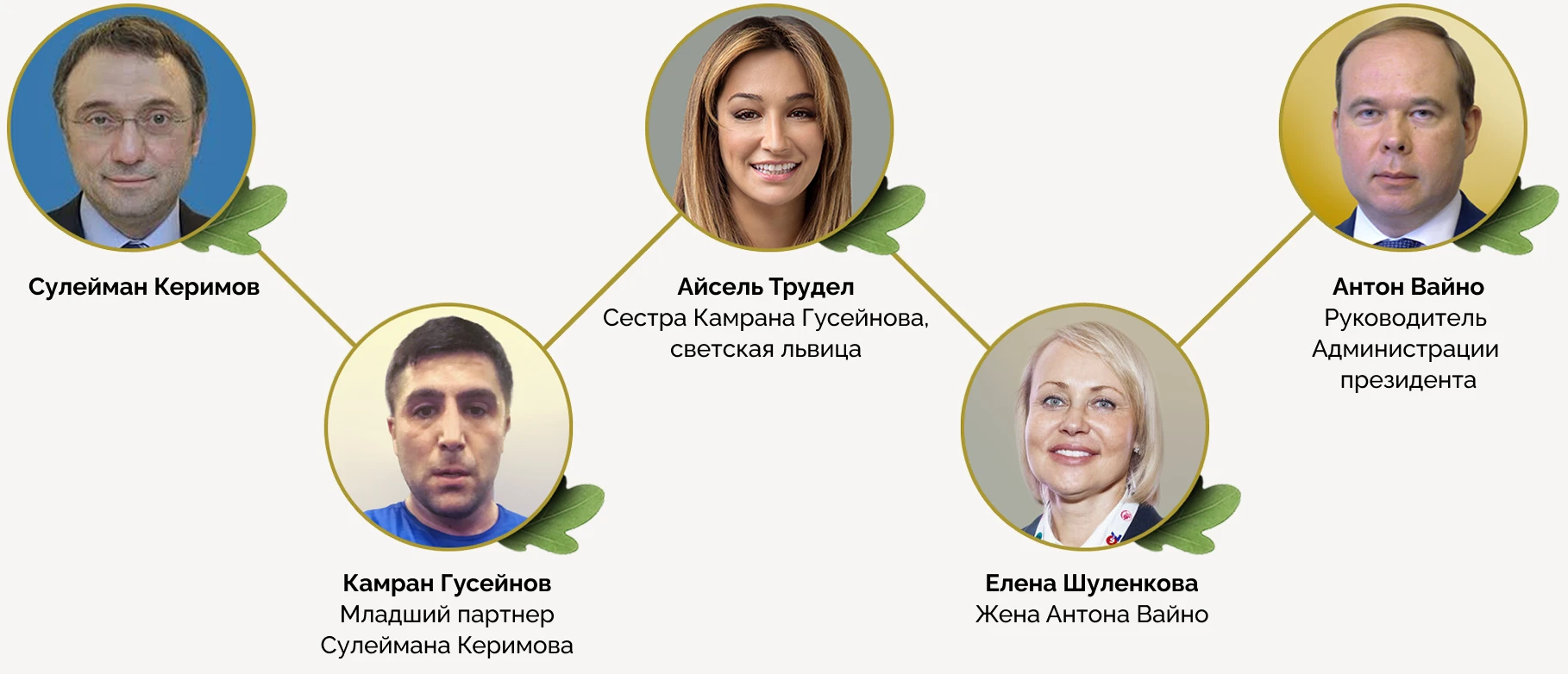
42-year-old Kamran Guseinov is one of Kerimov’s junior partners - among other things, he was the head of the New City fund, through which Kerimov was going to invest in the creation of a resort on the Caspian Sea and in the development of Derbent, and Guseinov was also on the board of directors of the Makhachkala airport ×
. Kamran is the grandson of another Kamran Huseynov, who during the Soviet years worked as the first secretary of the Sumgayit city party committee and deputy chairman of the Council of Ministers of Azerbaijan. Kamran Jr.’s sister is Aysel Trudel, surname from her husband, Canadian Louis Trudel, who lives in Monaco ×
, Moscow socialite, ambassador of the Christian Louboutin and Agent Provocateur brands, owner of expensive boutiques. It was she who opened the way for Kerimov to the Kremlin. Trudel is quite familiar with the Vaino family thanks to the fact that the wife of the current head of the presidential administration, Elena Shulenkova, is passionate about luxury. Trudel gave the Vaino family expensive gifts from Kerimov - we know about the paintings and jewelry from the words of a person who participated in the scheme.
In general, jewelry, watches and similar luxury items are a common form of bribes in Russia. How this scheme works was described to us by two former civil servants who participated in it. Jewelry, watches, antiques, including, for example, ancient coins are transferred to the official through an intermediary - for example, for Vaino this role was played by Aysel Trudel, for his deputy ~~Alexei Gromov~~ - his subordinate and university friend Mikhail Bryukhanov, etc. But both the giver and recipient of the gift understand that the item will soon be on the market again. The intermediary, at the request of the official, sells the same item on the black market or sells it as consignment goods directly to the Mercury company - this is the largest seller of luxury goods in Moscow, the operator of the Central Department Store. So the official receives real money in exchange for another donated watch, which he probably did not plan to wear.
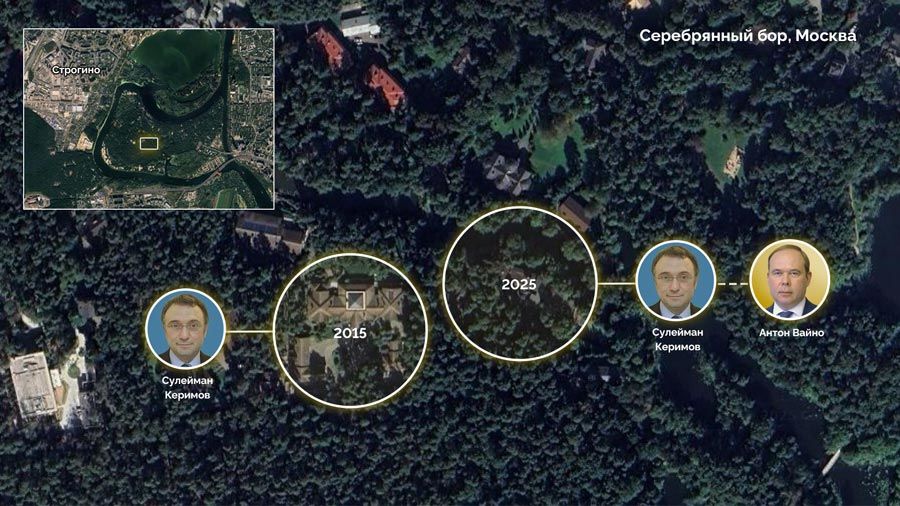
But paintings and jewelry are not all gifts. In 2015, Kerimov bought a plot of land for one of his wives in Serebryany Bor, a green and expensive area of Moscow where the elite have settled since Soviet times. By 2022, a huge house was built on the plot, and in 2025, the neighboring plot was also given to the oligarch - Kerimov’s former partner claims that this plot of land is intended for the Vaino family.
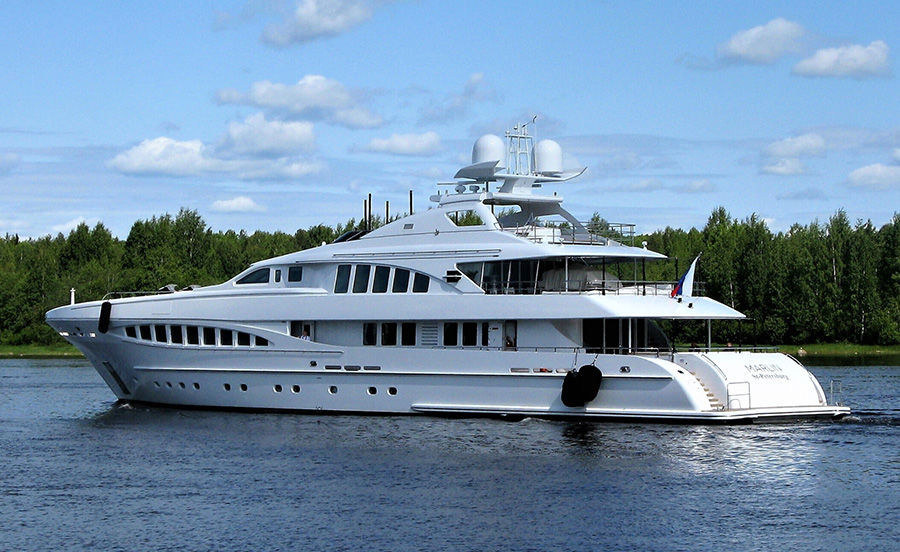
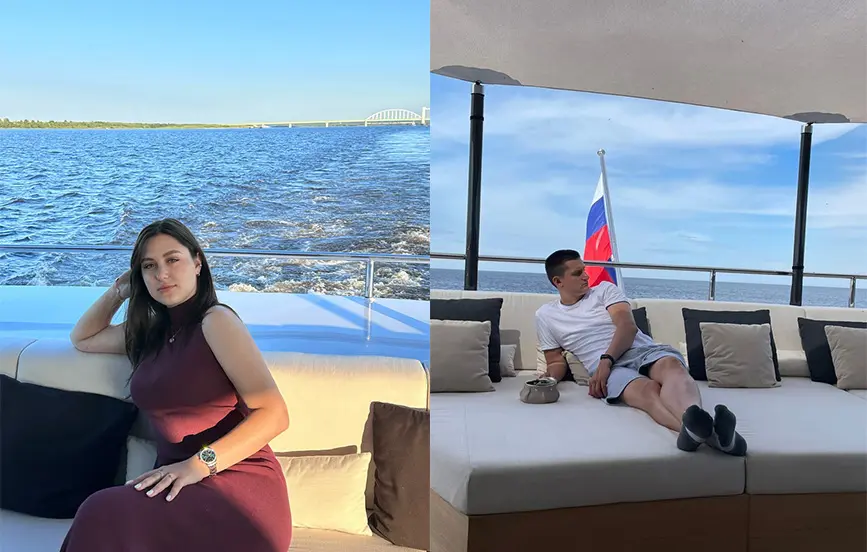
Vaino Kerimov made another expensive gift in 2022. The 46-meter pleasure yacht “Marlin” previously traveled in the Mediterranean Sea and was registered to the manager of European assets, Kerimov.
. The yacht belonged to the offshore company Ofanto Ventures, which was controlled by Swiss businessman Alexander Studhalter, who is in charge of Kerimov’s real estate on the French Riviera ×
. Now every summer the yacht can be found on the Volga and the Svir River in the Leningrad region, off the coast of Crimea or in Sochi. The fact is that Kerimov gave this “boat” to Vaino
, knows the person who participated in the scheme to transfer the yacht ×
. It is unknown who the “boat” is now registered to, but we managed to find members of the Vaino family vacationing on board.
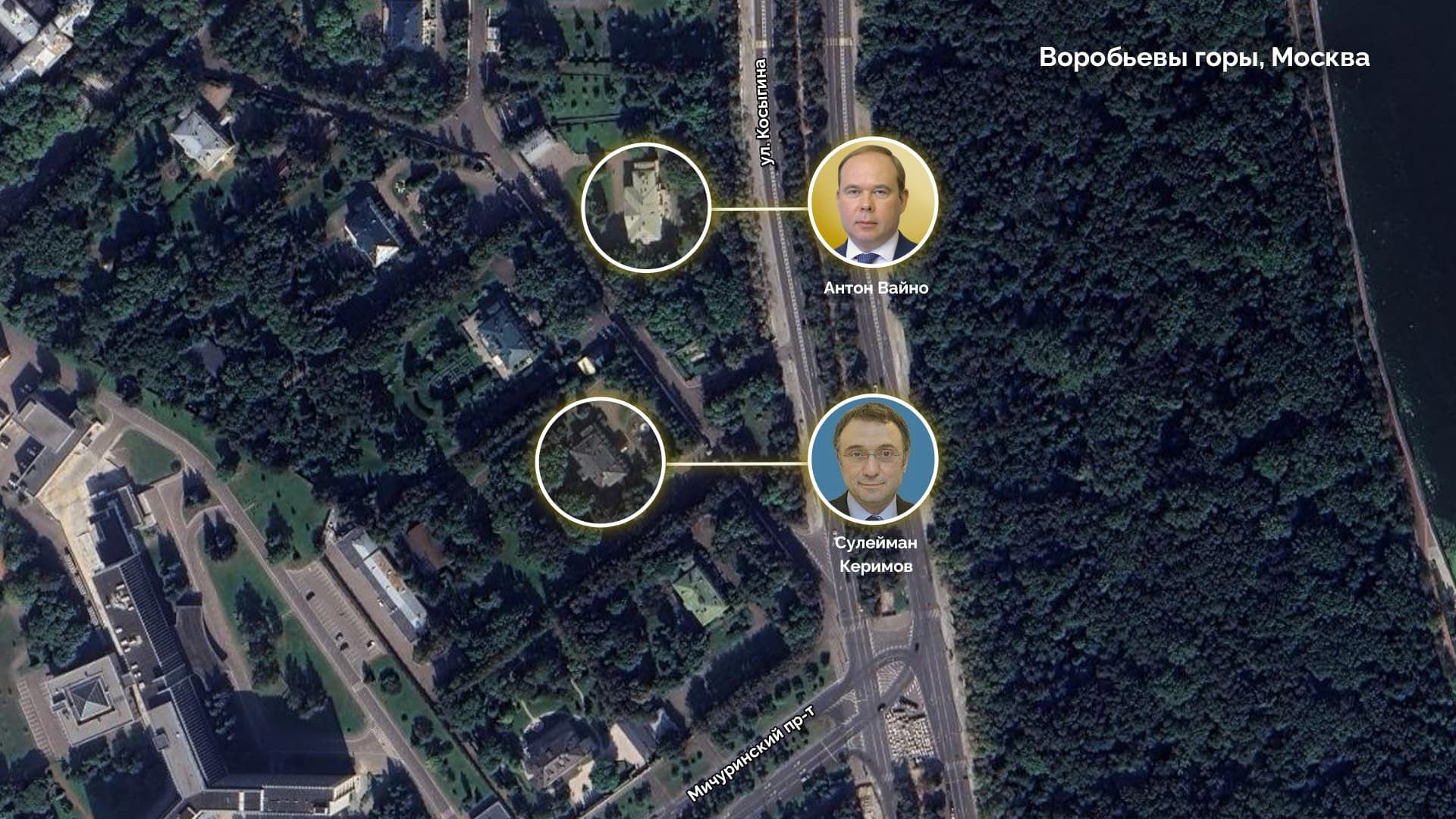
“Kunak” in the Kremlin also helped Kerimov financially in response. On Kosygina Street in Moscow - in the part where it faces Mosfilm - there is a quiet place - several state dachas, which in Soviet times were intended for party bosses and especially important foreign guests. Now most of these houses are under the control of the Federal Security Service and only respected people live there, such as Anton Vaino. Senator Suleiman Kerimov also received permission to live on the territory of the closed village. His business partner, deputy Magomed Gadzhiev, settled nearby. We will tell you about this unique place in another episode of our special project, but now it is important to know that the entire complex of dachas on Kosygina, in addition to the personal security of the residents, is under the protection of the FSO. Kerimov is generally obsessed with personal security - working under him are Sergei Udovik, who previously served in military intelligence, an officer of the GRU Senezh Special Purpose Center Vitaly Yakovets and an officer of the FSB Special Purpose Center Dmitry Klinskikh, who accompanies Kerimov on trips abroad. To protect the oligarch, a special security agency was established - “Radius-V” - dozens of bodyguards are employed there. One of the businessman’s acquaintances witnessed how Kerimov came from his house on Vorobyovy Gory to his office on Polyanka - the motorcade made its way along Kosygin, Leninsky Prospekt and Yakimanka in just five to seven minutes, and then security completely blocked Staromonetny Lane so that the senator could safely enter the building.
One of Kerimov’s acquaintances calls Vaino the “main secret” of the Dagestani billionaire’s success: “He knows Putin’s schedule, he can bring in a paper or have a guest.” “Kerimov is one of those who can run to Putin,” admits a source close to the Kremlin, meaning that Vaino organized several non-public meetings between the businessman and the president.
On several occasions, these meetings saved Kerimov from big trouble. In November 2017, the billionaire was again unlucky in Nice - as soon as he arrived on the Cote d'Azur with a woman, the billionaire was detained by the French police. Authorities said they were investigating money laundering and tax evasion. Kerimov spent two days in the cell; the judge released him under house arrest in France with the obligation to provide bail and also report weekly to the police station. In January 2018, citing his brother’s illness, Kerimov asked to return home with a promise to return for trial. As a result, six months later, Kerimov was transferred to the status of a witness and finally released to his homeland.
Throughout the arrest, the entire Russian government fought for Kerimov—the Foreign Ministry, parliament, the presidential administration, and the prosecutor general’s office. Returning to Moscow, Kerimov met with Putin. During that conversation, the circumstances of the billionaire’s arrest came up. According to the version on which the president and senator agreed, the French authorities allegedly received information about the billionaire’s financial affairs and plans through a tip from Kerimov’s longtime competitors - Dagestani businessmen Ziyavudin and Magomed Magomedov. This story is told by two people - a relative of the Magomedovs and a former partner of Kerimov ×
. After a short time, the Magomedovs will be detained and subsequently sentenced to long prison terms for creating a criminal community to steal budget money. At the same time, Magomed Magomedov, who previously, like Kerimov, worked as a senator, lost his state dacha on Vorobyovy Gory - so the hero of our story also got rid of his neighbor (read about another clash between these families - below).
But there was one particularly important story for Kerimov, where connections in the Kremlin helped a lot.
In 2011, the businessman dared to make a very expensive and extravagant gift to the Kremlin - he bought the Dagestan football club Anzhi. In general, football became especially fashionable among Russian oligarchs after 2003, when billionaire Roman Abramovich acquired the London Chelsea club. Abramovich was sometimes criticized at home for investing money in foreign football, but the oligarch’s closeness to Putin forced other businessmen to also think about their own club. In 2008, Kuban billionaire Sergei Galitsky invested in the Krasnodar team, which over time became one of the leaders of Russian football. At the same time, the unprofitable club from Makhachkala, Anzhi, became interested in wealthy fellow countrymen. They say that the first to show interest were the brothers Ziyavudin and Magomed Magomedov, oligarchs who were close to the then president ~~Dmitry Medvedev~~ . But Kerimov bypassed them (this is another conflict between influential Caucasians). Anji became a vanity fair for the Dagestani billionaire - he bought famous players and coaches with rich promises, sometimes strange ones. The famous midfielder Yuri Zhirkov was attracted with the promise of providing him with a Nazi military uniform in addition to his salary - the football player, as they wrote, collected such artifacts. Kerimov was lucky with Zhirkov - he lured the footballer from Chelsea, thereby “pushing Abramovich”
, recalls an acquaintance of a Dagestan businessman ×
. But the main stars of Kerimov's Anzhi are Cameroonian Samuel Eto'o, Brazilian Roberto Carlos and Dutch coach Guus Hiddink. The stars immediately refused to live and work in Makhachkala, so Kerimov paid them rent for apartments in Moscow City, and set up a training base in the Moscow region.
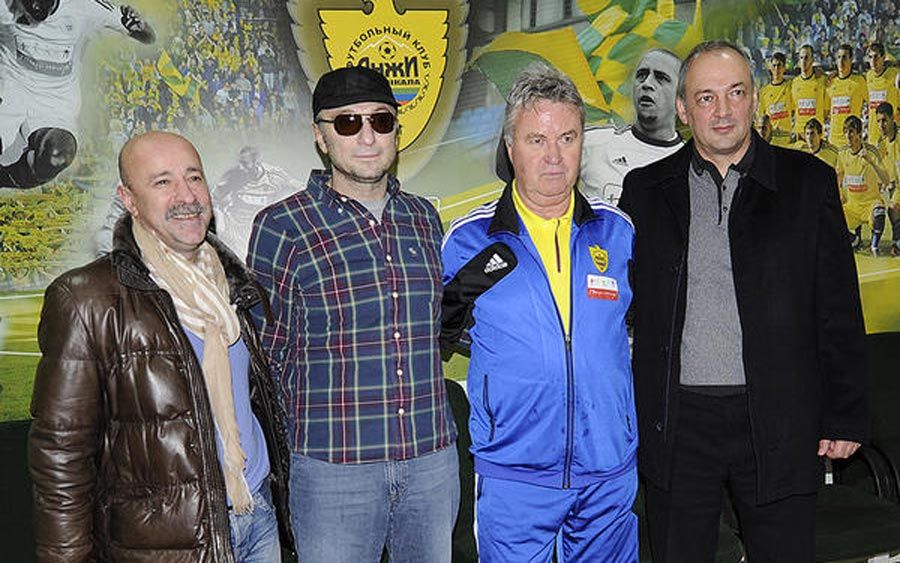
“Suleiman at that moment really wanted to become the president of Dagestan. I wanted to show that I was equal to Ramzan (the head of Chechnya ~~Ramzan Kadyrov~~ in 2004 headed and began sponsoring the Grozny football club “Terek”, later “Akhmat”),” recalls Kerimov’s partner
. An acquaintance of Anton Vaino confirmed the same in a conversation with “Project” ×
.
But the adventure again ended in a criminal investigation. Trouble came from Belarus.
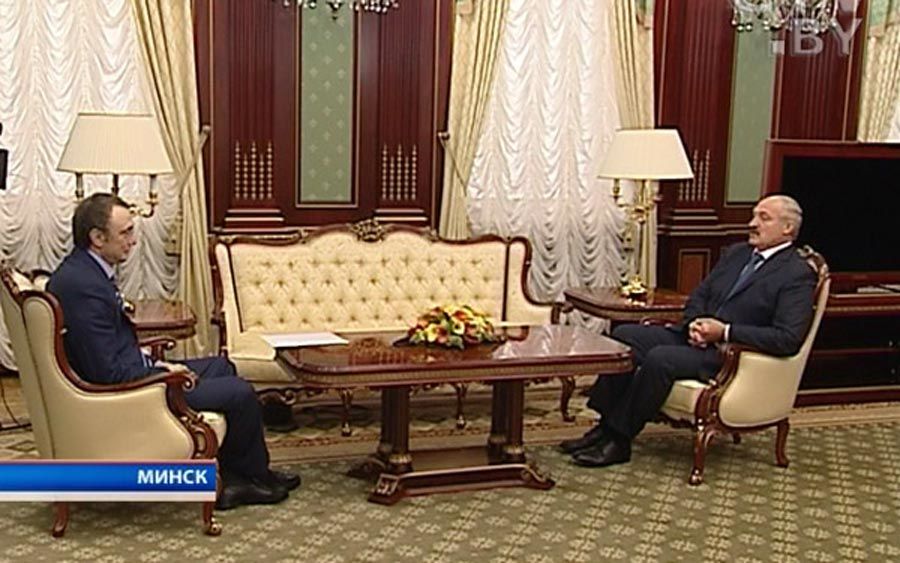
In the summer of 2013, Kerimov, who then had a significant stake in the Uralkali company, quarreled with Belarusian President Alexander Lukashenko. Uralkali was part of a cartel along with Belaruskali, the Belarusian state-owned fertilizer producer. Each side was dissatisfied with the terms of the partnership: Minsk was the first to begin trading fertilizers, bypassing the cartel, but did not leave it. In the summer of 2013, Uralkali announced its withdrawal from the partnership, and the shares of all global potash producers collapsed. The Belarusian authorities, who suffered the most from Kerimov’s actions, responded with threats, and then in Minsk they detained and put under arrest the director of the Russian company, Vladislav Baumgertner. Lukashenko went into a rage: he ordered that a criminal investigation be launched against Kerimov himself and that he be put on the wanted list. A request to check the billionaire was sent to the Russian Investigative Committee.
In this quarrel, both sides were worth each other. Kerimov, leaving the cartel agreement, foresaw a fall in shares of potash companies and “played short.” Forbes magazine described the story as follows: “Shortly before Uralkali’s announcement (about leaving the cartel), Kerimov’s structures bought put options from Sberbank on shares of potash companies, which it acquired from several Western banks. When the quotes collapsed, the options “earned” and Kerimov was able to sell the securities at a previously fixed higher price.” A source involved in this operation confirms the scheme, adding that Kerimov’s personal benefit from the fall of the potash market amounted to about $300 million.
In August-September 2013, the conflict reached the Kremlin level - Putin spoke with Lukashenko. The Russian President also informally received Kerimov. At that meeting, as the billionaire told his entourage, Putin promised him that he would not have problems with the law. Russia really did not comply with Belarus’ request to detain Kerimov; Baumgertner was also soon transferred to his homeland and released. But Putin wanted something in return: Kerimov had to transfer about $100 million to the needs of the Kremlin-sponsored Sirius children's center. As Project previously found out, approximately half of this amount was sent directly to the Talent and Success fund, which manages Sirius. In another part, Kerimov built a regional center in 2017 - Sirius-Altair in Makhachkala ×
.
Kerimov had to part with Uralkali - due to the fall in the share price, it was difficult for him to service the loans received at one time to purchase the company. By the end of 2013, Kerimov’s share in the potash company was sold to Mikhail Prokhorov and Dmitry Mazepin. However, there was one loser in this deal, who will remind Kerimov of his grievance (see below).
The drama with Uralkali also decided the fate of Anzhi - the owner no longer wanted to spend millions on maintaining the team. Kerimov spent around half a billion dollars on the football club during his ownership, according to a person familiar with this story ×
. In August 2013, Anzhi began selling off star players, and Kerimov was able to finally get rid of the team in 2016. The Anzhi final was very revealing. For a long time, the billionaire could not find anyone willing to take over the club, until Osman Kadiev appeared on the horizon, who at that time controlled Dynamo Makhachkala. Kerimov knew his fellow countryman from the days of his criminal youth - in the 90s, “Great Osman,” as Kadiev was called in criminal circles, worked with the same authorities as Kerimov. It is known that in the 90s, Kadiev was engaged in tailoring sportswear in Turkey, which was sold in Russia under the Dag-Mos brand. The company associated with the Dagestan criminal group had the same name ×
. The deal was simple: the club went to Kadiev not just for free, but with an additional payment - for another year Kerimov covered the expenses of the new owner. Now the club plays in the third league of Russian football.
Perhaps this was Kerimov’s only deal that did not bring him any benefit - he lost money and never became the head of Dagestan.
Lately, Kerimov has not been very public - he does not appear in the Federation Council, and does not often attend social events. One of his wives, ~~Marina Petrenko~~ , is a completely different matter. In February 2022, when a major war began in Ukraine, Moscow was plastered with advertisements for the film “Blind Valentine’s Day.” On the banners is Petrenko herself, who not only played one of the roles, but also acted as a producer of the film. Petrenko, a 38-year-old native of Crimea, was an actress before meeting the oligarch, starring in cheap Ukrainian and Russian TV series. She was introduced to Kerimov by the popular TV presenter Andrei Malakhov, about whom secular Moscow has long known that he brings starlets together with rich and influential men for a small bribe.
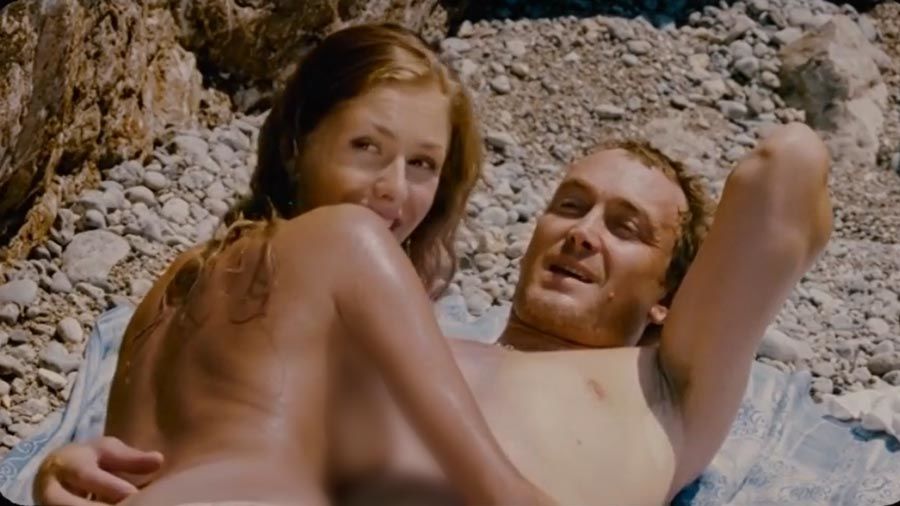
The phrase “one of the wives” is not a slip of the tongue. Kerimov, as is customary among wealthy people from the Caucasus close to power, had several wives at the same time. The first, Firuza Khanbalaeva, whose father opened the way to Moscow for Kerimov, remains the official wife of the billionaire. She is well off and lives in a rich house in Skolkovo. But Kerimov now spends most of his time with Petrenko, who bore him four children (the two eldest sons were born in Los Angeles and New York, so they are probably US citizens by birthright). Other members of Kerimov’s harem at different times were ballerina Anastasia Volochkova and Olympic champion, figure skater Elena Ilinykh. Kerimov’s neighbor in the Caucasus region, the head of Chechnya ~~Ramzan Kadyrov~~ , has at least five wives. So the realities of the comedy film “Prisoner of the Caucasus,” where the villain stole the girl he liked, have been fully preserved in the 21st century.
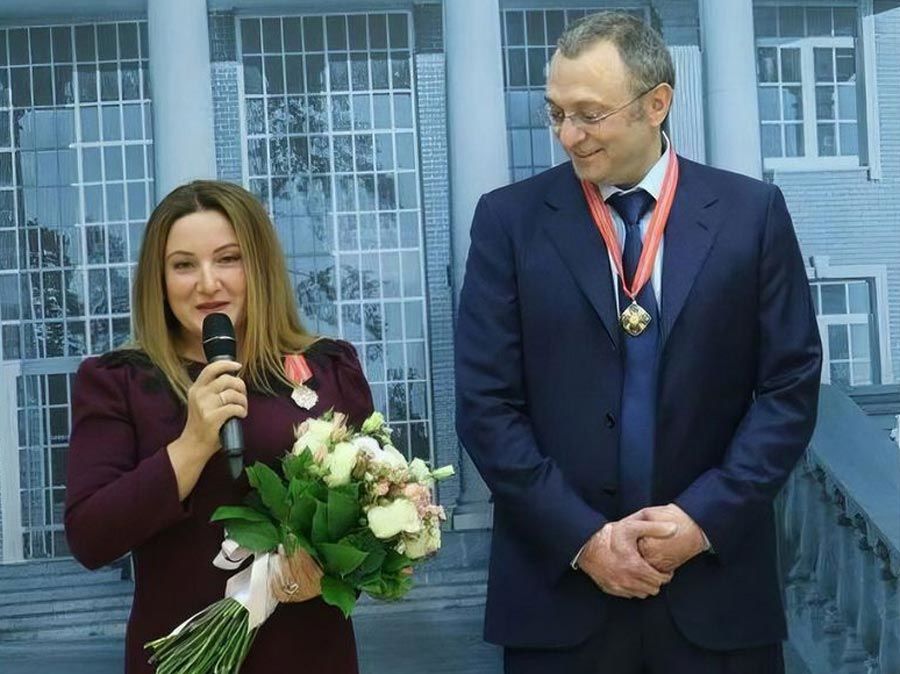
But the advertising posters hanging in Moscow in February 2022 are important to us not only because of the photograph of Senator Kerimov’s wife. The billboards belonged to the largest outdoor advertising operator in the country - the Russ company was then called Russ Outdoor ×
, a connection with which the billionaire has never openly admitted. However, four officials and businessmen familiar with him clearly say that Kerimov is the main owner of this considerable asset.
The Russ company, which was once founded in Russia by the famous investor Rupert Murdoch, came to its current monopoly position in the advertising market as a result of several acquisitions, where Kerimov also needed connections in the Kremlin. The first in 2019 to pass into the hands of Kerimov and the brothers Levan and Robert Mirzoyan, who officially own the business, was the advertising company “Laisa” - it was engaged in outdoor advertising in the metro and on railways. For control over "Laisa" Kerimov
, according to a source involved in the negotiations, ×
paid about a billion dollars. The person interested in this deal was the hereditary spy and diplomat ~~Dmitry Peskov~~ , the president's press secretary and the hero of another episode of our research. Of course, Peskov did not own a stake in the company publicly, but through Sergei Kolushev, his friend, the guest of honor at his own wedding, and at the same time the ice show manager ~~Tatyana Navka~~ , Peskov’s wife.
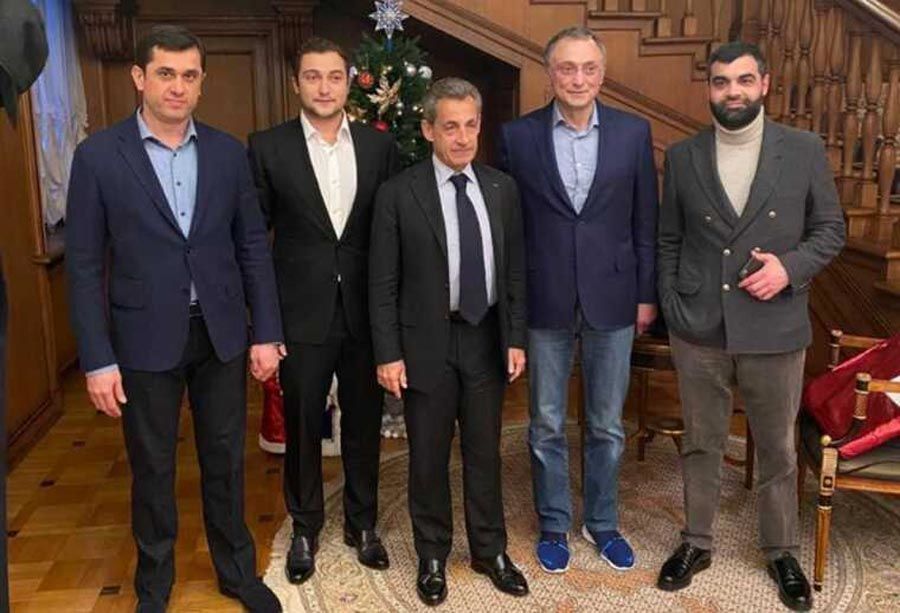
Next, Kerimov took over the Russian business of French advertisers from JCDecaux. To convince the French, Kerimov needed someone more influential than Peskov - the conversation about the fate of JCDecaux with the French ex-president Nicolas Sarkozy was conducted personally by Putin - in any case, this is how Kerimov described the scheme to his acquaintances, one of whom conveyed his words to us. Sarkozy had a friendly and probably financial relationship with the founder of the advertising company, Jean-Claude Decaux. It is also known that Sarkozy, after resigning as president, visited Russia several times for informal meetings with Putin and his entourage ×
. Finally, Gallery was the last to join the Russ structure.
In it, Kerimov provided work for the son of another hero of our study - ~~Alexey Gromov~~ ~~,~~ the deputy head of Putin's administration (for Gromov Sr. this is a common practice. His children and wife were employed or taken as partners by other oligarchs close to power).
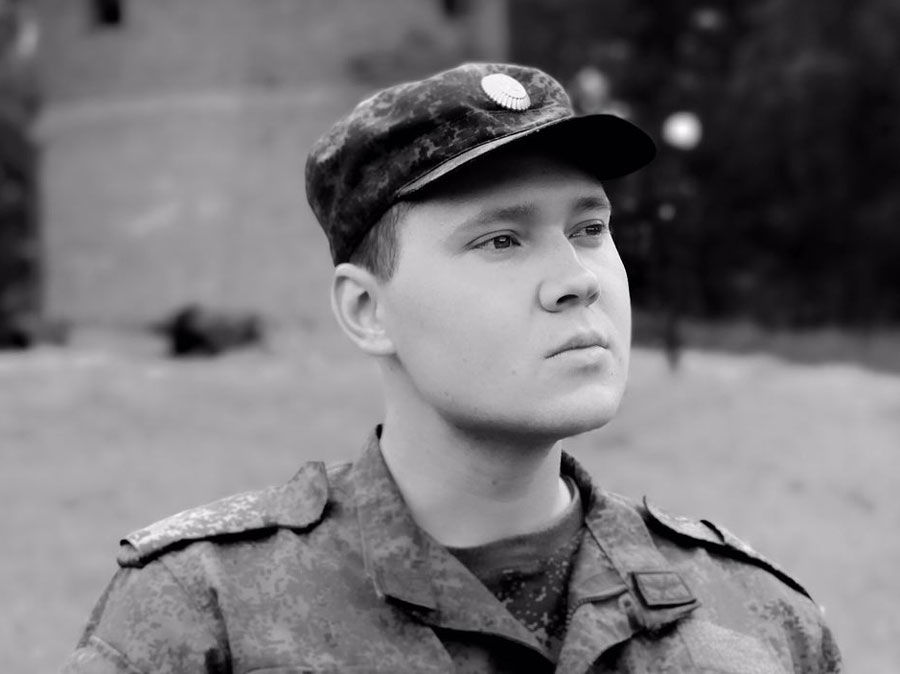
~~Danila Gromov~~ , the youngest son of an official, has worked as a PR manager for Gallery since 2020, and in 2021 he was appointed deputy director of the entire Russ Outdoor. One should not think that the young man achieved these positions on his own. Firstly, we know that Kerimov personally provided his hiring
— a close friend of the billionaire recalls this ×
. Secondly, Gromov Jr. at that time did not sit for hours in the office, but traveled around the world together with Kerimov’s partners Levon Mirzoyan and ~~Bekhan Barakhoev~~
, we know from air travel data leaks ×
. In September 2021, Barakhoev became a State Duma deputy, one of Kerimov’s kunaks in parliament. This Ingush businessman received his crusts thanks to the patronage of Gromov and ~~Vaino~~
, two former deputies who know Kerimov and Barakhoev are sure ×
. Such a tangle of family and business ties that only grew over time.
When Kerimov consolidated the entire outdoor advertising business in his hands, he set his sights on something bigger. In 2024, the billionaire’s junior partner Robert Mirzoyan, it is unknown - on the advice of an older comrade or on his own initiative - started an affair with a married woman Tatyana Bakalchuk. Among her advantages is that Tatyana owns the Wildberries marketplace, the largest in Russia, the value of which was estimated at $10 billion.

Soon, a third appeared in the novel between Mirzoyan and Bakalchuk - Suleiman Kerimov. He held lightning-fast negotiations with the woman in love, convincing her to merge her huge company with Russ Outdoor. Vaino organized a visit to Putin for Kerimov and Bakalchuk, where the Dagestani entrepreneur convinced the president to agree on a major deal (Russ Outdoor is important to the Kremlin because it is the largest operator of outdoor advertising - political and social propaganda, military service, etc.). True, there was one obstacle - Tatyana’s legal husband, Vladislav Bakalchuk, who, although not immediately, realized that not only his wife, but also his money was about to be taken away from him. And then it came to blood.
In a strange way, Uralkali came back to haunt Kerimov in the Wildberries story. In the fertilizer epic, there was one person who was very haunted by Kerimov’s successes. This is the second hero of this chapter - the leader of Chechnya ~~Ramzan Kadyrov~~ . We said above that almost everyone won in the transaction for the sale of Uralkali, except for the minority shareholder of the company, who was left without his share. This shareholder - of course, informal - was Kadyrov. Here's the thing. In 2011, the companies Uralkali and Silvinit merged, making the company the world's second largest producer of potash fertilizers
. The first 44% of Silvinit were bought by the structures of businessman Anatoly Skurov and deputy ~~Zelimkhan Mutsoev.~~ They acted in the interests of Suleiman Kerimov ×
. But the deal might not have taken place, since the major shareholder of Silvinit, Pyotr Kondrashov, (these were then called “red directors”), for the time being resolutely refused to part with his share. Kerimov turned to Kadyrov for help, and he attracted State Duma deputy ~~Adam Delimkhanov~~ , his closest assistant in dubious matters. They convinced Kondrashov with threats that the shares needed to be sold, and as a result they believed that they could count on 20% of Kerimov’s share in the united potash company. As a result, Kondrashov moved to Austria for greater safety, and Kadyrov did not receive “his share” when Kerimov sold Uralkali. This caused a conflict between two Caucasian civil servants, both of whom are legally prohibited from doing business.
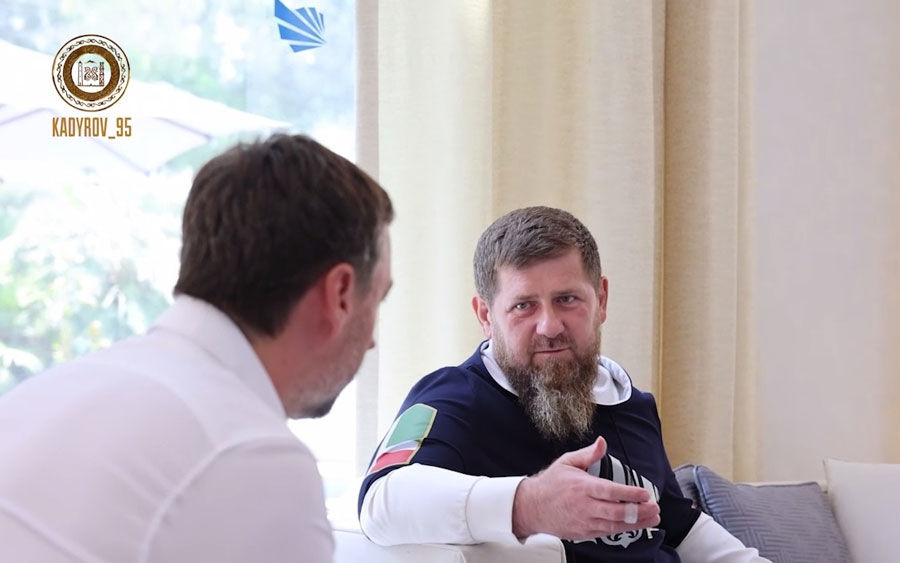
In 2024, Kadyrov again sensed money and an opportunity to get even. He took advantage of the conflict between the Bakalchuk spouses and publicly took the side of the abandoned husband. “The Battle of Wildberries” was the name given to the battle in the center of Moscow near the company’s office, where Bakalchuk arrived with the forceful support of the Chechens. The office was defended by Ingush guards. An attempt to break out and regain control of the company quickly escalated into a shooting that left two Ingush dead and several people on both sides wounded.
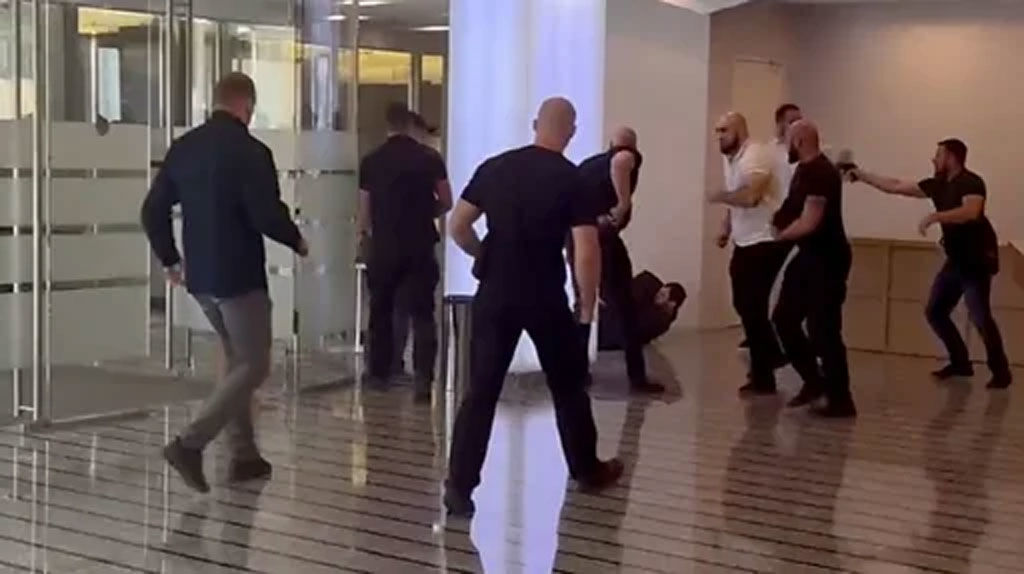
Never before in modern Russian history has it happened that two current government officials used weapons to sort things out, killing people and scaring passers-by some 400 meters from the Kremlin. Then something happened that had also never happened in Russian politics: the head of the region (Kadyrov) publicly declared a blood feud against a senator (Kerimov) and two State Duma deputies (Barakhoyev and ~~Kurbanov~~ ), and the perpetrators of revenge were another deputy (Delimkhanov) and another senator ( ~~Suleiman Geremeev~~ , another Kadyrov henchman in Moscow).
Senator Kerimov met his 26th year of civil service in his usual situation of great stress with criminal overtones. Although the extent of the current problems is probably not comparable to what it was before. Now the billionaire is hiding not only from photographers and bacteria, but also from blood officials. The headquarters of Kadyrov’s militants, the President Hotel on Yakimanka, is located some 500 meters from Kerimov’s office. На заседания в Совет федерации сенатор теперь вовсе не ходит, но не только потому что оплатил прогулы, а из-за того, что может встретить там чеченца Геремеева (он, судя по базе данных голосования, на работе иногда показывается). Мордобой в российском парламенте уже бывал, а стрельбы — пока нет . Представитель Керимова Алексей Красовский не ответил на запрос редакции ×
.
О других кавказских и не только династиях во власти читайте подробнее в нашей базе данных .